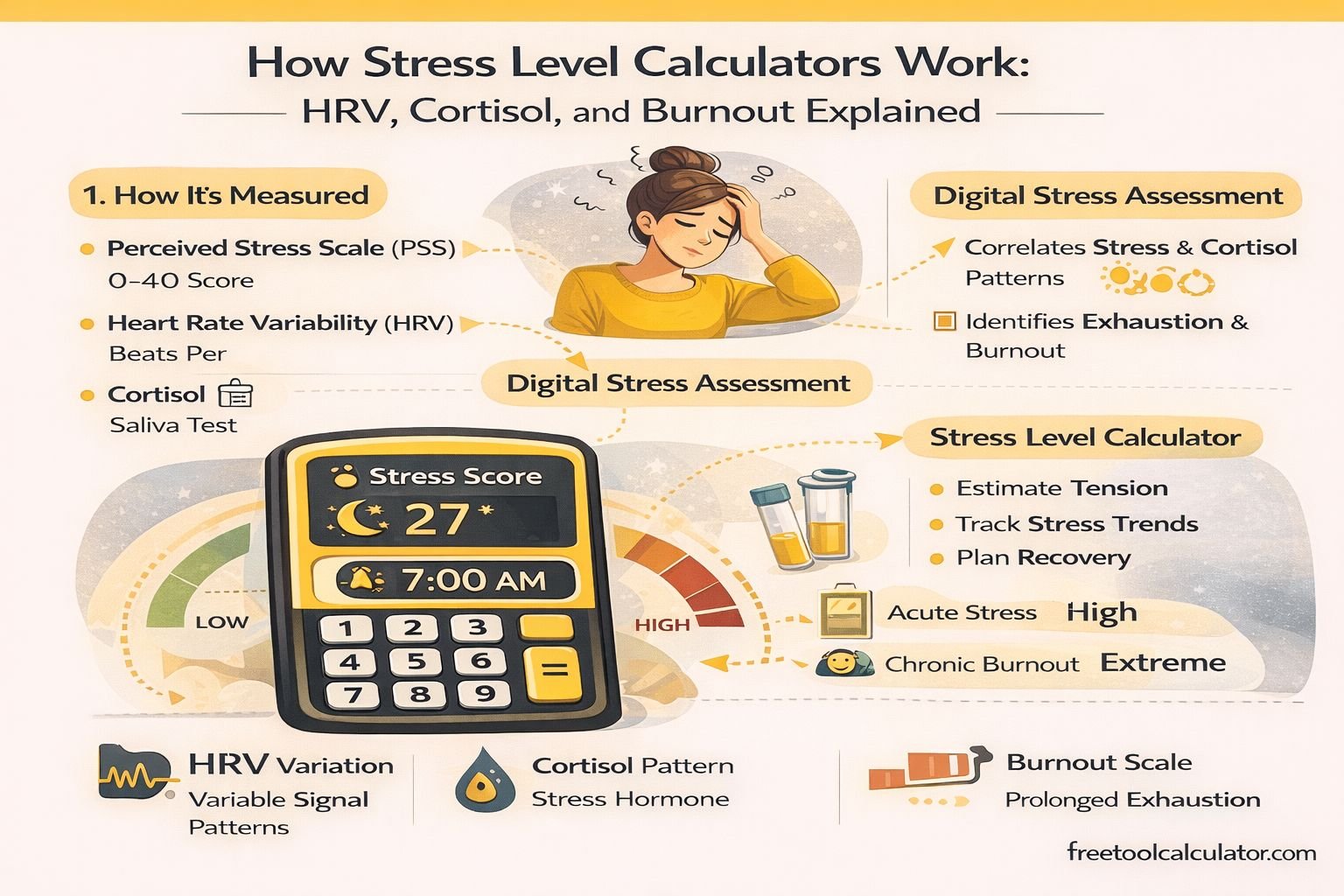
Measurement is no longer limited to clinical labs and long psychological surveys. A modern Stress Level Calculator combines psychological scoring models and physiological indicators to estimate your current tension level and recovery status. These digital tools help users understand whether they are experiencing temporary pressure, sustained stress load, or possible burnout patterns. This guide explains the science behind stress calculators, including Heart Rate Variability (HRV), Perceived Stress Scale (PSS), cortisol modeling, and the difference between acute stress and chronic burnout.
What a Stress Level Calculator Actually Measures
A Stress Level Calculator does not “read stress” directly. Instead, it estimates stress by analyzing measurable proxies that correlate strongly with nervous system load and psychological strain.
- Self-reported stress perception scores
- Sleep quality indicators
- Behavioral strain markers
- Heart rate variability trends
- Recovery patterns
- Workload vs rest balance
- Symptom frequency signals
How HRV Is Used in Stress Level Calculator Models
Heart Rate Variability (HRV) is one of the most scientifically validated physiological stress indicators. It measures the variation in time between consecutive heartbeats rather than the beats per minute.
Autonomic Nervous System Link
HRV reflects the balance between:
- Sympathetic nervous system (stress activation)
- Parasympathetic nervous system (recovery activation)
Common HRV Metrics Used
- RMSSD — short-term variability index
- SDNN — overall variability spread
- Frequency domain ratios
- Recovery slope trends
Perceived Stress Scale vs Physiological Stress Testing
Stress calculators generally fall into two scientific categories: perception-based and physiology-based.
Perceived Stress Scale (PSS)
- Feeling overloaded
- Lack of control
- Emotional strain
- Mental pressure frequency
Physiological Stress Tests
- HRV
- Resting heart rate
- Sleep disruption
- Fatigue signals
- Activity strain load
- Recovery markers
How Digital Stress Tools Estimate Cortisol Patterns
Cortisol is the primary biological stress hormone. However, no online calculator can directly measure cortisol without laboratory testing.
What Digital Calculators Actually Do
- Suppressed HRV
- Sleep fragmentation
- Elevated resting heart rate
- High perceived stress scores
- Recovery deficits
Clinical Interpretation Rule
Any calculator claiming to output exact cortisol levels without lab data is using inference, not direct testing. These outputs are screening indicators, not medical diagnostics.
Can a Stress Level Calculator Detect Acute Stress?
- Sudden HRV drop
- Temporary heart rate increase
- Short sleep disturbance
- High stress perception score
- Rapid rebound after recovery
Can It Detect Chronic Stress or Burnout?
- Persistently low HRV baseline
- Flattened recovery patterns
- Ongoing sleep debt
- Repeated high stress scores
- Fatigue and motivation decline
- Reduced adaptation to rest days
Accuracy Limits of Stress Level Calculators
- Poor sleep data
- Illness
- Dehydration
- Medication effects
- Stimulant use
- Irregular measurement timing
- Inconsistent user inputs
Best Use Cases for Stress Level Calculators
- Daily stress monitoring
- Recovery tracking
- Workload balance checks
- Fitness readiness screening
- Burnout risk awareness
- Lifestyle adjustment decisions
Common Mistakes When Interpreting Stress Scores
Single Reading Overreaction
One high score does not equal chronic stress. Look at multi-day trends.
Ignoring Sleep Impact
Poor sleep alone can lower HRV and inflate stress estimates.
Comparing With Others
Stress metrics are baseline-dependent. Personal trends matter more than cross-person comparison.
Assuming Hormone Measurement
Digital tools estimate stress patterns — they do not measure cortisol directly.
Practical Takeaway
A Stress Level Calculator combines psychological scoring and physiological metrics to estimate your current stress load. HRV reveals autonomic nervous system strain, PSS models perceived pressure, and behavioral signals refine the estimate. These tools can detect acute stress patterns and long-term overload trends, but they do not replace clinical evaluation. Used consistently, they provide a powerful framework for monitoring tension, improving recovery, and preventing burnout through informed daily decisions.