If you are using Clearblue and wondering how many High Fertility days come before Peak Fertility, the most honest answer is this: there is no single fixed number for everyone. In many cycles, people see a few High Fertility days before Peak, and a practical rule of thumb is often around 2 to 5 days. But Clearblue’s own guidance is broader: it says the estrogen rise marks entry into the high fertility window, which is usually four or more days, and the exact number of High days can vary from cycle to cycle based on your hormone pattern.
That variability matters. Some people move from High to Peak quite quickly. Others may see High Fertility for longer, especially if ovulation is delayed, hormone patterns shift, or Peak is not detected in that cycle. Clearblue even notes that if Peak Fertility is not detected, the monitor may keep showing High Fertility for an extended period.
What High Fertility and Peak Fertility Mean on Clearblue
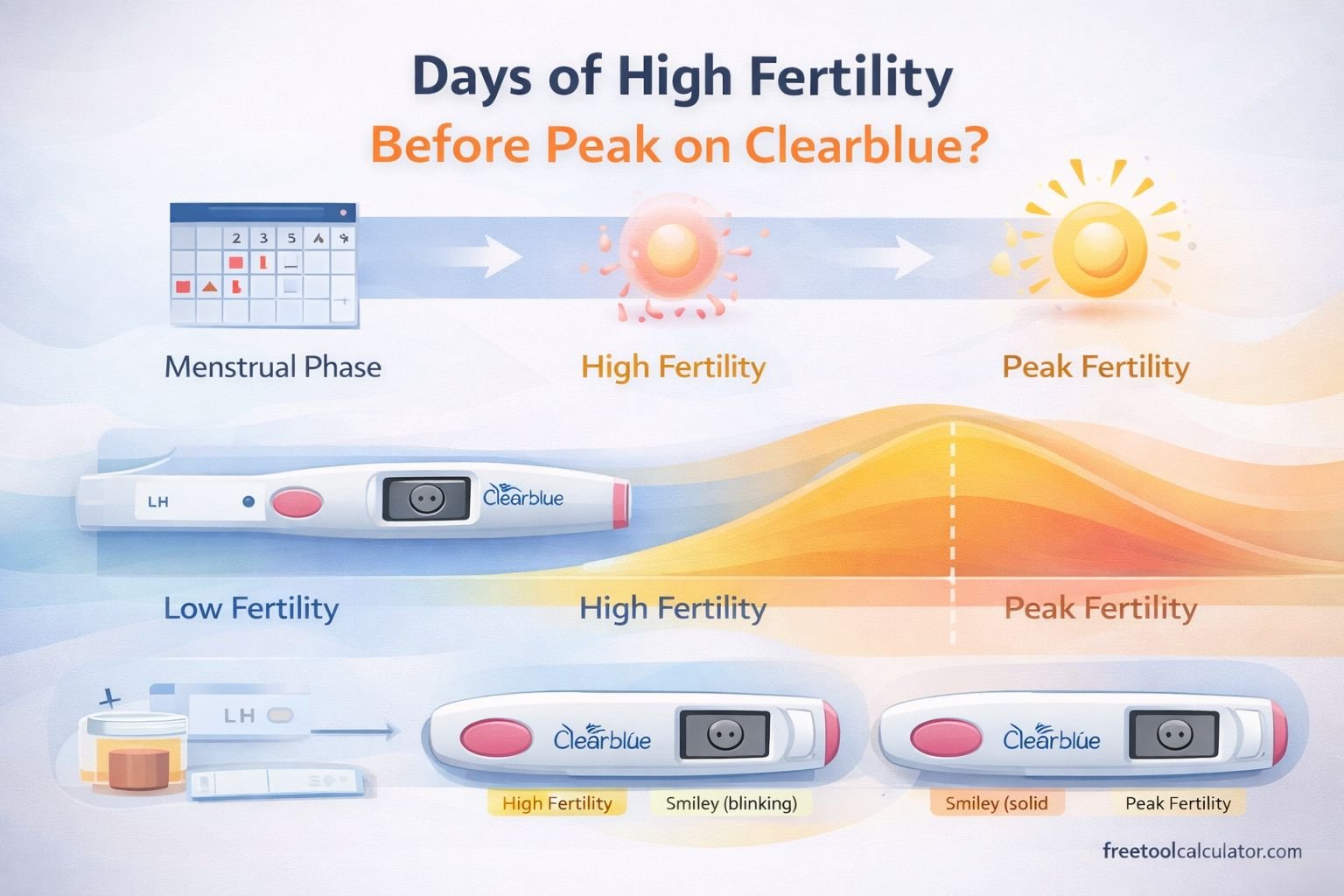
Clearblue products that track both estrogen and LH work by looking for changes in two key fertility hormones. First, they detect the rise in estrogen, which signals that you are entering your fertile window. That is what usually triggers High Fertility. Then they look for the LH surge, which is what triggers Peak Fertility.
This is important because High Fertility and Peak Fertility do not mean the same thing. High Fertility means your body is preparing for ovulation and your chances of conception are rising. Peak Fertility means the LH surge has been detected and ovulation is likely close. Clearblue states that the LH surge generally happens about 24 to 36 hours before ovulation, which is why Peak days are often treated as the most biologically strategic days to try.
How Many Days of High Fertility Before Peak on Clearblue?
For most readers, this is the part that matters most. A simple answer is: you will usually see a few High Fertility days before Peak, often around 2 to 5 days, but sometimes less or more. Official Clearblue material does not lock this into one exact number. Instead, it says the estrogen rise usually opens a fertility window of four or more days, and some users can see more than two High Fertility days before Peak appears.
So if your monitor shows High Fertility for three days, that can be normal. If it shows High for five days, that can also be normal. Even longer stretches can happen in some cycles, especially when hormone timing shifts. What matters most is that High Fertility is your signal that the fertile window has already opened, not that ovulation has already happened.
Why High Fertility Can Last Longer in Some Cycles
Your body does not ovulate on a perfect schedule every month. Stress, illness, travel, sleep disruption, and normal cycle variation can all shift the timing of ovulation. Conditions linked with irregular ovulation, especially PCOS, can make cycles less predictable because ovulation may happen infrequently or irregularly. NHS guidance notes that PCOS is associated with irregular periods because the ovaries do not regularly release eggs.
Age can also affect fertility timing and predictability over time. That does not mean Clearblue stops being useful. It means your hormone pattern may not look exactly the same every month. So if one cycle gives you two High days and another gives you five, that difference is not automatically a sign that something is wrong.
Why Clearblue Can Be More Useful Than Calendar Tracking Alone
Calendar tracking can be helpful, but it assumes your cycle follows a predictable pattern. That is a problem if your ovulation shifts from one month to the next. Mayo Clinic notes that the rhythm or calendar method can be inaccurate, especially when cycles are irregular.
Basal body temperature has its own limitation: it usually rises after ovulation has already occurred, so it can confirm ovulation retrospectively but is less useful for spotting the fertile window in advance. In contrast, Clearblue tracks hormone changes that happen before ovulation, which is why hormone-based testing can be more actionable when you are trying to time intercourse.
Signs That Often Match High Fertility
High Fertility on Clearblue often lines up with other physical signs. Rising estrogen is associated with fertile cervical mucus, which is usually clearer, wetter, and more slippery. Clearblue explains that this type of mucus is more sperm-friendly and can help sperm survive for several days.
Some people also notice mild pelvic discomfort around ovulation, a change in libido, or a general feeling that ovulation is approaching. Mayo Clinic lists common ovulation clues such as changes in cervical mucus and subtle body changes around the fertile window. These signs are not perfect on their own, but they can be useful when they match what your monitor is showing.
How to Use Clearblue More Effectively
The biggest mistake people make is treating the monitor like a one-off test instead of a daily timing tool. Consistency matters. Clearblue advises testing at approximately the same time each day, and some Clearblue instructions also note that you should avoid urinating for several hours before testing, depending on the product.
Another mistake is waiting for Peak Fertility before trying. That can be too late for some couples. Sperm can survive in fertile cervical mucus for several days, which is why the High Fertility window matters so much. If you only act on the Peak result, you may miss some of the best days leading up to ovulation.
Best Timing for Intercourse During High Fertility
If you are trying to conceive, the evidence-based approach is simple: have intercourse during the High Fertility days and again on Peak Fertility days. Mayo Clinic advises that the highest pregnancy rates occur when couples have sex daily or every other day, especially near ovulation.
That means a practical plan is to start once High Fertility begins and continue every 1 to 2 days through Peak. This approach gives sperm time to be present before the egg is released, which is exactly what you want biologically.
What If You Keep Seeing High Fertility but No Peak?
This can happen, and it does not always mean something is wrong. Clearblue notes that an extended High Fertility phase may occur if Peak is not detected, if a test was missed, if testing was done incorrectly, or if ovulation did not happen in that cycle.
If this happens occasionally, it may just reflect normal cycle variation. But if it happens repeatedly, or if your periods are irregular, absent, or unusually long, it is worth discussing with a clinician. NHS guidance specifically recommends seeking care if your periods are irregular and you are struggling to get pregnant.
When to Talk to a Doctor
You should not rely on home tracking forever if pregnancy is not happening. ACOG and Mayo Clinic both advise fertility evaluation after 12 months of trying if you are under 35, after 6 months if you are 35 or older, and sooner if you have irregular periods or known fertility-related conditions.
That does not mean home monitoring failed. It simply means there may be other factors worth assessing, such as ovulation problems, sperm factors, or underlying hormonal conditions. Clear timing helps, but it is only one part of the fertility picture.
Final Answer
So, how many days of High Fertility come before Peak on Clearblue?
A practical answer is about 2 to 5 days for many people, but the more accurate medical answer is that it varies. Clearblue officially frames this as entering a high fertility window that is usually four or more days, and some cycles may show shorter or longer stretches before Peak appears. The best strategy is not to wait for a perfect number. Start trying when High Fertility begins, continue through Peak, and use your body signs and cycle pattern as added context.
FAQ
Is 2 days of High Fertility before Peak normal on Clearblue?
Yes. A short High Fertility phase can be normal if your estrogen rise and LH surge happen close together.
Is 5 days of High Fertility before Peak normal?
Yes, that can also be normal. Clearblue describes the fertile window as usually four or more days, and the number of High days varies between users and cycles.
Can stress or PCOS affect High Fertility days?
Yes. Irregular ovulation and cycle changes can alter how long High Fertility lasts before Peak appears. PCOS is a common reason for irregular ovulation.
Should I only have sex on Peak Fertility days?
No. It is better to start during High Fertility and continue through Peak because sperm can survive for several days in fertile cervical mucus.