element-4.png

Online Area Calculator for Square, Rectangle, Circle, Triangle

Calculate areas for common shapes instantly using accurate formulas, clean inputs, and clear results designed for fast result.

Select a shape and calculate its area instantly!

Inputs

Use any unit (cm, m, in). Result will be in square units.

Result

Ready
Calculated Area
--
Formula
Select a shape to see the formula.
Area Scale --
Low
Small areas
Normal
Typical
High
Large areas
Tip: Change values and recalculate to compare areas quickly.

What is an online area calculator

An online area calculator helps you calculate the surface area of common geometric shapes quickly and accurately. It eliminates manual formulas and reduces calculation errors. This tool is widely used by students engineers architects and everyday users. Results are instant and easy to understand.

Why calculating area is important

Area calculation is essential in mathematics construction interior design and land measurement. It helps estimate material requirements cost planning and space utilization. Accurate area values prevent wastage and design errors. This makes area calculators highly practical tools.

How an online area calculator works

You simply select the shape and enter the required dimensions. The calculator applies the correct mathematical formula automatically. It supports real time calculations with precision. No advanced math knowledge is required.

Area of a square calculator

To calculate the area of a square you only need the length of one side. The formula used is side multiplied by side. Squares are commonly used in flooring tiling and basic geometry problems. The calculator provides instant results.

Area of a rectangle calculator

Rectangle area is calculated using length multiplied by width. This is one of the most common area calculations in daily life. It is widely used in room planning construction and landscaping. The tool ensures accurate and fast computation.

Area of a circle calculator

The area of a circle is calculated using the formula pi multiplied by radius squared. Circles appear in engineering wheels and design layouts. Manual calculation often leads to rounding errors. The calculator handles pi values accurately.

Area of a triangle calculator

Triangle area is calculated using base multiplied by height divided by two. Some calculators also support Heron formula when sides are known. Triangles are common in architecture and geometry problems. This tool simplifies complex calculations.

What measurements do I need to calculate area

You need basic dimensions such as side length radius base or height depending on the shape. Measurements should be entered in the same unit for accuracy. The calculator works with centimeters meters inches and feet. Consistency ensures correct results.

Can this area calculator handle decimal values

Yes the calculator supports decimal and fractional values. This allows precise calculations for real world measurements. It is suitable for both academic and professional use. Accuracy is maintained across all inputs.

Is this area calculator useful for students

Yes students benefit greatly from visual and instant calculations. It helps with homework exam preparation and concept clarity. Teachers also use it for demonstrations. It supports learning through practical application.

Can professionals use this area calculator

Architects engineers and contractors frequently use area calculations. This tool saves time during planning and estimation. It reduces human error and improves workflow efficiency. It is suitable for quick reference calculations.

Is this online area calculator free to use

Yes this online area calculator is completely free. No registration or payment is required. You can use it unlimited times. It works on all devices and browsers.

About the Online Area Calculator for Square, Rectangle, Circle, Triangle

Online Area Calculator for Square, Rectangle, Circle, Triangle helps perform a focused calculation from the values you provide and presents the result in a form that is easier to check and reuse. The interactive tool above is the main feature of this page; the guide below explains how to use it responsibly, what the result means, and what to check when the number will be used for a real decision.

How to use this tool

  1. Read each field label and enter the requested values using the units shown.
  2. Check that decimal points, percentages, dates, or units have been entered correctly.
  3. Run the calculation or generation step and review the complete result rather than copying only one number.
  4. If the result will affect money, health, purchasing, scheduling, or another important decision, verify the inputs and compare the result with an appropriate independent source.

What to know before relying on the result

Use the formula that matches the shape and keep all length measurements in the same unit before calculating area.

Check the inputs and units

Most calculation errors come from entering the wrong value, mixing units, or misunderstanding what a field represents. Review each input, keep units consistent, and compare the result with a rough mental estimate when possible.

Common mistakes to avoid

  • Mixing measurement systems or entering a value in a different unit from the one requested.
  • Using rounded or estimated inputs when more accurate values are available.
  • Assuming an online result includes every real-world variable, fee, exception, or personal factor.
  • Copying the output without checking whether the result is plausible for the values entered.

Frequently Asked Questions

Is the Online Area Calculator for Square, Rectangle, Circle, Triangle free to use?

Yes. You can use the tool in your browser without purchasing specialist calculation software.

Why might my result differ from another calculator?

Different tools can use different assumptions, rounding rules, data sources, formulas, defaults, or conversion precision. Compare the inputs and methodology before deciding that one result is incorrect.

Can I use the result for professional decisions?

It can be useful for preliminary calculations and cross-checking. For regulated, medical, legal, tax, engineering, or other high-stakes decisions, confirm the result with the relevant official source or qualified professional.

How can I report a problem?

If you find a calculation, wording, usability, or technical issue, contact Free Tools Calculator and include the page URL, the inputs you used, the result you received, and what you expected. That makes the issue easier to reproduce and review.

Complete Guide to the Online Area Calculator

This guide explains how to use the online area calculator, what the output means, which formulas or assumptions matter, and how to check the result. The existing interactive tool remains the main feature; the supporting information is intended to answer common questions and make the result easier to use correctly.

What Area Measures

Area describes two-dimensional space inside a boundary and is reported in square units such as m², ft² or cm².

Before relying on the output, confirm that the inputs use the units, categories and definitions requested by the tool. Where real-world standards, product specifications, health information or official rules are involved, use the calculator as a planning aid and verify consequential decisions with the appropriate primary source.

Square and Rectangle Formulas

Rectangle area is length × width. A square has equal sides, so its area is side². A 6 m by 4 m rectangle covers 24 m².

Circle Area

Circle area is πr². If you have diameter rather than radius, divide the diameter by two before calculating.

Triangle Area

A common formula is ½ × base × perpendicular height. The height must meet the chosen base at a right angle.

Area Units and Conversion

Area conversion factors are squared. Because 1 m = 100 cm, 1 m² = 10,000 cm². Converting as if area were a linear measurement is a common mistake.

Irregular Rooms and Spaces

Split an irregular layout into simple shapes, calculate each section, then add them. Subtract openings or excluded sections where appropriate.

How to Check Your Result

Use a simple example that you can calculate or verify independently, compare it with the tool, and then return to your actual inputs. Recheck decimal points, signs, units, selected options and rounding. For estimates, try more than one realistic scenario so you can see how strongly the result depends on the assumptions.

Accuracy and Editorial Approach

FreeToolCalculator pairs interactive tools with explanatory content so users can understand the calculation instead of seeing an unexplained number. Exact mathematical relationships are distinguished from estimates and variable real-world data. We avoid presenting general-purpose calculators as official, medical, legal, financial or professional determinations.

Getting Better Results From the Online Area Calculator for Square, Rectangle, Circle, Triangle

Before using the final output, confirm exactly what question you want the tool to answer. Enter the source information carefully, keep units or labels attached to the values, and review any options that change how the result is produced. A clearly defined input makes the result easier to understand and reproduce.

Use a Small Test Case First

If the interface is unfamiliar, try a simple example whose result you already know. This confirms the expected format and helps identify reversed fields, unsupported characters or an incorrect option before you use more important data.

Save the Context, Not Just the Answer

When a result will be reused later, record the input and settings along with the output. That makes it possible to repeat the process after a value changes and avoids confusion about how the result was obtained. For decisions governed by an external standard or official source, verify the final value against that source.

Final Check for Online Area Calculator for Square, Rectangle, Circle, Triangle

Review the original input one final time before copying the result. Check decimal places, signs, units, dates and any selected options. If the value will be shared, include enough context for another person to understand what was entered and what the output represents. This final check reduces transcription errors and makes the calculation easier to reproduce.
More Tools

Discount Calculator

Calculate sale price, discount savings, and final total from percentage or fixed discounts, with optional tax for accuracy.

Electricity Calculator

Calculate electricity usage and cost using power, usage time, and price per kilowatt-hour for accurate energy expense estimates.

Pythagorean Theorem Calculator

Calculate a missing right-triangle side using the Pythagorean theorem by entering any two sides for instant accurate results.

CGPA Calculator

Calculate CGPA online by entering subjects, credits, and grades to get accurate cumulative GPA with clear breakdown instantly.

Percentage Calculator

Calculate what percent one number is of another instantly using part and total values with accurate results and validation.

Online Math Solver

Solve math expressions instantly online including brackets, percentages, and basic operators with validation and accurate real-time results.

Number Sum Calculator Add a List of Numbers Online

Add comma-separated numbers instantly to get an accurate total, with validation, count checks, and clean results for calculations.

Midrange Calculator for Data Sets

Calculate the midrange of any data set instantly using minimum and maximum values with validation and clear statistical output.

Hypotenuse Calculator for Right Triangle

Calculate the hypotenuse of a right triangle instantly using side A and side B with accurate math and clean results.

Destiny Number Calculator Free Numerology Tool

Find your destiny number using a free numerology calculator that reveals your life purpose personality traits and natural abilities.

Decimal to Fraction and Fraction to Decimal Calculator

Convert decimals to simplified fractions and fractions to decimals instantly with validation, clear output, and quick reference indicators for accuracy.

Convolution Calculator for Two Sequences

Compute discrete convolution of two sequences instantly from comma-separated inputs with validation, clear output series, and visual indicators.

Our Blogs

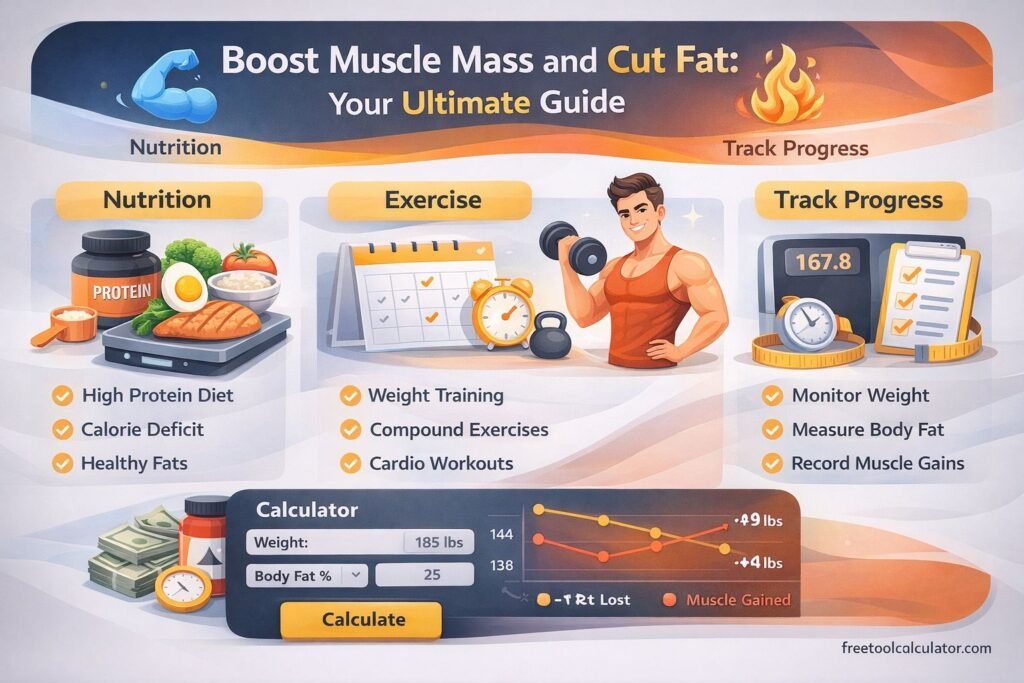
Boost Muscle Mass and Cut Fat Your Ultimate Guide

Boost Muscle Mass and Cut Fat: Your Ultimate Guide

Transform your body with our ultimate guide to boosting muscle mass while cutting fat. Discover essential tips and strategies for your fitness journey.

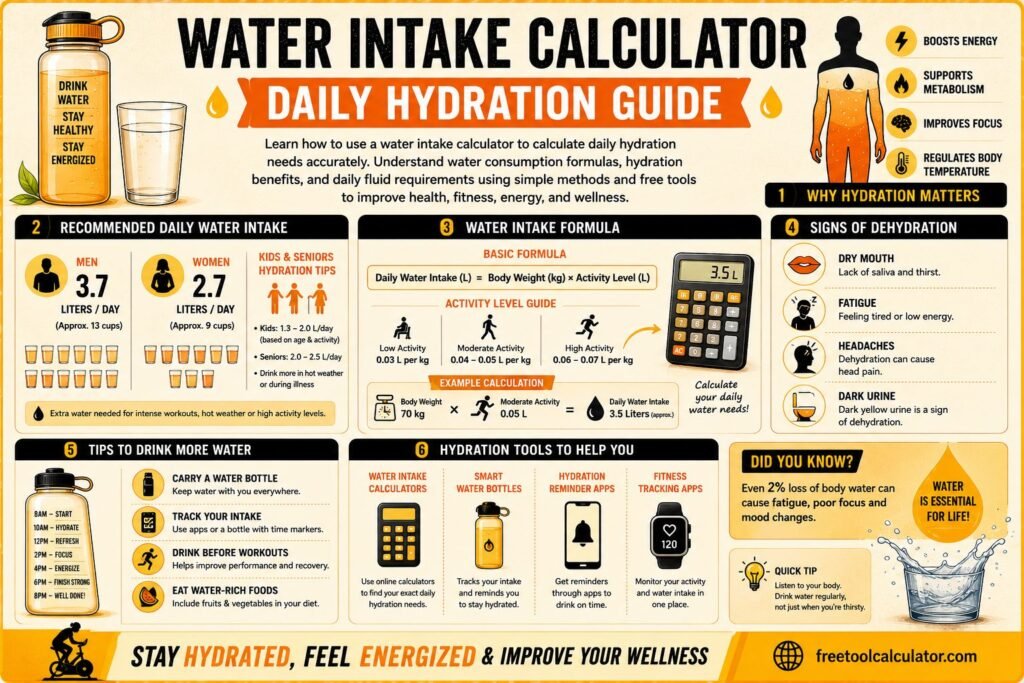
Water Intake Calculator Daily Hydration Guide

Water Intake Calculator Daily Hydration Guide

Learn how to use a water intake calculator to calculate daily hydration needs accurately This guide explains water consumption formulas hydration benefits and daily fluid requirements using simple methods and free tools to improve health fitness energy and overall wellness for all age groups effectively

Add to Date Calculator Explained Date Math Made Simple

Add to Date Calculator Explained Date Math Made Simple

Calculating future and past dates accurately is essential for planning deadlines events and schedules. This guide explains how an Add to Date Calculator works explores real life use cases date math logic leap year handling and alternative calculation methods to help you confidently add days months or years to any date.

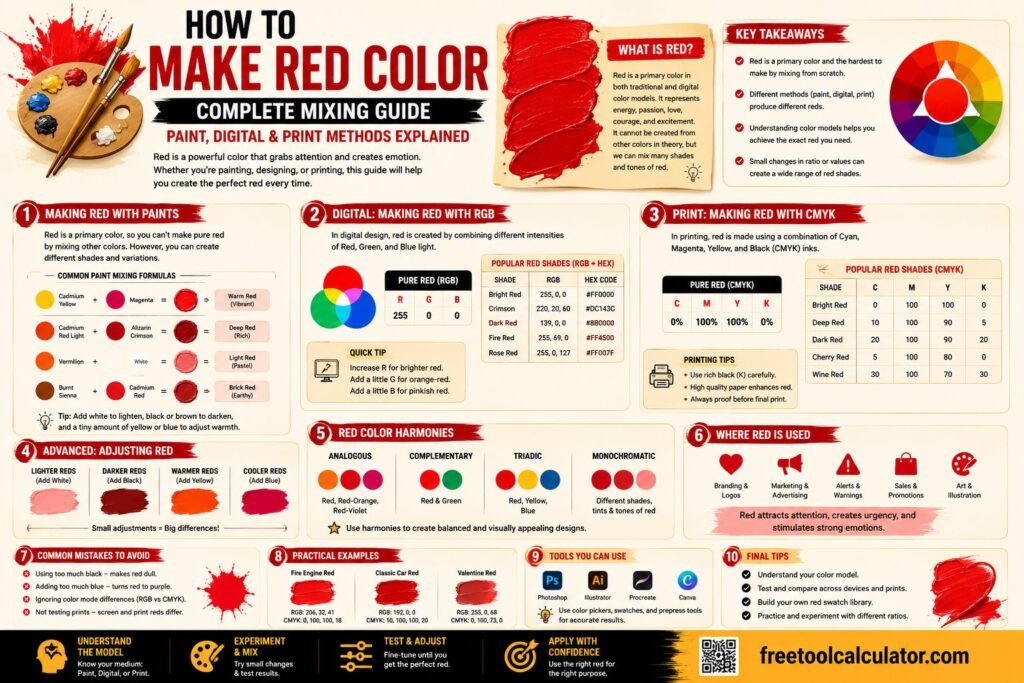
How to Make Red Color (Complete Mixing Guide) Paint, Digital & Print Methods Explained

How to Make Red Color (Complete Mixing Guide): Paint, Digital & Print Methods Explained

Red is one of the most recognizable primary colors, but many people wonder whether it can be mixed or recreated using other colors. This guide explains how red works in traditional color theory, digital design, and printing while covering paint mixing, RGB, CMYK, and practical color applications for artists and designers.

How many days of high fertility before peak on Clearblue

How Many Days of High Fertility Before Peak on Clearblue?

Learn how many days of High Fertility occur before Peak on Clearblue. Discover tips for timing intercourse, how stress or PCOS can affect your cycle, and how to use the Clearblue fertility monitor.

Steps to Calories Conversion and Why It Matters Steps to calories conversion is an important concept for anyone tracking fitness, weight loss, or daily activity levels. It helps estimate how many calories you burn based on the number of steps you take. This calculation is widely used in fitness tracking apps and wearable devices to give users a better understanding of their physical activity. Knowing how to convert steps to calories allows you to monitor your progress and adjust your routine accordingly. Whether you are trying to lose weight, maintain fitness, or improve overall health, understanding this conversion provides valuable insights. You can easily convert steps to calories using this free tool and get accurate results instantly. What Is Steps to Calories Conversion Steps to calories conversion refers to estimating the number of calories burned while walking or running based on step count. Since each step requires energy, your body burns calories during movement. The total calories burned depend on factors such as body weight, walking speed, and step length. This method is commonly used because it is simple and accessible. Most people track their steps daily using smartphones or fitness trackers, making it easy to estimate calorie burn without complex calculations. Understanding steps to calories helps you stay motivated and maintain consistency in your fitness journey. It also provides a clear measurement of your daily activity level. Steps to Calories Formula Explained The steps to calories formula is based on average energy expenditure per step. A common estimate is that a person burns approximately 0.04 to 0.06 calories per step. However, this value can vary depending on individual factors. A simple formula is Calories burned equals steps multiplied by calories per step For example, if you take 10000 steps and burn 0.05 calories per step, the total calories burned would be 500. This formula provides a quick estimate but may not be fully accurate for everyone. Using a reliable calculator ensures better precision and personalized results. Factors That Affect Calories Per Step Calories per step are not the same for everyone. Several factors influence how many calories you burn during physical activity. Body weight is one of the most important factors. Heavier individuals tend to burn more calories because their bodies require more energy to move. Walking speed also plays a role. Faster walking or running increases calorie burn compared to slow walking. Step length and terrain also affect energy expenditure. Walking uphill or on uneven surfaces requires more effort and burns more calories. Understanding these factors helps you make more accurate estimates when performing steps to calories conversion. How to Convert Steps to Calories Accurately To convert steps to calories accurately, start by tracking your daily step count. Then use an appropriate calorie per step value based on your body weight and activity level. Multiply the steps by this value to estimate calories burned. For more accurate results, it is recommended to use a tool that considers multiple factors. You can calculate steps to calories using this free calculator and get personalized results instantly. Using a dedicated tool ensures that your calculations are based on reliable data, making your fitness tracking more effective. Real Examples of Steps to Calories Conversion Examples make it easier to understand steps to calories conversion. If a person walks 5000 steps and burns approximately 0.05 calories per step, they would burn around 250 calories. Similarly, walking 10000 steps may burn about 400 to 600 calories depending on factors like weight and speed. These estimates show how increasing your step count can significantly impact calorie burn. Tracking your daily steps and converting them into calories helps you stay consistent and motivated in your fitness routine. Benefits of Tracking Steps to Calories Tracking steps to calories provides several benefits. It helps you understand how active you are throughout the day and encourages you to stay consistent. It also allows you to set realistic fitness goals and measure progress over time. For individuals trying to lose weight, this method provides a simple way to monitor calorie expenditure. It also helps in maintaining a balance between calorie intake and output. Using tools like a calorie calculator can further enhance your understanding of daily energy needs and improve your overall fitness plan. Common Mistakes in Steps to Calories Calculation One common mistake is assuming that calories per step are the same for everyone. This can lead to inaccurate estimates. Another mistake is ignoring factors such as walking speed and terrain, which can significantly affect calorie burn. Relying solely on step count without considering overall activity level is another issue. For example, strength training and other exercises also contribute to calorie burn but are not reflected in step count. Using accurate tools and understanding the limitations of step based calculations helps avoid these mistakes. Advanced Tips to Improve Accuracy To improve accuracy, consider using wearable devices that track additional metrics such as heart rate and distance. These devices provide more precise calorie estimates. Maintaining a consistent walking routine also helps in getting reliable data. Tracking your progress over time allows you to identify patterns and make necessary adjustments. Combining step tracking with other tools like a tdee calculator can give a complete picture of your daily energy expenditure. This approach helps you manage your fitness goals more effectively. How Steps to Calories Helps in Weight Loss Steps to calories conversion is a useful tool for weight loss. By increasing your daily step count, you can burn more calories and create a calorie deficit, which is essential for losing weight. For example, adding an extra 2000 steps to your daily routine can burn additional calories over time. This small change can lead to significant results when combined with a balanced diet. Understanding how to convert steps to calories allows you to set realistic goals and track your progress effectively. It also helps you stay motivated and consistent. Conclusion Steps to Calories Conversion Made Simple Steps to calories conversion is a simple yet powerful way to track your physical activity and improve your health. By understanding the steps to calories formula and using accurate tools, you can estimate your calorie burn effectively. If you want precise and instant results, you can use this free steps to calories calculator and track your daily activity with ease. Combining this with other health tools ensures a complete and effective fitness strategy for long term success.

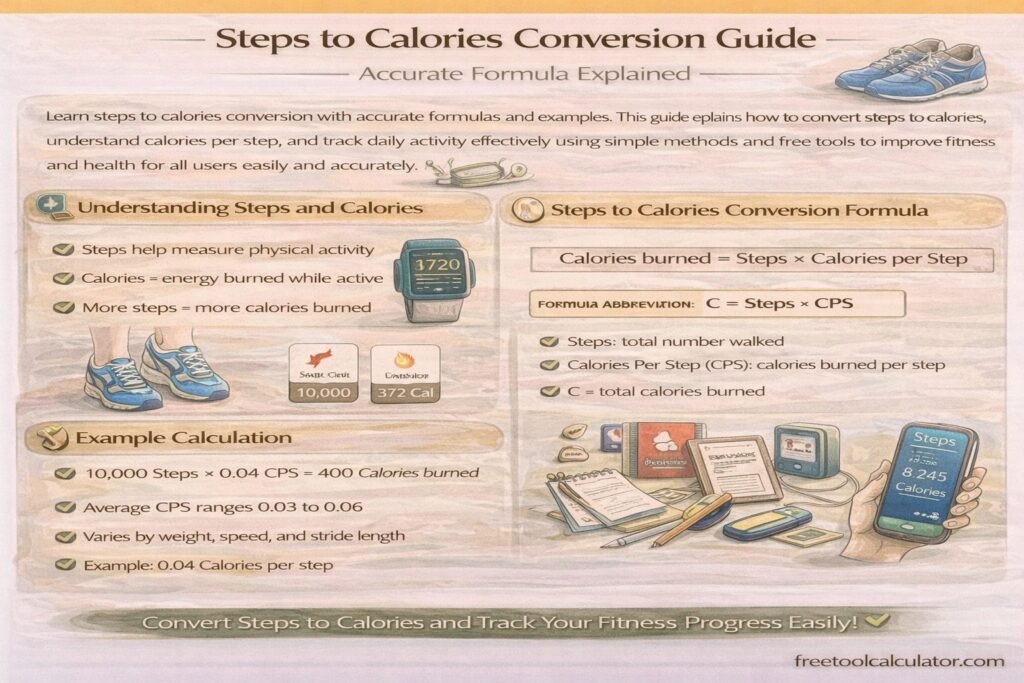
How to Convert Steps to Calories: Formula, METs and Examples

Learn steps to calories conversion with accurate formulas and examples This guide explains how to convert steps to calories, understand calories per step, and track daily activity effectively using simple methods and free tools to improve fitness and health for all users easily and accurately

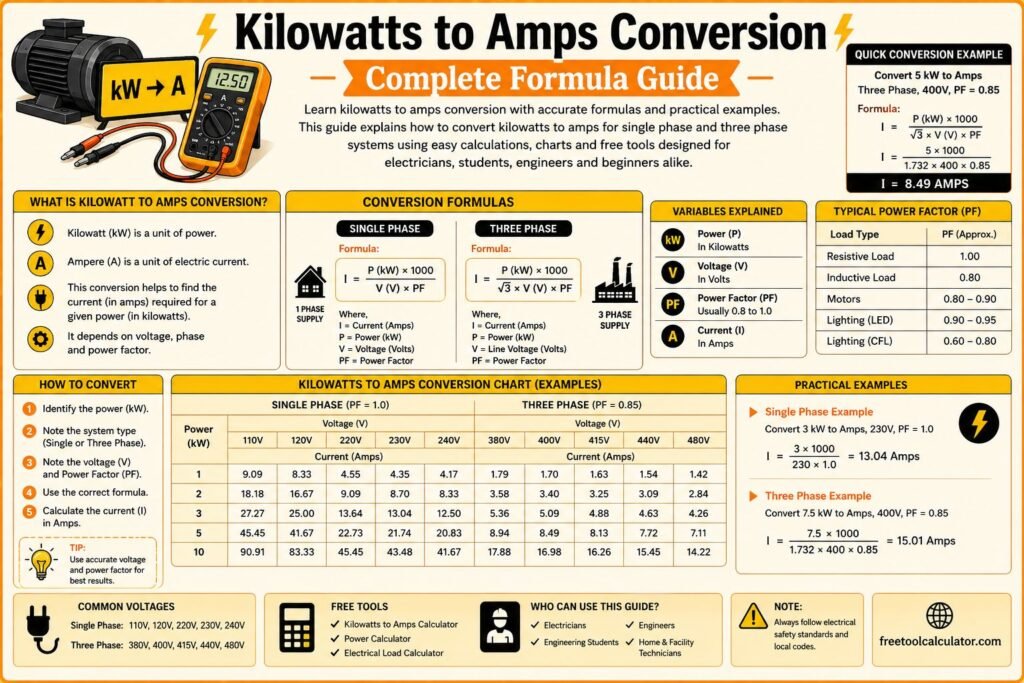
Kilowatts to Amps Conversion Complete Formula Guide

Kilowatts to Amps Conversion Complete Formula Guide

Learn kilowatts to amps conversion with accurate formulas and practical examples This guide explains how to convert kilowatts to amps for single phase and three phase systems using easy calculations charts and free tools designed for electricians students engineers and beginners alike

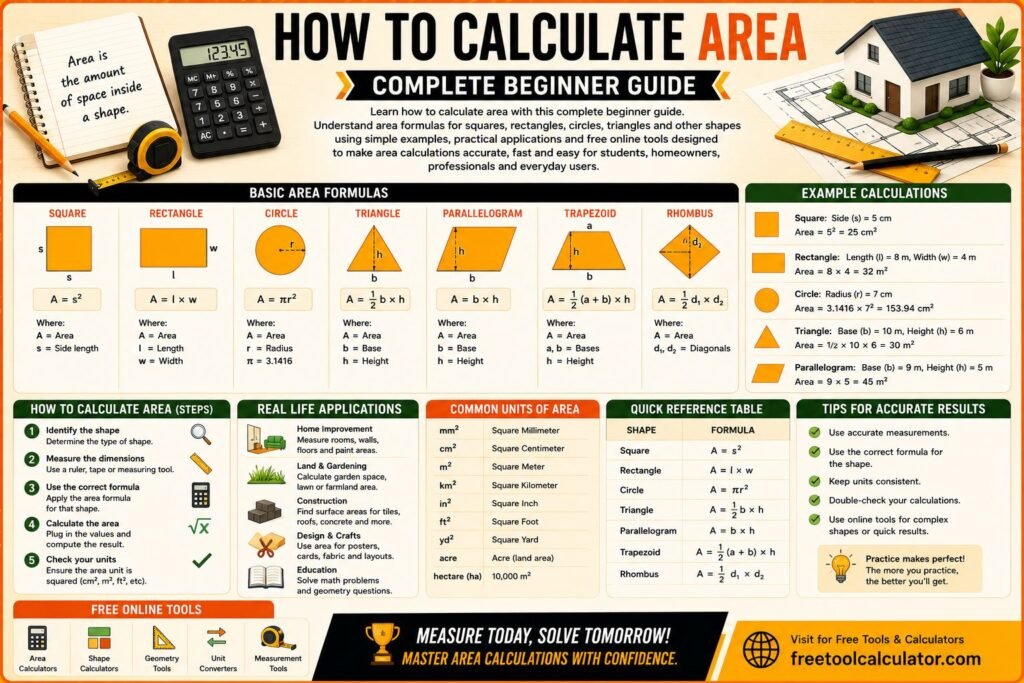
How to Calculate Area Complete Beginner Guide

How to Calculate Area Complete Beginner Guide

Learn how to calculate area with this complete beginner guide Understand area formulas for squares rectangles circles triangles and other shapes using simple examples practical applications and free online tools designed to make area calculations accurate fast and easy for students homeowners professionals and everyday users

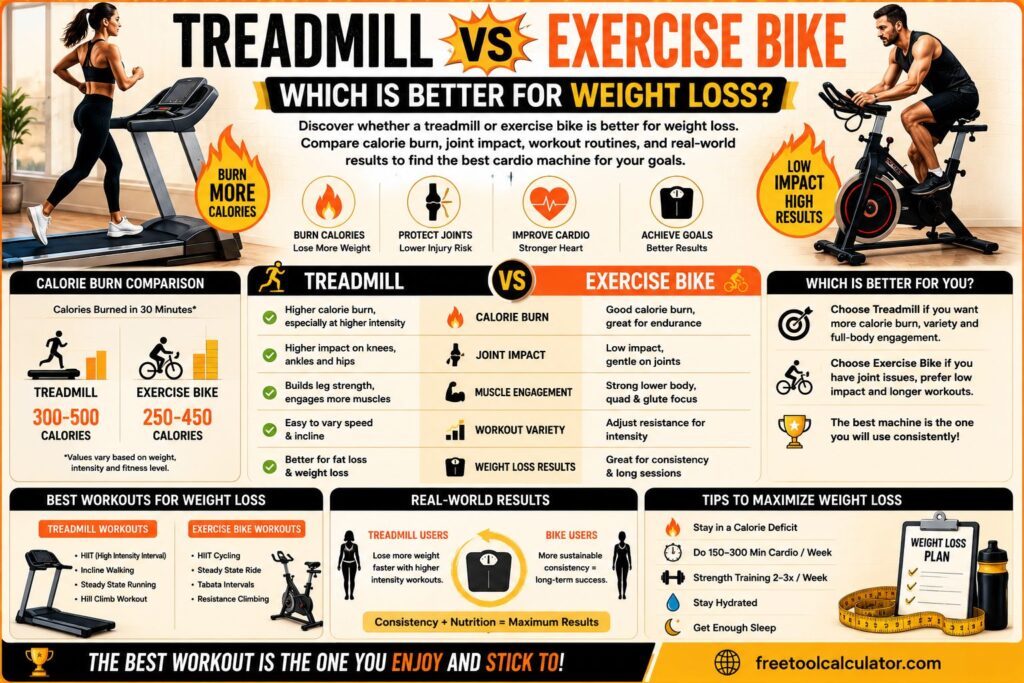
Treadmill vs Exercise Bike Which Is Better for Weight Loss

Treadmill vs Exercise Bike: Which Is Better for Weight Loss? (Complete Guide)

Trying to decide between a treadmill and an exercise bike for weight loss? This detailed comparison covers calorie burn, joint health, workout routines, real-world examples, and expert opinions to help you choose the right cardio machine.

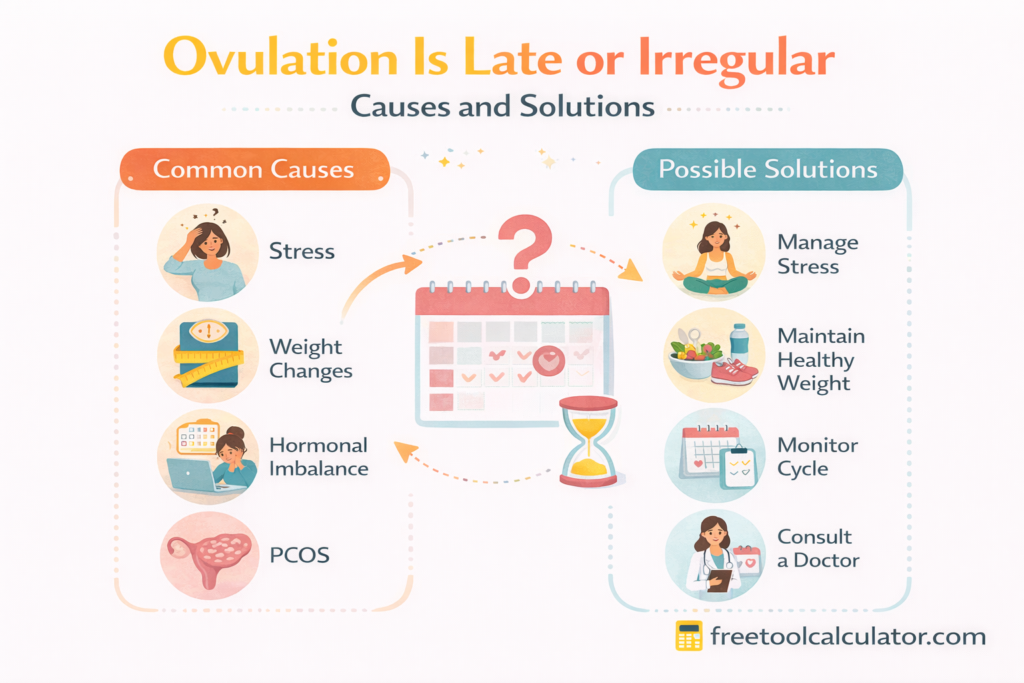
Late Ovulation Explained Causes Symptoms and Fertility Impact

Late Ovulation Explained Causes Symptoms and Fertility Impact

Irregular ovulation is a common concern that affects fertility and cycle health. This medical guide explains why ovulation may be delayed or absent how to recognize signs of irregular ovulation and what steps help restore hormonal balance using accurate fertility tracking methods.

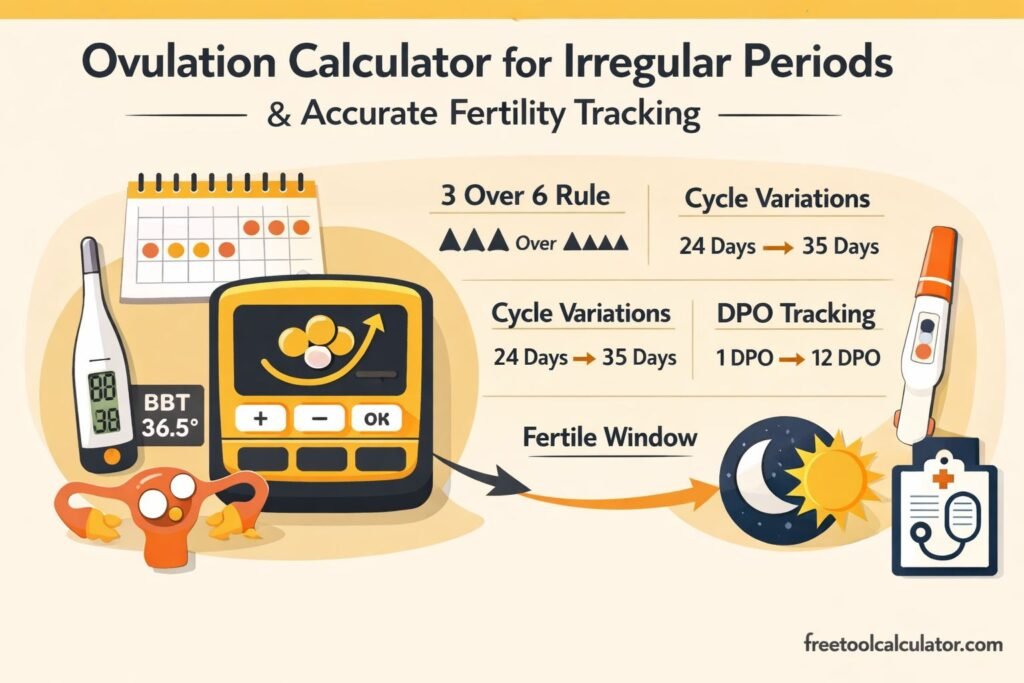
Ovulation Calculator for Irregular Periods and Accurate Fertility Tracking

Ovulation Calculator for Irregular Periods and Accurate Fertility Tracking

This blog explains how an ovulation calculator for irregular periods helps women track fertility accurately. It covers ovulation timing, the BBT 3 over 6 rule, cycle length differences, multiple ovulation myths, and correct DPO counting. Medical guidance ensures reliable pregnancy planning and better understanding of reproductive health patterns.

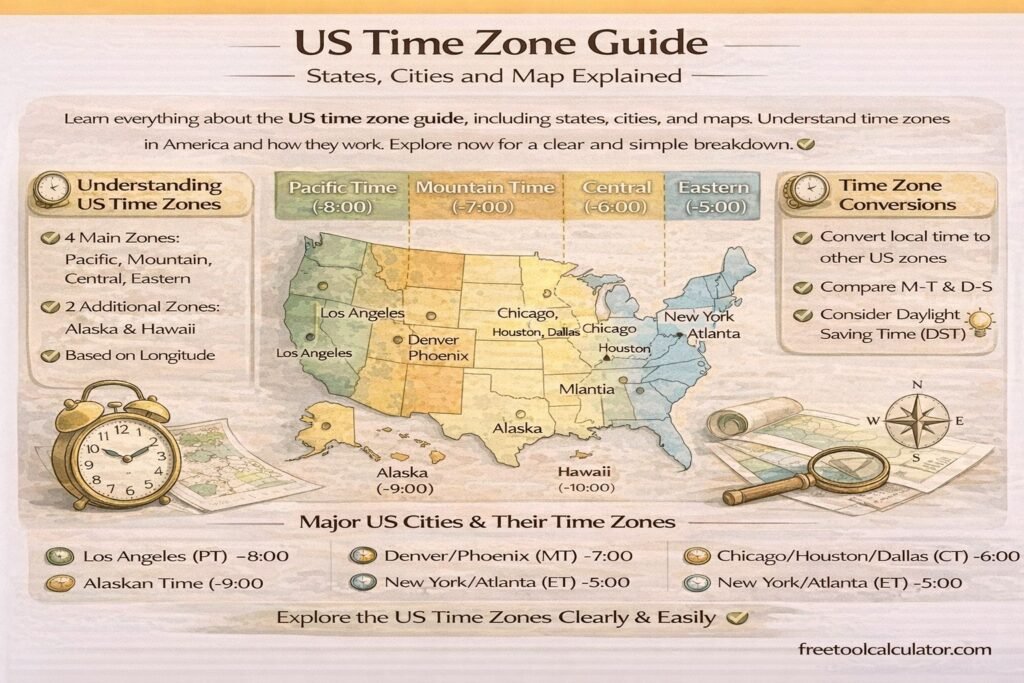
US Time Zone Guide – States, Cities and Map Explained

US Time Zone Guide – States, Cities and Map Explained

Learn everything about the US time zone guide, including states, cities, and maps. Understand time zones in America and how they work. Explore now for a clear and simple breakdown.

Report a Bug