Treadmill vs Exercise Bike: Which Is Better for Weight Loss?
If you’re trying to lose weight and only have room or budget for one piece of cardio equipment, you’ve probably asked yourself the same question:
Should I buy a treadmill or an exercise bike?
Both machines are popular, both burn calories, and both can help you lose weight. However, they achieve those results differently. Some people swear by running on a treadmill, while others prefer cycling because it’s easier on the joints and more sustainable.
After using both machines and observing how people respond to them, I’ve noticed that the answer isn’t as simple as “one burns more calories.” Weight loss success depends on consistency, comfort, injuries, lifestyle, and adherence—not just calorie burn.
In practice, treadmills tend to deliver faster results because running and brisk walking require more energy. However, exercise bikes often win in the long run because people are more likely to stick with them consistently.
The truth is that the “best” machine depends on your body, fitness level, and ability to maintain a routine over months rather than weeks.
Understanding the Difference Between Treadmills and Exercise Bikes
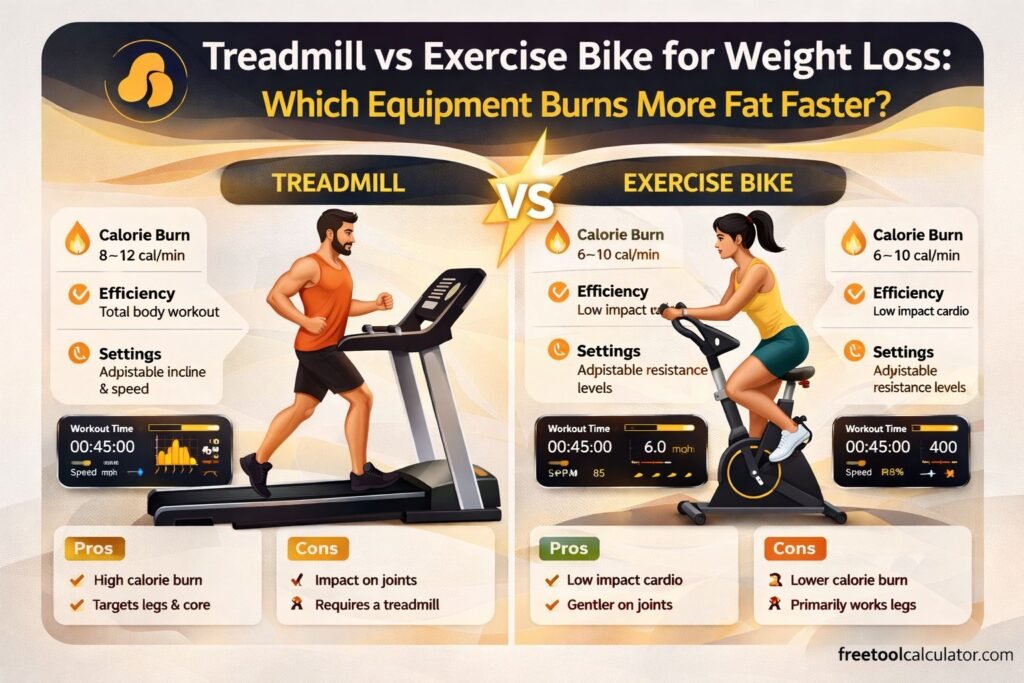
A treadmill simulates walking, jogging, or running. Because it involves supporting your body weight, it engages more muscle groups and generally burns more calories per minute.
An exercise bike, on the other hand, provides low-impact cardiovascular exercise. Since your body weight is supported by the seat, there is less stress on your knees, hips, and ankles.
This difference makes both machines suitable for different types of people.
Treadmills are ideal for:
- People wanting maximum calorie burn.
- Runners and walkers.
- Individuals without major joint problems.
- Those seeking shorter, high-intensity workouts.
Exercise bikes are ideal for:
- Beginners.
- Overweight individuals.
- People with knee pain or injuries.
- Older adults.
- Anyone seeking sustainable daily cardio.
Neither machine is universally better. The right choice depends on your circumstances.
Which Burns More Calories?
One of the biggest reasons people compare treadmills and exercise bikes is calorie burn.
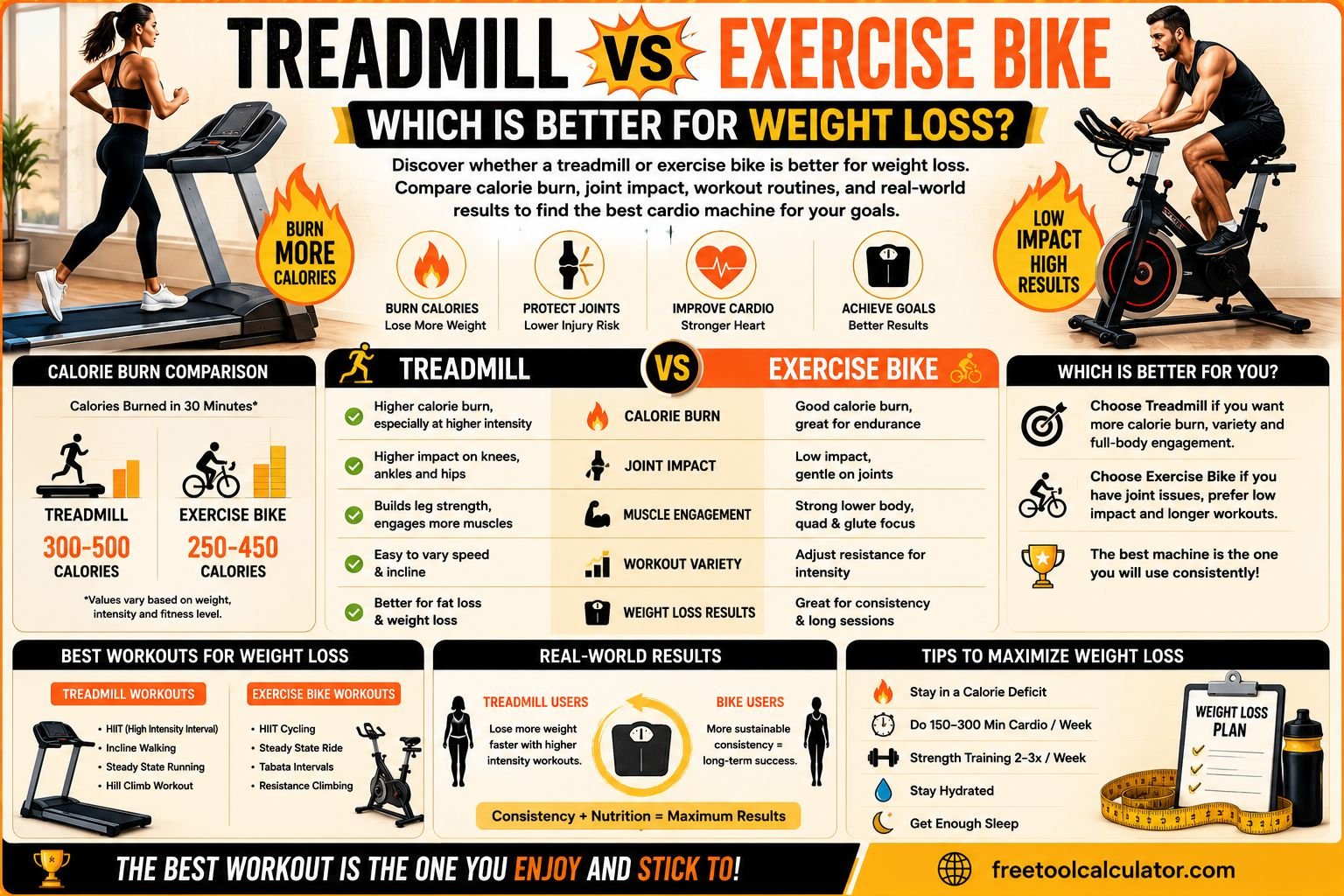
Generally speaking, treadmills have the advantage.
Running and brisk walking require your entire body to move against gravity, which naturally increases energy expenditure.
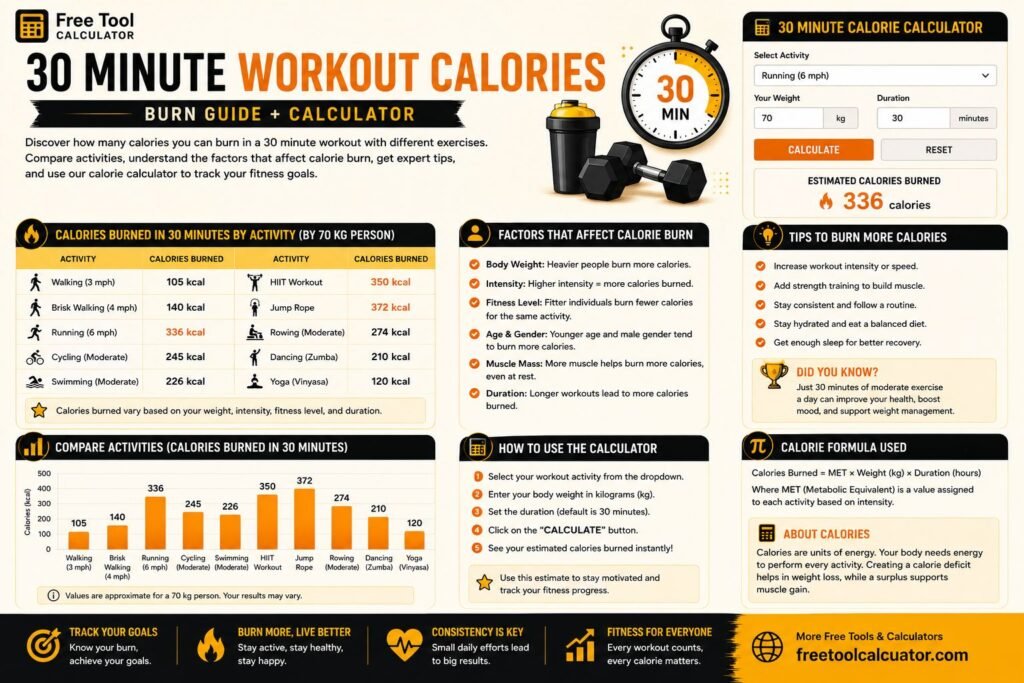
For a 155-pound person:
Treadmill
- Walking (3.5 mph): 250–300 calories per hour.
- Jogging (5 mph): 500–600 calories per hour.
- Running (6–7 mph): 700–900 calories per hour.
Exercise Bike
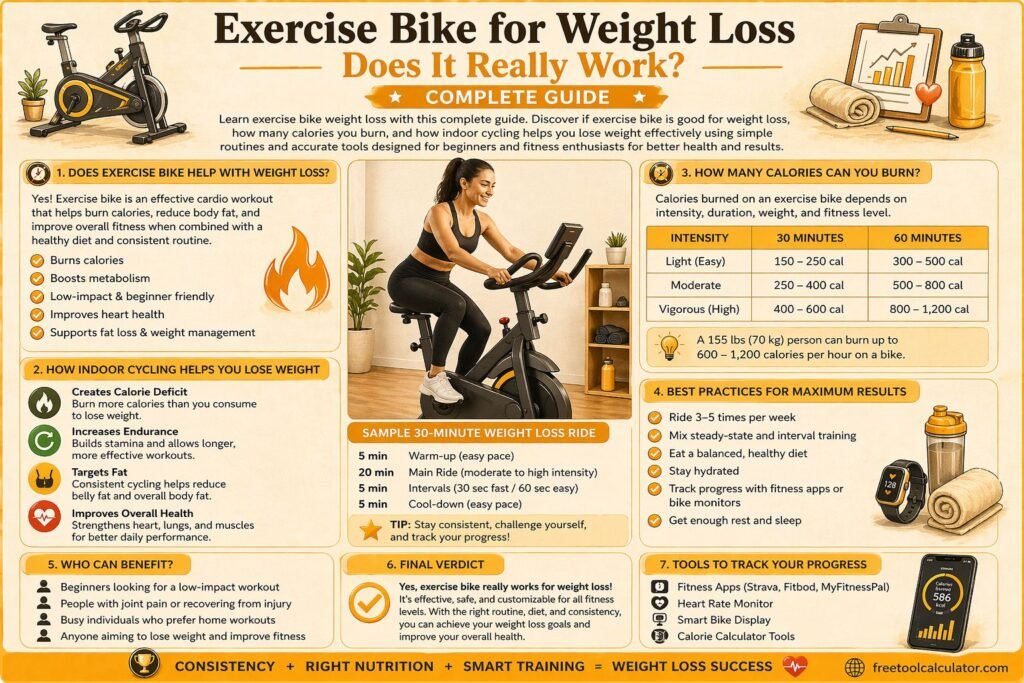
- Moderate intensity: 400–500 calories per hour.
- Vigorous cycling: 600–800 calories per hour.
If pure calorie burn is your only concern, treadmills usually win.
However, calorie burn alone doesn’t guarantee weight loss.
I’ve seen many people spend hours on treadmills while maintaining poor eating habits and never achieving meaningful results.
Weight loss is primarily determined by maintaining a calorie deficit.
For estimating daily calorie requirements and creating a sustainable calorie deficit, you can calculate your body’s needs using a Calorie Calculator:
Understanding your calorie needs is often more important than choosing between machines.
My Experience Using Both Machines
I’ve used both treadmills and exercise bikes extensively.
The treadmill provided faster calorie burn and felt more intense. However, after prolonged sessions, I noticed increasing stress on my knees, especially when running regularly.
The exercise bike produced slower but more consistent progress.
Because cycling was easier on my joints, I found it easier to train daily without discomfort. Rather than needing recovery days after hard treadmill sessions, I could comfortably ride five or six times a week.
This taught me an important lesson:
Consistency beats intensity.
A machine that allows you to train regularly will almost always outperform one that leaves you injured or exhausted.
Real-World Example: Losing 20 Pounds with a Stationary Bike
One of my friends struggled with obesity and chronic knee pain.
Running simply wasn’t an option.
Instead of forcing himself onto a treadmill, he chose a stationary bike.
His approach was surprisingly simple:
- 45 minutes of cycling.
- Five days per week.
- Moderate intensity.
- Gradual dietary improvements.
Within four months, he lost approximately 20 pounds.
What impressed me wasn’t the speed of his transformation but the sustainability of it. Because the bike didn’t aggravate his joints, he could stay consistent without setbacks.
Many people underestimate how powerful consistency can be.
Which Machine Is Better for Beginners?
If someone asked me today which machine a complete beginner should buy, I’d recommend the exercise bike.
Not because it’s superior.
But because beginners need habits before they need intensity.
Exercise bikes offer several advantages:
Lower Injury Risk
Cycling places less stress on joints, reducing the risk of pain and overuse injuries.
Less Intimidating
Running can feel difficult and uncomfortable for overweight or sedentary individuals.
Cycling feels easier psychologically, making it easier to stick with.
Better Recovery
Because exercise bikes are low-impact, people can train more frequently.
Improved Confidence
Early success builds momentum. Beginners who enjoy exercise are far more likely to continue.
Once fitness improves, adding treadmill workouts can significantly increase calorie expenditure.
Joint Health Changes Everything
One of the biggest mistakes people make is ignoring their physical limitations.
Age, obesity, injuries, and joint pain dramatically influence which machine is appropriate.
Treadmills Can Be Problematic For:
- Arthritis sufferers.
- Obese beginners.
- Knee injuries.
- Hip problems.
- Ankle instability.
Exercise Bikes Are Better For:
- Older adults.
- Individuals recovering from injury.
- People with knee pain.
- Obese individuals starting their fitness journey.
Many people assume that more impact equals better results.
In reality, avoiding injury is often more important than maximizing calorie burn.
Because once pain enters the picture, consistency disappears.
Treadmill HIIT vs Exercise Bike Steady-State Cardio
Another difference between these machines is the type of training they support best.
Treadmill HIIT
High-intensity interval training can produce tremendous calorie burn in a short period.
For example:
- 30-second sprint.
- 90-second walk.
- Repeat for 20–30 minutes.
These workouts elevate metabolism and save time.
Exercise Bike Steady-State Cardio
Exercise bikes excel at moderate, longer sessions.
Examples include:
- 45–60 minutes at moderate intensity.
- Maintaining a consistent heart rate.
- Building endurance.
Both methods work.
The best choice depends on which style of exercise you enjoy enough to repeat consistently.
Why Most People Fail With Cardio Machines
One of the biggest misconceptions about weight loss is that simply buying a treadmill or exercise bike will automatically lead to results. In reality, cardio equipment doesn’t cause weight loss—consistent habits do.
I’ve seen countless people invest in expensive treadmills, motivated by visions of dramatic transformations, only to abandon them within a few months. Eventually, the treadmill becomes an oversized clothes rack sitting unused in the corner.
The same thing happens with exercise bikes. People often pedal casually while scrolling through social media, never increasing resistance or intensity enough to challenge themselves.
The machine itself isn’t the problem.
The real issue is unrealistic expectations.
Many people expect rapid results and push too hard in the beginning. When soreness, boredom, or minor injuries appear, they quit entirely.
Weight loss isn’t about finding the perfect machine. It’s about finding a routine you can repeat for years.
The Biggest Weight-Loss Mistake People Make
In my experience, the biggest mistake isn’t choosing the wrong machine.
It’s relying exclusively on cardio while ignoring nutrition.
Many people assume they can out-exercise a poor diet.
Unfortunately, it rarely works.
A 30-minute run may burn 300 calories, but a large fast-food meal can easily contain over 1,200 calories. Trying to create a calorie deficit solely through exercise becomes extremely difficult.
Successful fat loss almost always combines:
- Proper nutrition.
- Moderate cardio.
- Strength training.
- Consistency.
- Sleep and recovery.
Cardio helps create a calorie deficit, but diet controls the majority of the equation.
Understanding your body’s energy needs can make the process easier. Estimating your calorie intake with a Calorie Calculator can help determine how many calories you need daily:
Without a calorie deficit, neither a treadmill nor an exercise bike will produce meaningful weight loss.
Why Consistency Matters More Than Calorie Burn
Many fitness experts focus heavily on calories burned.
I think this is misleading.
A workout that burns 700 calories means nothing if you hate doing it.
On paper, treadmills usually burn more calories.
But here’s the problem:
Many people find running uncomfortable.
They get shin splints, knee pain, or simply become mentally exhausted.
Meanwhile, exercise bikes often burn fewer calories per session, but because they are easier on the body, people can use them more frequently.
Consider these two examples:
Person A
Runs on a treadmill twice a week.
700 calories per session.
Total weekly burn:
1,400 calories.
Person B
Cycles five days per week.
350 calories per session.
Total weekly burn:
1,750 calories.
Despite burning fewer calories per workout, Person B wins because consistency produces a greater cumulative effect.
This is why I strongly believe adherence matters more than intensity.
Treadmill vs Exercise Bike for Belly Fat
One question people frequently ask is:
“Which machine burns belly fat faster?”
The answer is neither.
Spot reduction is a myth.
You cannot target belly fat specifically through running or cycling.
Fat loss occurs throughout the body and is controlled primarily by:
- Overall calorie deficit.
- Hormones.
- Genetics.
- Muscle mass.
- Consistency.
Both treadmills and exercise bikes help reduce overall body fat.
As body fat decreases, belly fat eventually follows.
The machine itself does not determine where fat disappears.
Effective Treadmill Workouts for Weight Loss
If you choose a treadmill, several approaches work well.
Incline Walking
Incline walking is highly underrated.
Many people immediately jump into running, but walking at an incline can burn substantial calories with much less stress on the joints.
Example:
- Speed: 3.5 mph
- Incline: 10%
- Duration: 45 minutes
This combination can burn hundreds of calories while remaining sustainable.
HIIT Training
High-intensity interval training increases calorie expenditure in less time.
Example:
- 30 seconds sprint.
- 90 seconds walk.
- Repeat for 20 minutes.
HIIT is highly effective but should be used carefully because excessive intensity can increase injury risk.
Jogging
Moderate jogging offers a balance between intensity and sustainability.
Three to four sessions per week often provide excellent results.
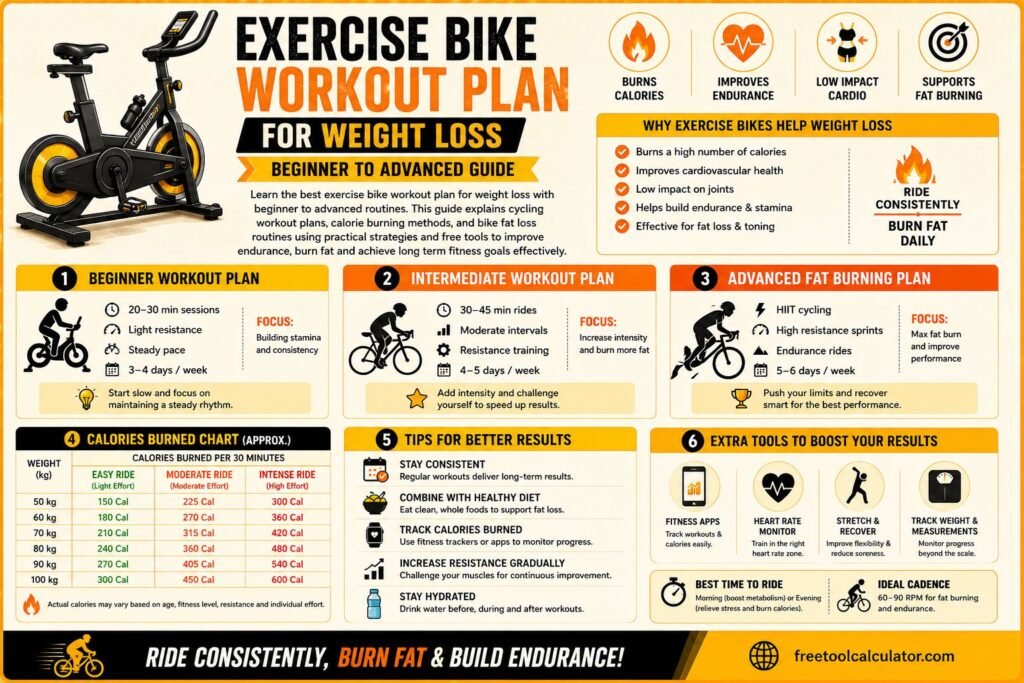
Effective Exercise Bike Workouts for Weight Loss
Exercise bikes provide multiple options for fat loss.
Steady-State Cardio
This remains one of my favorite approaches.
- Moderate intensity.
- 45–60 minutes.
- Comfortable pace.
This type of training is easy to recover from and ideal for beginners.
Interval Cycling
Alternating between hard and easy efforts increases calorie expenditure.
Example:
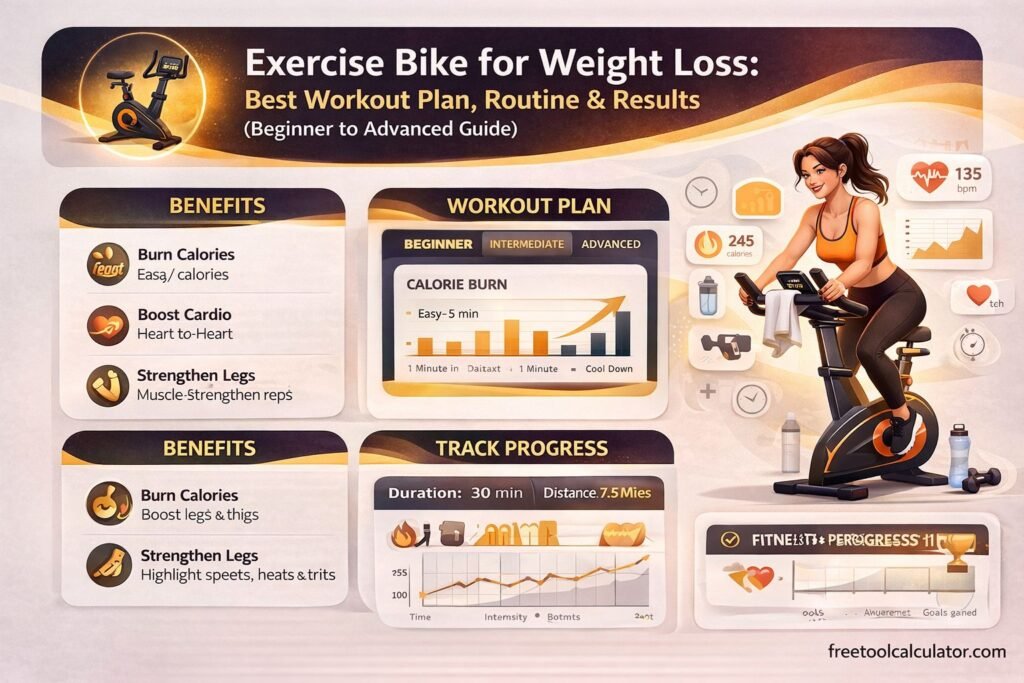
- One minute hard.
- Two minutes easy.
- Repeat for 30 minutes.
Resistance Training on the Bike
One mistake I frequently see is using resistance levels that are too low.
Pedaling with minimal resistance may feel easy, but it doesn’t challenge the body enough.
Increasing resistance improves:
- Strength.
- Endurance.
- Calorie expenditure.
When Treadmills Fail
I’ve seen many people fail with treadmills because they try to do too much too soon.
Common problems include:
- Knee pain.
- Shin splints.
- Ankle injuries.
- Burnout.
People often assume more intensity equals faster results.
Unfortunately, pushing too hard frequently leads to injury and frustration.
The lesson is simple:
Consistency beats intensity.
A moderate routine performed consistently is better than an aggressive routine that causes you to quit.
When Exercise Bikes Fail
Exercise bikes are not perfect either.
The biggest mistake I observe is lack of effort.
Because cycling feels easier, some users pedal slowly while watching television or browsing their phones.
Without sufficient resistance, the workout becomes ineffective.
Success with exercise bikes requires:
- Progressive overload.
- Adequate resistance.
- Regular frequency.
- Patience.
Low resistance and inconsistency are the main reasons people fail.
Treadmill vs Exercise Bike for Older Adults
For older adults, exercise bikes usually have a significant advantage.
Joint pain, arthritis, and balance issues become increasingly common with age.
Exercise bikes provide:
- Lower injury risk.
- Reduced joint stress.
- Better stability.
- Easier recovery.
Recumbent bikes are particularly helpful because they offer back support and comfort.
Treadmills can still be effective, especially for walking, but they require more caution.
Which Is Better for Obese Beginners?
For obese beginners, I almost always recommend starting with an exercise bike.
Extra body weight places considerable stress on:
- Knees.
- Ankles.
- Hips.
Running on a treadmill while carrying excess weight can quickly become painful.
Cycling provides a safer entry point and allows people to improve cardiovascular fitness without excessive impact.
As weight decreases, treadmill walking and jogging can gradually be introduced.
My Contrarian Opinion: Cardio Alone Is Overrated
This opinion might surprise some people.
I believe cardio alone is overrated for weight loss.
Many fitness experts obsess over calories burned during treadmill runs or bike sessions.
But calorie burn is only part of the equation.
Strength training changes everything.
Building muscle increases metabolism and helps maintain weight loss over the long term.
Instead of relying exclusively on cardio, I believe the ideal combination is:
- Strength training 3 times per week.
- Moderate cardio 3–5 times per week.
- Healthy nutrition.
- Adequate sleep.
This combination consistently produces better results than endless hours of cardio.
Which Machine Would I Personally Choose?
If maximum calorie burn were my only goal, I’d choose the treadmill.
But if long-term consistency, comfort, and sustainability matter—and they should—I lean toward the exercise bike.
Why?
Because a machine you actually use beats the machine with the highest calorie burn on paper.
The best cardio equipment is not necessarily the one that burns the most calories.
It’s the one that becomes part of your lifestyle.
Treadmill vs Exercise Bike: Quick Comparison
| Feature | Treadmill | Exercise Bike |
|---|---|---|
| Calorie Burn | Higher | Moderate |
| Joint Impact | High | Low |
| Beginner Friendly | Moderate | Excellent |
| Injury Risk | Higher | Lower |
| Weight Loss Speed | Faster | Sustainable |
| Recovery Time | Longer | Shorter |
| Older Adults | Good | Excellent |
| Knee Pain | Poor | Excellent |
| HIIT Training | Excellent | Good |
| Daily Use | Moderate | Excellent |
Treadmill vs Exercise Bike: Pros and Cons
Both machines can help you lose weight, improve cardiovascular health, and increase endurance. However, each has strengths and weaknesses that should be considered before making a decision.
Treadmill Pros
Higher Calorie Burn
One of the biggest advantages of treadmills is their ability to burn calories quickly. Walking, jogging, and running engage multiple muscle groups and require your body to support its own weight, which increases energy expenditure.
Natural Movement
Walking and running are movements people perform every day. Because of this, treadmills often feel intuitive and require little learning.
Great for HIIT
Treadmills excel at high-intensity interval training. Alternating between sprints and walking intervals can produce significant calorie burn in a short amount of time.
Improves Bone Density
Weight-bearing exercise strengthens bones, making treadmills beneficial for long-term skeletal health.
Treadmill Cons
Increased Injury Risk
Running places stress on:
- Knees
- Ankles
- Hips
- Lower back
Overuse injuries are common among people who push too hard too quickly.
Longer Recovery Time
Hard treadmill sessions often require additional recovery days, especially for beginners.
Expensive
Quality treadmills are typically larger and more expensive than exercise bikes.
Space Requirements
Treadmills occupy substantial floor space, making them less practical for apartments or smaller homes.
Exercise Bike Pros
Joint Friendly
Perhaps the greatest advantage of exercise bikes is their low-impact nature.
Cycling minimizes stress on the knees and ankles, making it suitable for:
- Older adults
- Obese beginners
- Individuals with arthritis
- People recovering from injuries
Easy Recovery
Because cycling creates less impact, users can often train daily without significant soreness.
More Affordable
Good exercise bikes are generally less expensive than high-end treadmills.
Comfortable for Beginners
Exercise bikes are less intimidating and easier to use consistently.
Exercise Bike Cons
Lower Calorie Burn
While still effective, exercise bikes generally burn fewer calories than running.
Easy to Undertrain
Many users pedal with very little resistance, reducing the effectiveness of the workout.
Less Functional Movement
Cycling doesn’t replicate everyday movement patterns the way walking and running do.
Which Machine Is Better for Specific Goals?
For Maximum Fat Loss
Winner: Treadmill
Running and incline walking usually burn more calories per minute.
For Beginners
Winner: Exercise Bike
Low-impact and easier to maintain consistently.
For Knee Pain
Winner: Exercise Bike
Cycling places significantly less stress on joints.
For Older Adults
Winner: Exercise Bike
Safer and easier to recover from.
For Busy Professionals
Winner: Treadmill
HIIT workouts can provide excellent results in only 20–30 minutes.
For Long-Term Sustainability
Winner: Exercise Bike
Consistency often outweighs intensity over months and years.
Weight Loss Isn’t Just About Cardio
One lesson I’ve learned over the years is that many people dramatically overestimate how many calories exercise burns and underestimate the role of nutrition.
For example, running for 30 minutes may burn approximately 300 calories.
But consuming:
- A soda
- Fries
- A dessert
Can easily add more than 1,000 calories back into your day.
This is why exercise should complement your diet rather than compensate for poor eating habits.
Tracking calorie intake and estimating daily energy needs can make weight loss more predictable. If you’re unsure how many calories your body needs, using a Calorie Calculator can provide a useful starting point:
Understanding your calorie requirements is often more important than choosing the “perfect” cardio machine.
Body Weight Matters Too
Calorie expenditure depends heavily on body weight.
Heavier individuals naturally burn more calories because moving more mass requires more energy.
Understanding your Body Mass Index (BMI) can provide context when setting realistic goals. You can calculate your BMI using:
While BMI isn’t a perfect measurement, it can help track progress and determine healthy weight ranges.
Why Recovery Matters More Than Most People Think
Recovery is often ignored in weight-loss discussions.
Many people believe that exercising every day at maximum intensity produces the fastest results.
In reality, insufficient recovery can lead to:
- Fatigue
- Injuries
- Burnout
- Loss of motivation
This is one reason why exercise bikes appeal to many people.
Because they are easier on the body, they allow frequent exercise without excessive soreness.
Sustainability almost always beats intensity.
Common Myths About Treadmills and Exercise Bikes
Myth #1: Running Is Necessary for Weight Loss
False.
Walking and cycling can produce excellent results when paired with a calorie deficit.
Myth #2: More Sweat Means More Fat Loss
False.
Sweat reflects body temperature regulation, not fat burning.
Myth #3: Cardio Burns Belly Fat Specifically
False.
Spot reduction does not exist.
Fat loss occurs throughout the body.
Myth #4: Longer Workouts Are Always Better
False.
Quality and consistency matter more than duration.
Myth #5: Cardio Can Replace Diet
False.
Nutrition drives the majority of weight-loss results.
Frequently Asked Questions
Is a treadmill better than an exercise bike for weight loss?
Generally, treadmills burn more calories and may produce faster results. However, exercise bikes often lead to better long-term consistency because they are easier on the joints.
Which burns more calories, treadmill or stationary bike?
Treadmills usually burn more calories because running and walking involve supporting your body weight.
Is cycling better than running for bad knees?
Yes. Cycling is lower impact and significantly easier on the joints.
Can I lose belly fat with an exercise bike?
Yes, but not specifically. Exercise bikes help reduce overall body fat, which eventually leads to belly fat loss.
Should beginners choose a treadmill or exercise bike?
Most beginners benefit from starting with an exercise bike because it is safer, lower impact, and easier to maintain consistently.
Is HIIT better than steady-state cardio?
Both approaches work.
HIIT burns more calories in less time, while steady-state cardio is easier to sustain and recover from.
My Final Verdict
If your only goal is maximizing calorie burn, the treadmill wins.
Running and incline walking simply demand more energy and can accelerate weight loss.
However, if I had to recommend one machine for the average person, beginner, or someone trying to maintain a routine for years rather than weeks, I would lean toward the exercise bike.
Why?
Because consistency beats intensity.
A 300-calorie workout performed five days a week is better than a 700-calorie workout you only manage once or twice before quitting.
I’ve personally experienced faster calorie burn with treadmills, but I’ve also experienced knee discomfort after prolonged use. In contrast, exercise bikes allowed me to train more frequently and recover more easily.
One of the most impressive success stories I’ve witnessed involved a friend who lost 20 pounds in four months using nothing more than a stationary bike, moderate dietary improvements, and consistency.
That experience reinforced a simple truth:
The best cardio machine isn’t necessarily the one that burns the most calories. It’s the one you can use consistently without injury or burnout.
And perhaps my most controversial opinion is this:
Cardio alone is overrated.
Strength training, nutrition, adequate sleep, and moderate cardio form a far more powerful combination than endless hours on either a treadmill or exercise bike.
At the end of the day, both machines work.
The question isn’t “Which machine is better?”
The real question is:
Which machine will you still be using six months from now?
Because that’s the machine that will ultimately deliver results.