Lawn Fertilizer Calculator and Introduction
A Lawn Fertilizer Calculator helps you estimate how much fertilizer your lawn needs based on lawn size and application rate. Instead of guessing how many pounds, kilograms, bags, or gallons to apply, this tool uses simple inputs to calculate a practical fertilizer amount. It is useful for homeowners, lawn care beginners, gardeners, landscapers, and anyone who wants a more organized way to fertilize grass.
Many people search for lawn fertilizer calculator, fertilizer calculator for lawn, how much fertilizer for lawn calculator, lawn fertilization calculator, and calculate lawn fertilizer because fertilizer labels can be confusing. A bag may show nutrient percentages, coverage area, and application instructions, but you still need to match those numbers with your actual lawn size. A calculator makes that process easier and helps reduce over-application or under-application.
This Lawn Fertilizer Calculator is designed to calculate the correct fertilizer quantity for your lawn using lawn size and application rate. It can help with granular fertilizer, liquid lawn fertilizer, new lawn fertilizer planning, cost estimates, and general lawn fertilizer rate calculations. The result is an easy-to-understand estimate that supports healthy grass growth when used alongside proper watering, mowing, soil care, and local lawn recommendations.
What Is Lawn Fertilizer?
Lawn fertilizer is a product that supplies nutrients to grass. The three main nutrients shown on most fertilizer labels are nitrogen, phosphorus, and potassium, often written as N-P-K. Nitrogen supports leaf and blade growth, phosphorus supports root development, and potassium supports overall grass strength and stress tolerance. Different lawns may need different nutrient levels depending on soil condition, grass type, season, and location.
A fertilizer label such as 20-5-10 means the product contains 20% nitrogen, 5% phosphorus, and 10% potassium by weight. The remaining percentage includes filler, carrier material, or other ingredients. Because fertilizer strength varies by product, two bags with the same weight may provide different nutrient amounts. This is why calculating lawn fertilizer based on nutrient rate is more accurate than applying fertilizer by bag size alone.
A lawn fertilizer calculator helps convert lawn size and nutrient application rate into the amount of product needed. This is useful whether you are using a standard granular fertilizer, a liquid lawn fertilizer calculator approach, or a lawn fertilizer application calculator for seasonal feeding.
How the Lawn Fertilizer Calculator Works
Step 1: Measure Your Lawn Size
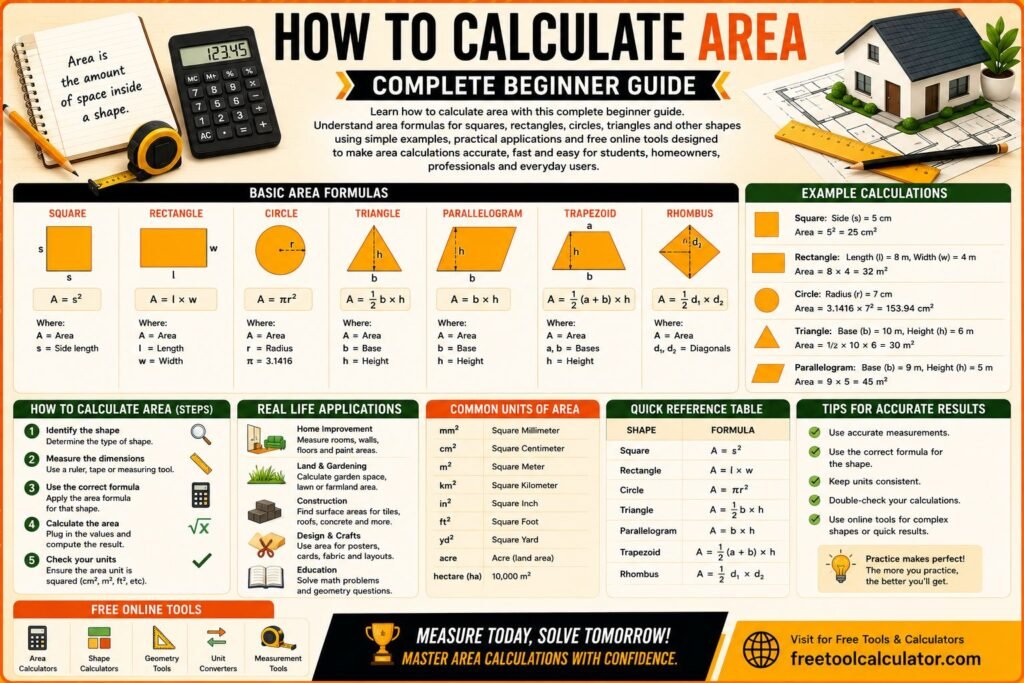
Start by measuring the total area of your lawn. For a rectangular lawn, multiply length by width. For irregular lawns, divide the yard into smaller sections, calculate each area separately, and add the results together. Lawn size is usually entered in square feet or square meters depending on your measurement system.
Step 2: Choose the Application Rate
The application rate tells the calculator how much fertilizer or nutrient should be applied per unit of lawn area. Lawn fertilizer rate calculator tools commonly use pounds of nitrogen per 1,000 square feet or grams per square meter. Always read the fertilizer label and follow local recommendations when selecting an application rate.
Step 3: Enter the Fertilizer Analysis
If the calculator uses nutrient percentages, enter the N-P-K value from the fertilizer label. For example, if the fertilizer is 24-0-6, the nitrogen percentage is 24%. This helps the tool calculate how much actual product is needed to deliver the desired nutrient amount.
Step 4: Review the Fertilizer Amount
The calculator estimates how much fertilizer to apply over your lawn area. The result may be shown in pounds, kilograms, bags, gallons, or ounces depending on the product type and input settings. You can then use the result to plan spreading, mixing, or purchasing.
How to Calculate Lawn Fertilizer
To calculate lawn fertilizer manually, you need three pieces of information: lawn size, desired nutrient rate, and fertilizer nutrient percentage. The most common calculation focuses on nitrogen because nitrogen is usually the main nutrient used for turf growth. For example, many lawn fertilizer calculations are based on how many pounds of nitrogen are needed per 1,000 square feet.
A simple formula is:
Fertilizer Needed = Desired Nutrient Amount ÷ Nutrient Percentage
If you want to apply 1 pound of nitrogen per 1,000 square feet and your fertilizer contains 20% nitrogen, divide 1 by 0.20. The result is 5 pounds of fertilizer product per 1,000 square feet. If your lawn is 5,000 square feet, you would multiply that amount by 5, giving 25 pounds of fertilizer product.
Example Lawn Fertilizer Calculation
Suppose your lawn is 4,000 square feet and you want to apply 1 pound of nitrogen per 1,000 square feet. Your fertilizer label shows 25-0-5, which means it contains 25% nitrogen. First, calculate the amount of product needed per 1,000 square feet by dividing 1 by 0.25. The result is 4 pounds of fertilizer per 1,000 square feet.
Next, multiply 4 pounds by 4 because the lawn is 4,000 square feet. The total fertilizer needed is 16 pounds. This is the basic method used by many lawn fertilizer rate calculator tools. The calculator simply does the math faster and reduces the chance of mistakes.
1 ÷ 0.25 = 4 pounds per 1,000 sq ft
4 × 4 = 16 pounds total fertilizer
How Much Fertilizer for Lawn Calculator
A how much fertilizer for lawn calculator answers one of the most common lawn care questions: how much product should be applied to a specific lawn size? The answer depends on the fertilizer strength, application rate, and total lawn area. Applying fertilizer based only on guesswork can lead to uneven growth, waste, or possible lawn stress.
For best results, measure your lawn carefully before using the calculator. Then enter the fertilizer analysis from the bag or bottle. If the product label gives a recommended coverage area, compare that information with the calculator result. When values differ, follow the product label and local lawn care guidance.
The calculator is especially helpful when fertilizer bags are sold in different sizes. It can help determine whether one bag is enough or whether multiple bags are needed for full coverage.
Lawn Fertilizer Rate Calculator
A lawn fertilizer rate calculator focuses on the application rate. The rate may refer to pounds of fertilizer product per 1,000 square feet or pounds of actual nutrient per 1,000 square feet. These are not the same thing. Product weight includes all ingredients, while nutrient weight refers only to the active nutrient amount.
Calculating lawn fertilizer rates properly helps avoid applying too much fertilizer. Over-application may increase waste and can contribute to runoff concerns in some areas. Under-application may not provide enough nutrients for the desired lawn response. The right rate depends on grass type, season, soil test results, and local conditions.
Because local recommendations vary, a calculator should be used as a planning tool rather than a replacement for soil testing or regional lawn care guidance.
Lawn Fertilizer Application Calculator
A lawn fertilizer application calculator helps plan how much fertilizer to spread over a given area. It is useful before using a broadcast spreader, drop spreader, handheld spreader, or sprayer. Good application planning helps create even coverage and reduces streaking or patchy growth.
When applying fertilizer, divide the total amount into sections if the lawn is large. Some users spread half the fertilizer in one direction and the other half across the lawn at a right angle. This can help improve distribution. Always follow product label instructions and avoid applying fertilizer near storm drains, water bodies, or hard surfaces where runoff may occur.
After spreading, some fertilizers need watering in, while others should remain dry for a specific period. Read the product label carefully before application.
Liquid Lawn Fertilizer Calculator
A liquid lawn fertilizer calculator estimates how much liquid concentrate and water may be needed for a lawn area. Liquid fertilizers are commonly applied with hose-end sprayers, backpack sprayers, tank sprayers, or professional application equipment. The calculation may involve product rate per gallon, coverage area, and spray volume.
Liquid fertilizer calculations can be different from granular fertilizer calculations because mixing ratios matter. The product label may state how many ounces of concentrate to mix per gallon of water or how much area a mixed gallon covers. Use those label directions as the primary guide.
If you are using a sprayer, calibration is important. Even if the mixture is correct, applying too much or too little spray volume can change the actual amount delivered to the lawn.
How to Mix DEF for Lawn Fertilizer Calculator
Some users search for how to mix DEF for lawn fertilizer calculator or DEF ratio for lawn fertilizer calculator. DEF usually refers to diesel exhaust fluid, which contains urea and water. While urea is a nitrogen source, DEF is made for vehicle emissions systems, not as a standard lawn fertilizer product.
Using non-lawn products on grass can be risky because concentration, additives, purity, and application suitability may not match lawn care needs. If a product is not labeled for lawn use, it is safer to choose a fertilizer specifically designed for turfgrass. Always follow label directions and local regulations.
For a healthy lawn, use products intended for lawn fertilization and calculate rates based on their fertilizer analysis. When unsure, consult a local extension office, garden center, or lawn care professional.
Lawn Fertilizer Cost Calculator
A lawn fertilizer cost calculator helps estimate how much it will cost to fertilize a lawn. It uses lawn size, fertilizer amount needed, bag size, and product price to estimate total cost. This can be helpful when comparing different fertilizer brands, package sizes, or application schedules.
To calculate cost to fertilize a lawn, first determine how much fertilizer product is needed. Then divide that amount by the product package size to estimate how many bags or containers are required. Finally, multiply the number of packages by the price per package. Some calculators also estimate cost per 1,000 square feet.
A lawn fertilization cost calculator is useful for homeowners budgeting seasonal lawn care and for professionals preparing service estimates. It can also help compare granular and liquid products more fairly.
New Lawn Fertilizer Calculator
A new lawn fertilizer calculator helps estimate fertilizer needs for newly seeded or newly sodded lawns. New grass may have different nutrient needs than established turf, especially during root development. Starter fertilizers are often used for new lawns, but the correct product and rate depend on soil conditions and local recommendations.
Before fertilizing a new lawn, consider a soil test. Soil testing can identify nutrient levels and pH, helping you choose a better fertilizer formula. Applying the wrong product or too much fertilizer may not improve establishment and may create unnecessary waste.
For newly seeded lawns, timing also matters. Follow seed label instructions, fertilizer label directions, and local turfgrass recommendations for the best results.
Lawn Fertilization Calculator by Region
Regional conditions affect lawn fertilization. Searches such as lawn fertilizer calculations in Florida, lawn fertilizer calculator Western Washington, and lawn fertilizer rate calculator MN reflect the fact that climate, grass type, rainfall, soil, and local rules can vary widely. A warm-season lawn in Florida may require a different fertilization schedule than a cool-season lawn in Minnesota or Western Washington.
Florida lawns often require attention to local fertilizer ordinances, rainy seasons, and nutrient runoff concerns. Minnesota lawns may follow cool-season grass schedules with different timing and nitrogen recommendations. Western Washington lawns may be influenced by mild weather, rainfall patterns, and soil conditions.
A calculator can handle the math, but local guidance helps determine the right timing, rate, and fertilizer type. For region-specific recommendations, local university extension services or trusted lawn care professionals are often useful resources.
Is Today a Good Day to Fertilize My Lawn Calculator?
Some users search for is today a good day to fertilize my lawn calculator because timing affects fertilizer performance. A good fertilizing day usually depends on weather, soil moisture, temperature, grass growth stage, and rainfall forecast. Fertilizing during extreme heat, drought stress, heavy rain, or frozen conditions is usually not ideal.
In general, apply fertilizer when the lawn is actively growing and conditions allow nutrients to be absorbed. Avoid applying fertilizer before heavy rain because nutrients may wash away. Avoid fertilizing stressed grass unless the product is specifically recommended for that situation.
A weather-aware calculator can help, but always combine tool results with product label directions and local lawn care advice.
Lawn Fertilizer Calculator App
A lawn fertilizer calculator app can be useful for homeowners and lawn care professionals who want fertilizer estimates on a phone or tablet. Apps may include lawn size measurement, fertilizer rate calculations, cost estimates, reminders, and application logs.
While apps can make planning easier, the quality of the result still depends on accurate inputs. Lawn size, fertilizer analysis, application rate, and product type must be entered correctly. Incorrect measurements or rates can lead to incorrect fertilizer amounts.
An online lawn fertilization calculator free tool can provide similar convenience directly in a browser without requiring installation.
Lawn Fertilizer Calculations Worksheet
A lawn fertilizer calculations worksheet is useful for learning and record keeping. It can include lawn area, fertilizer grade, target nutrient rate, product amount, cost, date applied, and notes about weather or lawn response. Worksheets help users understand the math behind a calculator.
For students, gardeners, and lawn care beginners, worksheets can make fertilizer calculations less confusing. Writing out each step helps explain how nutrient percentages relate to actual product amounts. This is especially useful when comparing several fertilizer products.
Professionals may also use worksheets to document applications, track customer lawns, and maintain consistent service records.
Lawn Care Nut Fertilizer Calculator
Users sometimes search for lawn care nut fertilizer calculator or lawn care nut calculating fertilizer when looking for practical lawn care calculation guidance. The main idea is the same: measure the lawn, choose a nutrient target, read the fertilizer analysis, and calculate the amount of product needed.
Regardless of the calculator style, the math should be based on lawn area and nutrient percentage. The calculator should not encourage random application. Accurate measurement and label-based application are the foundation of responsible fertilizing.
For any lawn care program, calculators are most useful when combined with observation, soil testing, mowing practices, watering habits, and local turfgrass recommendations.
Common Uses of a Lawn Fertilizer Calculator
- Estimating fertilizer amount for a lawn.
- Calculating fertilizer product based on nitrogen rate.
- Planning granular fertilizer applications.
- Estimating liquid lawn fertilizer mixtures.
- Calculating cost to fertilize a lawn.
- Comparing fertilizer bag sizes and prices.
- Planning new lawn fertilizer applications.
- Preparing lawn fertilization worksheets.
- Supporting seasonal lawn care planning.
- Reducing guesswork before spreading fertilizer.
Understanding Related Lawn Fertilizer Concepts
Lawn Size
Lawn size is the total area of grass being fertilized. It is commonly measured in square feet or square meters. Accurate lawn size is essential because all fertilizer calculations depend on area.
Application Rate
Application rate describes how much fertilizer or nutrient should be applied over a specific area. It may be shown as pounds per 1,000 square feet or another unit depending on the product and region.
N-P-K Ratio
N-P-K refers to nitrogen, phosphorus, and potassium percentages in fertilizer. These values help determine how much actual nutrient is in the product.
Granular Fertilizer
Granular fertilizer is applied as dry particles using spreaders. It is common for home lawns and often includes slow-release or quick-release nutrients depending on the product.
Liquid Fertilizer
Liquid fertilizer is mixed with water or applied through a sprayer. It may provide faster nutrient availability but requires careful mixing and application.
Who Uses a Lawn Fertilizer Calculator?
- Homeowners maintaining their lawns.
- Gardeners improving grass health.
- Landscapers estimating fertilizer needs.
- Lawn care companies preparing service plans.
- Property managers maintaining large grass areas.
- Golf course and sports field staff.
- Students learning turfgrass calculations.
- New homeowners planning lawn care.
- DIY users comparing fertilizer costs.
- Anyone wanting more accurate fertilizer application.
Benefits of Using a Lawn Fertilizer Calculator
- Helps estimate fertilizer quantity accurately.
- Reduces guesswork before application.
- Supports better lawn care planning.
- Can help prevent over-application.
- Useful for granular and liquid fertilizer.
- Helps compare product costs.
- Supports seasonal fertilization schedules.
- Simple enough for beginners.
- Useful for new and established lawns.
- Helps organize lawn maintenance records.
Common Lawn Fertilizer Mistakes
Guessing Lawn Size
Incorrect lawn size is one of the most common reasons fertilizer calculations are wrong. Measure the lawn carefully before using a calculator. For irregular lawns, divide the area into smaller shapes and add them together.
Confusing Product Weight with Nutrient Weight
A 50-pound bag of fertilizer is not 50 pounds of nitrogen. The nutrient percentage tells you how much actual nutrient is in the product. Always use the fertilizer analysis when calculating nutrient-based rates.
Applying Fertilizer at the Wrong Time
Fertilizing during drought, extreme heat, heavy rain, or dormancy may reduce effectiveness and increase waste. Apply fertilizer when grass is actively growing and weather conditions are suitable.
Ignoring the Product Label
The fertilizer label contains important instructions for application rate, timing, safety, and watering. Calculator results should be checked against label directions before use.
Using the Wrong Fertilizer Type
Different lawns and seasons may require different fertilizer formulas. A soil test can help identify nutrient needs and reduce unnecessary applications.
Frequently Asked Questions
How does a lawn fertilizer calculator work?
A lawn fertilizer calculator uses lawn size, fertilizer analysis, and application rate to estimate how much fertilizer product is needed. It performs the same math used in manual fertilizer calculations. The result helps users plan spreading, mixing, or purchasing more accurately.
How do I calculate fertilizer for my lawn?
Measure your lawn area, choose a target nutrient rate, and check the fertilizer label for the nutrient percentage. Divide the desired nutrient amount by the nutrient percentage to calculate product needed. A calculator does this automatically and helps reduce math errors.
How much fertilizer do I need for my lawn?
The amount depends on lawn size, fertilizer strength, and application rate. A small lawn needs less product than a large lawn, and a high-nitrogen fertilizer requires less product than a low-nitrogen fertilizer for the same nutrient target. Always compare the calculator result with label directions.
How do I calculate lawn fertilizer rates?
Lawn fertilizer rates are usually calculated per 1,000 square feet or per square meter. First decide the desired nutrient rate, then use the fertilizer percentage to convert nutrient amount into product amount. Local recommendations can help choose a suitable rate.
How do I calculate the cost to fertilize a lawn?
Calculate the fertilizer amount needed, then compare it with bag size and product price. Divide total product needed by package size to estimate how many bags are required. Multiply by the price per bag to estimate total cost.
Can I use a lawn fertilizer calculator for liquid fertilizer?
Yes, but liquid fertilizer calculations must also consider mixing ratio and spray coverage. Use the product label to determine ounces of concentrate, gallons of water, and coverage area. Sprayer calibration is important for accurate application.
What is the DEF ratio for lawn fertilizer?
DEF is made for diesel exhaust systems and is not a standard labeled lawn fertilizer. Although it contains urea, it is safer to use products specifically labeled for turfgrass. Lawn fertilizer calculations should be based on approved fertilizer labels and local guidance.
Is today a good day to fertilize my lawn?
A good fertilizing day depends on weather, soil moisture, grass growth, and rainfall forecast. Avoid fertilizing before heavy rain, during drought stress, or in extreme heat. Follow product label directions and local lawn care recommendations.
Do lawn fertilizer calculations differ by region?
Yes. Grass type, climate, rainfall, soil, and local regulations can affect fertilizer timing and rates. Florida, Minnesota, Western Washington, and other regions may have different recommendations. Use the calculator for math, but follow local turfgrass guidance for timing and rates.
Can I use a lawn fertilizer calculator for a new lawn?
Yes, but new lawns may require starter fertilizer or different nutrient timing. Soil testing is helpful before fertilizing a new lawn. Follow seed, sod, fertilizer label, and local recommendations for establishment.
What information do I need before using the calculator?
You need lawn size, fertilizer analysis, and desired application rate. For cost estimates, you also need product price and bag size. For liquid fertilizers, you may need mixing ratio and sprayer coverage information.
Why should I avoid applying too much fertilizer?
Too much fertilizer can stress grass, waste money, and may contribute to runoff concerns. Responsible application uses the correct rate, timing, and product type. A calculator helps support better planning, but label instructions should always be followed.
Why Trust This Tool?
This Lawn Fertilizer Calculator is based on standard fertilizer calculation methods used in lawn care, gardening, turf management, and basic agronomy education. It uses lawn size, nutrient percentage, and application rate to estimate the amount of fertilizer needed. These are accepted concepts for understanding fertilizer application.
The tool is designed for educational and practical lawn planning. It does not replace soil testing, product label instructions, regional fertilizer rules, or professional turfgrass advice. Local conditions such as grass type, climate, rainfall, soil health, and regulations can affect the best fertilizer schedule and rate.
By explaining the formulas, inputs, examples, cost estimates, liquid fertilizer considerations, and common mistakes, this calculator helps users make more informed lawn care decisions. It encourages accurate measurement, responsible application, and careful reading of fertilizer labels.
Get Started Today
Use this Lawn Fertilizer Calculator to calculate fertilizer amount for your lawn based on lawn size and application rate. Enter your lawn area, fertilizer analysis, and target nutrient rate to estimate how much product is needed. You can also use the result to plan fertilizer purchases, compare costs, prepare application records, or estimate liquid fertilizer requirements.
Whether you are searching for lawn fertilizer calculator, lawn fertilizer cost calculator, fertilizer calculator lawn, lawn fertilizer application calculator, lawn fertilizer rate calculator, liquid lawn fertilizer calculator, new lawn fertilizer calculator, or how to calculate lawn fertilizer, this tool gives you a clear starting point. Measure carefully, follow label directions, consider local recommendations, and apply fertilizer responsibly for healthier lawn growth.