Introduction: Understanding US Time Zones Made Simple
Time zones in the United States can feel confusing, especially when you are dealing with multiple states, cities, and daylight saving changes. Whether you are scheduling meetings, planning travel, or trying to understand how time works across the country, a clear US time zone guide makes everything easier. Many people search for a simple explanation of how time zones in America work and how they are divided. This guide breaks everything down in a straightforward way so you can understand the system without confusion and use a time zone converter whenever you need a fast answer.
US Time Zone Guide Explained
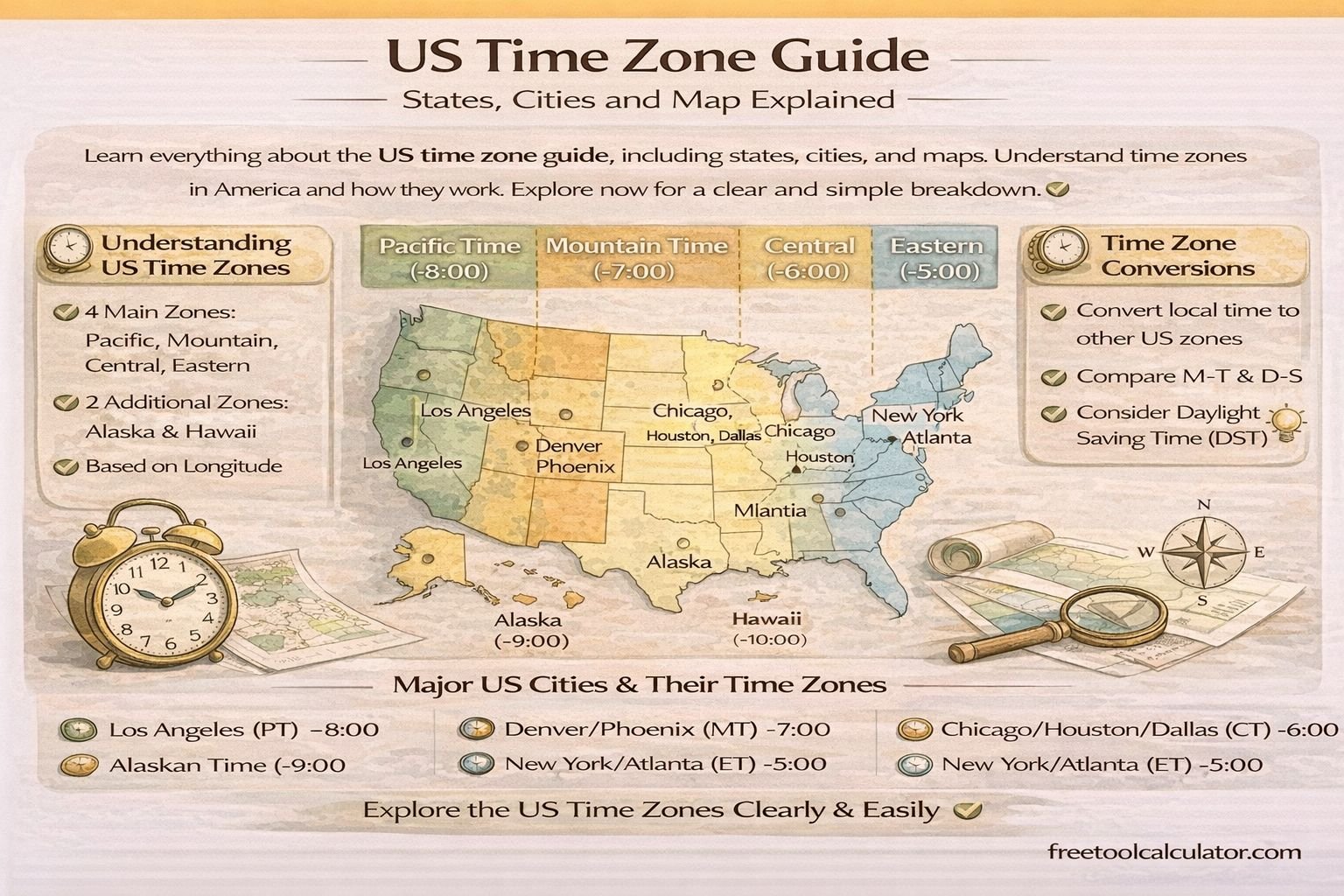
The United States is divided into multiple time zones to manage time more effectively across its large geographic area. Each time zone follows a specific offset from Coordinated Universal Time, also known as UTC. The purpose of this system is to keep daylight hours aligned with normal daily activities such as work, school, and travel. In total, the United States has six primary time zones when you include Alaska and Hawaii. These time zones help people and businesses stay organized across different regions, and a reliable time zone conversion tool can make those differences much easier to manage.
Main Time Zones in America
The four most commonly used time zones in the continental United States cover most of the population and land area. These include Eastern, Central, Mountain, and Pacific Time. Each one is generally one hour apart as you move from east to west. Understanding these zones is important for communication, appointments, travel planning, and online meetings. If you regularly work across states, using a free time zone converter can save time and prevent mistakes.
Eastern Time Zone
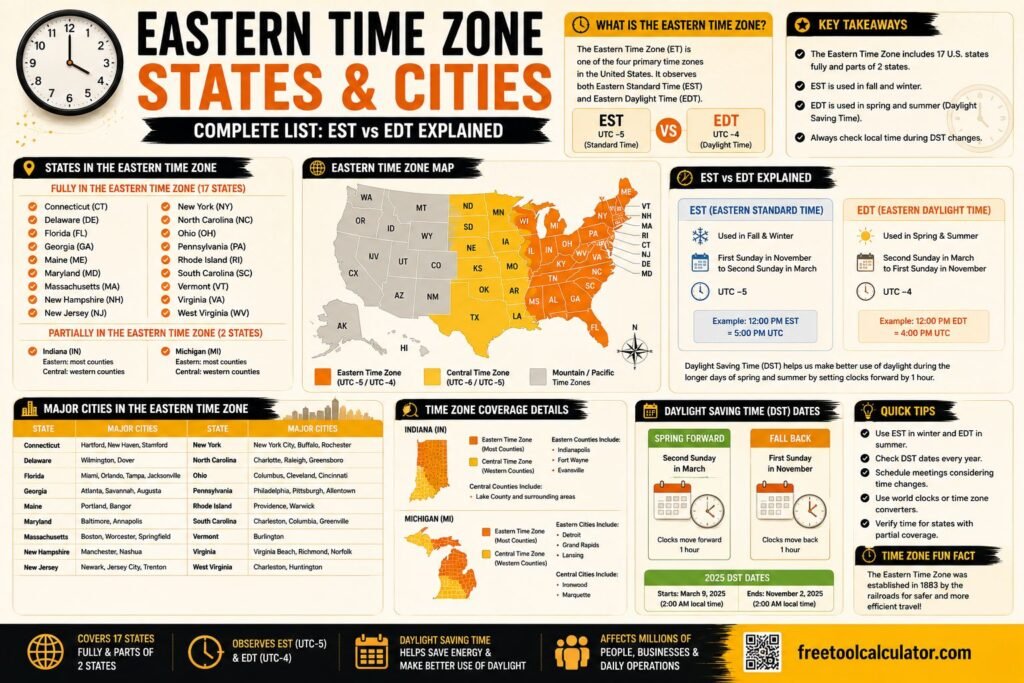
The Eastern Time Zone is the most populated and widely recognized time zone in the United States. It includes major cities such as New York, Washington DC, Atlanta, and Miami. National TV broadcasts, financial markets, and many business schedules often use Eastern Time as the default reference point. Because of its influence, many people outside this region also need to convert to or from Eastern Time when planning calls or events.
Central Time Zone
The Central Time Zone is one hour behind Eastern Time and includes major cities such as Chicago, Dallas, Houston, and New Orleans. This time zone covers a large section of the country and plays an important role in business, agriculture, and transportation. Many people get confused when working between Eastern and Central schedules, which is why time conversion tools are helpful in daily use.
Mountain Time Zone
The Mountain Time Zone is one hour behind Central Time. It includes cities such as Denver, Colorado Springs, and Salt Lake City. This region has a smaller population than Eastern and Central areas, but it still plays an important role in travel, logistics, and regional business activity. Because it sits between Central and Pacific Time, it can sometimes be overlooked, which leads to scheduling errors.
Pacific Time Zone
The Pacific Time Zone is three hours behind Eastern Time and includes major cities such as Los Angeles, San Francisco, San Diego, and Seattle. It is strongly associated with the entertainment and technology industries. Many companies with national operations have to coordinate Pacific Time with Eastern and Central schedules, which makes accurate conversion essential for meetings, project deadlines, and customer communication.
Additional US Time Zones
Beyond the four major continental zones, the United States also includes the Alaska Time Zone and the Hawaii-Aleutian Time Zone. Alaska is one hour behind Pacific Time, while Hawaii is even further behind and does not observe daylight saving time. These zones are just as important, especially for airlines, federal operations, and people working remotely across different regions. When you need to compare these regions accurately, you can use the Free Tool Calculator time zone converter directly within your workflow.
US Time Zones List by States
Each US state follows one or sometimes two time zones depending on its location. California is entirely in the Pacific Time Zone, while Texas is mostly in the Central Time Zone. States such as Florida, Tennessee, Kentucky, and Indiana can span more than one time zone, which often confuses both residents and travelers. This is one reason why the us time zones list remains a popular search topic. People want a clear breakdown of which state belongs to which zone so they can plan more accurately.
Time Zones in America and Daylight Saving Time
Daylight saving time adds another layer of complexity to time zones in America. During part of the year, most states move their clocks forward by one hour to make better use of daylight in the evening. This shift does not change the order of the time zones, but it does affect the clock time people see and use every day. Not every state follows daylight saving time in the same way. Hawaii does not observe it, and that creates a different relationship with the mainland during certain months of the year. This is why many people prefer to use a time zone converter tool instead of calculating the difference manually.
Time Zone Map USA Explained
A time zone map USA shows how the country is divided into different regions of time. These maps help people visualize where the boundaries are and how time changes across states. The lines are not perfectly straight because they often follow state borders, population centers, and practical regional needs. A map makes it much easier to understand why two nearby cities may follow different clock times. It also helps travelers, businesses, and remote teams plan ahead with more confidence.
How Many Time Zones in the World
Many readers looking for a US time zone guide also ask how many time zones in the world exist. The standard global system is based on 24 main time zones, each representing roughly one hour of Earth’s rotation. However, the real picture is more complex because some countries use half-hour and quarter-hour offsets. That means the number of active time variations worldwide is higher than 24. Understanding this broader system helps put US time zones into context, especially for international meetings and travel planning.
Why Time Zones Matter
Time zones matter because they create structure and consistency in everyday life. Without time zones, national and international coordination would be far more difficult. Businesses depend on them to schedule meetings. Airlines use them to manage flight departures and arrivals. Schools, hospitals, broadcasters, and remote teams all rely on accurate timekeeping. Even personal communication becomes easier when people understand the time difference between states or countries. A good guide combined with a time zone converter helps remove guesswork and improve accuracy.
Tips for Managing Different Time Zones
When working across multiple time zones, always confirm the local time of the other person before setting a meeting or deadline. Pay attention to daylight saving changes, especially when those changes do not happen on the same date everywhere. Keep a reference of major US zones if you work with national clients or customers. It also helps to use a trusted online time zone converter so you do not have to calculate differences manually.
Common Mistakes People Make
A common mistake is assuming every state follows only one time zone. That is not always true, and this assumption can lead to missed calls or incorrect scheduling. Another frequent mistake is forgetting daylight saving time, which shifts the clock by one hour in many places. People also confuse abbreviations such as EST, CST, MST, and PST without checking whether daylight saving time is active. These small errors can create real problems in work and travel planning.
Conclusion: A Clear Understanding of US Time Zones
A strong understanding of US time zones helps you manage communication, travel, business operations, and daily planning more effectively. Once you understand how the states, cities, and map fit together, the system becomes much easier to follow. Whether you are learning for personal knowledge or practical use, this guide gives you a clear starting point. To make the process even easier, you can use our time zone converter to check time differences quickly and accurately.