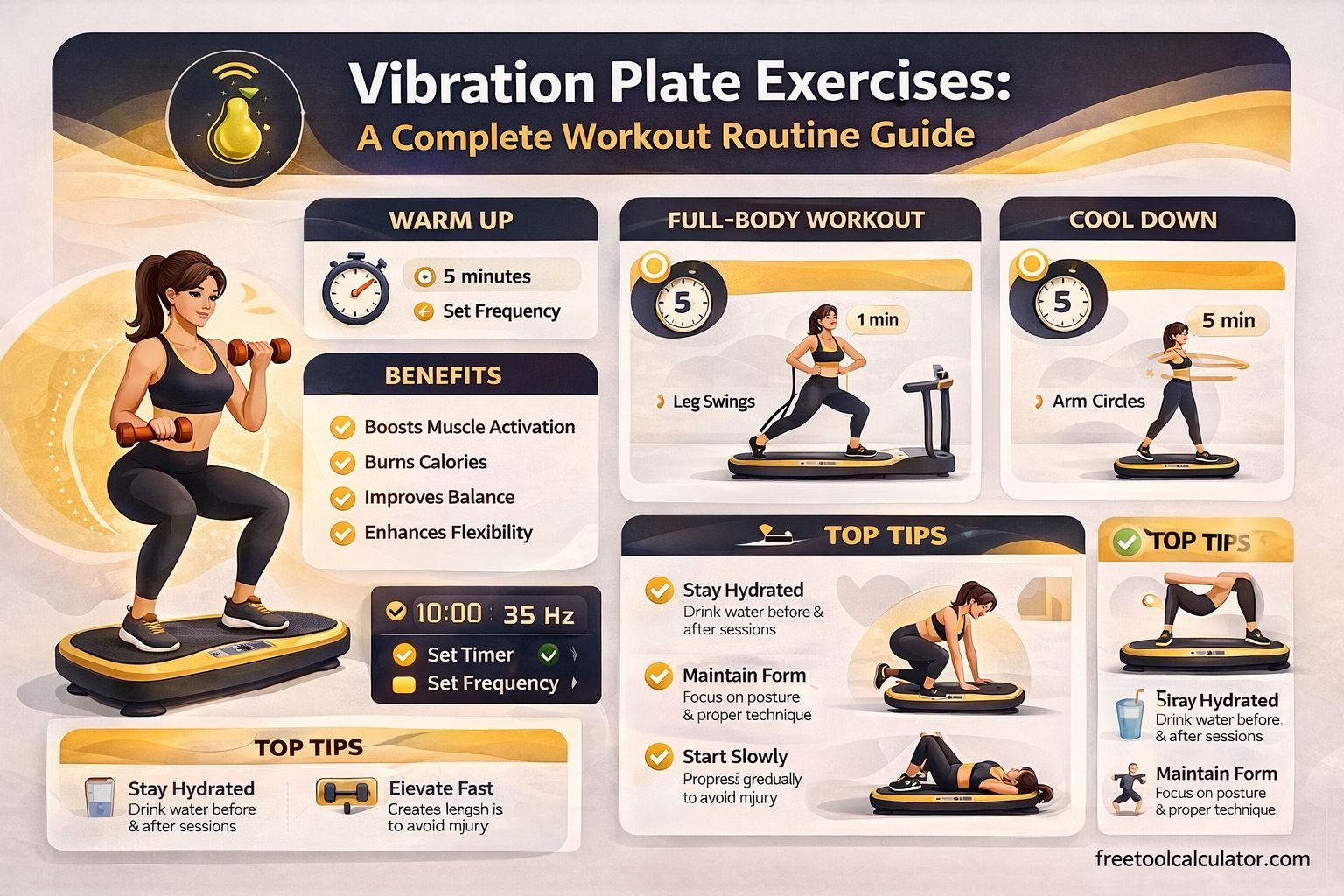
You bought a vibration plate, or you are thinking about buying one. Now you stand on it, the platform vibrates, and you wonder: What exactly am I supposed to do?
Standing passively on a vibration plate burns minimal calories. To unlock the science-backed benefits—muscle activation, improved circulation, and weight loss support—you need a structured routine. I have spent years analyzing fitness equipment efficacy, and the truth is simple: vibration plate exercises work best when you pair the machine’s mechanical stimulation with intentional movement.
This guide provides a complete vibration plate workout routine, explains the physiological mechanisms behind whole-body vibration (WBV), and gives you a downloadable exercise chart to follow. You will learn proper form, safety precautions, and how to integrate this tool into your fitness plan for measurable results.
What Happens to Your Body During Vibration Plate Exercises?
Understanding the “why” behind the movement helps you execute the “how” with better focus. When you perform vibration plate exercises, the platform sends rapid, oscillating waves through your body—typically 20 to 50 times per second.
The Neuromuscular Response
Your muscles perceive this instability as a threat to balance. In response, they automatically contract and relax multiple times per second. This process, called the tonic vibration reflex, activates up to 98% of muscle fibers during a single exercise, compared to roughly 40% during conventional strength training. You essentially recruit more muscle tissue in less time.
Circulatory and Lymphatic Benefits
The rapid oscillations also stimulate blood flow and lymphatic drainage. Increased circulation delivers more oxygen to working muscles, while the gentle pumping action helps move metabolic waste out of soft tissues. This dual effect explains why many users report reduced muscle soreness and improved recovery when using vibration plates consistently.
Essential Vibration Plate Exercise Chart: A Full-Body Routine
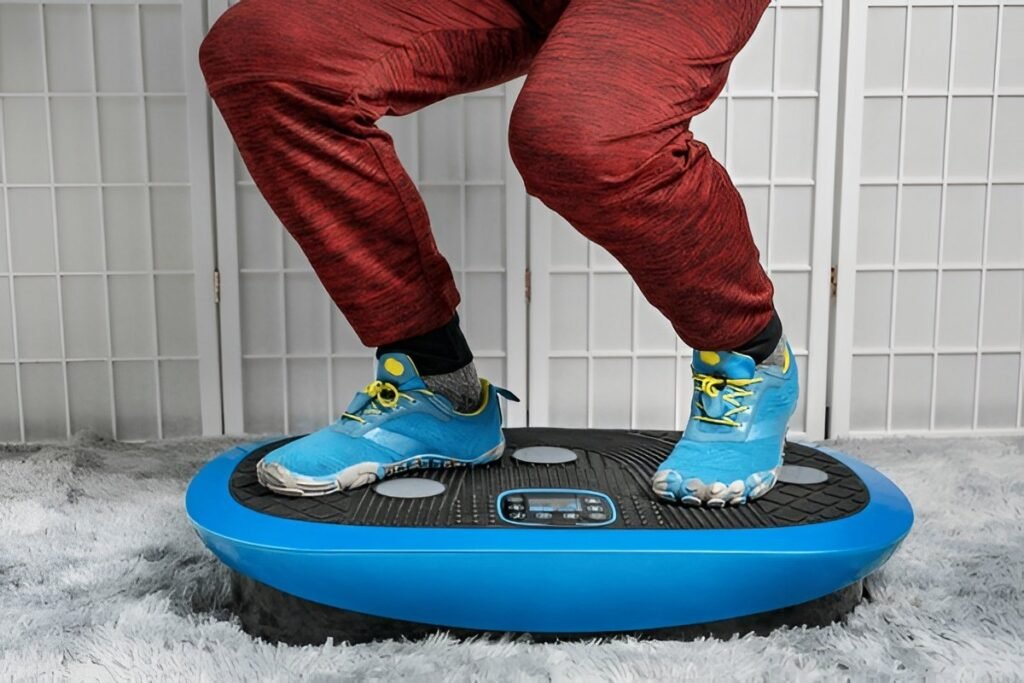
Below is a comprehensive weight loss vibration plate exercise chart organized by muscle group. Perform these exercises in sequence for a complete 15-minute workout. Hold each static position for 30 to 60 seconds or perform 10 to 15 repetitions for dynamic moves.
| Exercise | Target Area | Form Tip |
|---|---|---|
| Basic Stance | Full body, circulation | Stand with feet hip-width apart, knees slightly bent. Engage your core. |
| Squat | Quadriceps, glutes, hamstrings | Lower hips as if sitting in a chair. Keep chest lifted. Do not lock knees. |
| Plank (Elbows) | Core, shoulders, back | Place elbows on the plate, body in a straight line. Engage abdominals tightly. |
| Push-up | Chest, triceps, core | Perform push-ups with hands on the plate or use the floor with feet on the plate. |
| Lunge (Reverse) | Glutes, quadriceps | Step one foot back, lower back knee toward floor. Alternate legs. |
| Calf Raise | Calves, ankle stability | Rise onto the balls of your feet slowly. Control the descent. |
| Seated Stretch | Hamstrings, lower back | Sit on the plate with legs extended forward. Hinge at hips to reach toward toes. |
Does Vibration Plate Help Weight Loss? The Evidence
The question does vibration plate help weight loss dominates most user searches. Let me give you a direct, evidence-based answer: Yes, but not through passive standing alone.
Caloric Expenditure
A study published in the Journal of Obesity found that whole-body vibration training combined with a reduced-calorie diet resulted in significantly greater visceral fat loss compared to diet alone. The mechanism involves:
- Increased energy expenditure: Performing exercises on a vibrating platform requires greater muscular stabilization, raising your heart rate 15–20% higher than the same exercise on stable ground.
- Hormonal response: WBV can temporarily increase growth hormone and testosterone while reducing cortisol, creating a more favorable environment for fat metabolism.
- Enhanced post-exercise oxygen consumption (EPOC): High-intensity vibration plate routines keep your metabolism elevated for hours after the workout ends.
Realistic Expectations
Vibration plate exercises alone will not out-train a poor diet. They function as a force multiplier—they make your other efforts more efficient. When you combine a structured routine with a caloric deficit, you accelerate results.
External Link Suggestion: For a deeper dive into the peer-reviewed research on whole-body vibration and body composition, link to a reputable source like the National Institutes of Health (NIH) or PubMed Central.
Building Your Vibration Plate Workout Routine
Consistency matters more than intensity. A 10-minute daily routine beats a 60-minute session once a week. Use this framework to structure your vibration plate workout routine.
Beginner Routine (Weeks 1–2)
- Frequency: 3–4 times per week
- Duration: 10 minutes
- Structure: Basic stance (2 min), squat (2 min), calf raises (2 min), seated stretch (2 min), basic stance (2 min)
- Frequency setting: Low (20–30 Hz)
Intermediate Routine (Weeks 3–8)
- Frequency: 5–6 times per week
- Duration: 15–20 minutes
- Structure: Basic stance (2 min), squat (3 min), reverse lunges (3 min per leg), plank on plate (2 min), push-ups (2 min), seated stretch (3 min)
- Frequency setting: Medium (30–40 Hz)
Advanced Routine (Week 8+)
- Frequency: Daily
- Duration: 20–25 minutes
- Structure: Full circuit from the exercise chart performed twice, with dynamic movements like alternating lunges and mountain climbers on the plate.
- Frequency setting: Variable (alternate between 30 Hz and 45 Hz during the session)
[Video Embed Suggestion]
*Include a YouTube video embed here titled: “15-Minute Full Body Vibration Plate Workout for Beginners” from a certified fitness trainer (e.g., Naomi Joy Fitness or Vibration Plate Expert). This visual demonstration helps users confirm proper form.*
Safety First: Who Should Avoid Vibration Plate Exercises?
While generally safe for healthy adults, certain conditions require medical clearance or complete avoidance.
Consult a physician before use if you have:
- Pregnancy (especially first trimester)
- Deep vein thrombosis or blood clotting disorders
- Recent surgical implants (joint replacements, screws, plates)
- Pacemakers or other electronic medical implants
- Severe osteoporosis or spinal fractures
- Acute herniated discs or joint inflammation
Proper form protects you:
- Keep your knees soft—never locked
- Wear athletic shoes with cushioning
- Start at the lowest frequency and gradually increase
- Stop immediately if you feel dizziness, nausea, or sharp pain
Vibration Plate Benefits Beyond Weight Loss
While weight loss drives many users, the vibration plate benefits extend into several other health domains.
Bone Density Support
The mechanical loading from vibration stimulates osteoblasts (bone-building cells). Multiple studies show WBV can help maintain or modestly improve bone mineral density, particularly in postmenopausal women, making it a valuable tool for osteoporosis prevention.
Improved Balance and Fall Prevention
The constant challenge to stability trains your proprioceptive system. Older adults who perform vibration plate exercises consistently show improved balance scores and reduced fall risk.
Recovery and Reduced DOMS
Athletes using vibration plates post-exercise report less delayed onset muscle soreness (DOMS). The gentle oscillation appears to flush inflammatory mediators from muscle tissue faster than passive recovery alone.
Mobility and Flexibility
Performing stretches on a vibrating platform increases range of motion more effectively than static stretching alone. The vibration reduces tissue resistance, allowing for a deeper, safer stretch.
Frequently Asked Questions
Q: Can I lose belly fat by using a vibration plate?
A: Vibration plate exercises can contribute to overall fat loss, including abdominal fat, when combined with a caloric deficit. The rapid muscle contractions increase energy expenditure and may preferentially target visceral fat. However, spot reduction is a myth—fat loss occurs systemically, not locally.
Q: How long should I use a vibration plate per day?
A: Limit sessions to 10–20 minutes for whole-body workouts. Extended use beyond 25 minutes offers diminishing returns and may increase joint stress. Short, frequent sessions produce better results than long, sporadic ones.
Q: Does standing on a vibration plate alone burn calories?
A: Standing passively burns marginally more calories than standing on solid ground, but the difference is small. To maximize calorie burn and muscle activation, you must perform active exercises like squats, lunges, and planks while the plate is running.
Q: Can I use a vibration plate every day?
A: Yes, for low-frequency (20–30 Hz) sessions of 10 minutes or less. For higher frequencies or longer sessions, allow 24–48 hours of recovery for muscle repair. Listen to your body—excessive soreness signals you need rest.
Q: What frequency is best for weight loss?
A: Research suggests 30–40 Hz effectively stimulates muscle activation and metabolic response. Beginners should start at 20 Hz and progress slowly. Higher frequencies (45–50 Hz) target deeper muscle fibers but require excellent form to avoid joint strain.
Conclusion
Vibration plate exercises offer a time-efficient, low-impact way to activate muscles, improve circulation, and support weight loss. They do not replace traditional strength training or cardiovascular exercise, but they serve as an excellent supplement—especially for those with joint limitations or time constraints.
Your next step is action. Start with the beginner routine above, track your consistency, and pair your vibration plate workouts with a sustainable nutrition plan. To set a realistic weight loss goal and timeline based on your activity level, use the Weight Loss Timeline Calculator . Input your current stats, select your activity frequency, and see exactly when you can expect to reach your target..