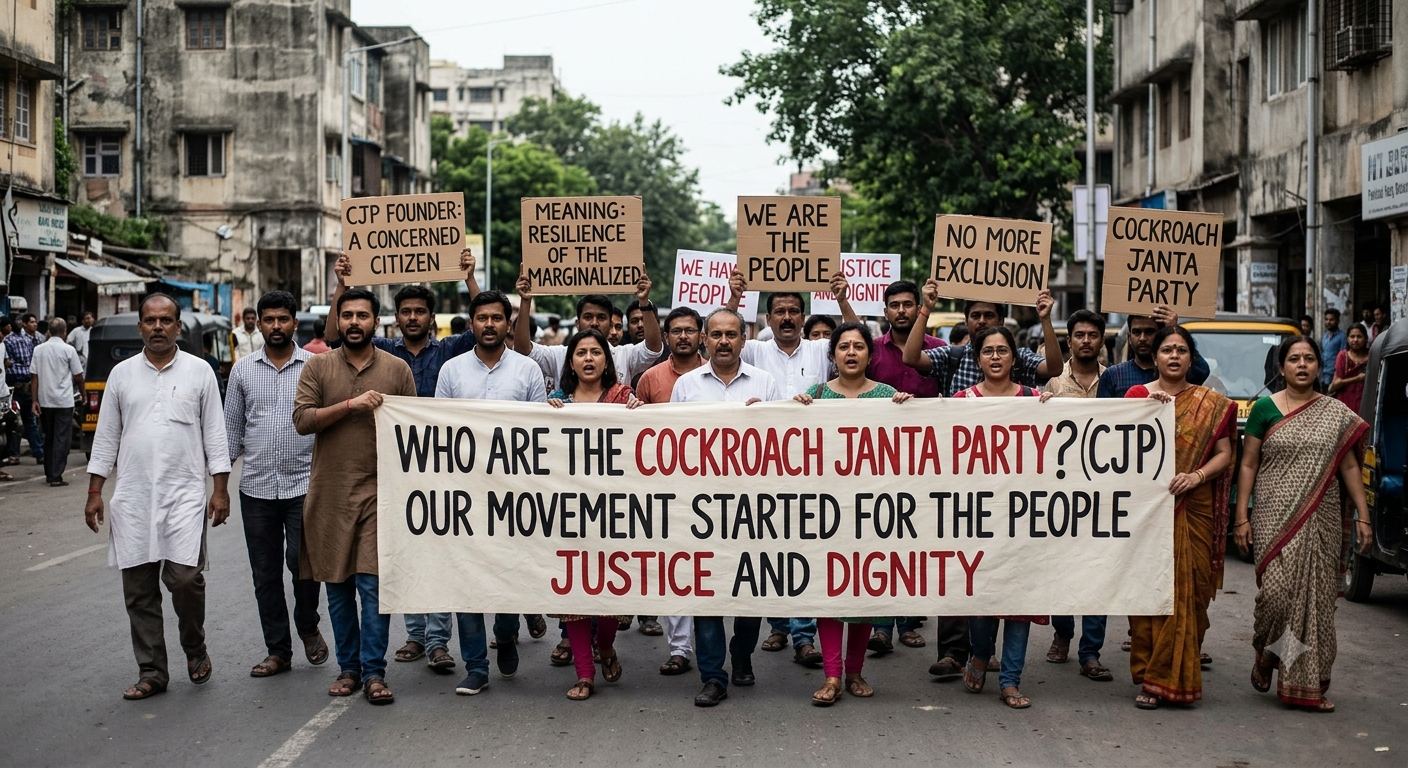
Who Are the Cockroach Janta Party CJP Founder Meaning and Why They Started the Movement
The Cockroach Janta Party, commonly known as CJP, is a youth-led protest movement that emerged in India in 2026. What began as a satirical social media response to a controversial remark about unemployed young people rapidly developed into a wider campaign focused on student rights, examination reform, unemployment and government accountability.
The movement gained national recognition during protests connected to the alleged leak of the NEET medical entrance examination paper. Students and their families were already angry about the disruption caused by the examination controversy. CJP gave that frustration a recognizable identity, a shared language and an organized platform through which young people could express their concerns.
Founded by activist and digital content figure Abhijeet Dipke, the movement combined traditional street demonstrations with memes, videos, political satire and fast-moving social media campaigns. Its supporters embraced the word Cockroach as a symbol of resilience after young unemployed Indians were reportedly compared to cockroaches during a public controversy.
Rather than rejecting the insult, supporters reclaimed it. They used it to communicate that young people who were ignored, mocked or dismissed would continue returning until their concerns were heard.
The Cockroach Janta Party became one of the most visible organizations associated with the youth protest India witnessed during the NEET controversy. However, describing it only as an examination protest group would be incomplete. Its popularity also reflected wider concerns about limited employment opportunities, academic pressure, competitive examinations, the cost of education and the feeling that traditional institutions were failing to listen to younger citizens.
This article explains what the Cockroach Janta Party is, who founded CJP, why the Cockroach movement adopted its unusual name, what its supporters demand, how the public responded and what may come next for the movement.
What Is the Cockroach Janta Party?
The Cockroach Janta Party is a youth-led collective that began as an online satire project and later developed into a large protest movement. Despite the word Party in its name, CJP did not initially operate like a conventional political party contesting elections, selecting candidates or presenting a traditional manifesto.
It was better understood as a decentralized movement that used satire, digital communication and public demonstrations to represent the anger of students, job seekers and other young Indians.
CJP presented itself as a voice for people who felt ignored by established political parties, institutions and sections of the media. Its online content often used humor to discuss serious issues, including unemployment, paper leaks, expensive education, government accountability and the treatment of peaceful protesters.
The organization developed quickly because many young people already shared these concerns. CJP did not create frustration over the examination system or unemployment. Instead, it provided an identity around which existing frustration could organize.
Its supporters came from different educational, professional and social backgrounds. They included medical entrance candidates, university students, job seekers, working professionals, parents and civil society activists.
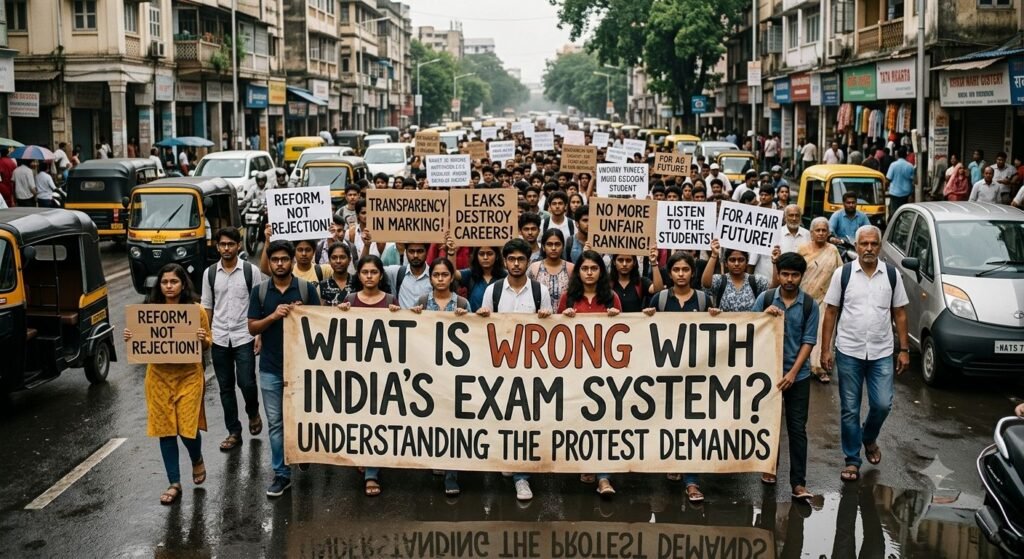
The movement became particularly visible after the NEET UG 2026 paper leak controversy. Students demanded a transparent investigation, protection for honest candidates and responsibility from senior education officials. CJP amplified these demands through online campaigns, sit-ins, public speeches and large demonstrations.
By July 2026, the movement had become a significant political challenge. Tens of thousands of supporters participated in demonstrations, including a major march in Delhi. The protests continued until Education Minister Dharmendra Pradhan resigned and government representatives accepted several demands made by protest organizers.
How the Cockroach Janta Party Started
The origins of the Cockroach Janta Party can be traced to May 2026. During a controversy involving criticism of the judiciary and unemployed young people, a remark reportedly compared young Indians without jobs to cockroaches.
The statement created anger online because unemployment was already a serious source of frustration. Many young people believed they were being blamed or mocked for economic conditions that were largely outside their control.
Abhijeet Dipke responded by creating a satirical identity based on the insult. The idea behind CJP was initially playful and provocative. If young Indians were going to be called cockroaches, they would organize under that name and make themselves impossible to ignore.
The concept quickly spread across social media. Users shared CJP posts, created memes and adopted the Cockroach identity. What began as a half-serious satire page started developing into a broader community.
A volunteer involved with the organization later described CJP as an attempt to reclaim the promise of equal dignity and opportunity. The volunteer explained that the movement became popular because years of frustration had finally found a language that young people understood.
The timing also helped the movement grow. Students were dealing with anxiety surrounding competitive examinations, alleged paper leaks and uncertain employment opportunities. The NEET controversy provided an immediate national issue around which CJP supporters could organize.
Within weeks, online conversations turned into street-level action. CJP organized its first major public gathering at Jantar Mantar in New Delhi in June 2026. Although early commentators questioned whether the movement could attract sustained offline support, it later organized much larger protests and gained national attention.
Who Is the CJP Founder?
Abhijeet Dipke is widely identified as the founder and leading public face of the Cockroach Janta Party. He became known for using online communication, satire and direct political criticism to connect with younger audiences.
Dipke was reportedly 30 years old when CJP emerged in 2026. He had been living in the United States for approximately two years before returning to India to participate in the movement’s first major street protest.
When he arrived at New Delhi airport in June, supporters greeted him and accompanied him toward the protest site. He carried a copy of the Constitution of India, a gesture intended to frame the movement around democratic rights and peaceful public participation rather than violence or disorder.
Dipke’s leadership style differed from that of many traditional political figures. He communicated through short videos, humorous commentary, livestreams and social media posts. His language was informal and designed to reflect how younger users communicate online.
This approach helped him build a connection with people who might not normally attend political meetings or follow lengthy policy debates. Supporters saw him as someone who understood their frustration and could express it in a direct, accessible way.
His critics argued that online popularity did not automatically translate into a sustainable political organization. Some also questioned whether a movement built around satire could develop clear policies or maintain discipline as it expanded.
However, Dipke’s influence grew when the movement successfully organized larger demonstrations. His role became especially prominent during negotiations over the resignation of the education minister and reforms to the national examination system.
Reuters described Dipke as the face of India’s first major Gen Z protest movement. His rise demonstrated how a digital creator could move from online political commentary to leading a national street campaign.
Abhijeet Dipke’s Role in the Movement
As the CJP founder, Dipke served several functions. He was a spokesperson, organizer, negotiator and symbol of the movement’s online culture.
He helped define the language used by CJP supporters. Rather than relying only on formal speeches, the movement used jokes, memes and cultural references. This allowed difficult issues such as examination corruption and unemployment to reach a wider audience.
Dipke also helped connect separate concerns under one movement. NEET students were angry about the exam leak. Job seekers were worried about unemployment. Other young people were frustrated by rising costs, unstable work and limited political representation.
CJP presented these concerns as connected examples of a wider failure to provide young citizens with fair opportunities and accountable institutions.
During the protests, Dipke repeatedly emphasized peaceful action. Supporters were asked to demonstrate without damaging property and to avoid giving authorities a reason to dismiss the movement as violent.
His visibility also made him the subject of intense attention. During the large protest march in Delhi, conflicting reports circulated online suggesting that he had been detained. CJP later clarified that he was neither detained nor arrested.
When Dharmendra Pradhan resigned as education minister, Dipke reportedly became emotional and briefly collapsed on stage after hearing the news. The moment was widely shared online and reflected the pressure surrounding the campaign.
Why Is It Called the Cockroach Janta Party?
The name Cockroach Janta Party is central to the movement’s identity. It began as a response to a remark that many young Indians considered insulting and dismissive.
According to reports, unemployed young people were compared to cockroaches during a public controversy in May 2026. The statement was widely criticized because unemployment can result from economic conditions, limited opportunities, skills mismatches and intense competition rather than laziness or a lack of ambition.
Young social media users responded by reclaiming the word. Instead of allowing Cockroach to remain an insult, they turned it into a symbol of survival and persistence.
Cockroaches are commonly associated with their ability to survive difficult conditions. CJP supporters used that image to suggest that young people would remain present even when ignored by authorities or excluded from traditional political structures.
The word Janta means the people or the public. By using Janta Party, the movement presented itself as an organization of ordinary citizens rather than a group controlled by established political leaders.
The full name therefore combined resistance, satire and public identity. It communicated that people who had been dismissed as unimportant could organize themselves and demand attention.
The phrase Cockroach movement became highly effective online. It was memorable, visually distinctive and easy to use in memes, posters and hashtags.
The name also created a shared identity among supporters. People who had never met could describe themselves as Cockroaches and immediately signal support for the movement’s concerns.
How the Movement Reclaimed an Insult
Reclaiming negative language is not new in social or political movements. Communities sometimes adopt words used against them and change their meaning.
CJP used this strategy successfully. The Cockroach identity no longer represented weakness, unemployment or social failure. It came to represent endurance, humor and refusal to disappear.
Supporters used cockroach images on signs, clothing and social media profiles. Some protest material presented the insect humorously, while other designs turned it into a symbol of resistance.
This strategy weakened the original insult. Once protesters proudly called themselves Cockroaches, opponents could no longer use the word in the same way.
It also helped the movement avoid the formal appearance of traditional political campaigns. CJP’s visual identity felt informal, rebellious and culturally connected to younger internet users.
The use of humor did not mean that supporters viewed their concerns as unimportant. Instead, humor became a way to discuss serious problems without using the language of political institutions that many young people distrusted.
Why the Cockroach Movement Grew So Quickly
The rapid growth of the Cockroach movement resulted from several factors. The name attracted attention, but the movement would not have expanded without deeper public frustration.
Existing Anger Over Unemployment
Many young Indians face intense competition for government jobs, professional positions and university placements. Candidates may spend years preparing for examinations without receiving a secure job.
CJP’s satirical claim that it represented the unemployed and overlooked connected with people who felt their experiences were missing from official political discussions.
The NEET Exam Controversy
The alleged leak of a national medical entrance examination paper gave the movement an urgent issue. More than two million candidates were affected by disruption and uncertainty surrounding the test.
The controversy brought together students, parents and education activists who may not have previously followed CJP.
Social Media Organization
CJP was designed for the digital environment. Its messages were short, visual and easy to share. Memes and parody videos helped serious political criticism travel beyond traditional news audiences.
The movement reportedly developed an enormous online following in a short period. While exact follower totals can change and may differ across platforms, major reporting described CJP as one of India’s fastest-growing youth political communities.
A Relatable Founder
Abhijeet Dipke spoke in a style familiar to younger social media users. His supporters considered him less formal than established politicians and more willing to directly criticize powerful institutions.
Limited Trust in Traditional Politics
Some young people believe established political parties focus on youth mainly during elections. CJP offered them a way to participate without immediately joining a traditional party.
What Are the Goals of the Cockroach Janta Party?
The goals of CJP developed as the movement expanded. Its initial purpose was to respond to the insulting description of unemployed young people. During the NEET protests, its focus became more specific and policy-related.
Examination Reform
CJP called for stronger security across national entrance and recruitment examinations. Supporters wanted better systems for printing, storing, transporting and distributing examination papers.
They also supported improved digital monitoring, secure computer-based testing where practical and independent audits of examination agencies.
Accountability for Paper Leaks
The movement demanded criminal investigations into examination leaks and punishment for individuals involved in organized cheating networks.
Supporters argued that accountability should include contractors, examination center staff, officials and senior administrators when evidence showed negligence or wrongdoing.
Protection of Honest Students
CJP wanted authorities to protect candidates who had prepared honestly. When an examination was cancelled, the movement called for clear communication, practical support and fair arrangements for retesting.
Responsibility From Political Leadership
One of the movement’s most visible demands was the resignation of Education Minister Dharmendra Pradhan. CJP argued that senior leadership needed to accept responsibility for major failures in the examination system.
Pradhan resigned on July 25, 2026, after weeks of protests and negotiations. The resignation was celebrated by organizers as a victory for public accountability.
Withdrawal of Cases Against Protesters
CJP demanded that legal cases filed against peaceful demonstrators be withdrawn. Organizers argued that students should not face criminal consequences for participating in democratic protest.
Support for Affected Families
The movement requested compensation and assistance for families of students whose deaths were connected in reporting and public discussion to examination pressure and the leak controversy.
A Stronger Voice for Young People
Beyond NEET, CJP sought to create a platform through which students, unemployed graduates and young workers could express their concerns.
Was CJP Only a Student Movement?
CJP was strongly associated with students because the NEET controversy became its most important campaign. However, its public identity was broader than a conventional student movement.
Supporters included graduates seeking employment, professionals concerned about government accountability, parents affected by examination failures and activists focused on civil rights.
This wider participation helped CJP grow. Parents brought credibility to complaints about educational pressure. Working professionals showed that the movement was not limited to teenagers or university campuses.
The protests also received support from prominent public figures and political representatives. Engineer and activist Sonam Wangchuk joined the sit-in and began a hunger strike on June 28, increasing national attention.
Opposition politicians supported some of the protesters’ demands, although CJP supporters often emphasized that their campaign should not be controlled by any existing political party.
The movement attempted to balance broad support with independence. This allowed it to welcome assistance without immediately becoming part of a traditional opposition alliance.
How CJP Used Memes and Humor as Protest Tools
One of the most distinctive features of the Cockroach movement was its use of digital humor. CJP supporters created memes, parody videos, satirical slogans and creative protest clothing.
This content criticized government officials, pro-government media narratives and the police response to demonstrations. It also helped explain complicated political issues in a format that young users could quickly understand.
Traditional protest messages can struggle to attract attention online. CJP’s humor increased engagement because users shared content not only for political reasons but also because it was entertaining.
The movement used irony to challenge authority. Instead of presenting leaders as distant and untouchable, memes reduced them to subjects of public criticism and jokes.
Associated Press reporting described humor and memes as important and unusual weapons used by the movement. This style marked a shift in how young Indians participated in political criticism online.
However, digital humor also created challenges. Satirical posts could be misunderstood, removed from context or presented as factual claims.
CJP therefore needed to distinguish between jokes, protest messaging and verified information. The movement’s long-term credibility would depend partly on its ability to maintain that distinction.
From Social Media to Street Protests
Many online movements become popular temporarily but struggle to produce offline participation. CJP’s ability to move from social media into public demonstrations became one of its most important achievements.
The first street protest in Delhi attracted attention but also criticism. Some commentators argued that attendance was smaller than expected and that the movement might lose momentum.
Instead, CJP continued organizing. Sit-ins, online campaigns and support from other activists helped expand the movement.
On July 20, tens of thousands of demonstrators participated in a major Delhi protest despite police restrictions. Protesters attempted to march toward Parliament as authorities used barricades, tear gas and batons to control the crowds.
The confrontation generated extensive media attention. Reports of injuries and videos of police action spread online, increasing sympathy for the protesters.
The protest demonstrated that CJP was no longer only a satire page. It had developed the ability to mobilize large numbers of people in the capital and inspire related gatherings in other cities.
How the Government Responded to CJP
The government’s response developed over several stages. Officials initially defended actions taken after the examination leak and emphasized investigations, arrests and plans for reform.
CJP supporters believed the response was insufficient because the education minister remained in office. They continued demanding higher-level accountability.
Authorities also attempted to control demonstrations through restrictions, barricades and limits on movement. During the largest Delhi march, police used force when protesters moved toward restricted areas.
The CJP account on X was temporarily blocked during the controversy. The Delhi High Court later allowed the account to be restored after the central government stated that it had no objection to unblocking it.
As protests continued, government representatives entered negotiations with movement leaders. Initial discussions did not immediately resolve the demand for the education minister’s resignation.
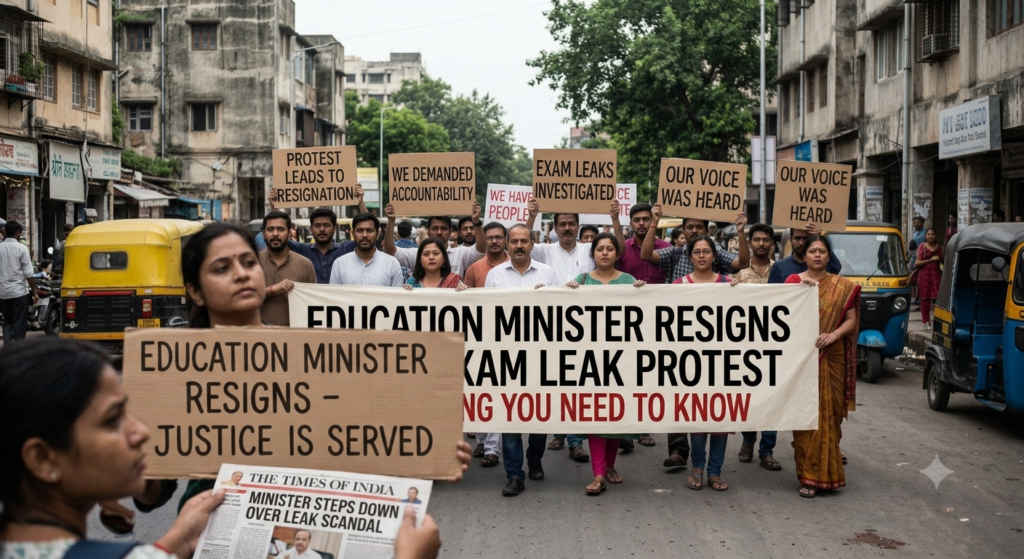
Dharmendra Pradhan eventually stepped down on July 25. The government also agreed to examination reforms, withdrawal of cases against protesters and support for affected families. CJP then announced the end of the organized demonstrations and asked supporters to leave peacefully.
Public Response to the Cockroach Janta Party
Public reaction to CJP was divided but highly engaged. Supporters viewed it as a fresh and necessary youth movement. Critics questioned its organization, leadership and long-term direction.
Support From Students and Parents
Students supported CJP because it gave national visibility to concerns about examination integrity. Parents joined because they understood the financial and emotional cost of competitive exam preparation.
Many supporters believed established institutions had responded too slowly to student concerns. CJP’s direct language made them feel represented.
Support From Civil Society
Activists and civil society groups defended the right of CJP supporters to protest peacefully. Criticism of the police response increased after demonstrators were injured during the Delhi march.
Political Support
Opposition parties supported demands for the education minister’s resignation and examination reform. They presented the protests as evidence of failures within the government.
CJP nevertheless attempted to preserve its independent identity rather than becoming an official branch of an established party.
Criticism of the Movement
Critics questioned whether CJP had a detailed policy platform beyond protest demands. Others argued that satire and social media popularity were not substitutes for formal organization.
Some early commentators predicted that the movement would struggle to attract people outside online spaces. The later mass demonstrations challenged that criticism, although questions about long-term structure remained.
Celebrity Silence
Many protesters criticized Bollywood celebrities and sports personalities for remaining silent. Supporters argued that public figures benefited from young audiences but avoided controversial issues affecting those same fans.
The debate highlighted wider questions about whether celebrities have a responsibility to speak during major public movements.
Why CJP Connected With India’s Generation Z
CJP’s growth reflected the political experience of India’s Generation Z. This generation has grown up with social media, digital education, competitive examinations and constant public discussion about employment.
Young Indians can compare government promises with personal experiences in real time. They can share examination problems, workplace conditions and political criticism instantly.
CJP communicated in the same environment. It did not expect supporters to attend formal party meetings before participating. A person could join the conversation by sharing a post, creating a meme, attending a local gathering or supporting a public demand.
The movement also rejected the idea that serious political participation must always use formal language. Its humorous style reflected how younger audiences naturally communicate.
India has a very large young population, and concerns about education and employment affect millions of families. Major reporting described the Cockroach movement as evidence of growing political impatience among young citizens.
Is the Cockroach Janta Party a Real Political Party?
The answer depends on how the term political party is being used. CJP is political because it makes demands, criticizes public officials and organizes demonstrations.
However, it did not begin as a conventional registered electoral party. It emerged as a satirical online movement and youth collective.
The organization may choose to develop a formal political structure in the future, but such a transition would create important challenges. It would need clear leadership rules, funding transparency, membership systems and policies covering issues beyond education and employment.
Remaining a movement could allow CJP to stay flexible and avoid some of the compromises associated with electoral politics. Becoming a formal party could provide greater influence over legislation and public policy.
Movement leaders and supporters would need to decide whether electoral participation would strengthen CJP’s goals or weaken its independent identity.
What Are CJP’s Future Plans?
The movement achieved its immediate goal when the education minister resigned and the government accepted key protest demands. However, the future of CJP remains open.
Monitoring Examination Reforms
CJP is likely to watch whether the government implements promised changes. Protesters will expect stronger security, faster investigations and clearer communication from examination authorities.
Supporting Other Student Issues
The movement may become involved in university disputes, recruitment examinations, student mental health and education affordability.
Expanding Employment Campaigns
Because unemployment was central to CJP’s origin, the group may expand its focus to job creation, recruitment transparency, workplace conditions and opportunities for graduates.
Building Local Networks
A national movement requires local organization. CJP may create student chapters, volunteer teams or issue-based groups in different cities.
Remaining a Digital Movement
The organization could continue primarily as a digital pressure group. This would allow it to mobilize rapidly around specific issues without building a permanent party structure.
Entering Electoral Politics
Some supporters may encourage CJP to contest elections. Such a decision would require formal registration, candidates, fundraising and a comprehensive policy platform.
The movement’s future will depend on whether it can maintain public trust after the immediate NEET campaign. Protest victories can generate attention, but sustainable organizations require internal accountability and consistent goals.
Challenges Facing the Cockroach Janta Party
CJP’s rapid rise provides opportunities, but it also creates risks.
Maintaining a Clear Identity
The movement includes people with different political views. Keeping them united after the NEET controversy may be difficult.
Preventing Misinformation
A movement built on fast-moving social media must verify claims carefully. False information could damage its credibility and distract from legitimate demands.
Developing Detailed Policies
Protest slogans can communicate anger, but long-term reform requires detailed proposals. CJP will need experts in education, employment, law and public administration.
Internal Democracy
If the organization expands, supporters may demand transparent leadership, decision-making and financial systems.
Avoiding Political Capture
Established parties may attempt to influence or absorb popular youth movements. CJP will need to manage external support without losing independence.
Sustaining Participation
Large demonstrations often decline after immediate demands are achieved. The movement will need new methods of participation if it wants to remain active.
Frequently Asked Questions About the Cockroach Janta Party
What is the Cockroach Janta Party?
The Cockroach Janta Party is a youth-led Indian movement that began as a satirical social media project in 2026. It later became a major protest organization focused on examination reform, student rights, unemployment and government accountability.
What does CJP stand for?
CJP stands for Cockroach Janta Party.
Who is the CJP founder?
Abhijeet Dipke is widely recognized as the founder and leading public face of CJP.
Who is Abhijeet Dipke?
Abhijeet Dipke is an activist and digital content figure who created the Cockroach Janta Party and helped organize its online campaigns and public protests.
Why is it called the Cockroach Janta Party?
The name was adopted after unemployed young Indians were reportedly compared to cockroaches. Supporters reclaimed the word and transformed it into a symbol of resilience.
When was CJP founded?
The movement began in May 2026 as a satirical online response and quickly developed into a broader youth organization.
Is CJP a registered political party?
CJP began as a protest movement and satire project rather than a conventional electoral party. Its future political structure has not been fully established.
Why did CJP protest?
CJP led demonstrations over the NEET examination paper leak, demanded education reform and called for senior-level accountability.
What were CJP’s main demands?
The movement demanded the education minister’s resignation, examination reforms, investigation of paper leaks, withdrawal of cases against protesters and support for affected families.
Did CJP achieve its demands?
The movement achieved several major demands after Education Minister Dharmendra Pradhan resigned and the government agreed to reforms and other concessions.
Is the Cockroach movement still active?
The organized NEET demonstrations ended after the minister’s resignation, but CJP may continue as a wider youth movement.
Was CJP only supported by students?
No. Its supporters also included parents, professionals, activists, job seekers and political representatives.
How did CJP become popular?
CJP became popular through social media, memes, political satire and its involvement in the NEET protest movement.
Did police act against CJP protesters?
Yes. Police used barricades, tear gas and batons during a major Delhi march after demonstrators attempted to move toward Parliament.
What role did Sonam Wangchuk play?
Sonam Wangchuk supported the protesters and began a hunger strike, helping bring additional attention to the movement.
What does CJP want for students?
CJP wants fair examinations, stronger security, transparent investigations, mental health support and accountability when education systems fail.
Will CJP contest elections?
The movement has not clearly established whether it will become an electoral party. It may remain a pressure group or develop a formal political structure in the future.
Conclusion
The Cockroach Janta Party became one of India’s most recognizable new youth movements by transforming an insult into a shared symbol of resistance.
Founded by Abhijeet Dipke, CJP began as an online satire project but quickly developed into a national campaign. Its rapid growth was driven by frustration over unemployment, examination paper leaks, political accountability and the feeling that younger citizens were being ignored.
The movement’s involvement in the NEET controversy gave it a clear public cause. Through social media campaigns, sit-ins and large demonstrations, CJP helped maintain pressure on the government until Education Minister Dharmendra Pradhan resigned and several protest demands were accepted.
CJP’s success also demonstrated the changing nature of political participation. A movement no longer needs to begin with party offices, formal membership cards or traditional media coverage. It can start with a meme, develop through shared online frustration and eventually bring thousands of people into the streets.
However, the movement’s long-term importance will depend on what it does after its first major victory. CJP must decide whether it wants to remain a flexible youth collective, become a policy-focused organization or enter electoral politics.
Whatever direction it chooses, the Cockroach movement has already shown that young Indians can reclaim dismissive language, organize around shared concerns and demand accountability from powerful institutions.