Why Did the Education Minister Resign? Complete Timeline of the Exam Leak Protest
India’s Education Minister Dharmendra Pradhan resigned on July 25, 2026, after weeks of youth-led demonstrations over alleged examination paper leaks, irregularities in the testing system and the government’s handling of the crisis. His departure became one of the most significant political consequences of the exam leak India controversy.
The resignation followed sustained pressure from students, parents, activists and the Cockroach Janta Party, also known as CJP. Protesters argued that the repeated disruption of competitive examinations had damaged public confidence and placed the futures of millions of young people at risk.
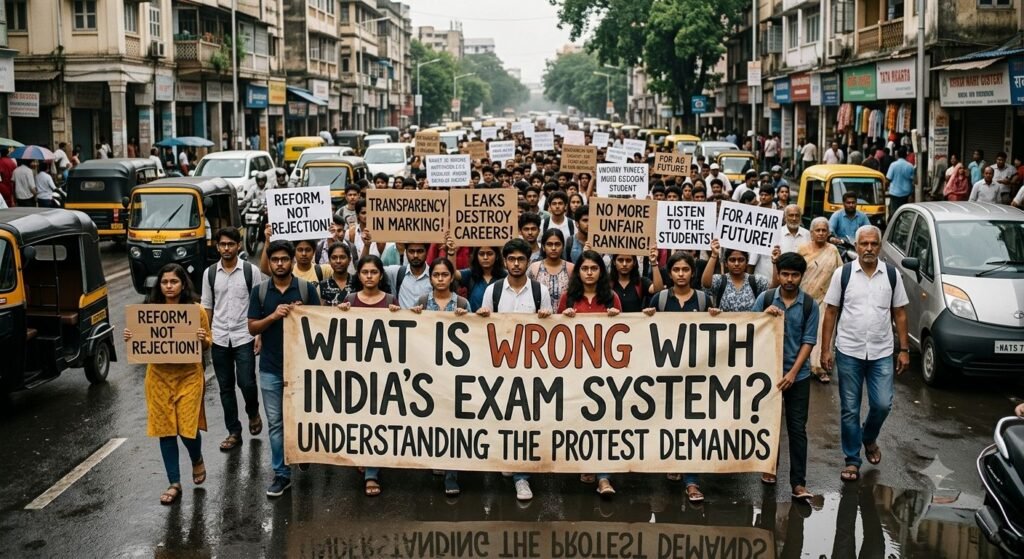
The movement initially focused on allegations surrounding the NEET UG 2026 medical entrance examination. It later expanded into a broader campaign about examination security, student mental health, unemployment, police conduct and political accountability.
After the resignation was accepted, Cabinet Minister Pralhad Joshi received additional charge of the Ministry of Education. The government also agreed to several protest demands, including examination reforms, the withdrawal of cases against demonstrators and assistance for families affected by the crisis.
This article explains the background to the Dharmendra Pradhan resignation, how public outrage developed, the complete protest timeline, why the minister ultimately stepped down, who replaced him and what the leadership change means for India’s education system.
Background to the Exam Leak Controversy
The controversy began after allegations emerged that the NEET UG 2026 examination paper had been leaked before the scheduled test. NEET is India’s main entrance examination for undergraduate medical education and is taken by more than two million candidates.
A student’s NEET score can determine whether they receive admission to a government medical college, enter an expensive private institution or need to spend another year preparing. The examination therefore carries enormous academic, financial and emotional importance.
Reports that some candidates may have gained unauthorized access to the paper created immediate concern about whether the examination remained fair. Students who had studied honestly feared that their performance could be compared with candidates who had received an illegal advantage.
The allegations also raised questions about the organizations responsible for creating, storing, transporting and distributing examination materials. Students wanted to know how confidential questions could have been accessed and whether the failure involved examination centers, contractors, coaching networks or officials.
The authorities eventually cancelled the affected examination and arranged a re-examination. The National Testing Agency published notices for the NEET UG 2026 re-examination scheduled for June 21, including information about admit cards, biometric verification and examination procedures.
Although the re-examination provided candidates with another opportunity, it did not immediately resolve public anger. Students had to restart preparation, change travel plans and manage continuing uncertainty about counselling and admission schedules.
The controversy also revived memories of earlier examination irregularities. Students argued that paper leaks were not isolated mistakes but part of a recurring problem affecting entrance and recruitment tests across India.
Why the Exam Leak Caused Widespread Public Outrage
The NEET controversy affected a very large number of candidates, but public outrage extended beyond those who had taken the examination. Parents, teachers, job seekers and working professionals saw the scandal as a threat to the principle of merit.
Competitive examinations play a major role in access to education and government employment in India. For many families, success in these tests represents an opportunity for financial security and upward mobility.
Students may spend several years preparing for one entrance examination. Families often pay for coaching, books, accommodation, online courses and transportation. A paper leak can undermine all of that investment.
The emotional consequences were equally serious. Candidates faced uncertainty about whether the original test would be cancelled, whether they would need to travel again and whether admission deadlines would be delayed.
News reports connected the examination crisis with severe distress among students, including deaths by suicide. Families and protesters said the fear of repeating the examination and losing years of preparation had placed unbearable pressure on some candidates.
The government announced investigations and arrests, but many students believed its early response focused too heavily on individual offenders and not enough on institutional responsibility.
Protesters wanted to know why the security system had failed and why senior officials should remain in their positions after an examination affecting millions of candidates had been compromised.
This demand for higher-level accountability eventually made the resignation of the education minister one of the movement’s central conditions.
How the Cockroach Janta Party Became Involved
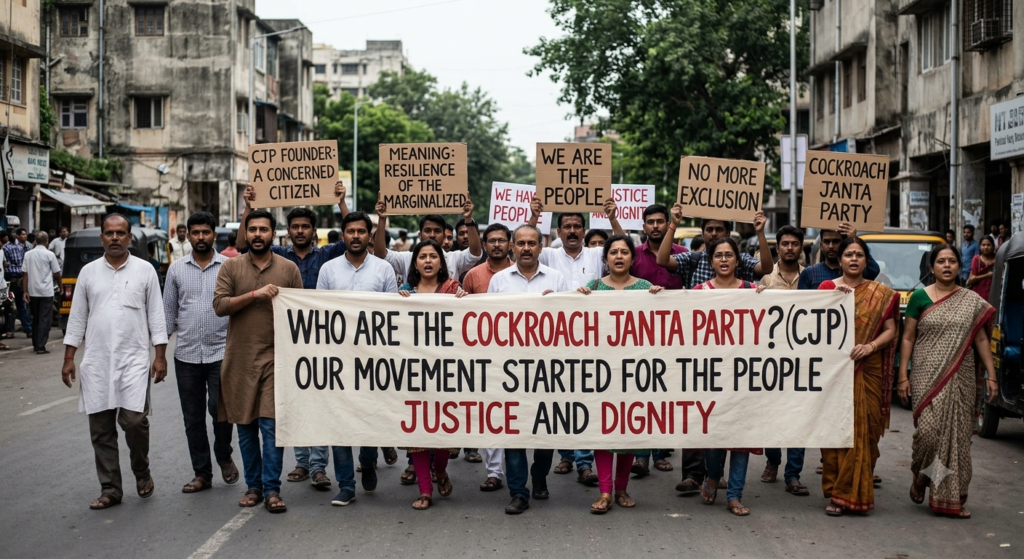
The Cockroach Janta Party began as a satirical youth movement but became one of the main organizations leading the exam leak protest. Its founder, Abhijeet Dipke, used social media, political humor and direct criticism to mobilize students and young job seekers.
CJP supporters adopted the name Cockroach after unemployed youth were reportedly compared to cockroaches during a public controversy. Instead of rejecting the word, they transformed it into a symbol of persistence.
The movement’s involvement gave the NEET protests a recognizable identity. CJP shared updates, organized demonstrations and connected the examination controversy with wider concerns about unemployment and the treatment of young people.
The group demanded the resignation of Dharmendra Pradhan, reform of the examination system, compensation for families affected by student deaths and the withdrawal of legal cases against peaceful protesters.
What began as an online movement developed into sit-ins and marches. Jantar Mantar in New Delhi became the central location for the demonstrations, while related gatherings took place in universities and other cities.
CJP’s growth demonstrated how rapidly online anger could become organized political action. The movement attracted students, parents, professionals, activists and supporters who did not normally participate in political demonstrations.
Complete Timeline of the Exam Leak Protest
May 3, 2026
The NEET UG 2026 examination was held for candidates seeking admission to undergraduate medical programs. More than two million students were affected by the test and its outcome.
Early to Mid May 2026
Allegations began circulating that the examination paper had been leaked before the test. Students shared claims and demanded an immediate investigation.
The controversy grew through education forums, messaging groups and social media. Candidates asked the National Testing Agency and the Ministry of Education to clarify whether the paper had been compromised.
Mid May 2026
The authorities moved toward cancelling the affected examination and arranging a fresh test. The decision confirmed that concerns about the original examination were serious enough to require corrective action.
For candidates, cancellation created a second challenge. They needed to begin preparing again without knowing how quickly the new examination would be held or how admission schedules would be affected.
Late May 2026
Public anger continued to grow. Parents and education professionals joined students in demanding transparency.
Questions also emerged about the National Testing Agency and its ability to secure high-stakes examinations. Protesters asked whether external contractors, examination center employees or officials had contributed to the failure.
Early June 2026
The Cockroach Janta Party began moving its online campaign into public spaces. Abhijeet Dipke returned to India and participated in demonstrations in New Delhi.
Protesters called for a transparent investigation and the resignation of Education Minister Dharmendra Pradhan. Early gatherings demonstrated that the movement had the ability to attract supporters beyond social media.
June 20, 2026
CJP supporters held a protest near Parliament in New Delhi. Demonstrators used slogans and symbolic actions to demand the minister’s resignation over alleged examination irregularities and repeated paper leaks.
June 21, 2026
The NEET UG 2026 re-examination was conducted. The National Testing Agency issued instructions covering admit cards, biometric verification, permitted items and other procedures.
The re-examination addressed the immediate need to provide candidates with a new test, but it did not end demands for responsibility and reform.
June 28, 2026
Activist Sonam Wangchuk began a hunger strike in support of the protesters. His participation brought additional national attention to the movement.
Students and representatives of other organizations joined the continuing sit-in. The hunger strike became a symbol of the protesters’ determination and increased pressure on government officials to negotiate.
Early July 2026
Demonstrations continued at Jantar Mantar. Students called for Pradhan’s resignation, compensation for affected families and structural changes to the examination system.
The government emphasized that investigations were underway and that individuals connected to the alleged leak were being arrested. Protesters responded that criminal proceedings did not eliminate the need for ministerial accountability.
Mid July 2026
The movement gained support from civil society activists, opposition parties and people outside the student community.
Sonam Wangchuk’s continuing hunger strike increased concern about his health. Images of the protest camp and messages from students circulated widely online.
July 20, 2026
Thousands of protesters gathered in New Delhi and attempted to march toward Parliament. Police used barricades, tear gas and batons as authorities tried to prevent demonstrators from entering restricted areas.
The confrontation resulted in injuries and intensified criticism of the police response. Associated Press reported that protesters had been camping at Jantar Mantar for about a month and were demanding the education minister’s resignation, examination reforms and compensation for families affected by student deaths.
July 21, 2026
Protests continued after the police clashes. Thousands gathered again despite assurances from Prime Minister Narendra Modi that strict action would be taken over the examination leaks.
Reuters reported that approximately 180 people had been injured in the previous day’s confrontation. Opposition politicians also joined the protests, increasing pressure on the government.
July 22 and July 23, 2026
Public attention remained focused on the demonstrations and the hunger strike. The government faced criticism over restrictions affecting transport, internet access and movement in parts of Delhi.
Sonam Wangchuk ended his 26-day hunger strike after negotiations and concerns about his health. However, CJP leaders said the wider movement would continue until its main demands were accepted.
July 24, 2026
Government representatives held talks with protest leaders. CJP maintained that the resignation of Dharmendra Pradhan was a non-negotiable condition for ending the demonstrations.
The government requested additional time to respond. Reuters reported that other demands included dropping cases against protesters and providing compensation to affected families.
July 25, 2026
Dharmendra Pradhan submitted his resignation after weeks of pressure. President Droupadi Murmu accepted his resignation from the Union Council of Ministers with immediate effect.
The government assigned Pralhad Joshi additional charge of the Ministry of Education. The official appointment was confirmed in a Press Information Bureau communique issued on July 25.
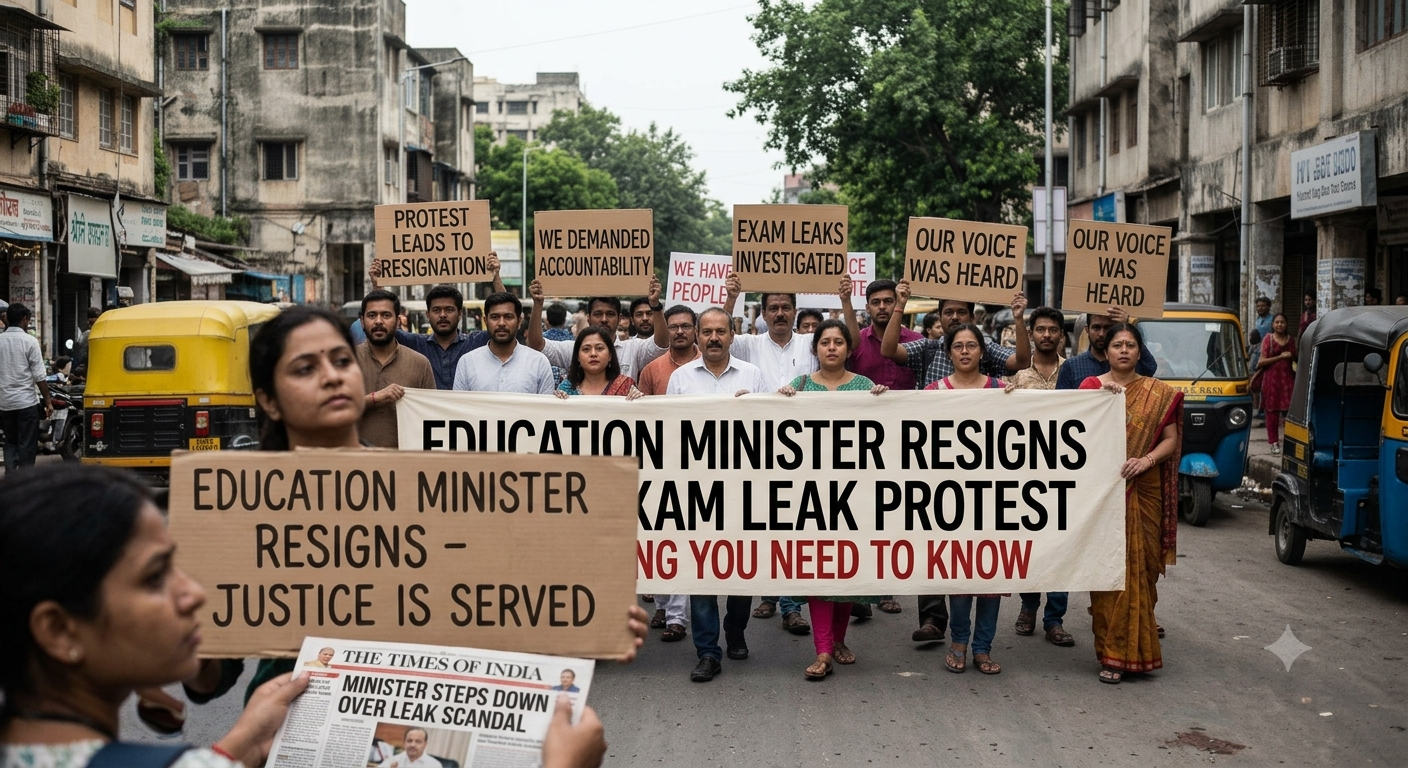
CJP leaders announced that the protests would end after the government accepted their major demands. Demonstrators celebrated at Jantar Mantar and were asked to leave peacefully.
The government also agreed to move forward with examination reforms, withdraw charges against protesters and provide assistance to families affected by the crisis.
Why Did Dharmendra Pradhan Resign?
Dharmendra Pradhan resigned because the examination controversy had developed into a sustained national political crisis. Although the minister was not personally accused of leaking the paper, protesters held him responsible for the performance of the institutions under the Education Ministry.
The resignation can be understood through several connected factors.
Loss of Public Confidence
The alleged paper leak damaged confidence in the examination system. Students believed that the government had failed to protect one of the country’s most important entrance tests.
Conducting a re-examination addressed the immediate result of the leak but did not answer broader questions about why the failure occurred.
Demand for Ministerial Accountability
Protesters argued that accountability should not end with arrests. They wanted senior political leaders to accept responsibility for institutional failures.
For CJP, the minister’s resignation became a test of whether the government was willing to recognize the seriousness of the crisis.
Sustained Street Pressure
The demonstrations continued for more than a month. Students maintained a visible presence at Jantar Mantar and organized marches despite police restrictions.
The movement did not disappear after the re-examination. Instead, police confrontations and the hunger strike generated additional sympathy and attention.
Failure of Early Negotiations
The government’s early promises of investigation and reform did not satisfy protest leaders. CJP insisted that discussions could not conclude while Pradhan remained in office.
By July 24, government representatives were negotiating directly with movement leaders, and the resignation had become the main unresolved issue.
Political Pressure From the Opposition
Opposition parties used the controversy to accuse the government of failing students and protecting senior officials.
The issue disrupted parliamentary proceedings and created a wider national debate about youth unemployment, public examinations and government accountability.
Fear of Wider Political Damage
The movement had expanded beyond NEET candidates. It attracted young people concerned about employment, corruption and the responsiveness of political institutions.
Reuters described the protests as one of the biggest political challenges to Prime Minister Narendra Modi during his third term. The government faced the risk that continued unrest could influence public opinion ahead of important state elections.
A Path Toward Ending the Protest
Pradhan’s resignation created a way for both sides to end the confrontation. Protesters could claim a major victory, while the government could begin implementing reforms under new leadership.
Once the resignation was accepted, CJP announced the end of its organized demonstrations. This suggests that the leadership change was central to the final settlement.
Was the Resignation an Admission of Personal Wrongdoing?
The resignation should not automatically be interpreted as proof that Dharmendra Pradhan personally participated in the alleged leak. Public reporting focused on political and administrative responsibility rather than direct involvement in the criminal activity.
Investigators were responsible for determining who obtained, distributed or used the examination paper. Reuters reported that the Central Bureau of Investigation had arrested 13 suspects, including teachers and a doctor.
Ministerial responsibility is different from criminal responsibility. A minister may resign because a department under their leadership experiences a major failure, even when the minister is not personally accused of committing the act.
For protesters, the resignation represented recognition that senior officials must answer for the institutions they oversee. For the government, it provided an opportunity to reset the Education Ministry’s response and reduce public pressure.
What Did Dharmendra Pradhan Say About His Resignation?
Pradhan had previously defended the government’s response by pointing to the cancellation of the examination, the re-examination and the criminal investigation.
He maintained that action was being taken against those responsible and that the government was committed to protecting students.
However, those steps did not persuade protesters to withdraw their demand. By the time of his resignation, the issue had moved beyond the technical management of the examination and become a question of political confidence.
The official Press Information Bureau communique confirmed that President Droupadi Murmu accepted Pradhan’s resignation from the Union Council of Ministers under Article 75 of the Constitution.
Who Is the New Education Minister?
Pralhad Joshi received additional charge of the Ministry of Education after Dharmendra Pradhan resigned. The appointment was made on the advice of Prime Minister Narendra Modi and confirmed by the President.
Joshi was already serving in the Union Cabinet. He held responsibility for Consumer Affairs, Food and Public Distribution and New and Renewable Energy when the education portfolio was added to his duties.
The official announcement described the Education Ministry as an additional charge rather than confirming a complete long-term cabinet reshuffle.
Joshi is an experienced Bharatiya Janata Party politician and a long-serving Member of Parliament from Dharwad in Karnataka. His political background includes previous service in major cabinet roles.
His immediate responsibility will be to stabilize the Education Ministry and demonstrate that the government is serious about examination reform.
What Challenges Will Pralhad Joshi Face?
Pralhad Joshi takes charge of the Education Ministry during a period of intense scrutiny. Students are unlikely to accept general promises without visible action.
Restoring Trust in the Examination System
The most urgent challenge is rebuilding confidence among students and parents. The ministry must show that future national examinations will be protected by stronger security.
Reforming the National Testing Agency
The National Testing Agency will face questions about its structure, contractors, management and emergency response procedures.
Joshi may need to supervise independent audits and establish clearer accountability across every stage of examination administration.
Completing the Criminal Investigation
The government must allow investigators to identify the full network involved in the alleged leak. Public trust will depend on whether the investigation reaches organizers and facilitators rather than only lower-level participants.
Implementing Promised Reforms
Protesters will monitor whether reform announcements lead to actual policies. Possible changes include encrypted digital delivery, computer-based testing, stronger biometric systems and more secure examination centers.
Supporting Affected Students
The ministry must also address the emotional and financial effects of examination cancellation. Candidates may need counselling, grievance support and clearer communication about admissions.
Managing Multiple Cabinet Responsibilities
Because Joshi received education as an additional charge, questions may arise about whether he can devote sufficient attention to a ministry facing a major crisis.
What Reforms Are Protesters Demanding?
The resignation of the education minister was only one part of the protesters’ agenda. CJP and student groups demanded long-term changes that could prevent another crisis.
Independent Investigation of Paper Leaks
Students want investigations that are protected from political and institutional interference. Findings should explain how papers were accessed and which safeguards failed.
Faster Trials and Stronger Penalties
The government has discussed faster legal proceedings for examination leak cases. Protesters want organizers of cheating networks to face meaningful penalties.
Secure Question Paper Management
Authorities may need to reduce the number of people who can access examination materials. Printing, storage and transport systems should be monitored and documented.
Computer-Based Examinations
Digital examinations could reduce some risks associated with printed papers. Questions could be encrypted and delivered closer to the beginning of each test.
However, computer-based testing would require reliable infrastructure, cyber security and equal access for candidates in rural and remote areas.
Independent Security Audits
External specialists could regularly inspect testing systems and identify weaknesses before examinations are conducted.
Transparent Communication
Students want official updates to be published quickly when irregularities are reported. Delayed communication allows rumors and misinformation to spread.
Student Mental Health Support
The crisis highlighted the emotional pressure created by competitive examinations. Protesters want counselling services and emergency support for affected candidates.
Compensation for Affected Families
The movement demanded support for families of students whose deaths were linked in reporting and public discussion to the examination crisis.
Withdrawal of Cases Against Protesters
Organizers argued that students participating in peaceful demonstrations should not face criminal cases. The government agreed to drop charges as part of the settlement ending the protest.
Political Impact of the Dharmendra Pradhan Resignation
The resignation represents a rare example of sustained youth protest forcing a change within the Union Cabinet.
It also gives political significance to a generation that is often described mainly through education, employment and social media trends.
A Major Victory for the Youth Movement
CJP supporters presented the resignation as proof that peaceful public pressure can produce political accountability.
The movement began with satire and online content but developed into a campaign capable of influencing a cabinet-level decision.
Pressure on the Modi Government
The controversy challenged the government’s ability to present itself as responsive to young citizens. Continued demonstrations risked expanding dissatisfaction beyond examination reform.
Reuters reported that Pradhan was only the second minister to resign under Modi amid a major scandal, making the decision politically notable.
Opportunity for the Opposition
Opposition parties used the controversy to criticize the government and support demands for accountability.
They may continue raising paper leaks, unemployment and student pressure during parliamentary debates and election campaigns.
Greater Scrutiny of Other Examinations
The resignation may encourage students affected by other entrance or recruitment tests to organize similar campaigns.
Government departments will face greater pressure to respond quickly whenever allegations of cheating or paper leaks emerge.
Changing Forms of Political Organization
The movement demonstrated that a new political organization can grow through social media without relying on traditional party structures.
CJP’s combination of memes, livestreams and street protests may influence future youth movements in India.
Accountability as a National Issue
The crisis expanded public discussion about what ministerial responsibility should mean. Protesters argued that senior officials should not remain protected when the institutions they supervise fail on a national scale.
Did the Protest End After the Resignation?
CJP called off its organized demonstrations after Pradhan resigned and the government accepted its other major demands.
Protest leaders celebrated at Jantar Mantar and asked supporters to leave the site peacefully. Transport and communication restrictions imposed during the unrest were also lifted.
Associated Press reported that the Cockroach movement ended its weeks of protests after saying that the government had accepted all its demands.
However, ending the demonstrations does not mean that the wider issue has disappeared. Students and organizers are expected to monitor whether the government fulfils its promises.
The movement could return if reforms are delayed or if another major examination leak occurs.
What Happens Next for India’s Education Ministry?
The next stage will focus on implementation. The Education Ministry must convert political agreements into administrative action.
Pralhad Joshi will be expected to publish a clear reform plan, communicate with students and review the National Testing Agency’s procedures.
The criminal investigation must continue independently. Authorities will need to explain who organized the alleged leak and whether the network influenced examination results.
The government may also review the use of private contractors and local examination centers. Every organization involved in handling confidential materials will face greater scrutiny.
Another priority will be improving student support. Examination agencies need systems that recognize the emotional consequences of cancellations, delays and sudden retests.
The long-term outcome will determine whether the resignation is remembered as a symbolic change or the beginning of meaningful reform.
Frequently Asked Questions
Did India’s education minister resign?
Yes. Dharmendra Pradhan resigned from the Union Council of Ministers on July 25, 2026. President Droupadi Murmu accepted his resignation with immediate effect.
Why did Dharmendra Pradhan resign?
He resigned after weeks of protests over alleged examination paper leaks and irregularities. Protesters demanded his removal as a form of senior-level political accountability.
Was Dharmendra Pradhan accused of leaking the exam paper?
Public reporting did not accuse Pradhan of personally leaking the paper. The resignation related to political and administrative responsibility for the examination system.
Which examination caused the protests?
The immediate controversy involved the NEET UG 2026 medical entrance examination, which was cancelled and conducted again after allegations of a paper leak.
How many students were affected?
The controversy affected more than two million NEET candidates who faced uncertainty, cancellation and a re-examination.
Who replaced Dharmendra Pradhan?
Pralhad Joshi was assigned additional charge of the Ministry of Education. The appointment was officially announced on July 25, 2026.
Is Pralhad Joshi the permanent education minister?
The official announcement assigned him additional charge of the ministry. The government may later announce whether the arrangement will remain permanent.
Who organized the exam leak protest?
The Cockroach Janta Party was one of the leading organizations. Students, parents, activists and other civil society groups also participated.
What is the Cockroach Janta Party?
CJP is a youth-led movement founded by Abhijeet Dipke. It began as a satirical online collective and developed into a national protest organization.
Why did protesters demand the minister’s resignation?
They believed senior officials needed to accept responsibility for failures within the examination system. Arresting individuals involved in the leak was not considered sufficient.
Did police use force during the protest?
Yes. Police used barricades, tear gas and batons when demonstrators attempted to march toward Parliament on July 20.
Were protesters arrested or charged?
Some demonstrators faced detention or legal cases during the movement. The government later agreed to withdraw charges as part of the settlement.
Did Sonam Wangchuk participate?
Yes. Sonam Wangchuk joined the movement and completed a 26-day hunger strike in support of the protesters’ demands.
Was the NEET examination conducted again?
Yes. The National Testing Agency conducted the NEET UG 2026 re-examination on June 21, 2026.
Were any suspects arrested?
Reuters reported that the Central Bureau of Investigation arrested 13 suspects in connection with the alleged leak.
What reforms did the government promise?
The government agreed to improve examination security, pursue legal action, withdraw cases against protesters and support affected families.
Did the Cockroach movement end its protest?
Yes. CJP called off the demonstrations after Pradhan resigned and the government accepted the movement’s major demands.
Will NEET become computer-based?
A computer-based examination has been discussed as a possible reform. Full implementation details and a confirmed transition schedule would need to be officially announced.
What is the political importance of the resignation?
The resignation showed that sustained youth-led protest could create cabinet-level political consequences and influence national education policy.
What happens next?
Pralhad Joshi and the Education Ministry must implement reforms, complete investigations and rebuild public confidence in national examinations.
Conclusion
The resignation of Dharmendra Pradhan marked the most significant political outcome of the NEET Exam Leak Protest 2026. What began as anger over an alleged paper leak developed into a national movement demanding transparency, institutional reform and senior-level accountability.
Students argued that conducting a re-examination and arresting suspects did not fully address the failure. They wanted the government to recognize that ministers and senior administrators are responsible for the institutions they lead.
The Cockroach Janta Party played a central role in maintaining pressure through social media campaigns, sit-ins and large demonstrations. The involvement of parents, activists and opposition representatives helped transform an education controversy into a wider political challenge.
Pradhan’s resignation on July 25 allowed the government and protesters to reach an agreement. CJP ended its demonstrations, while Pralhad Joshi received additional charge of the Education Ministry.
The leadership change is important, but the future of the examination system will depend on implementation. Students need secure testing, transparent investigations, faster communication and meaningful support when failures occur.
If the promised reforms are introduced successfully, the protest may become a turning point in India’s approach to national examinations. If the changes remain limited to announcements, public distrust could return during the next controversy.
The central demand of the movement was straightforward. Students wanted an education system in which honest preparation is protected, merit remains meaningful and public officials accept responsibility when national institutions fail.