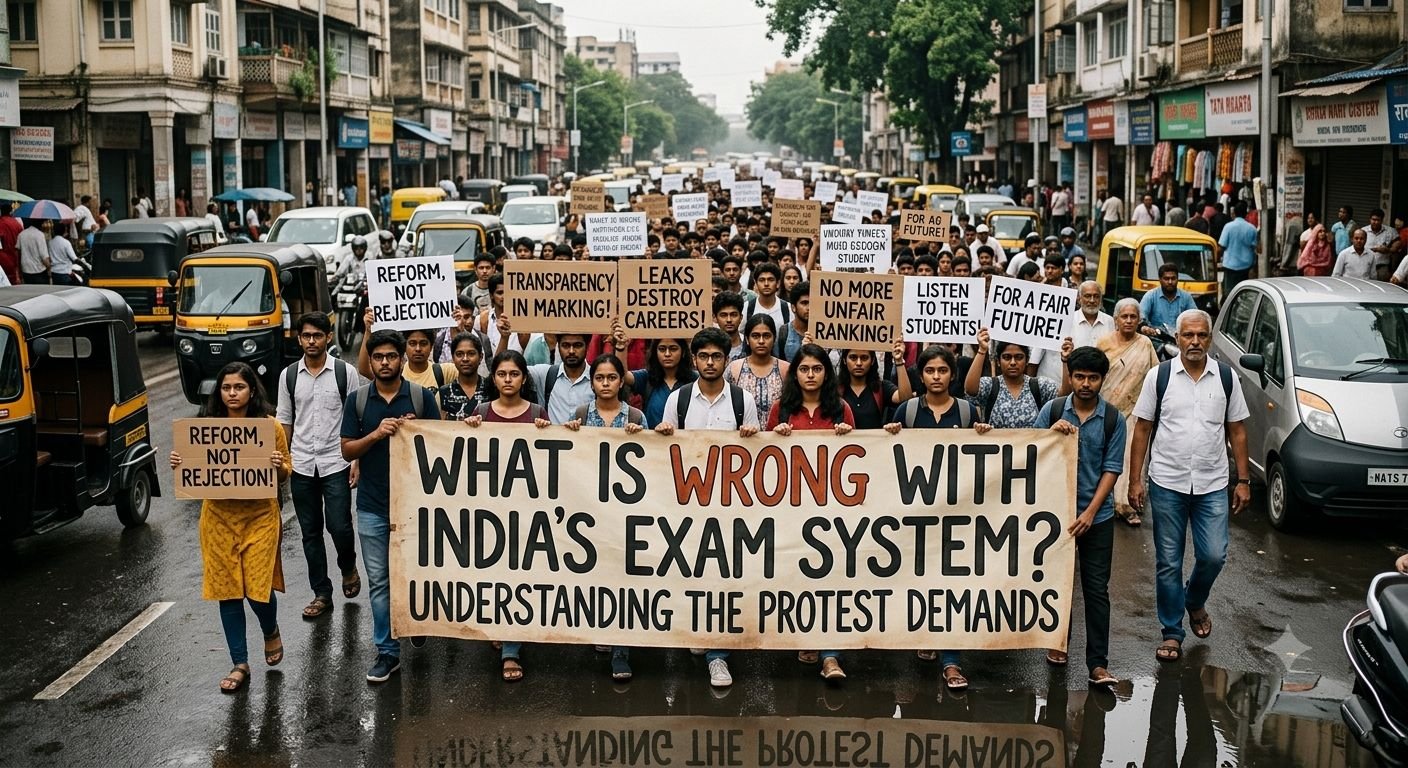
India’s Exam System Explained: Why Students Want Major Reforms After the Paper Leak
India’s exam system is one of the largest and most competitive education systems in the world. Every year, millions of students compete for limited seats in medical colleges, engineering institutions, universities and government jobs through highly competitive entrance and recruitment examinations. These tests determine academic opportunities, career paths and, for many families, their financial future.
For decades, competitive examinations have been considered one of the fairest methods of selecting candidates based on merit. However, repeated allegations of paper leaks, cheating networks, administrative failures and delayed investigations have raised serious questions about whether the current testing system can continue to maintain public trust.
The controversy surrounding the alleged NEET UG 2026 paper leak brought these concerns into national focus. Students across India argued that the problem was not limited to a single examination. Instead, they believed it reflected deeper weaknesses within India’s examination system. The protests quickly expanded beyond demands for a fresh examination and became a wider movement calling for education reform, stronger examination security and greater accountability.
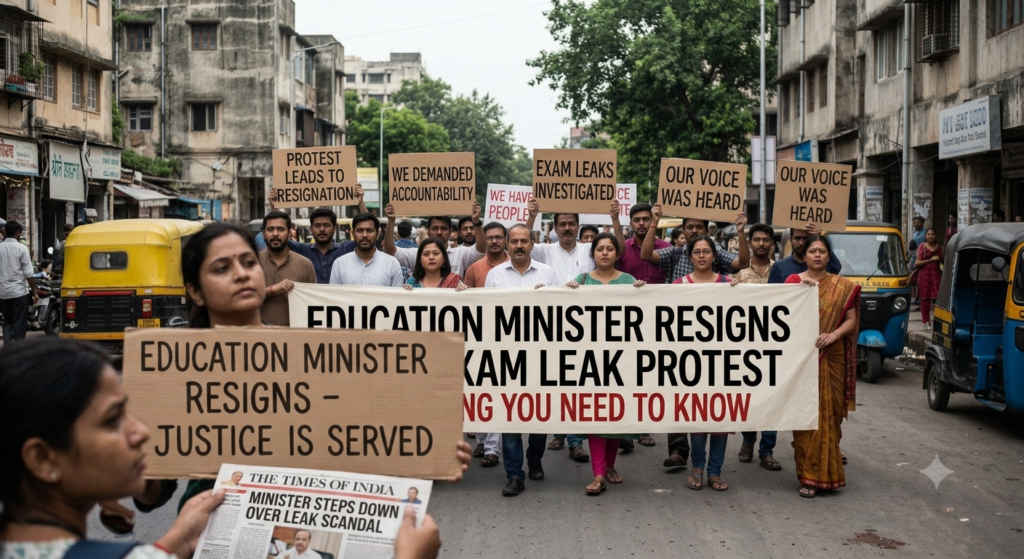
The resignation of Education Minister Dharmendra Pradhan after weeks of demonstrations further highlighted how important the issue had become. Protesters insisted that long-term reform was necessary to restore confidence in national examinations and ensure that honest students were protected.
This article explains how India’s exam system currently works, why paper leaks continue to happen, how these failures affect millions of students, what protesters are demanding, what reforms experts have proposed and what the future of India’s testing system may look like.
How India’s Current Examination System Works
India conducts hundreds of competitive examinations every year through different government agencies, universities and recruitment organizations. These examinations are used to select candidates for medical education, engineering programs, law schools, civil services, public sector employment, banking jobs and many other professional careers.
Some of the country’s largest examinations include NEET for medical admissions, JEE Main and JEE Advanced for engineering, CUET for university admissions, UPSC Civil Services Examination, SSC recruitment examinations, railway recruitment tests and numerous state-level entrance examinations.
Most of these examinations follow a similar structure. A testing agency prepares confidential question papers, prints them under secure conditions, transports them to examination centers across multiple states and supervises candidates on the examination day. After the examination, answer sheets are collected, evaluated and converted into national rankings.
Because millions of students often participate in a single examination, even a small security failure can affect thousands of candidates. Every stage of the process must therefore remain confidential. Question papers, answer keys, candidate information and examination center operations all require strict protection.
The National Testing Agency manages several of India’s largest entrance examinations. State education boards, universities and recruitment commissions manage many others. Although different organizations conduct different examinations, they often face similar security and administrative challenges.
The system depends on public confidence. Students need to believe that every candidate receives the same examination under identical conditions. Once that confidence is damaged, even honest examination results may be questioned.
Why India’s Examination System Faces Increasing Pressure
India’s population continues to grow, but educational opportunities and government jobs remain limited compared to the number of applicants. As competition increases, examination scores become more important than ever.
Medical colleges provide a useful example. More than two million students may compete for a limited number of undergraduate medical seats through NEET. Similar competition exists for engineering colleges, public sector recruitment and civil services examinations.
This level of competition creates enormous pressure. Students often spend several years preparing for one examination. Many attend coaching institutes, purchase expensive study materials and relocate to cities where better educational resources are available.
Families also invest significant financial resources. Parents may spend savings on tuition, accommodation, transportation and examination fees because they believe education offers the best opportunity for long-term success.
When examinations function properly, competition rewards preparation and ability. However, allegations of paper leaks, organized cheating or administrative mistakes can undermine years of effort within a single day.
The result is not only disappointment. It also creates uncertainty about whether the system continues to reward merit fairly.
Why Paper Leaks Continue to Happen
Paper leaks rarely result from one isolated mistake. Most experts believe they occur because several weaknesses exist within examination systems at the same time.
Large Distribution Networks
National examinations require question papers to be transported to thousands of examination centers across different states. Every additional location, employee or contractor increases the number of people who may potentially access confidential material.
The larger the examination becomes, the more difficult it is to maintain complete security throughout printing, storage and transportation.
Insider Access
Many investigation reports into previous examination controversies have suggested that insiders sometimes play a role in obtaining confidential information. Employees involved in printing, packaging, transportation or examination center administration may possess access that criminal networks attempt to exploit.
Without strict monitoring and independent oversight, confidential materials remain vulnerable.
Organized Cheating Networks
Paper leaks often involve organized criminal groups rather than individuals acting alone. These networks may recruit insiders, sell leaked papers, arrange impersonation or provide electronic communication during examinations.
Because large amounts of money can be involved, criminal organizations may invest considerable effort in identifying weaknesses within the examination process.
Technology Misuse
Modern communication technology creates new challenges. Smartphones, encrypted messaging applications, hidden cameras and wireless devices can spread confidential information extremely quickly.
Even if only one person gains unauthorized access to an examination paper, digital technology allows that information to reach many others within minutes.
Weak Security Procedures
Not every examination center maintains identical security standards. Differences in surveillance, staff training, identity verification and document handling may create opportunities for misconduct.
When procedures vary between centers, criminal groups often target locations with weaker controls.
Slow Investigations
Even when paper leaks are detected, investigations sometimes require months or years to conclude. Delayed justice reduces public confidence and may encourage future criminal activity.
Students often argue that certainty of punishment is more important than the severity of punishment.
The Paper Leak Problem Is Bigger Than One Examination
The alleged NEET UG 2026 paper leak attracted national attention because of the examination’s importance. However, students repeatedly argued during the protests that paper leaks have affected multiple recruitment and entrance examinations over several years.
Whenever an examination is cancelled or questioned, students begin asking whether similar failures exist elsewhere. This creates a cumulative loss of confidence.
Many candidates preparing for different examinations expressed support for the NEET protests because they believed the underlying problems were similar. Whether preparing for engineering, banking, railways or civil services, students rely on the same basic principle that examinations must remain secure and merit-based.
The NEET controversy therefore became a symbol of broader concerns rather than an isolated incident.
How Paper Leaks Affect Students
Academic Consequences
Students often prepare for months or years before appearing for a competitive examination. When an examination is cancelled, candidates may need to restart revision, postpone university admission and delay future plans.
Repeated examinations also create scheduling conflicts with other entrance tests.
Financial Burden
Competitive examination preparation can cost families a significant amount of money. Coaching fees, accommodation, transportation, books and digital learning platforms all require substantial investment.
If an examination is cancelled, many of these expenses increase because students must continue preparing for a longer period.
Mental Health Pressure
The emotional impact of examination uncertainty can be severe. Students may experience anxiety, depression, sleep problems and fear about their future.
Many candidates feel their entire career depends on one examination. When that examination becomes uncertain, the emotional consequences extend beyond academic disappointment.
Loss of Trust
Perhaps the most damaging consequence is the loss of confidence in merit. Honest candidates may begin believing that success depends not only on preparation but also on luck, corruption or criminal activity.
Once trust is damaged, rebuilding confidence becomes much more difficult than simply organizing another examination.
Why Students Started Protesting
The protests that followed the alleged NEET paper leak were not only about repeating one examination. Students believed that repeated irregularities demonstrated deeper institutional problems.
The movement quickly expanded beyond examination cancellation. Protesters demanded transparency, independent investigations and political accountability.
Many students argued that arrests alone would not solve the problem. They wanted authorities to examine how confidential materials were accessed and why existing safeguards failed.
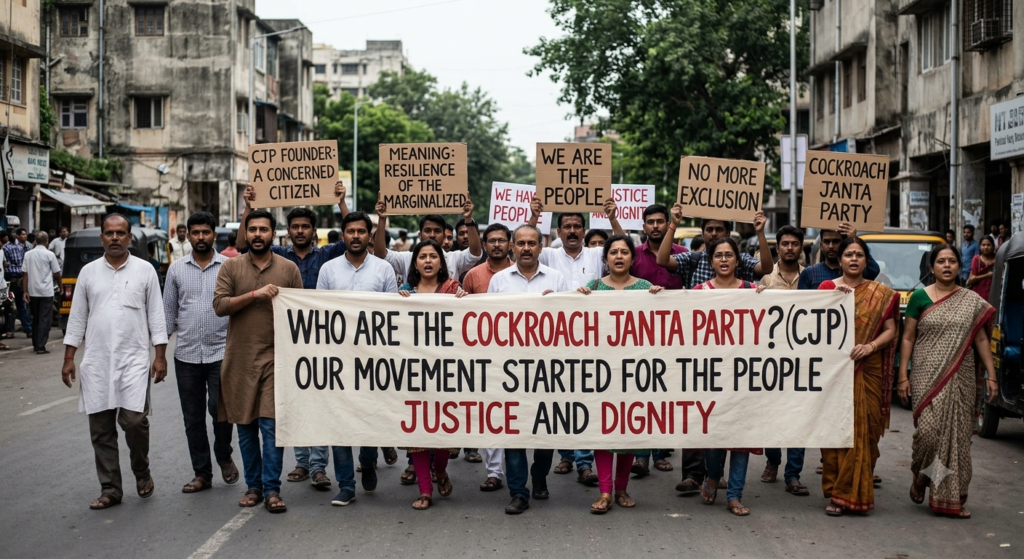
The Cockroach Janta Party helped organize demonstrations that attracted students, parents, teachers and civil society groups. Their campaign eventually led to the resignation of Education Minister Dharmendra Pradhan and government promises of examination reform.
What Were the Main Protest Demands?
Independent Investigations
Students demanded investigations free from political influence. They wanted complete transparency regarding how examination papers were leaked and who benefited.
Accountability
Protesters argued that responsibility should include everyone involved, from criminal networks to senior administrators responsible for examination security.
Better Examination Security
Students called for stronger printing, storage, transportation and digital security procedures.
Protection for Honest Candidates
When examinations are cancelled, students wanted clear communication, fair rescheduling and protection from unnecessary financial losses.
Faster Legal Action
Many protesters supported special fast-track courts for examination paper leak cases so investigations and trials could be completed more quickly.
Mental Health Support
Students requested counselling services and emergency support for candidates affected by cancelled examinations and prolonged uncertainty.
Transparent Communication
Authorities should publish regular updates whenever examination irregularities occur. Delayed communication increases rumors and confusion.
Possible Reforms That Could Improve India’s Exam System
Computer Based Testing
One frequently discussed reform is expanding computer-based examinations. Digital delivery can reduce risks associated with printing and transporting physical papers.
Questions may be encrypted until shortly before the examination begins, reducing opportunities for unauthorized access.
Multiple Question Sets
Using randomized question orders and multiple paper versions makes large-scale leaks less valuable because candidates receive different combinations of questions.
Stronger Identity Verification
Biometric verification, facial recognition and secure digital identity systems can reduce impersonation and fraudulent participation.
Independent Security Audits
External cyber security and examination security experts could review testing systems before every major examination.
Independent audits often identify weaknesses that internal teams may overlook.
Encrypted Paper Distribution
If printed examinations remain necessary, confidential materials should be tracked electronically from printing to examination centers.
Every transfer should create an auditable record.
Improved Surveillance
High-quality CCTV systems, controlled access areas and secure storage rooms can reduce opportunities for unauthorized access.
Whistleblower Protection
Employees who report suspicious activity should receive legal protection. Encouraging early reporting can prevent larger security failures.
Standardized Security Across Examination Centers
Every examination center should follow identical security standards regardless of location.
Consistent procedures reduce opportunities for criminal groups to target weaker centers.
Expert Opinions on Education Reform
Education experts generally agree that restoring confidence requires more than increasing punishment after leaks occur.
Many argue that prevention should become the primary objective. Strong technology, professional examination management and regular security reviews are often more effective than responding after confidential information has already been compromised.
Several experts have also emphasized the importance of reducing unnecessary pressure on students. Better counselling services, transparent communication and predictable admission schedules can reduce anxiety during examination crises.
Cyber security specialists frequently recommend encrypted digital systems and continuous monitoring rather than relying mainly on physical document protection.
Public administration experts also argue that accountability should exist at every level. Contractors, examination agencies, senior administrators and government officials should all understand their responsibilities when managing national examinations.
Finally, many education researchers believe that public trust depends on transparency. Students are more likely to accept difficult decisions when authorities explain what happened, how investigations are progressing and what reforms will prevent similar failures in the future.
Can India’s Exam System Be Rebuilt?
Despite the recent controversies, many education specialists believe India’s examination system can regain public confidence.
The country already possesses experienced testing agencies, advanced technology companies and large administrative capacity. The challenge is combining these resources into a secure, transparent and accountable national system.
Successful reform will require cooperation between education ministries, testing agencies, cyber security professionals, universities, law enforcement and independent experts.
Students also need to remain part of the discussion. Those directly affected by examination failures often understand practical problems that administrators may overlook.
If reforms focus only on punishment after leaks occur, similar crises may continue. Long-term improvement requires preventing leaks before they happen.
Frequently Asked Questions
What is India’s exam system?
India’s exam system consists of national and state-level entrance and recruitment examinations used for admissions to universities, medical colleges, engineering institutions and government jobs.
Why are students demanding education reform?
Students believe repeated paper leaks, administrative failures and inconsistent security have reduced confidence in competitive examinations.
Why do paper leaks happen?
Paper leaks may occur because of insider access, organized cheating networks, weak security procedures, technology misuse and insufficient oversight.
Which examination started the recent protests?
The alleged NEET UG 2026 paper leak became the main issue that triggered nationwide demonstrations.
How do paper leaks affect students?
Paper leaks create academic delays, financial losses, emotional stress and reduced confidence in merit-based competition.
What reforms are students demanding?
Students want stronger examination security, independent investigations, faster legal action, transparent communication, computer-based testing and accountability for officials responsible for examination management.
Can computer-based examinations prevent paper leaks?
Computer-based testing may reduce certain risks, especially those involving printed papers, although digital systems also require strong cyber security.
Why is transparency important?
Transparent communication helps reduce rumors, builds trust and allows students to understand how authorities are responding to examination problems.
Who conducts India’s largest entrance examinations?
The National Testing Agency conducts several major entrance examinations, while universities, recruitment commissions and state agencies conduct many others.
Will examination reforms solve every problem?
No. Effective reform requires stronger security, better technology, transparent administration, faster investigations and continued public oversight.
Conclusion
India’s exam system has helped millions of students access higher education and professional careers through merit-based competition. However, repeated paper leak controversies have exposed weaknesses that cannot be ignored.
The alleged NEET UG 2026 paper leak transformed a single examination controversy into a national debate about education reform. Students argued that the problem extended far beyond one test and reflected broader challenges involving security, accountability and public trust.
The protests demonstrated that young people expect more than investigations after problems occur. They want preventive reforms that protect honest candidates before examinations begin.
Possible solutions include stronger digital security, computer-based testing, encrypted question paper management, independent audits, transparent communication and better student support.
Rebuilding trust will require sustained commitment rather than temporary responses. If meaningful reforms are implemented, India’s examination system can continue rewarding merit while protecting millions of students from future uncertainty.
The future of India’s education system depends not only on conducting examinations but also on ensuring that every candidate believes the competition is fair, transparent and worthy of the effort they invest.