Tire Size Calculator and Why Tire Size Matters
A tire size calculator is an essential tool for vehicle owners who want to compare tire sizes, upgrade wheels, improve vehicle performance, or ensure proper fitment. Tires affect handling, fuel efficiency, ride comfort, braking distance, speedometer accuracy, and overall vehicle safety. Even small differences in tire dimensions can significantly impact how a vehicle performs on the road.
Many drivers assume all tires with similar appearances are interchangeable. In reality, tire width, aspect ratio, and wheel diameter all influence vehicle behavior. Using a tire size calculator helps eliminate guesswork and provides accurate comparisons between different tire options before making a purchase.
You can compare tire sizes using this free tire size calculator to instantly evaluate dimensions, diameter differences, and fitment changes.
What Is a Tire Size Calculator
A tire size calculator is an online tool that compares different tire dimensions and helps users understand how changes in tire size affect vehicle performance. Instead of manually calculating sidewall height, overall diameter, circumference, and speedometer differences, the calculator performs these calculations automatically.
Drivers often use a tire size calculator when upgrading wheels, switching tire brands, or selecting replacement tires. The tool helps identify compatible sizes while minimizing the risk of fitment problems.
Whether you own a passenger car, SUV, truck, or performance vehicle, understanding tire size dimensions is important for maintaining safe and efficient operation.
Understanding Tire Size Numbers
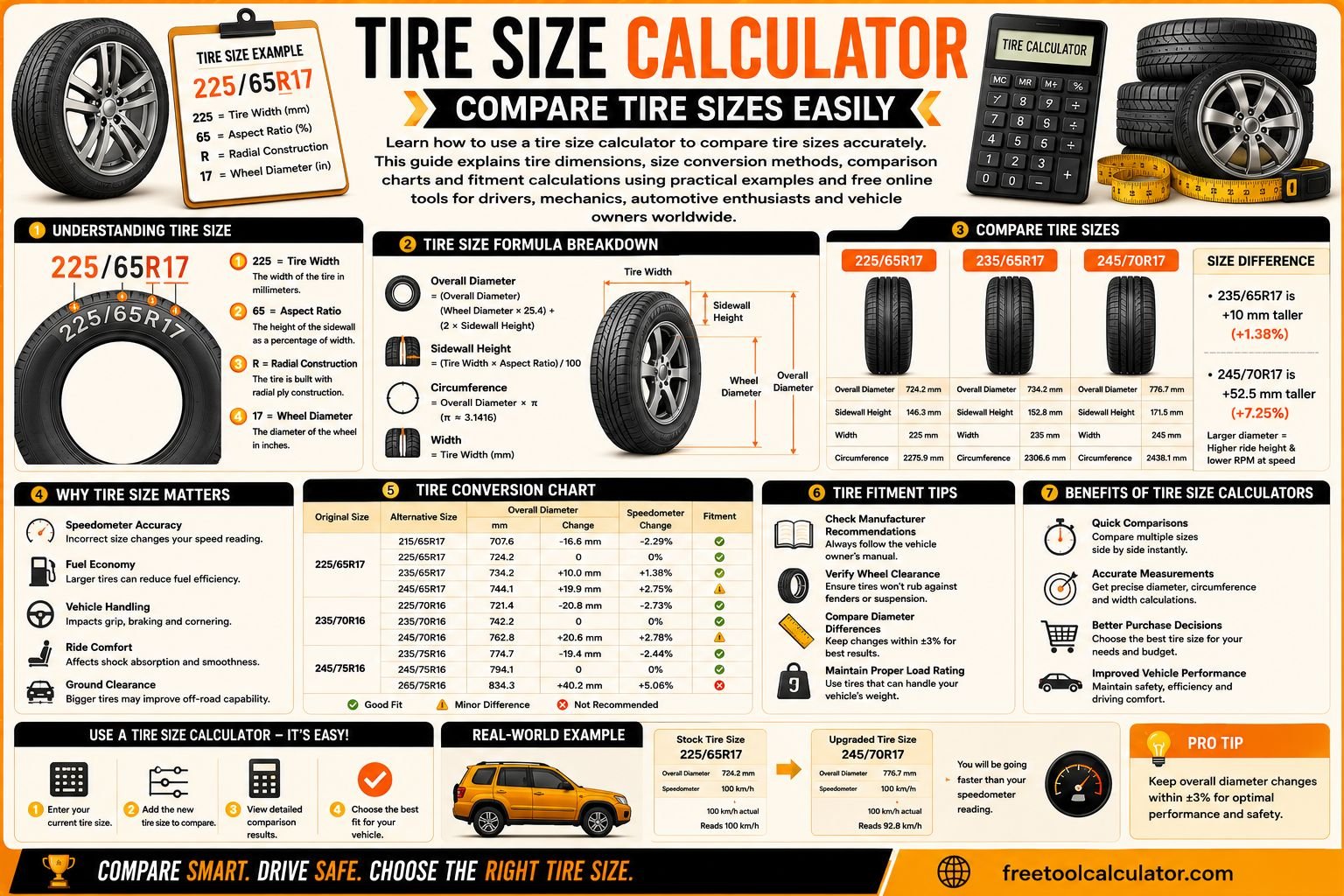
Many people find tire size markings confusing at first. A typical tire size might look like this:
225/45R17
Each section has a specific meaning.
225 represents the tire width in millimeters.
45 represents the aspect ratio, which is the sidewall height expressed as a percentage of tire width.
R indicates radial construction.
17 represents the wheel diameter in inches.
Understanding these measurements helps drivers make informed decisions when comparing different tire sizes.
How Tire Size Dimensions Are Calculated
Tire dimensions involve multiple measurements that determine the overall size of the tire.
Important dimensions include:
Tire width
Sidewall height
Wheel diameter
Overall tire diameter
Circumference
Revolutions per mile
These measurements influence speedometer readings, vehicle clearance, acceleration, and handling characteristics.
A tire size calculator automatically calculates these values, making comparisons much easier than manual calculations.
Why Drivers Compare Different Tire Sizes
Comparing different tire sizes is common when upgrading wheels or improving vehicle appearance and performance. Some drivers prefer larger wheels for aesthetics, while others seek wider tires for increased grip and handling.
Off road enthusiasts often install larger tires to improve ground clearance and traction. Performance drivers may choose lower profile tires for enhanced cornering response.
Regardless of the goal, comparing different tire sizes helps ensure the new setup remains compatible with the vehicle.
How a Tire Size Comparison Chart Helps
A tire size comparison chart provides a quick visual reference for evaluating different tire options. These charts display key measurements such as overall diameter, width, circumference, and percentage differences between tire sizes.
Drivers can quickly identify whether a proposed tire size falls within acceptable fitment ranges. Most experts recommend keeping overall diameter changes relatively small to avoid speedometer inaccuracies and clearance issues.
A tire size comparison chart simplifies decision making and reduces the risk of selecting incompatible tires.
How to Use a Tire Size Calculator
Using a tire size calculator is straightforward.
Enter the original tire size currently installed on the vehicle.
Enter the proposed replacement tire size.
The calculator then compares measurements and highlights differences in diameter, sidewall height, circumference, and speedometer accuracy.
You can use this tire size calculator to instantly evaluate replacement tire options and determine whether they are suitable for your vehicle.
How Tire Size Affects Speedometer Accuracy
One of the most important reasons for comparing tire sizes is speedometer accuracy. Vehicle speedometers are calibrated based on the original tire diameter.
When larger tires are installed, the vehicle travels farther per wheel rotation. This can cause the speedometer to display a slower speed than the vehicle is actually traveling.
Smaller tires create the opposite effect and may cause the speedometer to read faster than actual speed.
Using a tire size converter helps drivers understand these changes before making modifications.
Impact of Tire Size on Fuel Economy
Tire size can influence fuel efficiency in several ways. Larger tires generally weigh more and may increase rolling resistance, requiring additional energy to move the vehicle.
Wider tires often provide better traction but can slightly reduce fuel economy due to increased contact with the road surface.
Smaller and lighter tires may improve efficiency but could compromise handling or ride comfort.
Finding the right balance between performance and efficiency is an important part of selecting replacement tires.
How Tire Width Affects Vehicle Performance
Tire width plays a major role in traction and handling.
Wider tires typically provide a larger contact patch, which can improve grip during acceleration, braking, and cornering. This makes them popular among performance vehicle owners.
However, wider tires may also increase rolling resistance and reduce fuel efficiency.
Narrower tires often perform better in snow and wet conditions because they can cut through standing water and loose surfaces more effectively.
Understanding these tradeoffs helps drivers choose the most appropriate tire size for their needs.
Understanding Aspect Ratio and Sidewall Height
The aspect ratio determines the relationship between tire width and sidewall height.
A lower aspect ratio means a shorter sidewall, which generally improves handling responsiveness and cornering performance. Sports cars often use lower profile tires for this reason.
Higher aspect ratios create taller sidewalls that absorb road impacts more effectively and provide a smoother ride.
The ideal aspect ratio depends on driving style, vehicle type, and personal preferences.
Benefits of Maintaining Correct Tire Diameter
Keeping tire diameter close to the original specification helps preserve vehicle performance and safety.
Major diameter changes can affect:
Speedometer accuracy
Transmission behavior
Anti lock braking systems
Traction control systems
Ground clearance
Suspension geometry
Most tire experts recommend limiting overall diameter changes to maintain proper vehicle operation.
A tire size calculator helps identify acceptable alternatives quickly and accurately.
Common Tire Upgrade Mistakes
One common mistake is selecting tires based solely on appearance without considering fitment requirements.
Another mistake is increasing tire size excessively, leading to rubbing against suspension components, wheel wells, or fenders.
Drivers sometimes overlook speedometer differences and handling changes caused by larger or smaller tires.
Using a tire size comparison chart before purchasing new tires helps prevent these costly errors.
Tire Size Converter for Wheel Upgrades
Wheel upgrades are among the most common reasons people use tire size converters.
When increasing wheel diameter, drivers often reduce sidewall height to maintain a similar overall tire diameter. This process is commonly called plus sizing.
For example, moving from a 16 inch wheel to an 18 inch wheel often requires selecting a lower profile tire to preserve overall dimensions.
A tire size converter helps identify equivalent tire sizes during these upgrades.
Why Accurate Tire Fitment Is Important
Proper tire fitment affects safety, comfort, and vehicle performance.
Incorrect tire sizes may cause steering issues, reduced braking efficiency, excessive tire wear, and suspension problems.
Vehicle manufacturers carefully select tire specifications based on engineering requirements. While alternative sizes are often possible, they should remain within reasonable limits.
A tire size calculator helps ensure modifications remain practical and safe.
Useful Automotive Tools Related to Tire Calculations
Tire calculations often work alongside other automotive measurements and vehicle maintenance calculations.
You can also use the tire pressure calculator and fuel consumption calculator if available on your website. If those tools are not currently available, mention them as general automotive tools rather than linking them.
For mathematical calculations and conversions, the percentage calculator can help evaluate percentage differences between tire dimensions, while the scientific calculator can assist with more advanced automotive calculations.
How a Tire Size Calculator Saves Time and Money
Selecting the wrong tire size can be expensive. Returning incorrectly sized tires, replacing wheels, or fixing fitment problems often costs significantly more than taking a few minutes to compare dimensions beforehand.
A tire size calculator helps drivers evaluate options instantly and make informed purchasing decisions. This reduces mistakes and improves confidence when choosing replacement tires.
The calculator is especially useful for enthusiasts considering custom wheel and tire setups.
Conclusion
A tire size calculator is one of the most valuable tools for vehicle owners who want to compare tire sizes, evaluate upgrades, and maintain proper fitment. Understanding tire size dimensions helps improve safety, preserve vehicle performance, maintain speedometer accuracy, and avoid costly mistakes.
If you are planning to replace or upgrade your tires, you can use this free tire size calculator to compare tire sizes accurately. You can also use related tools such as the percentage calculator and the scientific calculator for additional calculations and comparisons when evaluating tire specifications and vehicle modifications.