Body Mass Index Calculator and what this blog will explain
A Body Mass Index Calculator is one of the most widely used medical tools for assessing whether a person’s weight is appropriate for their height. In this blog, you will learn the official BMI formulas used in the metric and imperial systems, how to calculate BMI manually without any online tool, whether a New BMI calculator exists for people who are very tall or very short, and what a BMI between 25.0 and 29.9 means according to medical standards. This guide is written in a professional medical tone to ensure accuracy, clarity, and usefulness for preventive health care.
If you want to check your weight category instantly, you can use our free and accurate Body Mass Index Calculator, which allows you to calculate your BMI in seconds and understand your health status without any cost.
What is a Body Mass Index Calculator
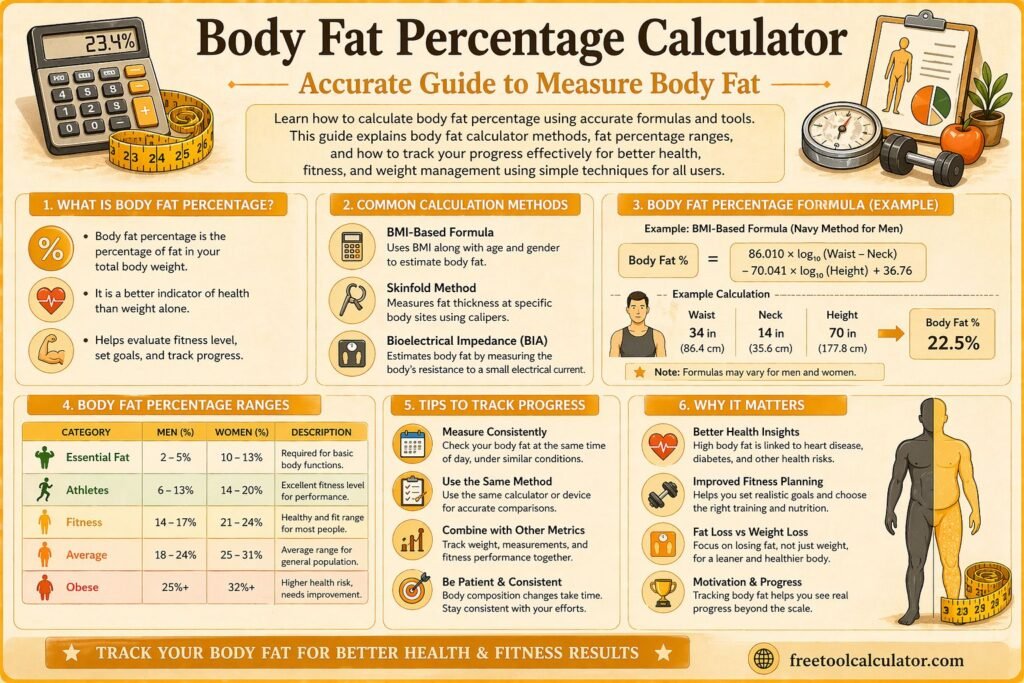
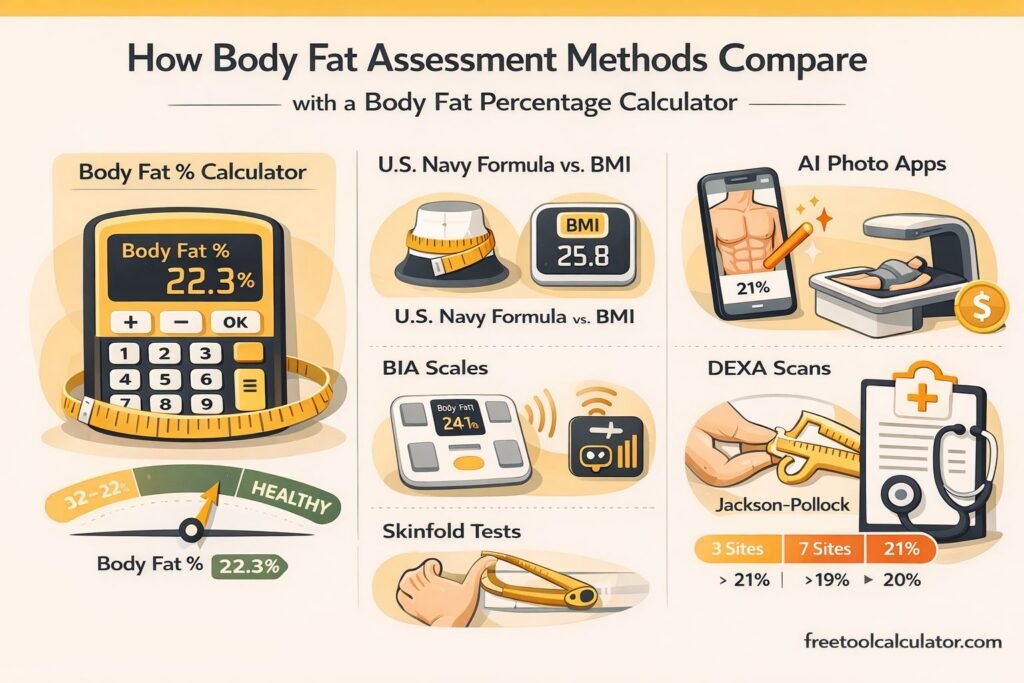
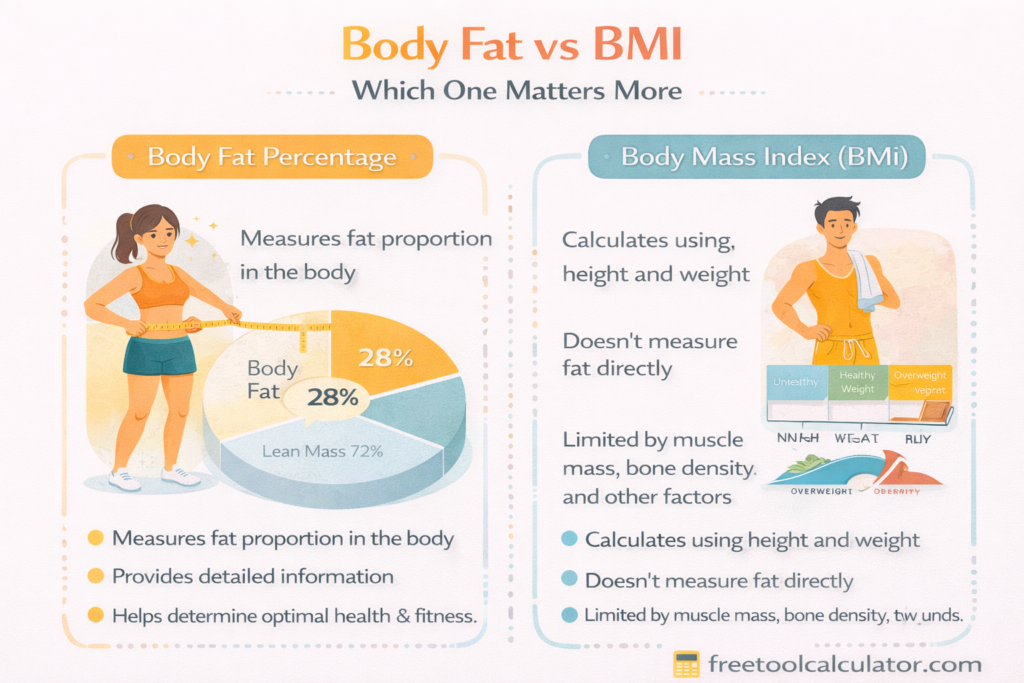
A Body Mass Index Calculator is a screening tool that estimates body fat based on the relationship between body weight and height. Although BMI does not directly measure body fat percentage, it correlates strongly with health risks in most adults. This is why it is used worldwide by doctors, hospitals, insurance providers, and public health organizations.
BMI is commonly used to identify individuals who may be underweight, overweight, or obese and who may therefore be at increased risk for conditions such as heart disease, diabetes, high blood pressure, joint disorders, and certain cancers. While it is not a diagnostic test, it provides a strong starting point for further medical evaluation.
Using a reliable Body Mass Index Calculator helps individuals become more aware of their weight status and encourages healthier lifestyle choices.
Official formula for BMI using the metric system
Metric Body Mass Index Formula
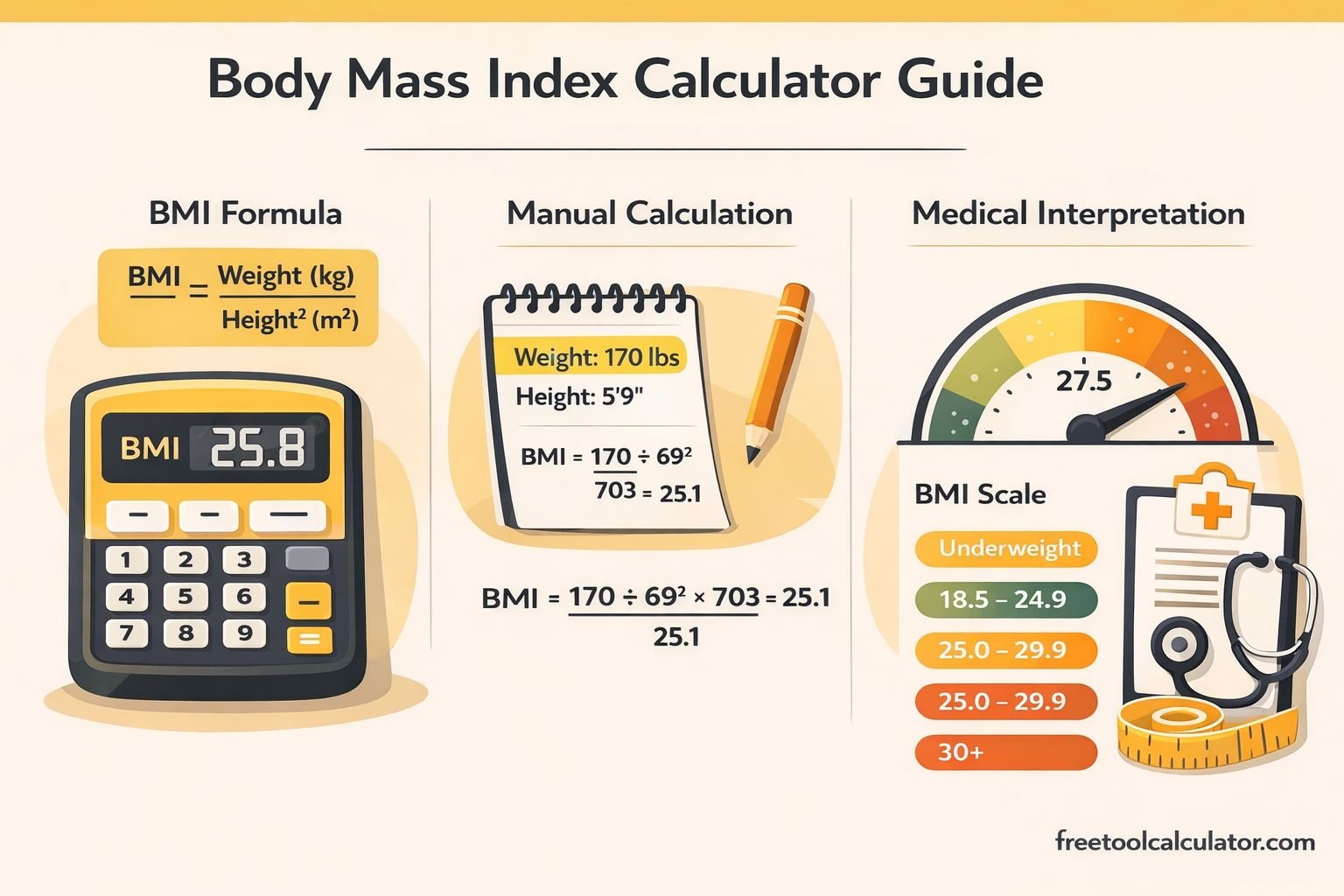
In the metric system, BMI is calculated using this equation:
BMI = weight in kilograms ÷ (height in meters × height in meters)
This can also be written as:
BMI = kg / m²
For example, if a person weighs 70 kilograms and is 1.75 meters tall:
BMI = 70 ÷ (1.75 × 1.75)
BMI = 70 ÷ 3.0625
BMI ≈ 22.9
A BMI of 22.9 falls within the normal weight range.
This formula is the global medical standard and is used in scientific research and clinical practice worldwide.
Official formula for BMI using the imperial system
Imperial Body Mass Index Formula
In the imperial system, BMI is calculated using pounds and inches with a conversion factor:
BMI = (weight in pounds ÷ (height in inches × height in inches)) × 703
For example, if a person weighs 154 pounds and is 69 inches tall:
BMI = (154 ÷ (69 × 69)) × 703
BMI ≈ 22.7
This result closely matches the metric calculation because both formulas describe the same relationship between weight and height using different units.
How to calculate BMI manually without using any online tool
Calculating BMI manually is simple and requires only basic math.
First, measure your weight accurately using a scale.
Second, measure your height accurately.
Third, choose the correct formula based on your measurement system.
For metric calculation:
Divide your weight in kilograms by your height in meters squared.
For imperial calculation:
Divide your weight in pounds by your height in inches squared, then multiply by 703.
Manual calculation is useful for understanding how BMI works, but using an online Body Mass Index Calculator is faster, more convenient, and eliminates the risk of calculation errors.
Is there a New BMI calculator for very tall or very short people
Yes, there is a concept known as the New BMI, which was proposed to improve BMI accuracy in people who are extremely tall or extremely short. The traditional BMI formula assumes that body mass increases in proportion to height squared, but real human body proportions do not scale perfectly in this way.
The New BMI formula is:
New BMI = 1.3 × weight (kg) ÷ height (m)²·⁵
This formula slightly increases the power of height and includes a correction factor to improve proportional accuracy.
When the New BMI may be helpful
The New BMI may provide better estimates for people who are much taller than average, much shorter than average, or individuals with unusual body proportions. However, it is not yet widely used in medical guidelines.
Why doctors still rely on traditional BMI
Traditional BMI remains the standard because it is supported by decades of medical research, it strongly correlates with disease risk, and most clinical guidelines are based on it. For everyday health screening, a Body Mass Index Calculator using the traditional formula remains medically appropriate.
What does a BMI of 25.0 to 29.9 mean medically
Medical BMI categories are defined as follows:
Underweight: less than 18.5
Normal weight: 18.5 to 24.9
Overweight: 25.0 to 29.9
Obesity: 30.0 and above
A BMI between 25.0 and 29.9 is classified as overweight.
Medical interpretation of the overweight range
Being in the overweight category does not automatically mean illness, but it signals an increased risk of developing certain health problems, particularly if other risk factors are present. These risks include higher chance of cardiovascular disease, increased risk of type 2 diabetes, higher blood pressure, and greater strain on joints. This range is often considered a warning zone where lifestyle changes can prevent progression to obesity.
Why BMI must be interpreted carefully
BMI does not differentiate between fat and muscle. Athletes may have high BMI values due to muscle mass but low body fat. Older adults may have normal BMI but higher fat percentages. Therefore, BMI should always be interpreted in context with medical history, waist circumference, physical activity, and body composition.
Why a Body Mass Index Calculator is still medically valuable
Despite its limitations, BMI remains one of the most powerful screening tools in preventive medicine. It allows early detection of unhealthy weight trends and supports timely lifestyle interventions.
You can easily assess your own BMI using our free Body Mass Index Calculator, which provides instant results and is accessible to everyone without cost.
How BMI supports preventive health care
BMI enables early identification of unhealthy weight patterns before serious disease develops. Preventive strategies may include improved nutrition, regular physical activity, weight management programs, and medical monitoring. Using a Body Mass Index Calculator regularly helps track progress and maintain awareness of health status.
Common myths about BMI
One common myth is that BMI is useless. In reality, it is extremely useful for screening large populations. Another myth is that BMI only reflects appearance. In truth, it primarily reflects health risk. Some believe BMI must be perfect for every individual. It is not perfect, but it is practical and scientifically reliable.
Final medical conclusion
A Body Mass Index Calculator is an essential and scientifically supported tool for evaluating body weight and potential health risks. The official BMI formulas differ only by measurement system, BMI can be calculated manually, and a New BMI exists but is not yet the clinical standard. A BMI of 25.0 to 29.9 is classified as overweight and indicates the need for preventive health awareness. When used responsibly, a Body Mass Index Calculator empowers individuals to understand their health and make informed decisions using a completely free and accessible resource.