Getting to Know the Average Shoe Size
People are often interested in the idea of an average shoe size. A lot of people want to know if their foot size is normal. Averages are useful for setting goals, but they don’t tell you what is normal for everyone.
Genetics, the environment, and lifestyle all affect foot size. But knowing the averages can help you shop smarter and find shoes that fit better.
If you’re not sure what size you are or need to compare sizes between areas, this tool is a good choice.
The process will be a lot easier and more accurate if you use https://freetoolcalculator.com/shoe-size-converter/.
What is the Average Size of a Man’s Shoe?
Average Size of Shoes in the US
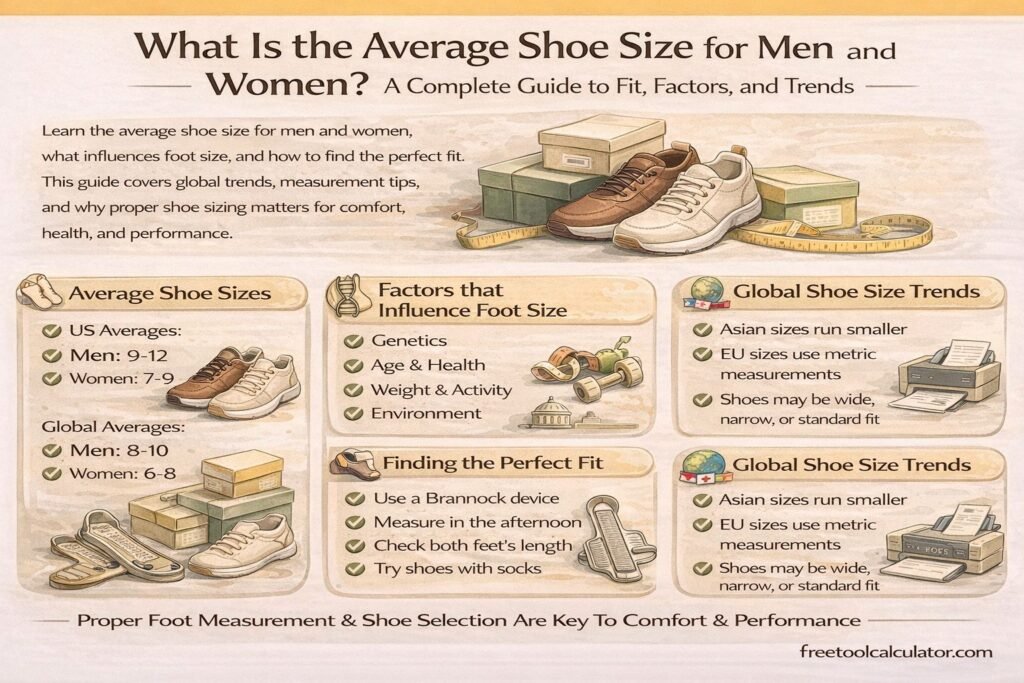
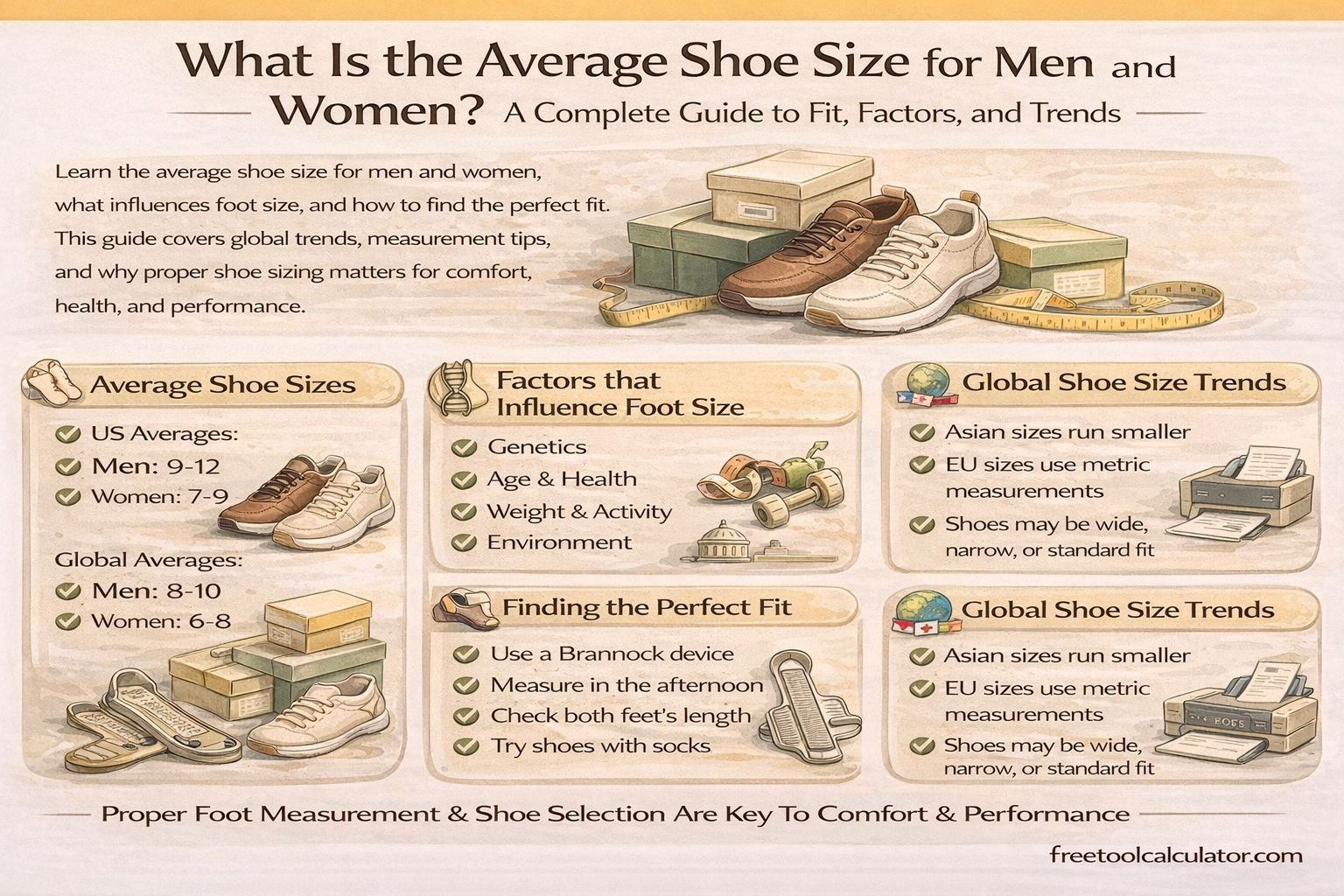
In the US, the average size of men’s shoes is usually around:
- 10 to 10.5 (medium width)
This estimate is based on retail data and observational studies, not official statistics. Still, most people agree that it is a good standard.
Average Shoe Size for Men Around the World
In most parts of the world, men’s shoe sizes are usually between:
- 9 to 12
This difference is due to differences in geography and genetics. Countries with taller people usually have bigger average shoe sizes.
The Relationship Between Shoe Size and Height
Your height has a big effect on how big your feet are. People who are taller need bigger feet to stay stable and balanced.
A Guide to Height and Shoe Size
- 5’5″ or shorter → Size 7–9
- 5’6″ to 5’9″ → Size 9.5 to 10.5
- 5’10” to 6’2″ → Size 11–12.5
- 6’3″ or taller → Size 13 and up
This relationship isn’t perfect, but it does show a clear trend. Men who are taller usually have bigger feet, but there are always some who don’t.
What is the Average Size of a Woman’s Shoe?
The Average Shoe Size in the US
The average shoe size for women in the U.S. is:
- Size 8.5 to 9
This is a lot bigger than previous generations.
The Growth of Women’s Shoe Sizes Over Time
Over the years, the average shoe size has gone up steadily:
- 1960s: Size 6.5
- 1970s: Size 7.5
- Today: 8.5–9
This rise is in line with changes in the size of people’s bodies in general.
Women from All Over the World
The average shoe size for women around the world is usually between:
- 7 to 9
But there are differences between regions:
- Asian populations lead to smaller averages
- European populations have higher averages
Why Are Average Shoe Sizes Getting Bigger?
The fact that the average shoe size is getting bigger is not random. There are a number of factors that are linked to this trend.
Better Health and Nutrition
Modern diets are better for your health, especially when you’re a child or teenager. So:
- People get taller
- The structure of the bones grows more fully
- The size of the foot grows in proportion
Average Height Has Gone Up
There is a strong link between height and foot size. As people get taller, their feet naturally get bigger to support their bodies.
Changes in Weight
Your weight also affects the size of your feet. When you gain weight, it puts stress on your feet, which makes them:
- Spread
- Become flat
- Become a little longer
How You Live and How Active You Are
People today move around more, work out more, and are more active. Over time, these things can change the shape and structure of the foot.
More Knowledge About How Shoes Fit
People are more focused on these things today:
- Comfort
- Health of the feet
- Correct sizing
Many people also use online tools like https://freetoolcalculator.com/shoe-size-converter/ to change sizes between the US, UK, and EU systems, which makes shopping more accurate.
Things That Change Shoe Size
Height isn’t the only thing that affects foot size.
Age
The following things change feet over time:
- Loss of stretch
- Arches that are flat
- Stretching the ligaments
Because of this, older people may need bigger shoes than they did when they were younger.
Genetics
Genetics is a big factor in how big your feet are. You probably have similar traits to your family members who have bigger or smaller feet.
Body Weight
Extra weight puts more pressure on the feet, which can make them change size and shape.
Foot Problems
Some health problems can change the size of shoes, such as:
- Bunions
- Hammer toes
- Flat feet
You might need wider or bigger shoes for these conditions.
Activity Level
Athletes and people who are active may have stronger, more structured feet. But over time, repetitive stress can also change the shape of your feet.
Why It’s Important to Get the Right Shoe Size
It’s important to choose the right shoe size for more than just comfort.
Foot Health
If you wear the wrong size, it can cause:
- Blisters
- Corns
- Calluses
- Bunions
If these problems aren’t dealt with, they could get worse over time.
Comfort and Daily Life
Shoes that don’t fit right can make even simple tasks uncomfortable. Shoes that fit well let you:
- Move naturally
- Reduce stress
- Improve stamina
Avoiding Injuries
When shoes are too tight or too loose, they can make you more likely to:
- Slip
- Fall
- Experience foot strain
Alignment and Posture
Your feet are the base of your body. Shoes that don’t fit well can affect:
- How you walk
- Balance
- Spine alignment
How to Get an Accurate Measurement of Your Shoe Size
The first step to finding the perfect fit is to get the measurements right.
Taking Measurements at Home
You can use simple tools to measure your feet.
What You Need
- Paper
- Pencil
- Ruler
Steps
- Put your foot on the paper
- Draw a line around it
- Measure from the heel to the longest toe
- Look at a size chart
Measurement by a Professional
The best results come from professional fitting. It checks:
- Length of foot
- Width
- Length of the arch
This method is very helpful for people whose feet are shaped differently.
Best Ways to Measure
- Get the size of both feet
- Use the bigger foot as a guide
- Take measurements at night
- Put on the socks you usually wear
You can also verify your measurement using https://freetoolcalculator.com/shoe-size-converter/ for better accuracy.
Useful Advice for Finding the Right Fit
Even if you have the right size, the fit can be different from shoe to shoe.
Try on Shoes Later in the Day
Your feet naturally get bigger during the day. Trying on shoes in the evening makes sure they fit better.
Leave Enough Room for Your Toes
There should be about half an inch of space between the front of the shoe and your longest toe.
Walk First, Then Buy
Always try on shoes by walking in them. This helps find places where there is pain or pressure.
Be Aware of the Width
Width is just as important as length, but many people don’t pay attention to it.
Put Comfort Ahead of Numbers
Different brands fit differently. Always put comfort ahead of the number on the tag.
Some Myths About Shoe Size
Shoe Size Shows How Healthy You Are
There is no direct link between the size of your shoes and your health.
Bigger Feet Make You Better at What You Do
The size of your feet doesn’t affect how well you can play sports or do physical tasks.
Shoe Size Shows Other Body Features
This is a common myth that isn’t based on science.
Trends in the Shoe Industry and Market Information
The shoe business has changed to meet the needs of customers.
Larger Size Ranges
Brands now give:
- Larger sizes
- Several width choices
- Better fit options
More and More People Want Comfort
What customers care about most:
- Cushioning
- Support
- Durability
The Growth of Buying Shoes Online
E-commerce has made the following things more popular:
- Tools for getting the right size
- Policies for easy returns
The Most Popular Shoe Sizes Sold
It’s interesting that the most popular shoe sizes don’t always match the averages.
For instance:
- The size that sells the most for women is about 7
- The average size is 8.5 to 9
This difference could be because of how people used to shop or because there aren’t many of them.
What Will Happen to Shoe Sizes in the Future
The future of shoes is going to be more personal.
Fitting Shoes to Your Feet
Technology is making it possible:
- Scanning feet in 3D
- Making shoes to order
Footwear That Lasts
Brands are concentrating on:
- Materials that are good for the environment
- Designs that last a long time
Smart Technology for Shoes
Some new ideas are:
- Sensors for pressure
- Cushioning that changes
Final Thoughts on the Average Size of Shoes
The average shoe size can help you understand things, but it should never be the only thing that defines what is normal.
- Men: About 10 to 10.5
- Women: About 8.5 to 9
But it’s completely normal for people to be different.
Fit and comfort are always the most important things. A shoe that fits well supports your daily activities, protects your feet, and makes you feel better overall.
Instead of looking at averages, look at what feels best for your feet. That is the real secret to comfort and healthy feet for a long time.