Introduction
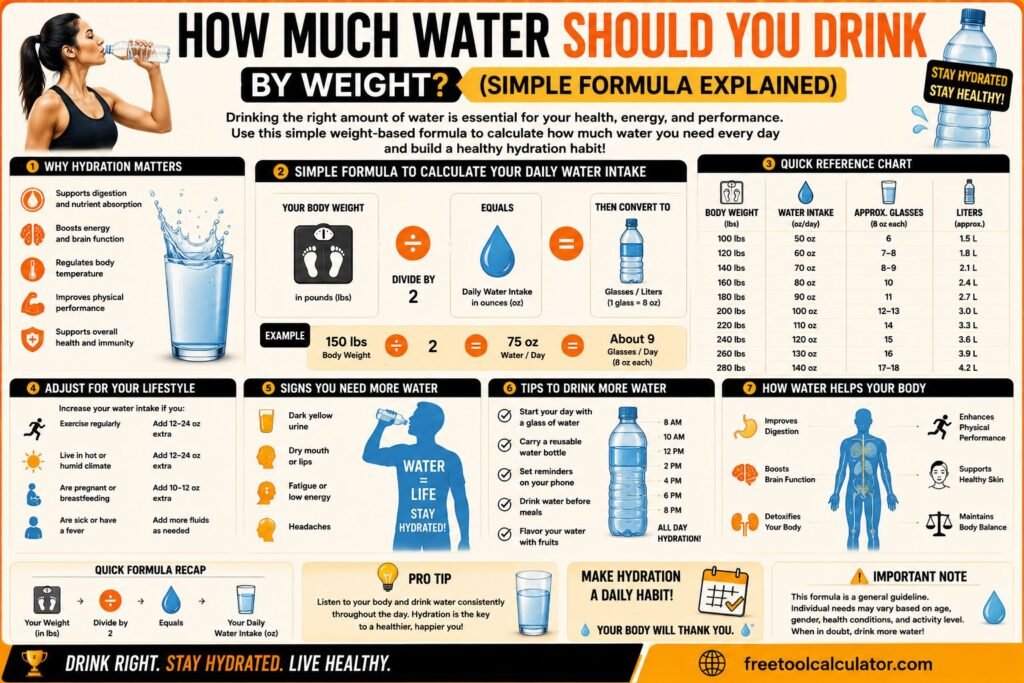
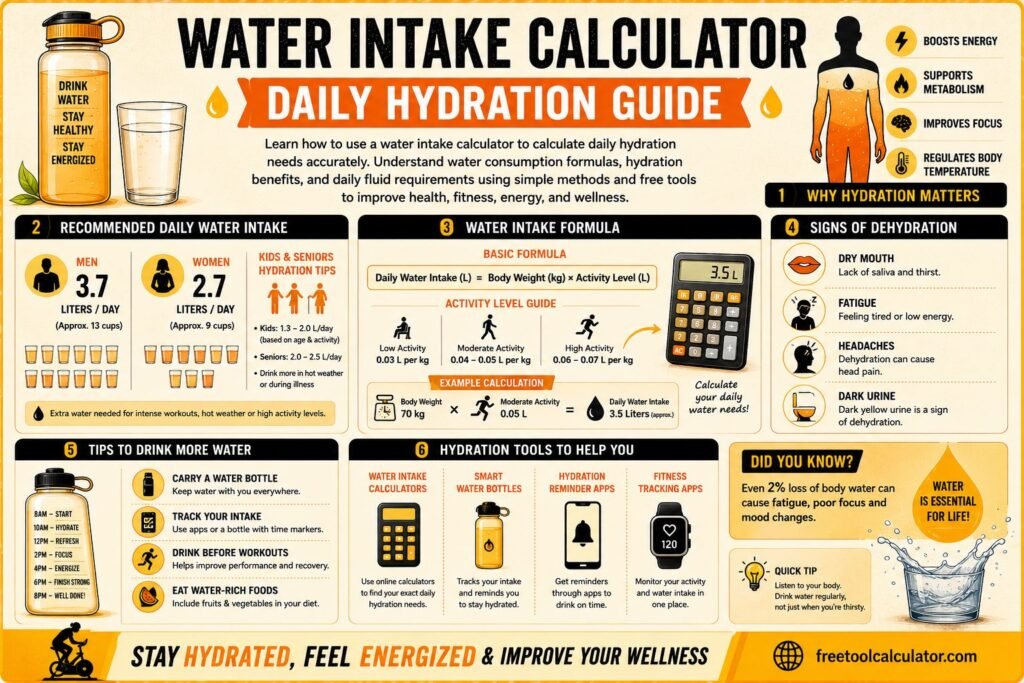
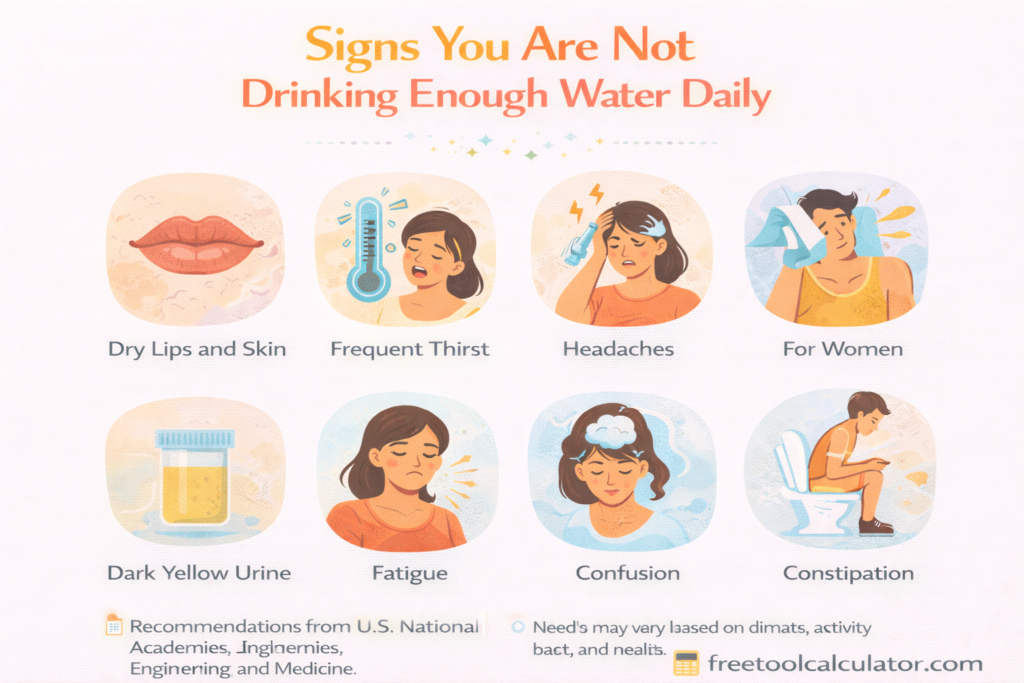
Daily water intake requirements are not the same for everyone. Hydration needs change throughout life and are influenced by age sex physical activity environment and underlying health conditions. As a senior health doctor I often see people following generic hydration advice that does not match their individual needs leading to fatigue headaches or poor performance. Understanding how daily water intake varies by age and lifestyle helps prevent dehydration and supports long term health. A personalized daily water intake calculator such as https://freetoolcalculator.com/daily-water-intake-calculator/ allows you to determine your exact hydration needs based on personal factors rather than assumptions.
Why Water Needs Differ Between Individuals
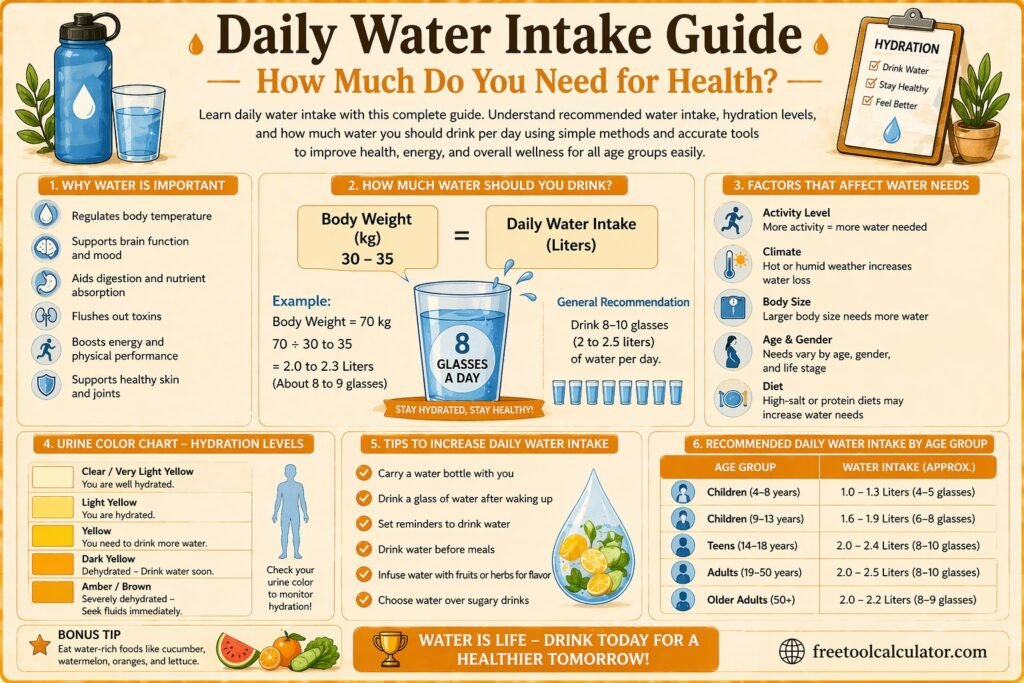
The human body regulates fluid balance continuously. Factors such as body composition metabolism sweat rate and kidney function affect how much water is required each day. Larger bodies generally need more water than smaller bodies. Active individuals lose more fluids through sweat and respiration. Environmental conditions such as heat humidity and altitude also increase water requirements.
Ignoring these differences often leads to underhydration or inconsistent intake patterns.
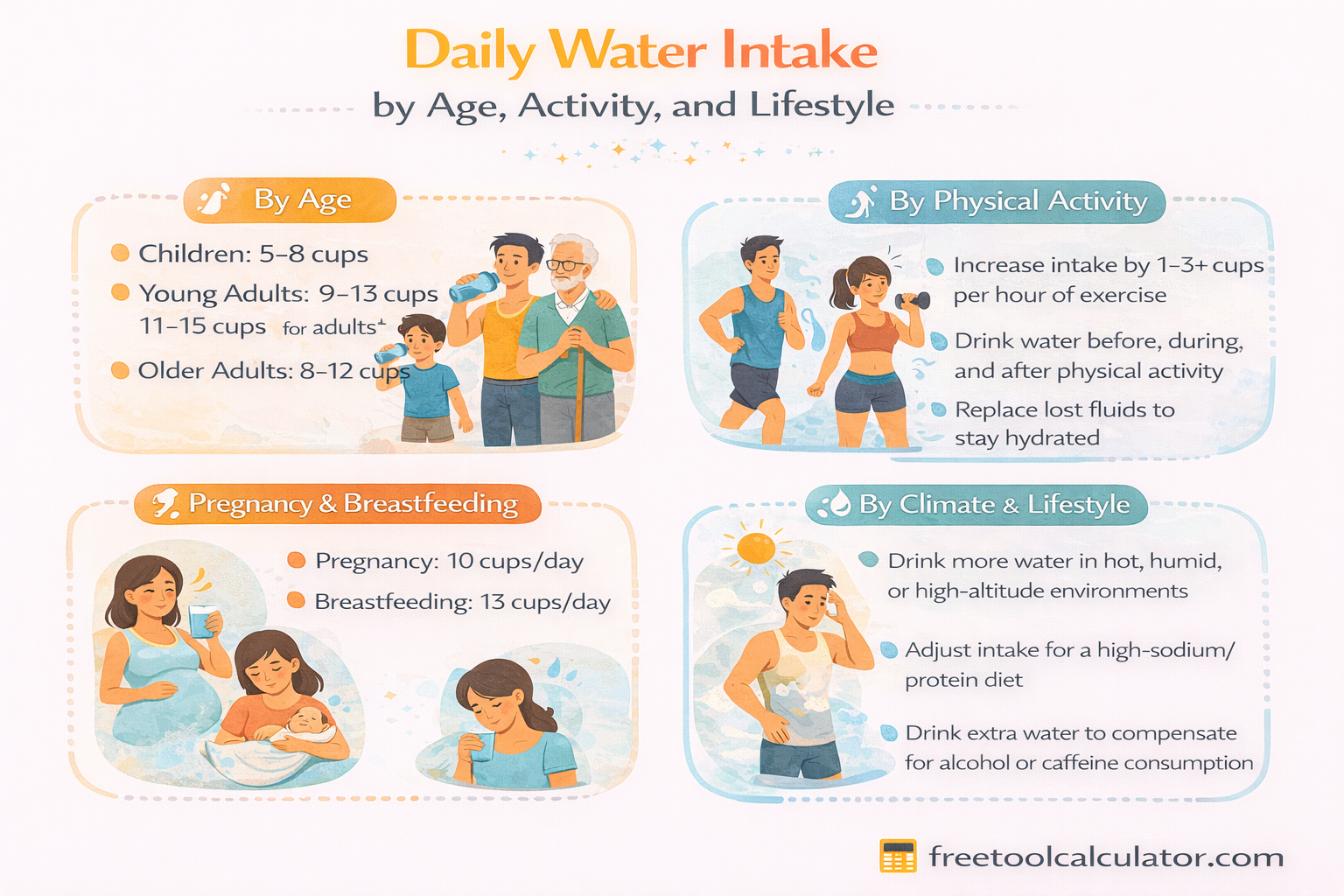
Daily Water Intake for Children
Children have a higher proportion of body water compared to adults but their ability to regulate temperature and recognize thirst is less developed. This makes them more susceptible to dehydration especially during physical activity or hot weather.
Young children require frequent water intake throughout the day even if they do not express thirst. School aged children benefit from structured hydration habits such as drinking water during breaks and meals.
Proper hydration in childhood supports growth cognitive development and physical performance.
Daily Water Intake for Teenagers
Adolescence involves rapid growth hormonal changes and increased physical activity. Teenagers often replace water with sugary drinks which increases dehydration risk.
Adequate hydration supports concentration mood stability and athletic performance during these critical developmental years. Encouraging water as the primary beverage is essential.
Teen hydration needs vary widely depending on body size and activity level making personalized calculation especially useful.
Daily Water Intake for Adult Men
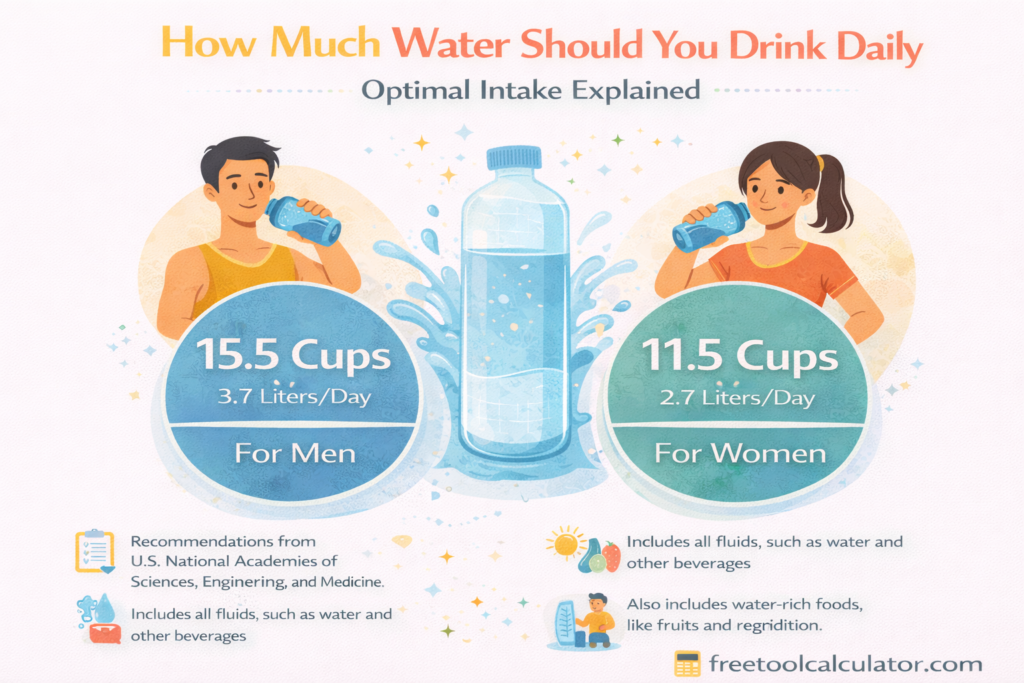
Adult men generally require higher water intake due to greater muscle mass and higher metabolic rate. Muscle tissue contains more water than fat tissue increasing baseline hydration needs.
Men who perform physically demanding work or exercise regularly require additional fluids. Alcohol consumption which is more common among adult men can also increase dehydration risk.
Using a water intake calculator helps adult men maintain consistent hydration tailored to lifestyle demands.
Daily Water Intake for Adult Women
Women have unique hydration considerations related to hormonal fluctuations menstrual cycles pregnancy and breastfeeding. Estrogen and progesterone influence fluid retention and thirst perception.
During pregnancy and lactation water requirements increase significantly to support fetal development and milk production. Inadequate hydration during these stages can affect both maternal and infant health.
Personalized hydration planning is particularly important for women across different life stages.
Hydration Needs for Athletes and Active Individuals
Athletes experience increased fluid loss through sweat and respiration. Endurance activities further elevate hydration demands. Even mild dehydration can impair strength coordination and reaction time.
Athletes should hydrate before during and after exercise. Monitoring body weight changes during training helps estimate fluid losses.
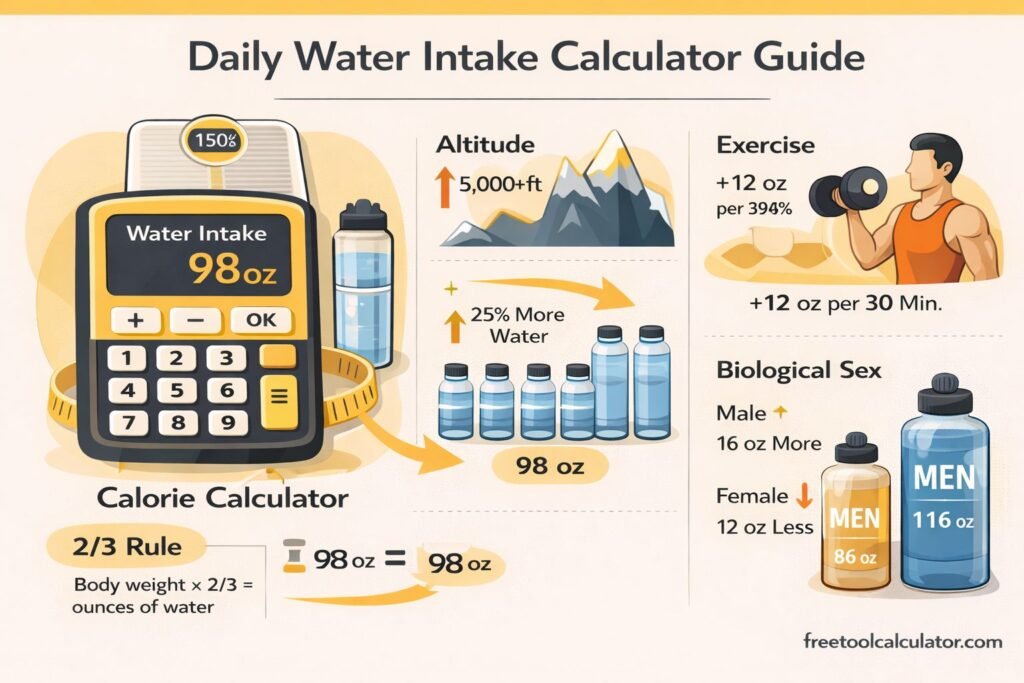
The daily water intake calculator allows athletes to account for activity level when determining total daily fluid needs.
Daily Water Intake for Older Adults
Aging reduces thirst sensitivity and kidney concentrating ability making older adults more vulnerable to dehydration. Medications such as diuretics further increase fluid loss.
Dehydration in older adults increases the risk of falls confusion constipation and kidney dysfunction. Regular scheduled water intake is more effective than relying on thirst cues alone.
Personalized hydration targets help maintain health and independence in later years.
Hydration Needs in Hot and Cold Climates
Hot environments increase sweat production and water loss. Individuals living or working in hot climates require higher daily fluid intake.
Cold environments reduce thirst perception but fluid loss still occurs through respiration and physical activity. People often underestimate hydration needs in cold weather.
Climate specific adjustments are important for accurate hydration planning.
Hydration at High Altitude
High altitude increases breathing rate leading to greater water loss through respiration. Appetite and thirst may also decrease at altitude increasing dehydration risk.
People traveling to or living at high altitude should increase water intake proactively.
Hydration and Health Conditions
Certain medical conditions alter hydration needs. Kidney disease heart failure diabetes gastrointestinal disorders and fever all affect fluid balance.
Some individuals require fluid restriction while others need increased intake. Medical guidance is essential in these cases.
Using a calculator provides a baseline estimate but professional advice should guide adjustments for chronic conditions.
How Diet Influences Water Requirements
High protein and high sodium diets increase water requirements due to increased waste excretion. Diets rich in fruits and vegetables contribute additional water intake.
Caffeinated beverages contribute to hydration but excessive intake may increase fluid loss. Alcohol increases dehydration risk and should not be relied upon for hydration.
Understanding dietary influences helps adjust water intake appropriately.
Recognizing Hydration Needs Across the Day
Hydration needs are not evenly distributed throughout the day. Morning hydration supports circulation after overnight fluid loss. Midday hydration supports digestion and cognitive function. Evening hydration supports recovery but excessive intake late at night may disrupt sleep.
Spacing water intake evenly improves absorption and comfort.
How to Calculate Personalized Water Intake
A daily water intake calculator considers body weight age sex activity level and environment to generate a personalized hydration goal. This approach prevents both underhydration and unnecessary overconsumption.
Use https://freetoolcalculator.com/daily-water-intake-calculator/ to determine your daily target and adjust as activity or climate changes.
Common Hydration Mistakes
Relying solely on thirst
Replacing water with sugary drinks
Ignoring hydration during cold weather
Underestimating fluid needs during exercise
Drinking large volumes at once instead of spreading intake
Avoiding these mistakes supports consistent hydration.
Practical Tips for Different Lifestyles
Office workers should keep water visible and accessible
Outdoor workers should hydrate regularly regardless of thirst
Athletes should plan hydration around training schedules
Older adults should follow scheduled hydration routines
Simple strategies make hydration sustainable.
Can You Drink Too Much Water
Excessive water intake without electrolytes can dilute blood sodium levels leading to hyponatremia. This is rare and typically affects endurance athletes consuming extreme volumes.
Balanced intake guided by personalized needs prevents this risk.
When to Seek Medical Advice
Consult a healthcare provider if hydration needs change suddenly or if symptoms such as swelling dizziness or confusion occur. Medical evaluation ensures safe hydration strategies.
Conclusion
Daily water intake varies significantly based on age activity lifestyle and health status. Following generic hydration rules often leads to inconsistent results. Understanding how your hydration needs change throughout life helps prevent dehydration and supports optimal health. A personalized daily water intake calculator such as https://freetoolcalculator.com/daily-water-intake-calculator/ provides an accurate evidence based hydration target tailored to your body and lifestyle. As a senior health doctor I emphasize individualized hydration planning as a cornerstone of long term wellness energy and physical performance.