Introduction
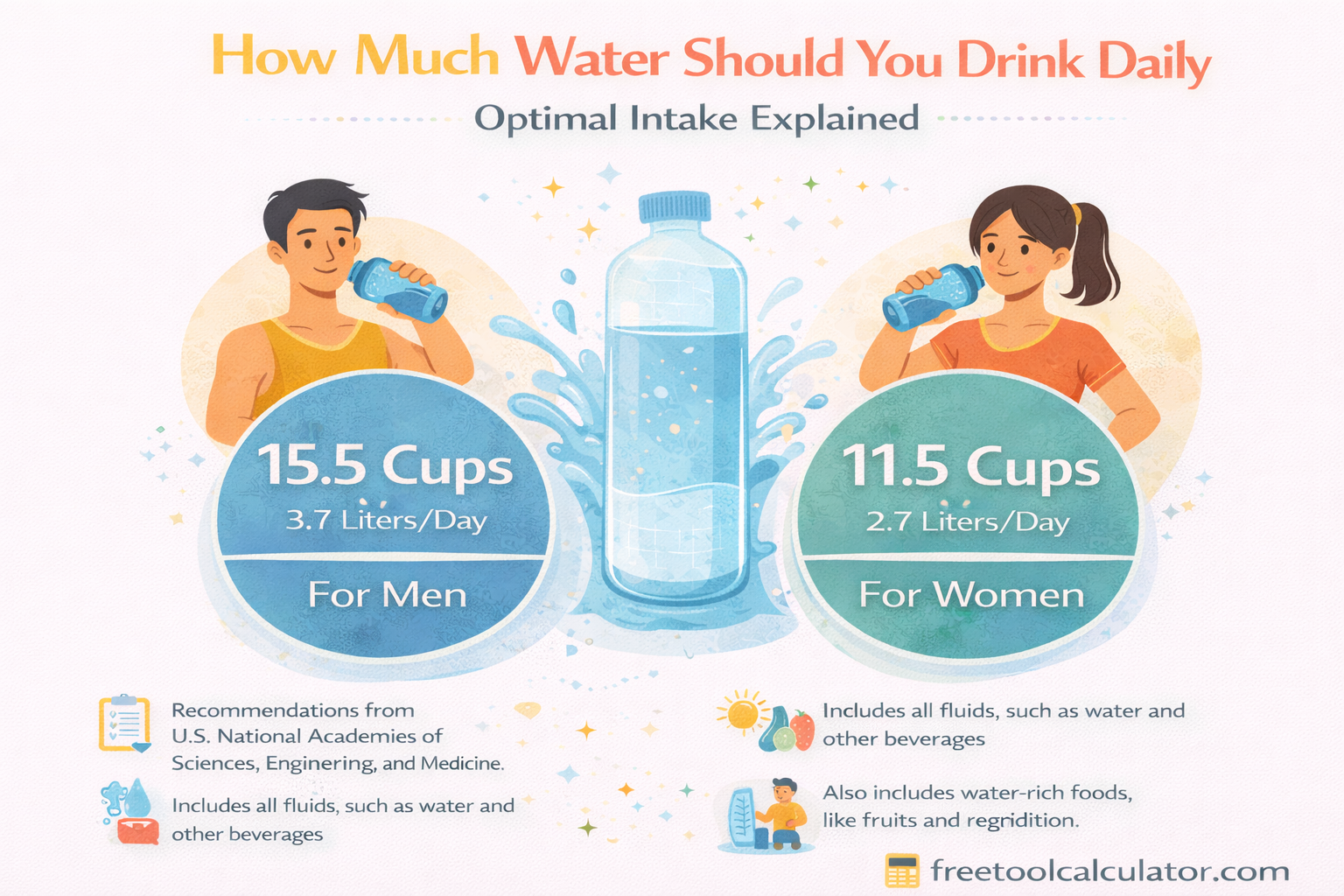
Staying properly hydrated is one of the simplest yet most important steps you can take to support your overall health. Understanding your daily water intake needs helps optimize digestion circulation temperature regulation cognitive performance and metabolic processes. The amount of water each person needs varies widely based on age body size activity level environment and health status. As a senior health doctor I often recommend individuals calculate their personalized hydration needs rather than follow generic rules. Using a free daily water intake calculator at https://freetoolcalculator.com/daily-water-intake-calculator/ makes this process quick and accurate so you can tailor your hydration goals based on your unique lifestyle and body composition.
Why Daily Water Intake Matters
Water makes up approximately 60 percent of adult body weight and is vital for every cell, tissue and organ. Proper hydration supports:
Digestive function and nutrient absorption
Kidney function and waste elimination
Joint lubrication and muscle performance
Temperature regulation through sweating
Blood circulation and cardiovascular health
Cognitive performance and mood stability
Dehydration, even at mild levels, can impair attention, memory, and physical performance. Chronic underhydration may contribute to kidney stones, urinary tract infections, and impaired metabolic function.
How Much Water Should You Drink Daily
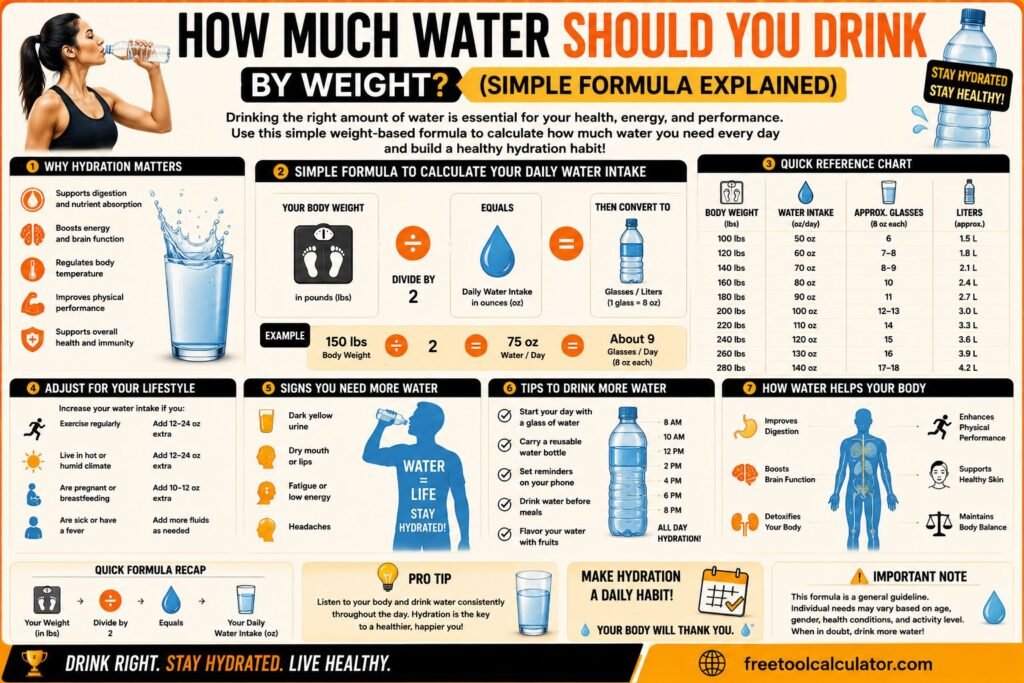
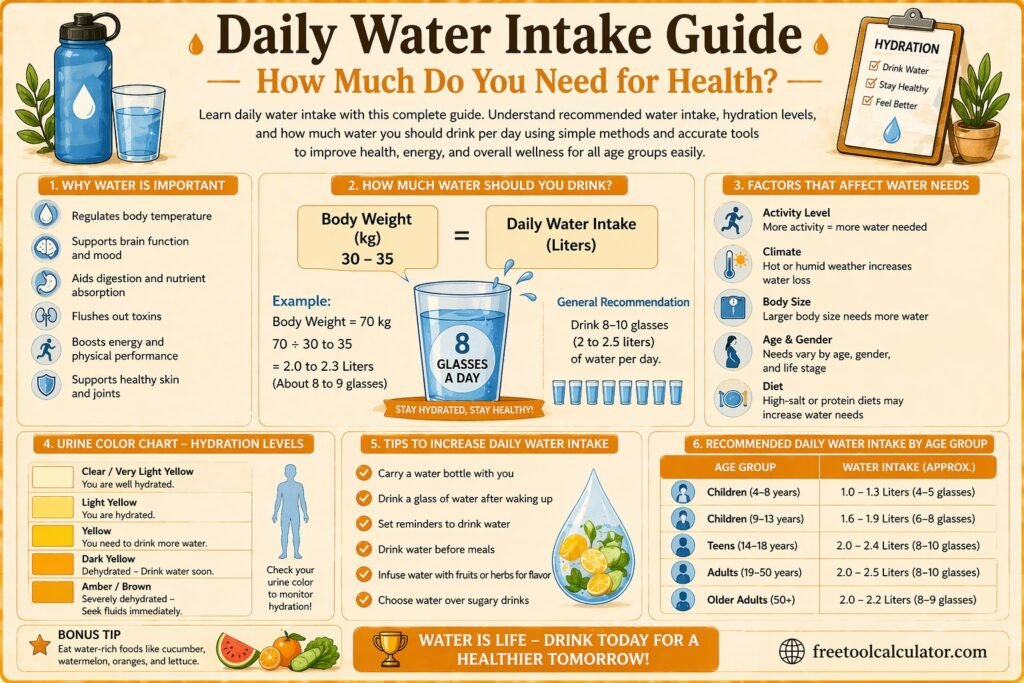
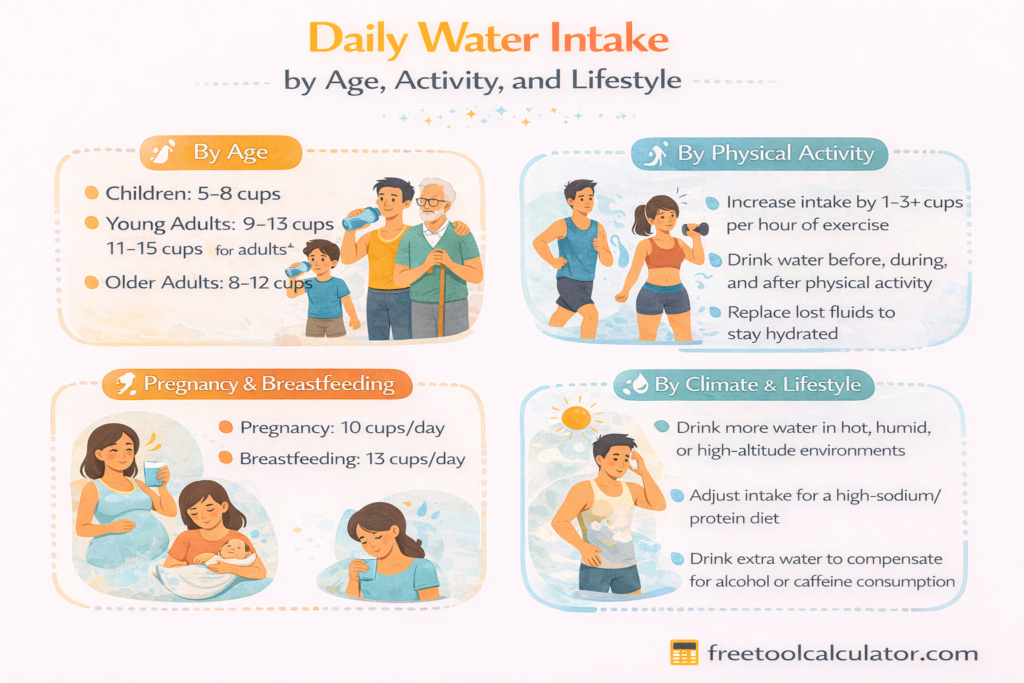
There is no one-size-fits-all water intake recommendation. Traditional guidelines like eight 8-ounce glasses a day (about 2 liters) are a general starting point but not specific to individual needs.
Hydration requirements depend on:
Age
Sex
Body weight and composition
Activity level
Climate and temperature
Dietary sodium and protein intake
Overall health status
For a tailored estimate use the free daily water intake calculator at https://freetoolcalculator.com/daily-water-intake-calculator/ which adjusts for these personal factors and creates a customized hydration goal.
How to Calculate Your Water Needs
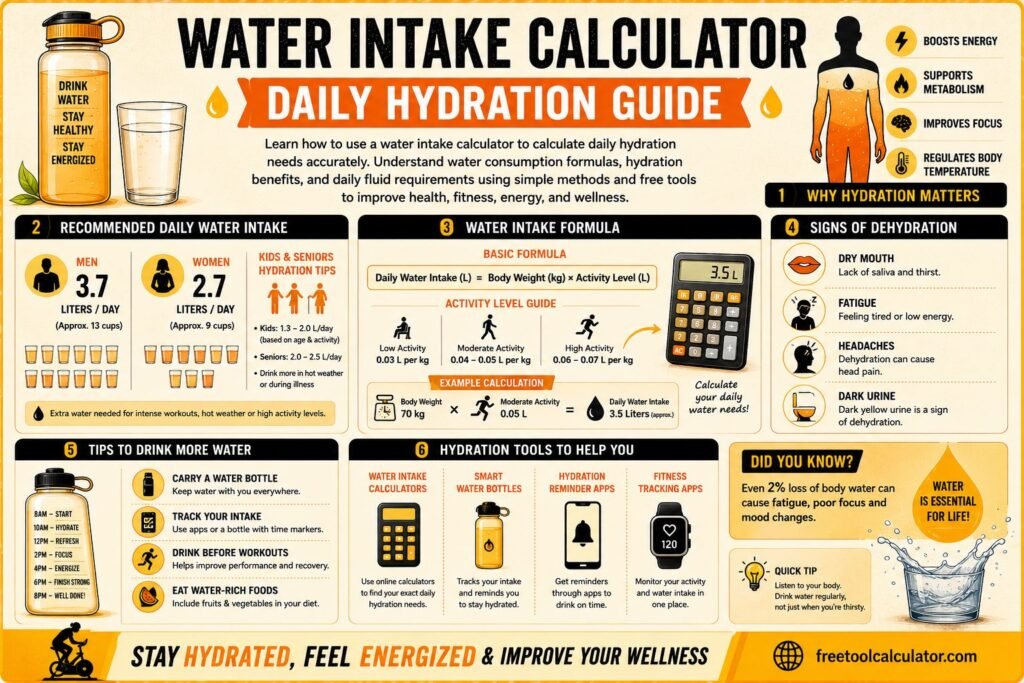
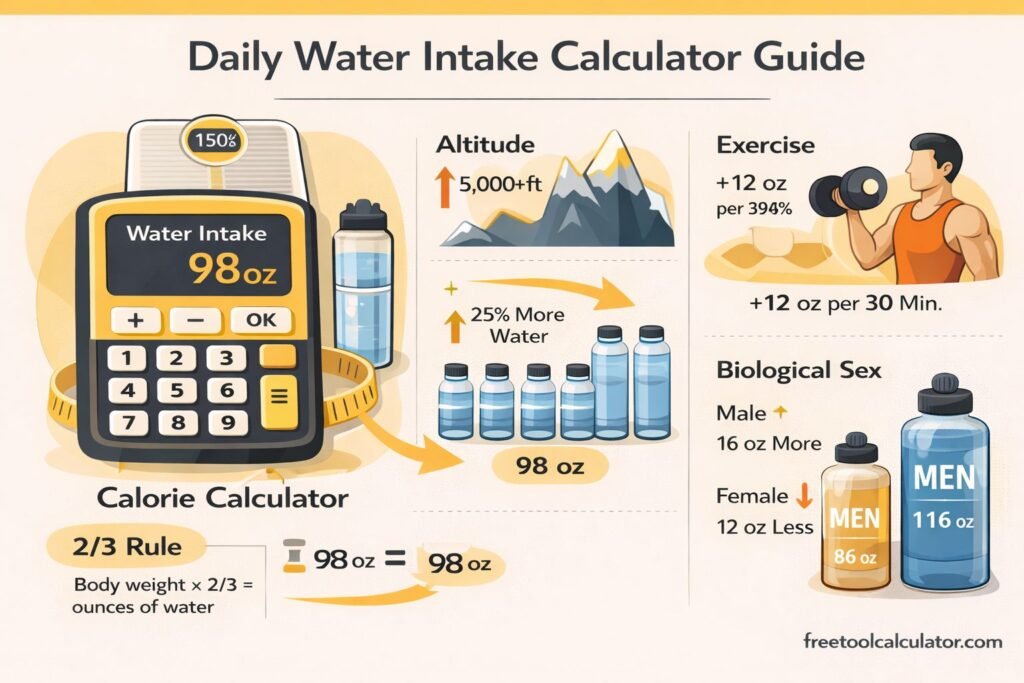
Hydration needs can be estimated through formulas that account for body weight and activity level. One common guideline used by healthcare professionals is to drink:
30 to 35 milliliters of water per kilogram of body weight
For example:
A person weighing 70 kilograms may aim for
70 x 30 = 2100 milliliters (about 2.1 liters) per day
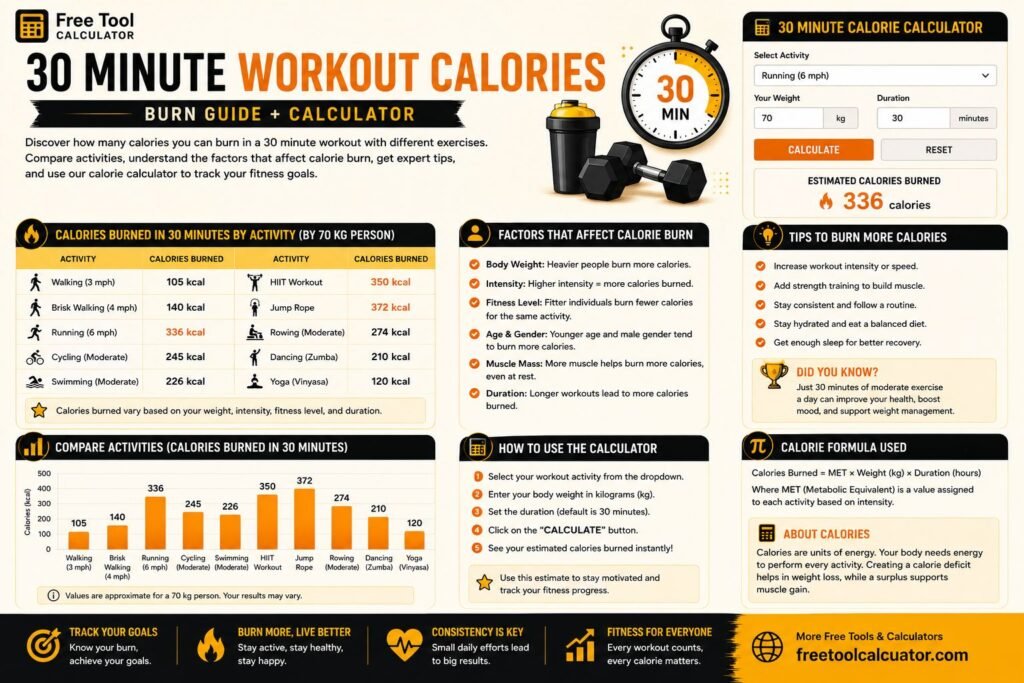
This estimate increases with physical activity because water is lost through sweat. Active individuals may require an additional 350 to 700 milliliters of fluid for every 30 minutes of moderate to intense exercise.
The daily water intake calculator at https://freetoolcalculator.com/daily-water-intake-calculator/ does this math for you instantly and helps set a practical daily hydration goal.
Hydration Needs During Exercise
Physical activity increases fluid loss through sweat and respiration. Adequate hydration before, during, and after exercise supports performance and recovery.
Before exercise:
Drink 500 to 600 milliliters of water about two hours before activity
During exercise:
Aim for 150 to 350 milliliters every 15–20 minutes depending on heat and exertion
After exercise:
Replenish fluids to replace what was lost by drinking an additional 500 to 750 milliliters for every pound of body weight lost during the session
Using a personalized daily water intake calculator allows you to incorporate exercise specific hydration needs into your daily plan.
How Climate and Environment Affect Hydration
Hot, humid climates increase sweating, leading to greater fluid loss and higher daily hydration needs. Similarly, cold environments can suppress thirst and lead to underhydration, even though the body still loses fluids through respiration and activity.
High altitude also increases water loss due to increased respiration rates.
A water intake calculator that considers environmental conditions gives a more accurate hydration recommendation than generic advice.
Signs of Proper Hydration
You are likely well hydrated if you experience:
Consistent clear or light-colored urine
Good energy levels
No dizziness or lightheadedness
Regular bowel movements
Moist lips and healthy skin elasticity
These indicators, when paired with personalized intake goals, help you maintain optimal hydration.
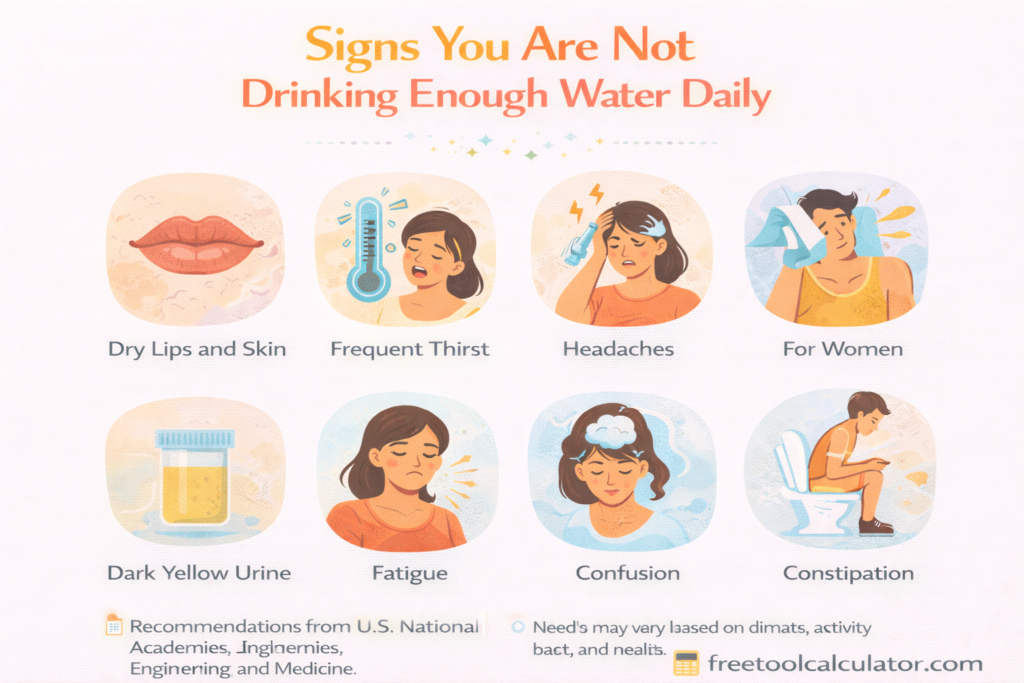
Signs of Dehydration to Watch For
Early signs of dehydration include:
Dark yellow urine
Dry mouth or lips
Fatigue
Headaches
Reduced urine output
Severe dehydration can lead to:
Rapid heartbeat
Confusion or irritability
Extreme thirst
Dizziness or fainting
If you experience these symptoms, increasing fluid intake and consulting a healthcare provider is important.
The Role of Diet in Hydration
Water also comes from food. Fruits and vegetables like watermelon, cucumbers, oranges, and lettuce have high water content and contribute to overall hydration. Soups, broths, and herbal teas also help meet daily fluid goals.
Caffeinated beverages like coffee and tea have mild diuretic effects but still contribute to hydration when consumed in moderation. Sugary drinks and alcohol can increase dehydration risk and should not be relied on as primary fluid sources.
Hydration Throughout the Life Span
Hydration needs change with age. Infants, young children, and older adults are particularly susceptible to dehydration because of differences in body composition, kidney function, and thirst perception.
Pregnant and breastfeeding individuals also have increased fluid requirements due to the demands of fetal growth and milk production.
Setting personalized hydration goals using a water intake calculator ensures safe fluid intake across different life stages.
Myths About Water Intake
There are many hydration myths such as “you must drink eight glasses of water a day” or “you should only drink water when you’re thirsty.” These rules are overly simplistic and don’t account for individual factors. Using a scientifically based calculator helps you move beyond myths to accurate daily goals.
Hydration and Weight Management
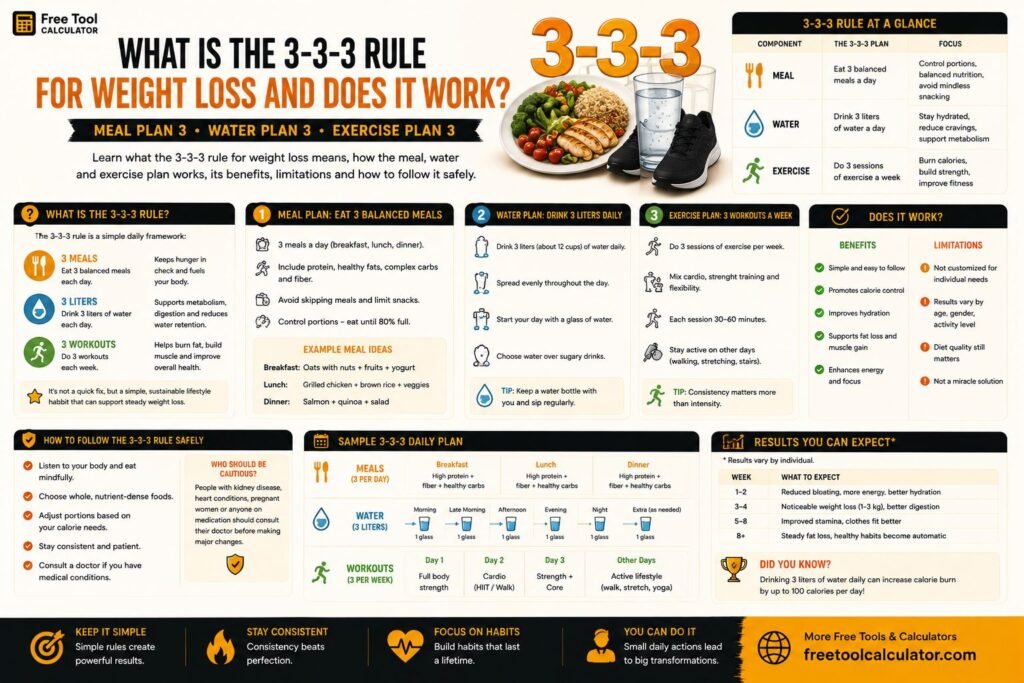
Proper hydration supports weight management by promoting satiety and reducing overeating. Drinking water before meals may help reduce overall calorie intake. Water also plays a role in metabolic processes including lipolysis, the breakdown of fat for energy.
Hydration and Kidney Health
Adequate hydration supports kidney function by flushing waste products and reducing the risk of kidney stones and urinary tract infections. Individuals with a history of kidney issues should follow personalized hydration plans under medical supervision.
Using a Daily Water Intake Calculator
A daily water intake calculator takes into account your body weight, activity level, environment and health conditions to give a personalized hydration target. Instead of guessing or using rigid rules you receive a scientifically informed recommendation that matches your lifestyle.
Use the tool at https://freetoolcalculator.com/daily-water-intake-calculator/ daily to set and monitor your hydration goals.
Practical Hydration Tips
Carry a reusable water bottle to stay hydrated throughout the day
Set reminders to drink water, especially during busy schedules
Incorporate water rich foods into meals
Drink water before, during, and after exercise
Monitor urine color as a quick hydration check
When to See a Doctor About Hydration
Seek medical advice if you have:
Persistent dehydration symptoms
Kidney disease or electrolyte imbalance
Unusual thirst or frequent urination
Significant fluid loss due to illness or heat exposure
Your healthcare provider can recommend tailored hydration plans and tests to ensure optimal fluid balance.
Conclusion
Proper daily water intake is essential for overall health, metabolic function, physical performance, and cognitive clarity. Generic hydration advice is a good starting point, but personalized hydration recommendations based on your unique needs make it easier to stay healthy and hydrated every day. A free daily water intake calculator such as https://freetoolcalculator.com/daily-water-intake-calculator/ helps you determine how much water to drink based on evidence rather than guesswork. As a senior health doctor I encourage consistent hydration habits because they support not only physical health but energy, mood, and long-term wellbeing.