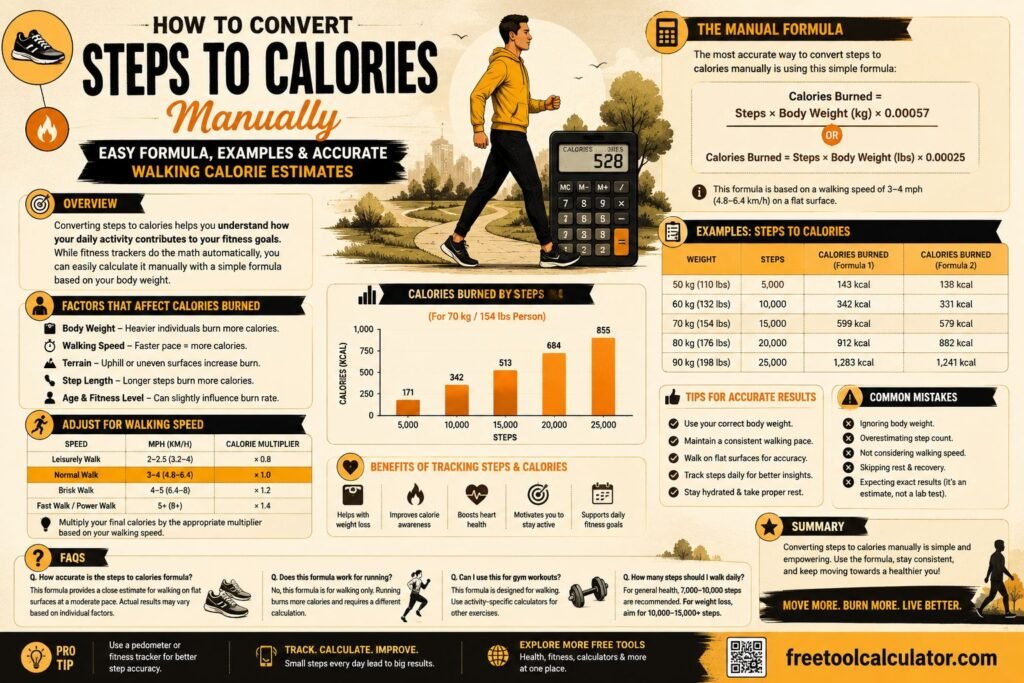
Quick answer: There is no single calorie number for 10,000 steps. Calories burned depend mainly on body weight, walking speed, distance covered, terrain, and individual movement efficiency. A personalized estimate is more useful than assuming every person burns the same amount.
For your own estimate, use the Steps to Calories Calculator. This guide explains what changes the result, how walking intensity is estimated, and how to interpret a 10,000-step day without treating the number as a medical or weight-loss guarantee.
How Many Calories Can 10,000 Steps Burn?
A 10,000-step walk can represent very different amounts of work for different people. Two people may record the same step count but cover different distances because of differences in stride length. A heavier person generally uses more energy to move the same distance, while a faster pace, hills, stairs, or uneven terrain can increase the energy cost further.
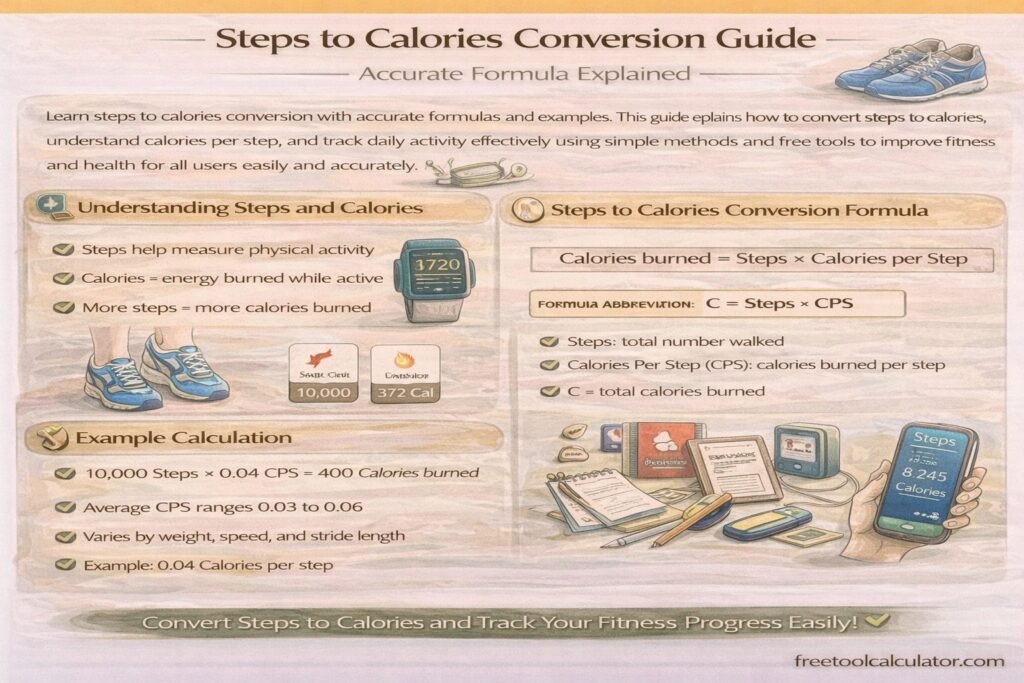
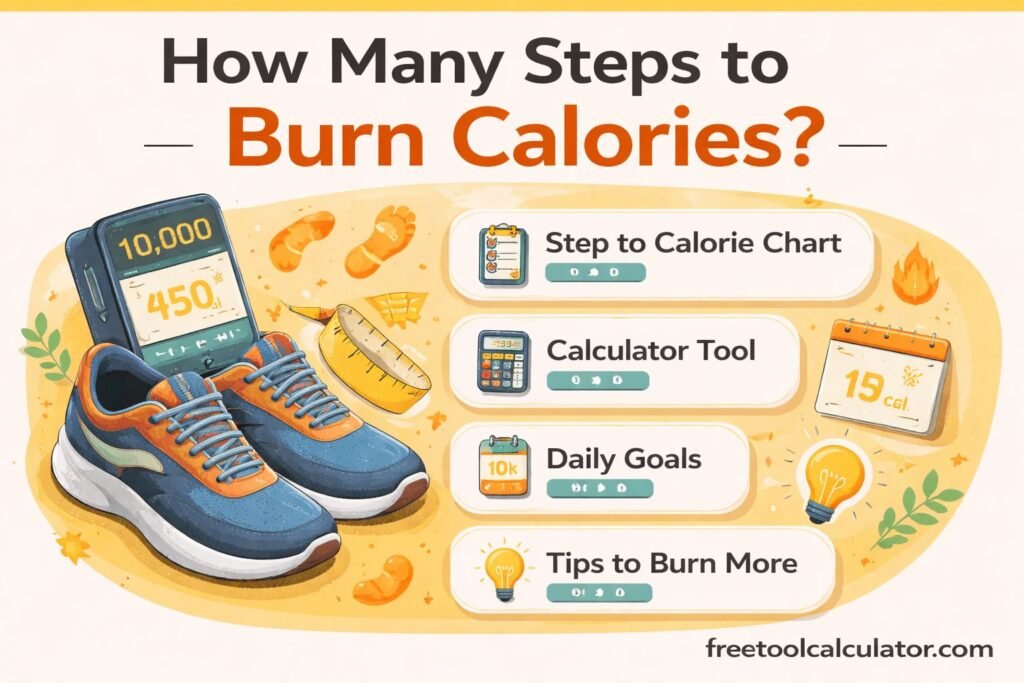
That is why a broad “calories per step” rule should only be treated as a rough shortcut. For a better estimate, combine step count with body weight and walking intensity rather than multiplying 10,000 by one fixed calorie value.
Why Weight and Walking Pace Change the Result
Walking intensity is commonly described with metabolic equivalents, or METs. The 2024 Adult Compendium of Physical Activities lists different MET values for different walking speeds. For example, level walking at 2.5 mph is listed at 3.0 METs, moderate walking around 2.8 to 3.4 mph at 3.8 METs, and brisk walking around 3.5 to 3.9 mph at 4.8 METs.
This matters because calorie expenditure rises as the activity becomes more demanding. Body weight also affects the estimate: the same MET-level activity produces a higher estimated energy expenditure for a heavier person than for a lighter person over the same duration.
A Better Formula Than Calories Per Step
When walking duration and intensity are known, a commonly used MET-based estimate is:
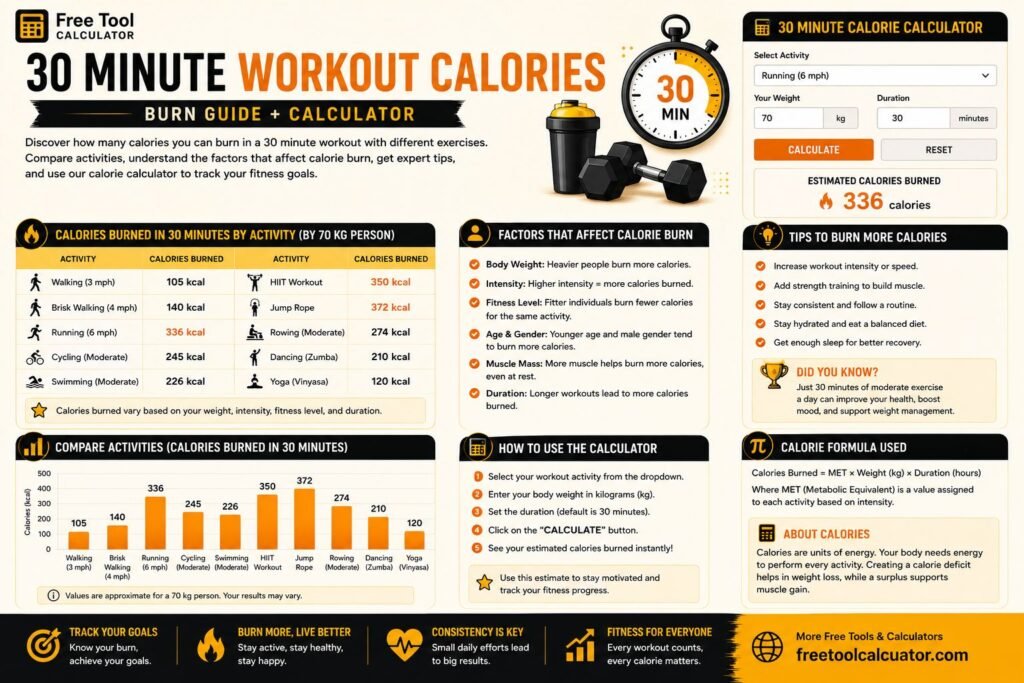
Calories per minute ≈ MET × 3.5 × body weight (kg) ÷ 200
This is still an estimate, not a laboratory measurement. Step counters can also differ in how they detect steps, and a step count alone does not reveal pace, grade, stride length, or total walking time.
Worked Example
Suppose a 70 kg person walks at a moderate pace represented by about 3.8 METs for 90 minutes. Using the formula above:
3.8 × 3.5 × 70 ÷ 200 ≈ 4.66 calories per minute
Over 90 minutes, that is roughly 419 calories. This example demonstrates the method; it does not mean every 70 kg person burns exactly 419 calories from 10,000 steps. The time required to reach 10,000 steps can vary substantially.
What Affects Calories Burned From 10,000 Steps?
Body weight
Moving a larger body mass generally requires more energy, so body weight is an important input in calorie estimates.
Walking speed
Brisk walking has a higher MET value than slow walking. If two people walk for the same length of time, the faster walk can produce a higher estimated energy expenditure.
Distance and stride length
Ten thousand steps is not a fixed distance. A longer stride covers more ground per step, so distance can differ even when two devices show the same step count.
Hills, stairs, and terrain
Inclines, stairs, sand, and uneven ground can make walking more demanding than level walking on a firm surface.
Is 10,000 Steps a Required Daily Target?
No. Ten thousand steps is a popular benchmark, not a universal medical requirement. Research summarized by the U.S. National Institutes of Health and the CDC indicates that health benefits can occur below 10,000 steps per day, and the relationship between step count and health varies by age and population.
The CDC also emphasizes that adults can benefit from physical activity even when they do not reach a specific step target. Current U.S. guidance focuses on accumulating moderate- or vigorous-intensity activity during the week rather than requiring one daily step number.
10,000 Steps for Weight Management
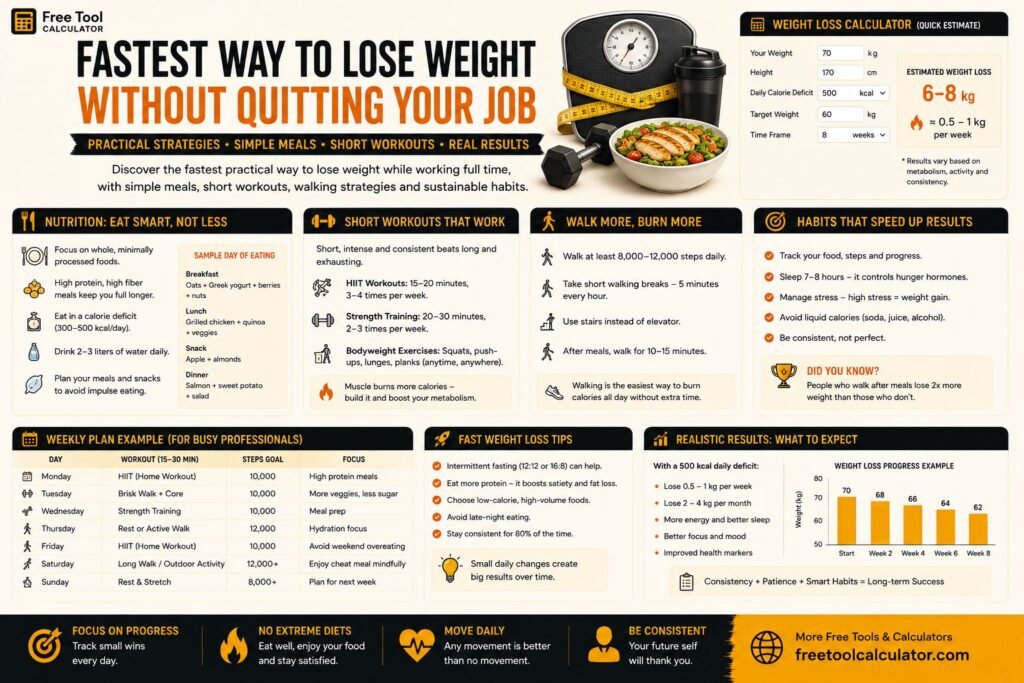
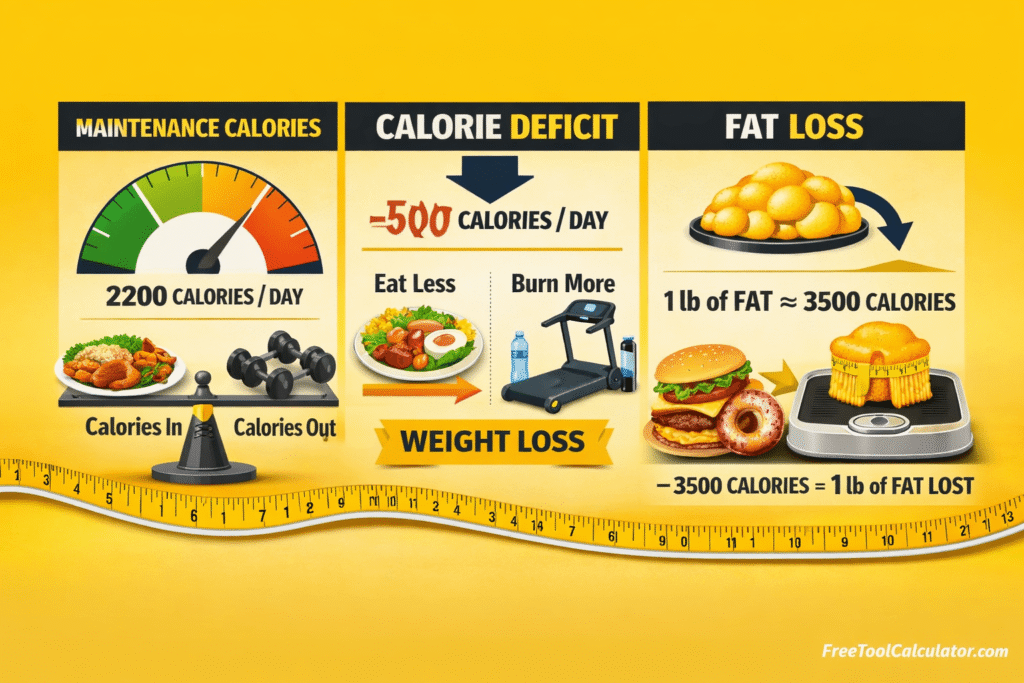
Walking can contribute to daily energy expenditure, but step count by itself cannot predict weight change. Body weight changes are influenced by overall energy intake, total activity, sleep, health conditions, medications, and other factors. Avoid treating a calorie estimate from a wearable or calculator as an exact amount of food “earned” or as a guaranteed calorie deficit.
If your goal is to understand your broader daily energy needs, compare this estimate with the Calorie Deficit Calculator and other relevant health tools. Calculator results are educational estimates and should not replace individualized medical or dietetic advice.
How to Get a More Useful Estimate
- Use your current body weight rather than a generic average.
- Use a realistic walking pace instead of assuming all steps are brisk exercise.
- Consider whether your route is level, hilly, or includes stairs.
- Use actual walking time when available.
- Compare trends over time rather than relying on one day’s estimate.
For a quick personalized calculation, enter your step count and available activity details in the Steps to Calories Calculator.
Frequently Asked Questions
Does everyone burn the same calories from 10,000 steps?
No. Weight, pace, walking time, distance, terrain, and individual efficiency all affect the estimate.
Is a fixed calories-per-step formula accurate?
It can be useful for a very rough estimate, but it ignores important variables. A weight- and intensity-aware method is more informative.
Do I need exactly 10,000 steps for health benefits?
No. Research shows benefits can occur at lower step counts, and public-health recommendations do not require every adult to hit exactly 10,000 steps each day.
Sources and Methodology
- 2024 Adult Compendium of Physical Activities — Walking MET values
- CDC — Benefits of Physical Activity
- CDC — Adding Physical Activity as an Adult
- NIH — Number of Steps per Day and Health Outcomes
Last reviewed: October 2026. This article provides general educational information. Calorie-burn calculations are estimates and are not a substitute for professional medical advice.