Daily Water Intake Calculator and Introduction
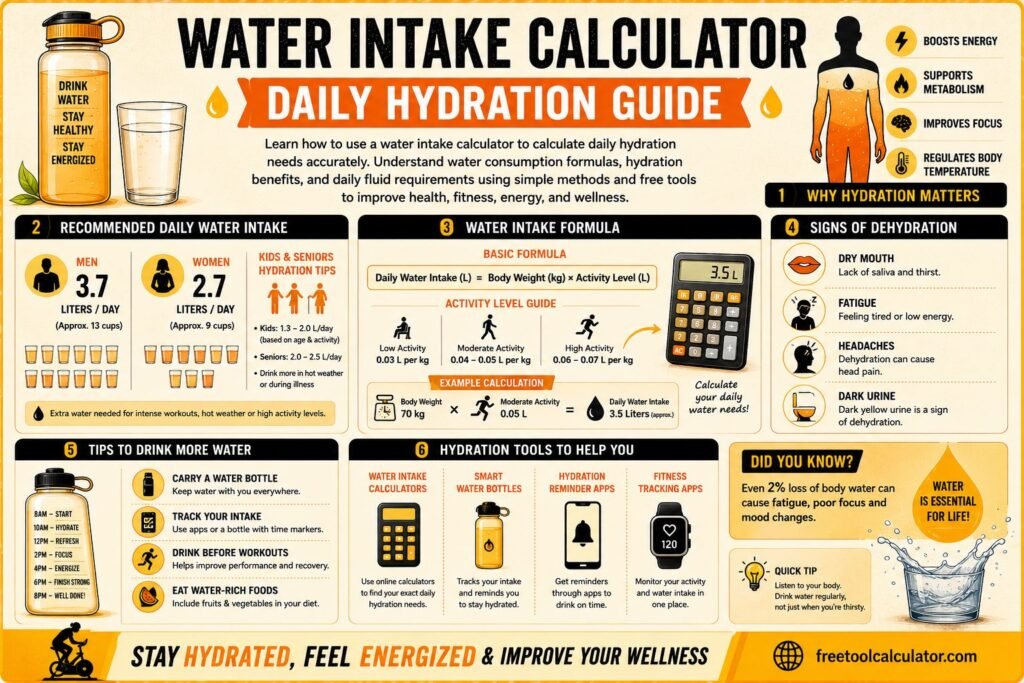
A Daily Water Intake Calculator helps estimate how much water a person may need each day based on factors such as body weight, activity level, climate conditions, and personal hydration goals. Staying properly hydrated supports normal bodily functions, including temperature regulation, nutrient transport, digestion, and physical performance. While individual needs vary, using a water intake calculator can provide a practical starting point for building healthy hydration habits.
Many people wonder how much water they should drink daily, especially when exercising, living in hot climates, working outdoors, or following specific health and fitness goals. A daily water intake calculator simplifies this process by converting hydration recommendations into easy-to-understand measurements such as liters, cups, and daily drinking schedules.
This Daily Water Intake Calculator estimates hydration needs using commonly accepted hydration guidelines and presents results in a clear format. Whether you are looking for a daily water intake chart, trying to calculate daily water intake for fitness purposes, or simply aiming to improve hydration habits, this tool can help you make informed decisions about your daily fluid consumption.
What Is Daily Water Intake?
Daily water intake refers to the total amount of fluids a person consumes throughout the day to support normal bodily functions. Water is essential for life and plays a role in nearly every system in the body. It helps transport nutrients, remove waste products, lubricate joints, regulate body temperature, and maintain healthy organ function.
Although water requirements differ between individuals, maintaining adequate hydration is important for overall well-being. Factors such as age, body size, physical activity, climate, diet, and certain medical conditions can influence how much water a person may need each day.
Because hydration needs vary, there is no single water intake recommendation that applies to everyone. A personalized calculator can provide more relevant estimates than a general rule of thumb.
How the Daily Water Intake Calculator Works
Step 1: Enter Your Weight
Body weight is one of the primary factors used to estimate water requirements. Larger individuals generally require more fluids than smaller individuals because they have greater body mass and water needs.
Step 2: Select Activity Level
Physical activity increases fluid loss through sweating and respiration. The calculator adjusts recommendations based on sedentary, moderate, or high activity levels.
Step 3: Consider Climate Conditions
People living in hot, humid, or dry environments often require additional fluids because the body loses water more rapidly through sweat and evaporation.
Step 4: Review Your Results
The calculator estimates daily water intake and presents results in liters, milliliters, ounces, and cups. Many versions also provide a suggested hydration schedule to help distribute water intake throughout the day.
Why Water Is Important for the Human Body
Water makes up a significant portion of the human body and supports countless physiological processes. Every cell, tissue, and organ depends on water to function properly. Even mild dehydration can affect concentration, physical performance, and comfort.
Water helps regulate body temperature through sweating and cooling mechanisms. It supports digestion by helping move food through the digestive tract and assists the kidneys in removing waste products from the bloodstream.
Proper hydration also contributes to healthy circulation, allowing oxygen and nutrients to be transported efficiently throughout the body. Maintaining adequate fluid intake is one of the simplest ways to support overall health and daily functioning.
Daily Water Intake Calculation Explained
Daily water intake calculation methods often use body weight as a starting point and then adjust for lifestyle factors. While formulas differ, many hydration calculators estimate baseline fluid needs and add extra amounts for exercise, hot weather, or increased physical demands.
For example, someone who exercises intensely for an hour each day may require additional water beyond baseline hydration recommendations. Similarly, people living in tropical climates often need more fluids than those living in cooler regions.
The purpose of a daily water intake calculation is not to provide a strict medical prescription but rather to offer a practical estimate that can help guide healthy hydration habits.
Factors That Affect Daily Water Intake
Body Weight
Body size influences hydration needs because larger bodies generally contain more water and require more fluids to maintain normal function.
Physical Activity
Exercise increases water loss through sweating. Active individuals often require additional hydration before, during, and after physical activity.
Climate and Environment
Hot, humid, and dry environments can increase fluid loss. Individuals living in such conditions may benefit from increasing water intake.
Diet
Certain foods contribute to fluid intake. Fruits, vegetables, soups, and beverages all contain varying amounts of water.
Personal Goals
People focused on fitness, athletic performance, weight management, or outdoor activities may choose to monitor hydration more closely.
Daily Water Intake in Litres
Many users prefer viewing hydration recommendations in liters because it provides a straightforward way to track water consumption. A daily water intake calculator commonly displays results in liters alongside cups and ounces for convenience.
Depending on personal factors, estimated water intake may range from approximately 2 liters per day for some individuals to over 4 liters per day for highly active people or those living in hot climates. However, individual requirements vary significantly.
Using liters as a measurement makes it easier to compare water intake with bottle sizes, hydration containers, and fitness goals.
Understanding a Daily Water Intake Chart
A daily water intake chart provides a visual guide for estimated hydration needs based on factors such as weight, activity level, and environmental conditions. These charts help users quickly identify recommended intake ranges without performing manual calculations.
While charts can be useful references, personalized calculators often provide more accurate estimates because they account for multiple lifestyle factors rather than relying on a single variable.
Combining a daily water intake chart with a personalized hydration calculator can help users develop realistic and sustainable drinking habits.
Daily Water Bottle Intake Planning
Many people track hydration using reusable water bottles. Knowing your estimated daily water intake allows you to determine how many bottles you need to drink each day.
For example, if your hydration goal is 3 liters daily and your bottle holds 750 milliliters, you would need to refill and finish approximately four bottles throughout the day.
Tracking water bottle intake can simplify hydration monitoring and help users stay consistent with their goals.
How to Calculate Daily Water Intake
Many users search for how to calculate daily water intake because hydration needs are influenced by several factors. Although numerous formulas exist, most calculators begin with body weight and then apply adjustments for activity level, climate, and personal circumstances.
A practical approach is to estimate baseline fluid requirements and then increase intake when engaging in exercise, spending time in hot weather, or experiencing higher fluid losses.
Hydration calculators automate this process and present results in user-friendly formats, making it easier to understand daily water needs.
Does Coffee Count as Daily Water Intake?
One of the most common hydration questions is: does coffee count as daily water intake? For most people, coffee contributes to total daily fluid intake because it contains a significant amount of water.
Although caffeine has mild diuretic properties, research suggests that moderate coffee consumption generally provides hydration rather than causing net fluid loss in habitual coffee drinkers. Therefore, many hydration experts consider coffee part of total fluid intake.
However, relying entirely on coffee for hydration is usually not recommended. Plain water remains one of the simplest and most effective ways to meet daily hydration goals.
Does Coffee Count Towards Daily Water Intake?
Another frequently asked question is whether coffee counts towards daily water intake. In general, moderate amounts of coffee contribute to overall fluid consumption and can be included when estimating daily hydration.
The degree to which coffee contributes may vary depending on caffeine content, serving size, and individual tolerance. Most hydration guidelines recognize that beverages such as coffee, tea, milk, and certain juices contribute to total daily fluid intake.
For many healthy adults, moderate coffee consumption can be considered part of a balanced hydration strategy.
Does Drinking Coffee Count as Daily Water Intake?
Yes, for most healthy individuals, drinking coffee can contribute to daily fluid intake. While coffee should not necessarily replace water entirely, it is generally included in total fluid consumption calculations.
People who consume large amounts of caffeine or have specific medical concerns should consult a healthcare professional regarding personalized hydration recommendations.
A Daily Water Intake Calculator typically focuses on total fluid needs, recognizing that hydration can come from a variety of beverages and foods.
Daily Water Intake During Chemotherapy Hydration
Some users search for information about daily water intake during chemotherapy hydration. Hydration can be an important topic for individuals undergoing cancer treatment because fluid needs may change based on treatment plans, medications, side effects, and individual circumstances.
However, hydration recommendations during chemotherapy should always be personalized and guided by qualified healthcare professionals. Fluid requirements can vary significantly depending on the treatment regimen and overall medical condition.
This calculator is intended for general educational and wellness purposes and should not replace medical advice for individuals receiving chemotherapy or other specialized treatments.
Common Uses of a Daily Water Intake Calculator
- Estimating hydration needs
- Creating daily drinking schedules
- Tracking water bottle consumption
- Supporting fitness and exercise goals
- Planning hydration in hot climates
- Monitoring daily fluid habits
- Building healthy routines
- Supporting outdoor activities
- Improving hydration awareness
- Educational wellness planning
Who Uses This Tool?
- Fitness enthusiasts
- Athletes
- Office workers
- Students
- Outdoor workers
- Travelers
- Health-conscious individuals
- Personal trainers
- Nutrition professionals
- People building hydration habits
Benefits of Using a Daily Water Intake Calculator
Personalized Estimates
The calculator considers factors such as weight, activity, climate, and goals to provide more tailored recommendations.
Easy Tracking
Results are often displayed in liters, cups, and bottles, making hydration goals easier to follow.
Better Awareness
Understanding hydration needs can help users make more informed choices about daily fluid consumption.
Supports Consistency
A hydration schedule encourages regular water intake throughout the day instead of consuming large amounts at once.
Common Hydration Mistakes
Waiting Until You Feel Extremely Thirsty
Thirst can be a useful signal, but maintaining regular hydration throughout the day may be more effective than waiting until significant thirst develops.
Ignoring Activity Levels
Exercise and physical work increase fluid losses and often require additional hydration.
Forgetting Climate Conditions
Hot and humid weather can substantially increase water needs.
Assuming Everyone Needs the Same Amount
Hydration requirements vary between individuals. Personalized estimates are generally more useful than one-size-fits-all recommendations.
Frequently Asked Questions
How much water should I drink daily?
The amount varies depending on body size, activity level, climate, diet, and personal factors. A daily water intake calculator can provide a personalized estimate.
How do I calculate daily water intake?
Most calculations use body weight as a starting point and adjust for activity, environment, and lifestyle factors.
What is a daily water intake chart?
A daily water intake chart provides estimated hydration ranges based on factors such as weight and activity level.
Does coffee count in daily water intake?
For most healthy adults, coffee contributes to total fluid intake because it contains water, although plain water remains an important hydration source.
Does drinking coffee count as daily water intake?
Yes, moderate coffee consumption generally contributes to daily fluid intake for most people.
How many liters of water should I drink per day?
The answer depends on individual circumstances. Hydration calculators estimate daily water intake in litres based on personal factors.
Can food contribute to hydration?
Yes. Fruits, vegetables, soups, and other foods with high water content contribute to overall fluid intake.
Is more water always better?
Not necessarily. Hydration needs vary, and extremely excessive water intake may not be appropriate in some situations. Balanced hydration is generally the goal.
Why Trust This Tool?
This Daily Water Intake Calculator uses commonly accepted hydration estimation methods based on body weight, activity level, environmental conditions, and lifestyle factors. The calculations are intended to provide educational guidance and practical hydration estimates rather than medical prescriptions.
The tool presents results in liters, cups, and easy-to-follow schedules to help users understand their estimated hydration needs. By focusing on transparent calculations and practical recommendations, the calculator supports informed hydration planning for everyday wellness.
Because individual fluid requirements can vary due to health conditions, medications, pregnancy, medical treatments, or other personal factors, users with specific health concerns should consult qualified healthcare professionals for personalized advice.
Get Started Today
Use the Daily Water Intake Calculator to estimate your hydration needs based on weight, activity level, climate, and personal goals. View your recommended intake in liters, cups, and a simple daily schedule, then build a practical hydration routine that fits your lifestyle. Whether you are improving fitness habits, monitoring water bottle intake, or simply looking for a better understanding of hydration, this tool provides a convenient and easy-to-use starting point.