Sales Tax Calculator and Why It Matters
A sales tax calculator is one of the most useful financial tools for consumers, business owners, freelancers, and ecommerce sellers. Every day, millions of purchases include sales tax, yet many people do not fully understand how sales tax is calculated or why the final amount differs from the advertised price. Understanding sales tax helps consumers budget accurately and allows businesses to remain compliant with tax regulations.
Sales tax is added to the purchase price of goods and services in many jurisdictions. The rate varies depending on the state, city, county, and sometimes even the ZIP code where the purchase occurs. Because of these variations, calculating tax manually can become confusing.
You can calculate sales tax using this free sales tax calculator to instantly determine total purchase costs and tax amounts based on current rates.
What Is Sales Tax
Sales tax is a consumption tax imposed by governments on the sale of goods and services. It is typically collected by retailers at the point of sale and then remitted to the appropriate tax authority.
Unlike income tax, which is based on earnings, sales tax is based on spending. The more taxable purchases a person makes, the more sales tax they pay. This makes sales tax one of the most common taxes consumers encounter in everyday life.
Most states in the United States apply sales tax, although rates vary significantly. Some states have no state sales tax at all, while others combine state, county, and local rates to create higher total percentages.
How Sales Tax Is Calculated
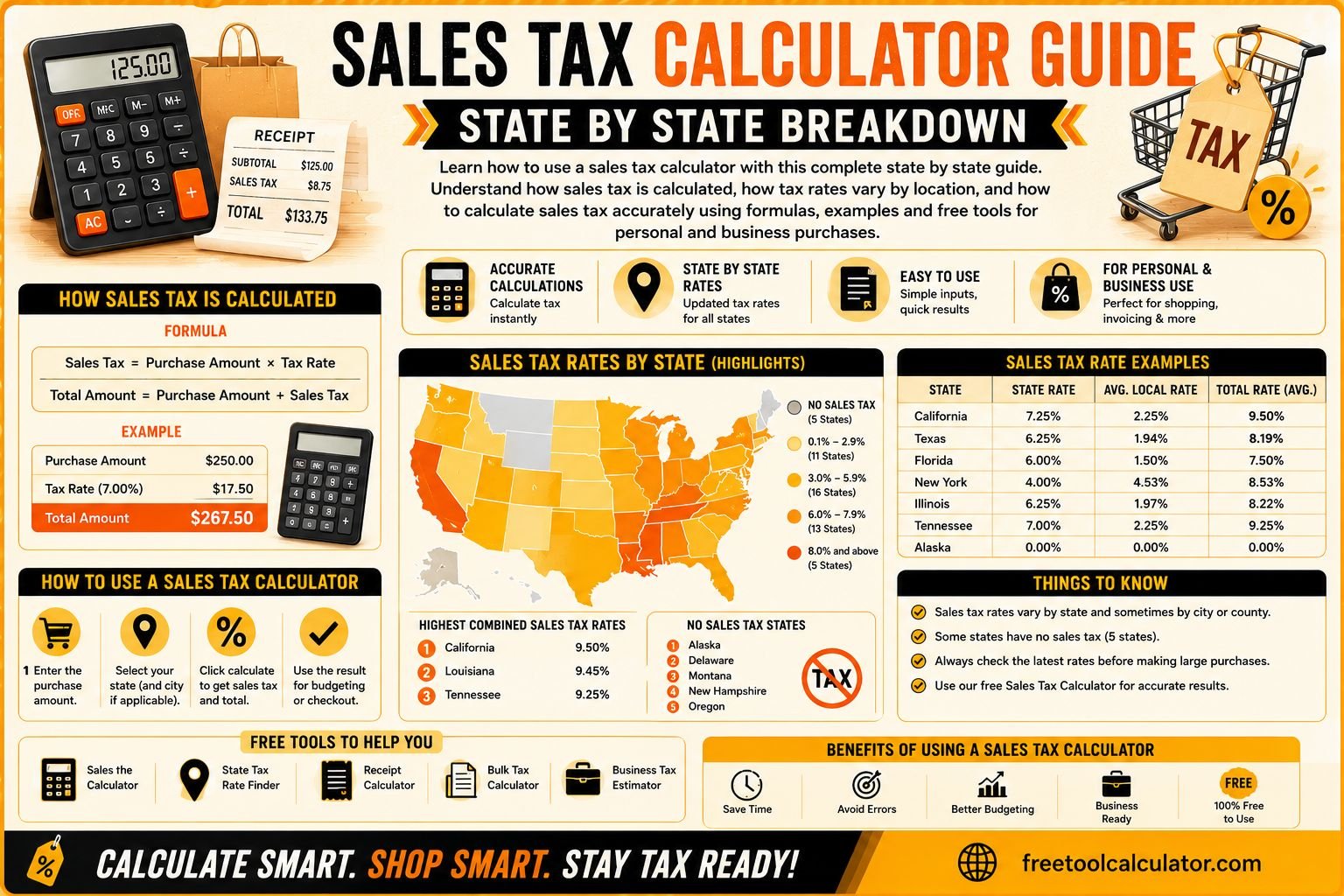
Many people ask how calculate sales tax correctly. The process is relatively simple once you understand the formula.
Sales Tax Amount = Purchase Price × Sales Tax Rate
Total Cost = Purchase Price + Sales Tax Amount
For example, if a product costs $100 and the sales tax rate is 8 percent:
Sales Tax = $100 × 0.08 = $8
Total Cost = $108
Although the formula is straightforward, tax rates vary widely across locations. This is why using a sales tax calculator is often the fastest and most accurate solution.
Why Sales Tax Rates Differ by State
One of the biggest reasons people use a sales tax calculator ZIP code tool is because tax rates differ significantly between states and local jurisdictions.
Some states such as Oregon, Delaware, Montana, New Hampshire, and Alaska generally do not impose statewide sales taxes. Other states apply state taxes plus local taxes, creating much higher combined rates.
For example, one city may have a combined sales tax rate of 6 percent while another location may exceed 10 percent after adding county and municipal taxes. Understanding these differences is important when budgeting purchases or operating a business across multiple regions.
How Sales Tax Calculator ZIP Code Tools Work
A sales tax calculator ZIP code tool simplifies the process of determining local tax rates. Instead of manually researching state, county, and city tax rates, users simply enter a ZIP code and purchase amount.
The calculator automatically identifies the appropriate tax rate for that location and calculates both the tax amount and final purchase total. This is especially useful for online shopping, business invoicing, and interstate transactions.
You can use this sales tax calculator to quickly estimate tax costs based on your location and purchase value.
State by State Sales Tax Overview
Sales tax systems vary across the United States. Some states rely heavily on sales tax revenue, while others use alternative taxation methods.
States such as California, Tennessee, Louisiana, and Washington often have higher combined tax rates because local governments add additional taxes on top of state rates. States without statewide sales taxes may still have local taxes depending on the area.
Understanding state specific tax rules is important for consumers and businesses alike because rates can significantly affect purchasing decisions and operating costs.
Why Businesses Need Accurate Sales Tax Calculations
For businesses, accurate sales tax calculations are essential for compliance and financial management. Collecting too little tax can create liabilities, while collecting too much may lead to customer complaints and regulatory issues.
Ecommerce businesses face additional complexity because they often sell products across multiple states. Different jurisdictions may require different tax rates depending on economic nexus rules and local regulations.
Using automated tax tools reduces errors and ensures accurate collection during transactions. This improves customer trust and helps businesses avoid penalties.
Common Purchases Subject to Sales Tax
Sales tax generally applies to retail goods such as electronics, clothing, furniture, appliances, and household products. However, some states also tax services while others do not.
Certain items may receive reduced tax rates or exemptions depending on local laws. Examples often include groceries, prescription medications, educational materials, and specific business purchases.
Because taxable categories vary by location, checking local regulations remains important for accurate calculations.
How Sales Tax Affects Online Shopping
Online shopping has made sales tax calculations more important than ever. In the past, many online purchases avoided sales tax, but modern regulations now require many online retailers to collect tax based on customer location.
As a result, consumers often see additional costs during checkout that were not included in the listed product price. Understanding how sales tax is calculated helps shoppers budget more accurately and avoid surprises.
A sales tax calculator can estimate these costs before completing purchases, making online shopping more transparent and predictable.
Sales Tax vs Value Added Tax
Sales tax and value added tax are often confused because both are consumption taxes. However, they work differently.
Sales tax is typically collected only at the final point of sale to the consumer. Value added tax is collected throughout the production and distribution process, with businesses receiving credits for taxes paid earlier in the supply chain.
The United States primarily uses sales tax systems, while many countries in Europe and other regions use value added tax systems. Understanding the distinction is important for international businesses and travelers.
Common Sales Tax Calculation Mistakes
One common mistake is applying the wrong tax rate. Since rates vary by location, using outdated or incorrect percentages can lead to inaccurate totals.
Another mistake occurs when users calculate tax based on discounted prices incorrectly. Sales tax is usually calculated on the final taxable purchase amount after eligible discounts are applied.
Businesses sometimes overlook local taxes or special district taxes, leading to under collection. Using reliable calculators helps reduce these errors significantly.
Benefits of Using a Sales Tax Calculator
A sales tax calculator saves time and improves accuracy. Instead of manually applying rates and formulas, users receive instant results for tax amounts and final purchase totals.
This is especially valuable for businesses processing multiple transactions daily. Consumers also benefit by understanding total costs before making purchases.
Automated calculations reduce human error and simplify financial planning. They are particularly useful for online sellers, freelancers, contractors, and small business owners.
Additional Financial Tools That Work Well With Sales Tax Calculations
Sales tax calculations are often part of larger budgeting and financial planning activities. Businesses frequently calculate profit margins, operating costs, and revenue projections alongside tax estimates.
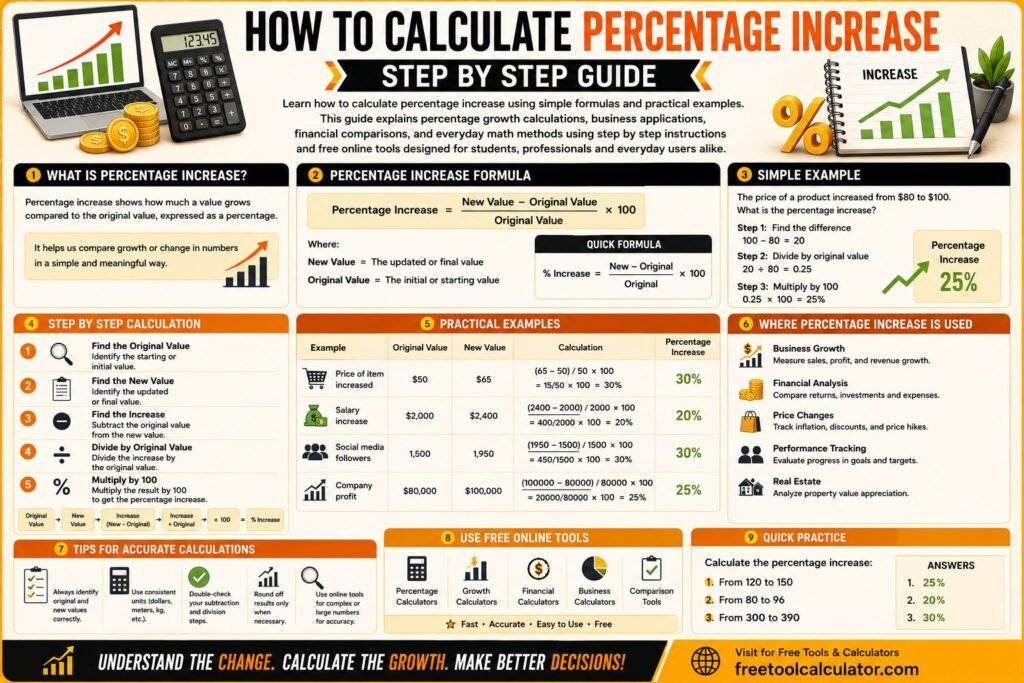
You can also use the gross profit margin calculator to analyze profitability and the percentage calculator for financial percentage calculations. These tools help provide a more complete picture of business performance and purchasing decisions.
How Consumers Can Save Money on Taxable Purchases
While sales tax itself is generally unavoidable, consumers can reduce total costs through strategic purchasing decisions. Shopping during tax free holidays, taking advantage of discounts, and comparing prices across locations may lower overall spending.
Businesses purchasing qualifying equipment or supplies may also be eligible for certain exemptions depending on local regulations. Understanding applicable rules helps consumers and businesses maximize savings opportunities.
Careful budgeting and awareness of local tax rates support smarter purchasing decisions throughout the year.
Future Trends in Sales Tax Collection
As ecommerce continues growing, governments are increasingly modernizing sales tax collection systems. Automated tax reporting, digital compliance tools, and real time tax calculations are becoming more common.
Businesses are adopting software solutions that automatically calculate and collect sales tax based on customer location. This trend improves accuracy and reduces administrative burdens.
Consumers benefit from greater transparency because taxes are displayed more clearly during online checkout processes.
Conclusion
A sales tax calculator is an essential tool for understanding purchase costs, budgeting expenses, and maintaining financial accuracy. Since tax rates vary by state, county, city, and ZIP code, automated calculations provide faster and more reliable results than manual methods.
Whether you are a consumer making everyday purchases or a business managing transactions, understanding how sales tax is calculated helps you make better financial decisions. You can use this free sales tax calculator alongside tools such as the gross profit margin calculator and the percentage calculator to improve budgeting, financial planning, and business management.