Pounds Cups Conversion and Why It Matters in Cooking
Understanding pounds cups conversion is extremely important for accurate cooking and baking. Recipes around the world use different measurement systems, and this often creates confusion in the kitchen. Some recipes list ingredients in pounds while others use cups, tablespoons, or grams. Without proper conversion, recipes may turn out too dry, too dense, or inconsistent.
Cooking allows some flexibility, but baking depends heavily on accurate ingredient measurements. Small mistakes in flour, sugar, butter, or liquid quantities can completely change the texture and quality of baked goods. Learning how to convert pounds to cups correctly helps improve consistency and confidence in the kitchen.
You can convert pounds to cups using this free calculator for quick and accurate kitchen measurements without manual calculations.
What Is the Difference Between Pounds and Cups
Before learning conversion of pounds to cups, it is important to understand the difference between these units. Pounds measure weight or mass, while cups measure volume. Because they measure different things, conversion depends on ingredient density.
For example, one pound of flour occupies a different amount of space compared to one pound of sugar or butter. Dense ingredients weigh more within the same cup volume, while lighter ingredients require more space.
This is why there is no universal conversion value for all foods. Every ingredient behaves differently depending on texture, moisture, and density. Understanding this concept is the foundation of accurate kitchen conversion.
How to Convert Pounds to Cups Correctly
To convert pounds to cups accurately, you must know the ingredient density or standard kitchen conversion value for that ingredient.
For example:
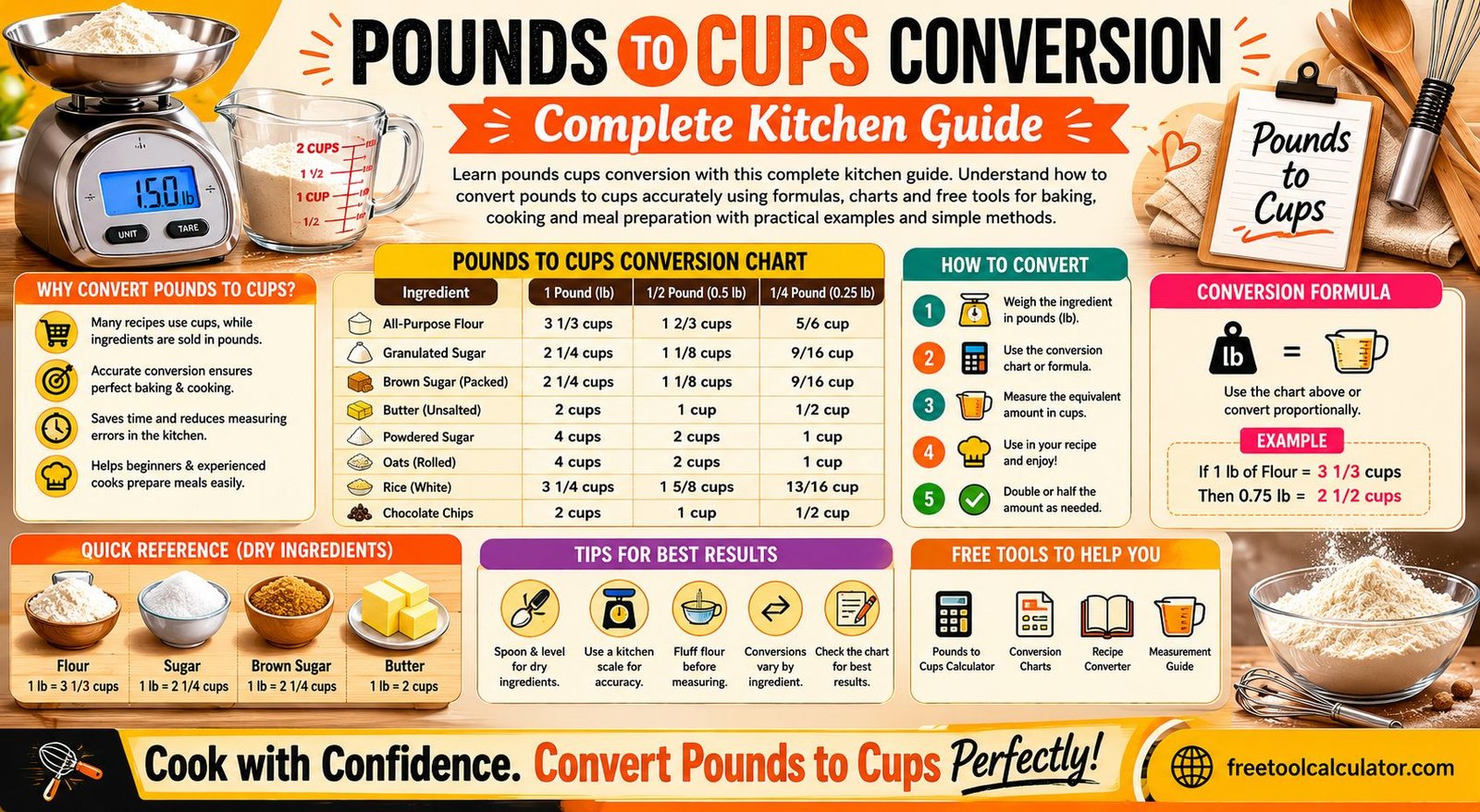
One pound of flour equals approximately 3.6 cups
One pound of granulated sugar equals approximately 2.25 cups
One pound of butter equals approximately 2 cups
Because every ingredient differs, using a pounds to cups converter is much easier and more accurate than memorizing values.
You can use this pounds to cups calculator to instantly calculate measurements for common kitchen ingredients.
Why Ingredient Density Changes Pounds Cups Conversion
Ingredient density is one of the biggest reasons kitchen conversions vary. Ingredients such as flour, cocoa powder, honey, salt, sugar, rice, and butter all have different densities. This means one pound of each ingredient occupies different cup volumes.
For example, powdered ingredients like flour are lighter and fluffier, requiring more cups per pound. Denser ingredients like honey or peanut butter occupy less volume for the same weight.
Professional bakers often prefer weight based measurements because they remain consistent regardless of ingredient texture or packing style. However, cups remain highly convenient for quick cooking and everyday recipes.
Common Pounds to Cups Chart Examples
Using a pounds to cups chart makes recipe preparation easier and faster. These charts provide quick reference values for common kitchen ingredients and help reduce manual calculation errors.
Some common examples include:
One pound flour equals around 3.6 cups
One pound sugar equals around 2.25 cups
One pound brown sugar equals around 2.5 cups
One pound butter equals around 2 cups
One pound rice equals around 2.3 cups
These are approximate values because texture and ingredient type may slightly affect measurements. Online calculators provide more accurate conversions for specific ingredients.
Why Bakers Prefer Weight Measurements
Professional bakers usually measure ingredients by weight because weight based measurements are more reliable than volume measurements. Cup measurements may vary depending on how ingredients are scooped, packed, or leveled.
For example, tightly packed flour weighs more than loosely spooned flour even if both use the same cup measurement. This inconsistency can affect bread texture, cake structure, and overall baking quality.
Weight measurements remove guesswork and improve recipe consistency. Still, understanding pounds cups conversion remains valuable when recipes use mixed measurement systems.
How Kitchen Conversion Tools Make Cooking Easier
Kitchen conversion tools simplify recipe preparation and reduce confusion between different measurement systems. Instead of manually calculating values or searching through charts repeatedly, users can instantly convert measurements online.
This becomes especially helpful when using international recipes because some countries use pounds while others use cups, grams, or ounces. Conversion tools bridge these differences and improve kitchen efficiency.
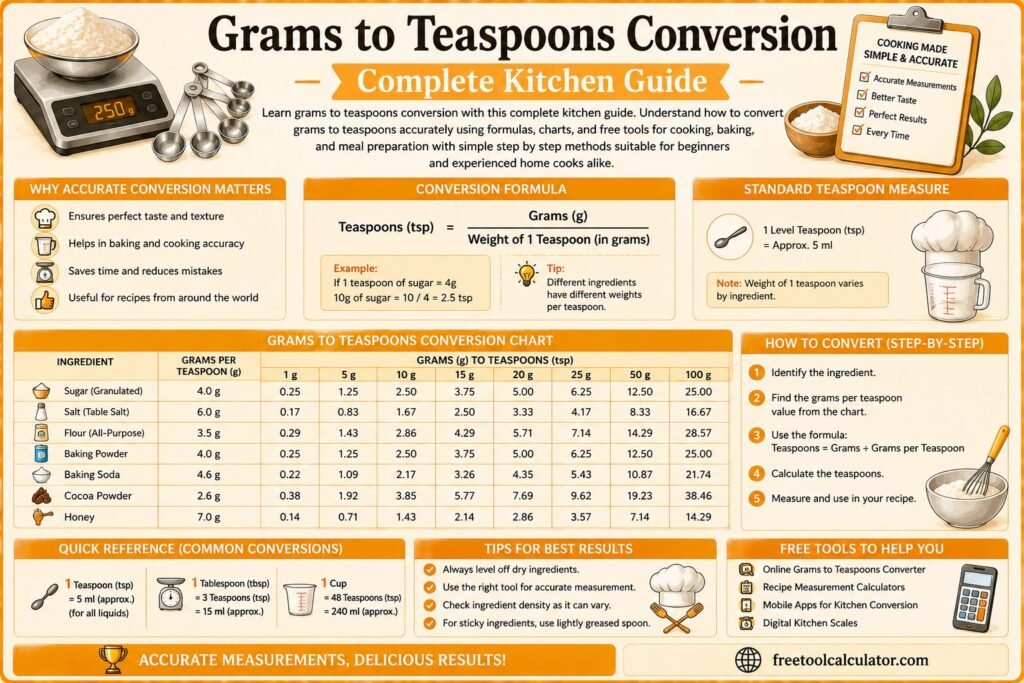
You can also use the kitchen measurement converter for broader recipe conversions and the grams to teaspoon converter when handling smaller ingredient quantities.
Common Mistakes in Pounds to Cups Conversion
One common mistake is assuming all ingredients convert equally. Since density varies significantly, using the same conversion value for every ingredient leads to inaccurate results.
Another mistake is using household cups instead of standard measuring cups. Kitchen measuring cups are specifically designed for cooking accuracy, while regular cups vary greatly in size.
Incorrect measuring techniques also create problems. Scooping directly from containers may compact ingredients and increase measurement errors. Leveling dry ingredients improves consistency significantly.
How to Measure Dry Ingredients Properly
Dry ingredients such as flour, cocoa powder, and powdered sugar should be measured carefully to improve recipe accuracy. The best method is to spoon the ingredient lightly into the measuring cup and level it with a flat edge.
Scooping directly from storage containers often compresses ingredients, resulting in heavier measurements than intended. This can negatively affect cakes, cookies, and breads.
Digital kitchen scales provide maximum precision, especially for baking. However, measuring cups remain practical for everyday cooking and quick meal preparation.
How to Measure Liquid Ingredients Correctly
Liquid ingredients should be measured at eye level using transparent measuring cups. Reading measurements from incorrect angles often causes overpouring or underpouring.
Liquids such as milk, oil, honey, and syrups all behave differently during measurement because density varies. Sticky ingredients may also cling to measuring cups, affecting accuracy.
Using proper measuring tools improves consistency and recipe reliability.
Benefits of Using Online Pounds to Cups Calculators
Online kitchen calculators save time and improve accuracy for both beginners and experienced cooks. Instead of relying on estimates or memorized charts, users receive instant ingredient specific conversions.
These tools work on phones, tablets, and computers, making them convenient while cooking or baking. Beginners especially benefit because conversion tools simplify complicated kitchen math.
You can also use the cups to grams converter and the ml to cups converter for additional kitchen measurement conversions.
How Accurate Measurements Improve Healthy Cooking
Proper measurements support healthier cooking habits and more accurate nutrition tracking. Excess sugar, butter, oil, or flour can significantly change calorie content and nutritional balance.
People following meal plans or fitness goals benefit from accurate ingredient tracking because it improves portion control and consistency. Precise measurements also reduce food waste by helping recipes turn out correctly the first time.
Understanding kitchen conversions supports better meal planning and healthier long term eating habits.
Tips for Better Kitchen Measurement Accuracy
Always use standard measuring tools instead of estimating ingredient amounts visually. Keep separate tools for dry and liquid ingredients because they are designed differently for accuracy.
Read measurements carefully and organize ingredients before cooking. Preparing ingredients ahead of time reduces mistakes and improves workflow in the kitchen.
Digital scales remain the best option for professional level precision, while online converters provide excellent support for everyday cooking and recipe adjustments.
Why Beginners Should Learn Kitchen Conversion Basics
Learning kitchen conversions helps beginners become more confident and independent in cooking. Many people avoid trying recipes because unfamiliar measurements seem confusing.
Understanding how to convert pounds to cups makes international recipes easier to follow and improves cooking flexibility. It also allows users to adjust recipe quantities more comfortably based on serving needs.
This knowledge becomes increasingly useful as people experiment with baking, meal prep, and advanced cooking techniques.
Conclusion
Understanding pounds cups conversion is an essential kitchen skill that improves recipe accuracy, baking consistency, and overall cooking confidence. Since pounds measure weight and cups measure volume, ingredient density must always be considered during conversion. Learning these basics helps avoid common kitchen mistakes and improves overall recipe quality.
If you want quick and reliable kitchen conversions, you can use this free pounds to cups calculator along with related tools like the kitchen measurement converter, the grams to teaspoon converter, and the cups to grams converter to simplify cooking, baking, and food measurement tasks more accurately.