Introduction
Understanding global time zones is essential in our interconnected world whether you are traveling planning meetings or working with international teams. At the heart of timekeeping are concepts like UTC vs GMT which help define how local times are determined around the world. This guide explains what distinguishes Coordinated Universal Time (UTC) from Greenwich Mean Time (GMT) how longitude influences time differences how the International Date Line changes calendar dates and how Daylight Saving Time affects conversions. You will also find clear examples of time conversions including calculating future local times and which regions use non standard offsets. For accurate conversions use the free time zone converter at https://freetoolcalculator.com/time-zone-converter/
What Distinguishes Coordinated Universal Time from Greenwich Mean Time
UTC and GMT are often spoken of interchangeably but they have important differences. Greenwich Mean Time is a time standard originally based on the mean solar time at the Royal Observatory in Greenwich London. It was historically used by mariners for navigation and later adopted as a global reference.
Coordinated Universal Time is the modern global time standard used for scientific precision and international timekeeping. UTC is based on highly accurate atomic clocks and includes leap seconds to adjust for irregularities in Earth’s rotation. While GMT is essentially a time zone used in some regions UTC is a formal standard maintained by international agreement. For everyday usage they often match exactly but UTC remains the authoritative standard for global time.
How Many Degrees of Longitude Correspond to a One Hour Difference in Time
The Earth is divided into 360 degrees of longitude. Since there are 24 hours in a day each hour corresponds to 15 degrees of longitude. As you move east from the Prime Meridian each 15 degree shift generally adds one hour of time. Moving west subtracts one hour per 15 degrees. This system forms the basis of time zones around the world.
What Is the International Date Line and How Crossing It Alters the Calendar Date
The International Date Line is an imaginary line that runs roughly along the 180th meridian in the Pacific Ocean. It serves as the boundary between calendar dates. When you cross the International Date Line from east to west the calendar date advances by one day. When crossing from west to east the calendar date goes back by one day. This adjustment ensures that the global calendar stays consistent with the 24 hour day cycle.
If the Time in London (UTC+0) Is 10 00 AM What Is the Local Time in Tokyo (UTC+9)
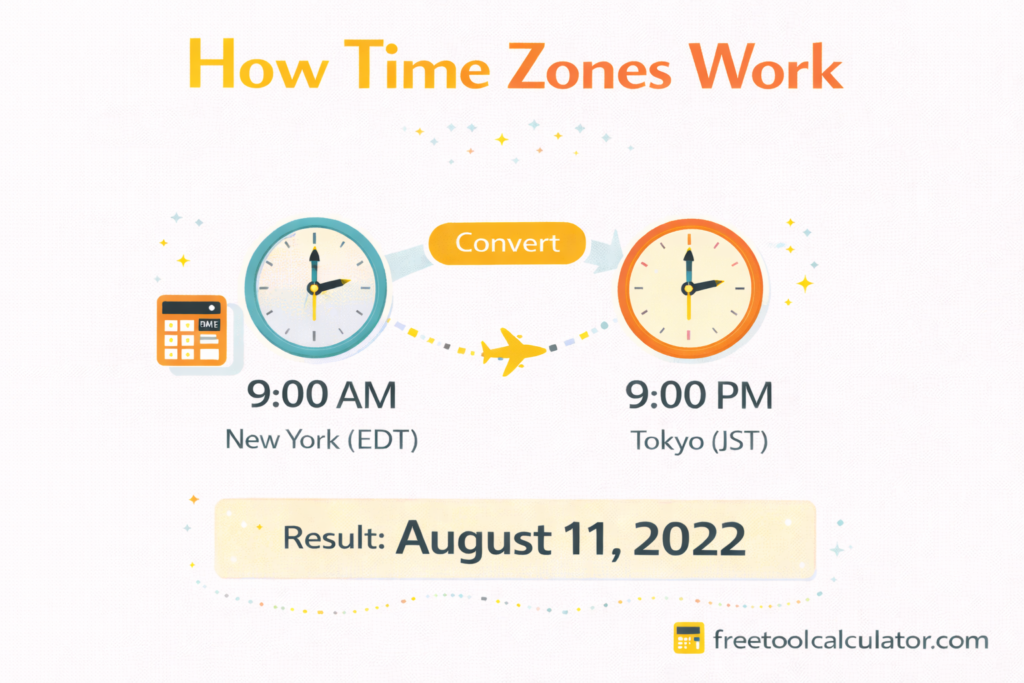
Tokyo is nine hours ahead of UTC. If it is 10 00 AM in London at UTC+0 you simply add nine hours to find the local time in Tokyo. Therefore the time in Tokyo would be 7 00 PM the same day. Time zone converters like https://freetoolcalculator.com/time-zone-converter/ help visualize this instantly when working with various time zones and daylight saving adjustments.
In What Ways Does Daylight Saving Time Affect Time Zone Conversions
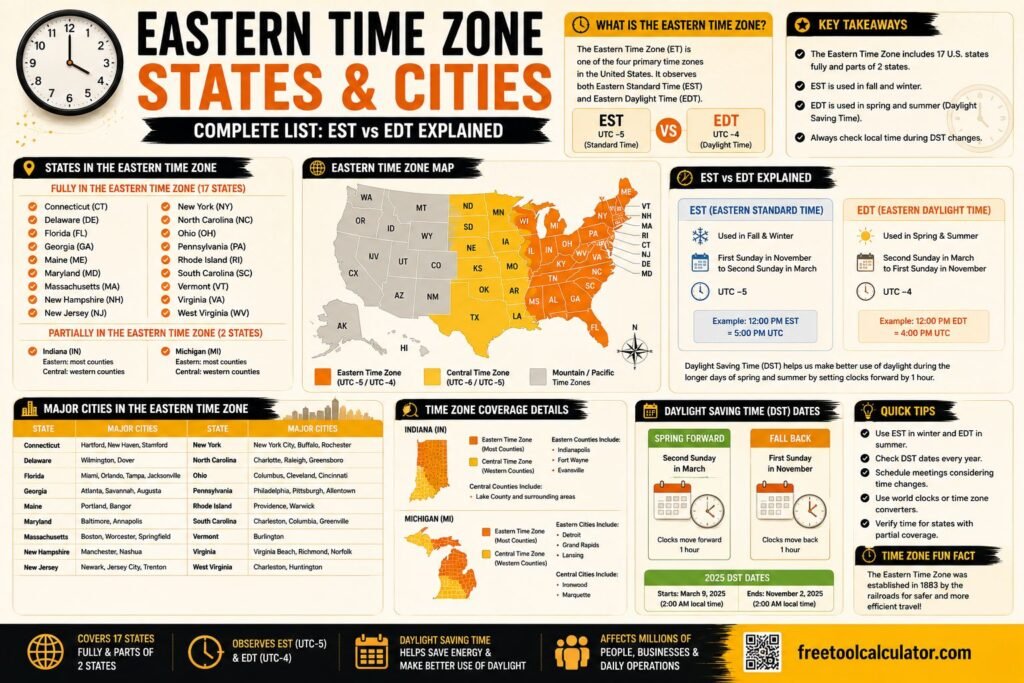
Daylight Saving Time or DST shifts local clock time typically by one hour to extend evening daylight during summer months. Countries in the Northern Hemisphere such as the United States and much of Europe advance clocks forward in spring and return to standard time in autumn. In the Southern Hemisphere such as parts of Australia or South America the timing is reversed due to opposite seasons.
Because DST changes the offset from UTC for participating regions time differences between cities can vary at different times of the year. For example New York and London have a five hour difference during standard time but a four hour difference when London observes DST while New York does not. Time zone converters automatically account for DST so you get accurate results throughout the year.
Which Countries or Regions Use Non Standard Time Zone Offsets
Most time zones differ from UTC by whole hour increments but some regions use half hour or forty five minute offsets. For example India uses UTC+5 30 while Nepal uses UTC+5 45. Parts of Australia such as South Australia use UTC+9 30. These non standard offsets exist due to historical political and geographical reasons and can make manual conversion tricky. Time zone converters handle these exceptions seamlessly.
If You Depart New York (UTC-5) at 8 00 PM for Paris (UTC+1) on a 7 Hour Flight What Will the Local Arrival Time Be
To calculate this first convert your departure time to UTC. New York at UTC-5 means 8 00 PM departure is 1 00 AM UTC the next day. Add the 7 hour flight duration which makes it 8 00 AM UTC. Paris at UTC+1 is one hour ahead of UTC so the local arrival time will be 9 00 AM the next day. Using tools like https://freetoolcalculator.com/time-zone-converter/ and adding flight duration helps confirm this quickly.
Why Time Difference Between Certain Cities Varies at Different Times of the Year
Time differences vary due to Daylight Saving Time changes in one location but not the other. For example the difference between London and New York can be five hours during winter but only four hours when London observes DST and New York does not. These seasonal adjustments require awareness when scheduling cross region meetings or calls.
What Is the Greatest Possible Time Difference on Earth
The greatest possible time difference between two time zones on Earth can be up to 26 hours. This occurs due to non standard offsets combined with the International Date Line. For example one location could be at UTC+14 while another is at UTC-12 making a total difference of 26 hours. This means at certain times two places on Earth could experience very different calendar dates even though their clocks show similar times.
How to Determine Whether a City’s Time Zone Is Ahead or Behind the Prime Meridian
To know if a city is ahead or behind the Prime Meridian look at its UTC offset. Positive offsets such as UTC+3 mean the local time is ahead of UTC and therefore ahead of the Prime Meridian. Negative offsets such as UTC-8 mean the local time lags behind UTC. Time zone converters show these offsets clearly and help you compare cities quickly.
Why Use an Online Time Zone Converter
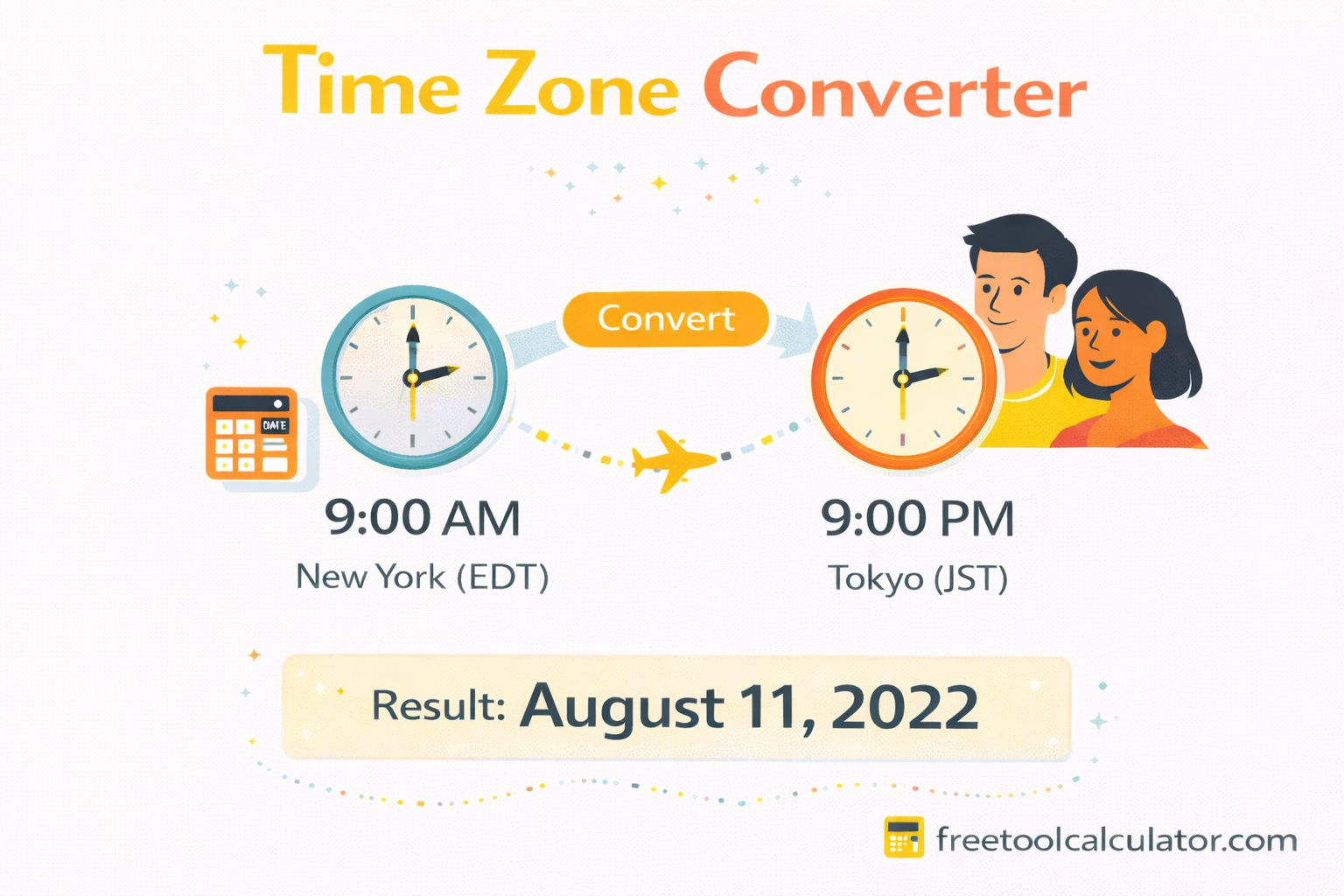
Manual time zone calculations become error prone when accounting for DST non standard offsets and date line changes. An online time zone converter like https://freetoolcalculator.com/time-zone-converter/ provides accurate results instantly regardless of complexity. This makes international communication planning and travel scheduling easier and more reliable.
Final Thoughts
Understanding how time zones work and the differences between UTC and GMT helps you navigate global time with confidence. Whether calculating local times for remote meetings planning flights or simply comparing clocks around the world using a dedicated time zone converter ensures accuracy. With tools like https://freetoolcalculator.com/time-zone-converter/ you can eliminate time calculation errors and focus on what matters most.