How Time Zones Work Global Offsets DST and Conversions

How Time Zones Work Global Offsets DST and Conversions

Introduction

Time zones exist to organize how humans experience time across the globe. Without time zones noon could occur at midnight in some places and morning meetings would be impossible to coordinate internationally. Understanding how time zones work is essential for travelers remote workers businesses and anyone communicating across borders. This article explains the logic behind time zones why offsets are not uniform how daylight saving time complicates conversions and how to accurately convert time between cities using a reliable time zone converter such as https://freetoolcalculator.com/time-zone-converter/

Why the World Needs Time Zones

The Earth rotates once every twenty four hours which creates day and night cycles. Because the planet is spherical sunlight reaches different locations at different times. If every location used the same local solar time global coordination would be chaotic. Time zones standardize time so regions within similar longitudes share the same clock time even though exact solar noon may vary slightly.

How Time Zones Are Structured

The globe is divided into time zones based loosely on longitude. Since the Earth has 360 degrees of longitude and 24 hours in a day each time zone spans roughly 15 degrees. This structure creates a logical progression of time from east to west.

However political borders geography and population centers influence final boundaries. As a result time zone borders are irregular and often curve to keep countries or regions within a single time zone for convenience.

Understanding Time Zone Offsets

Time zones are defined by their offset from Coordinated Universal Time. Offsets are written as UTC plus or minus a number.

UTC plus values indicate locations east of the Prime Meridian where local time is ahead.
UTC minus values indicate locations west of the Prime Meridian where local time is behind.

For example
UTC plus two means local time is two hours ahead of UTC
UTC minus seven means local time is seven hours behind UTC

A time zone converter displays these offsets clearly making conversions faster and more accurate.

Why Time Zone Offsets Are Not Always Whole Hours

Although many time zones use full hour offsets several regions use half hour or forty five minute differences. These offsets were often chosen to align local noon more closely with solar noon or due to historical decisions.

Examples include
India UTC plus five thirty
Nepal UTC plus five forty five
Newfoundland UTC minus three thirty
Parts of Australia UTC plus nine thirty

These non standard offsets make manual time conversion difficult which is why automated tools are essential.

How Daylight Saving Time Changes Local Time

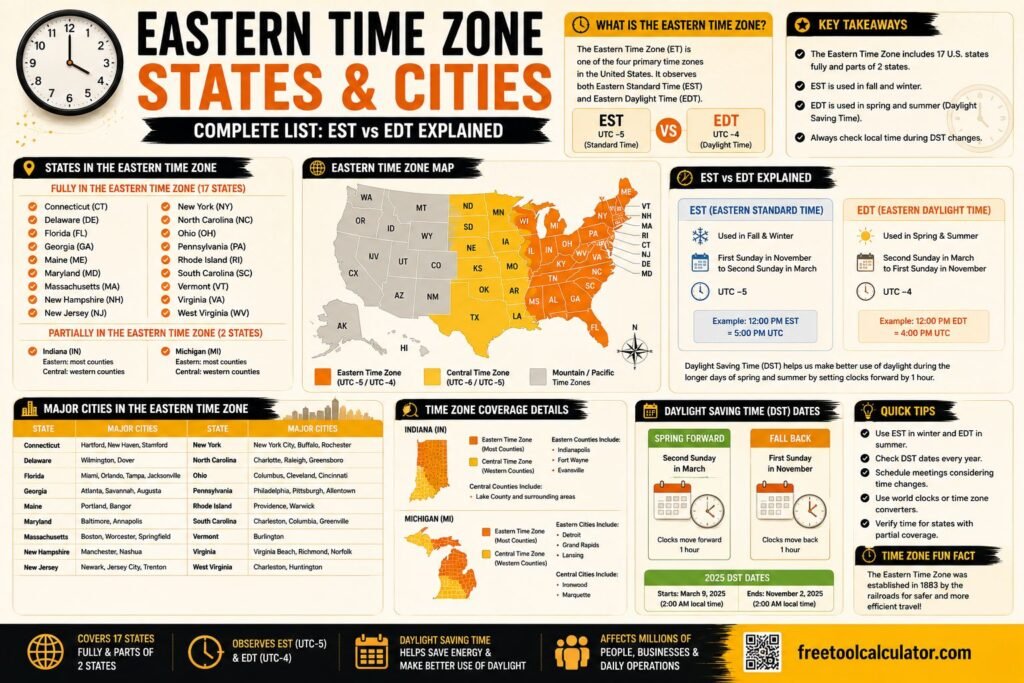
Daylight Saving Time shifts clocks forward by one hour during warmer months to extend evening daylight. Not all countries observe DST and those that do often start and end it on different dates.

This creates periods where the time difference between two cities changes temporarily. For example the time difference between London and New York can be four hours at one point in the year and five hours at another.

Using a time zone converter ensures DST adjustments are applied correctly without guesswork.

Why Time Zone Differences Change Throughout the Year

Time zone offsets themselves do not change but local clock times can shift due to DST. When one city changes its clock and another does not the time difference between them changes.

This is a common source of scheduling errors for international meetings. Many missed calls and delayed meetings happen because people assume time differences remain constant year round.

How the International Date Line Fits Into Time Zones

The International Date Line runs roughly along the 180 degree longitude line. It marks where the calendar date changes.

Crossing the line westward moves the date forward by one day.
Crossing eastward moves the date backward by one day.

This rule keeps the global calendar consistent but can be confusing when traveling or converting times across the Pacific region.

Converting Time Between Cities Correctly

To convert time between cities you must consider
The UTC offset of each city
Whether either city is observing DST
Whether the conversion crosses the International Date Line

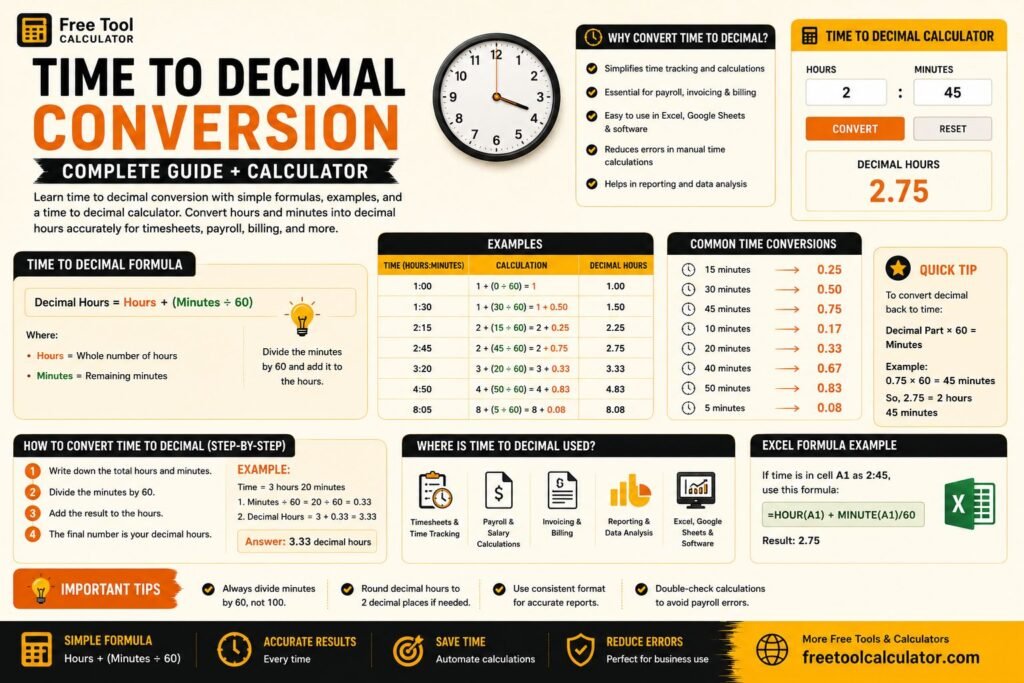
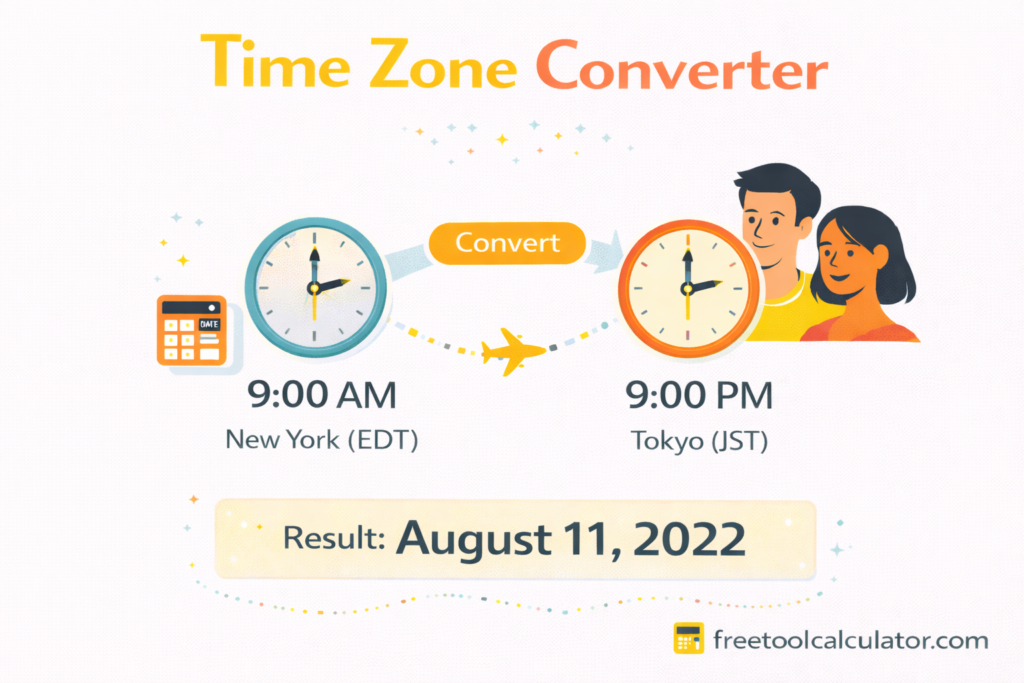
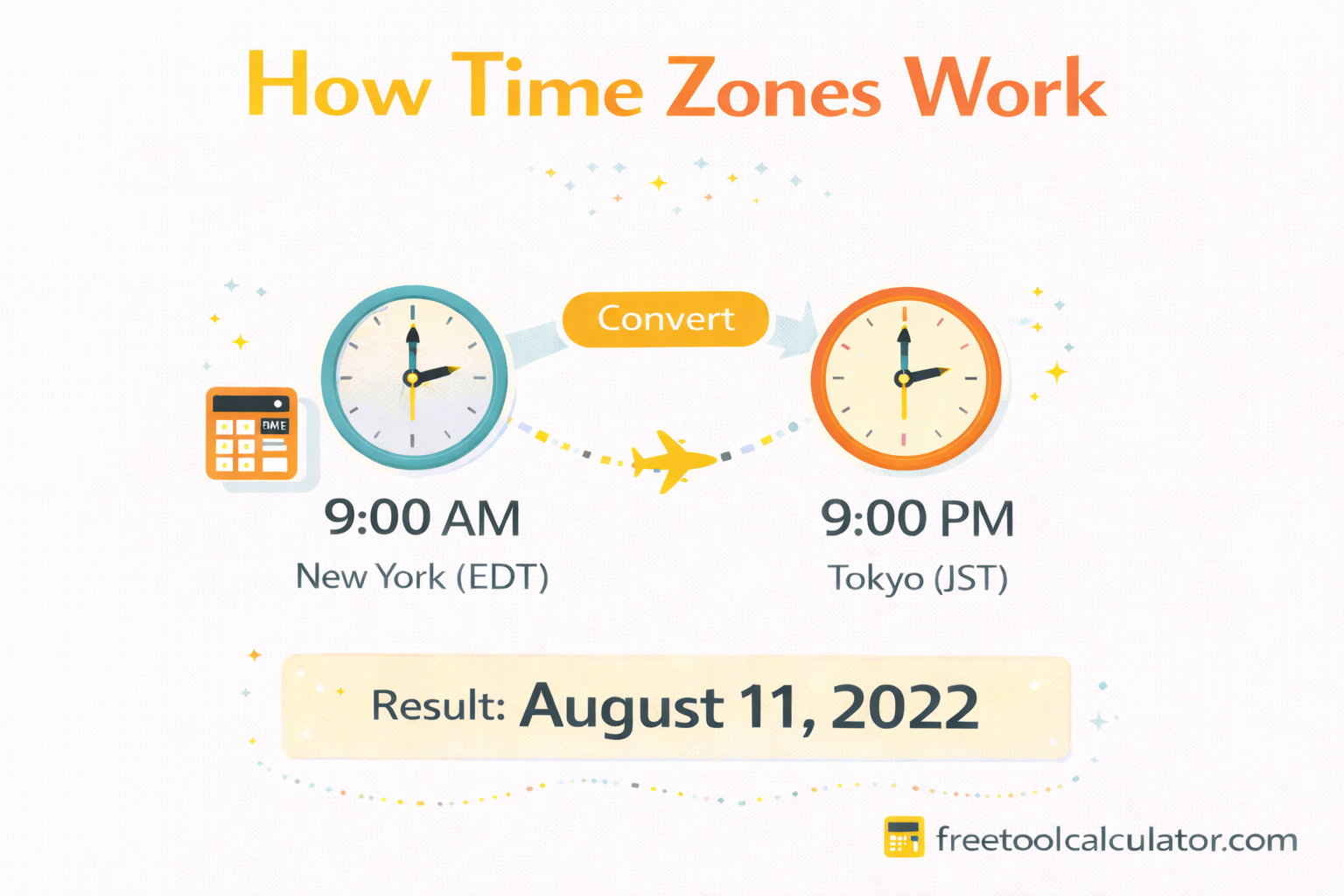
Manual calculation involves converting both local times to UTC then adjusting to the destination offset. A time zone converter performs this automatically and eliminates errors.

Use https://freetoolcalculator.com/time-zone-converter/ to convert time between cities accurately.

Time Zones in Travel Planning

Time zones significantly affect travel itineraries. Flight departure and arrival times are listed in local times which can make journeys appear shorter or longer than they are.

Understanding time zones helps travelers
Avoid missed connections
Plan rest periods
Manage jet lag
Coordinate hotel check ins

Travel planning is far easier when using a time zone converter alongside flight schedules.

Time Zones and Remote Work

Remote work has increased the importance of time zone awareness. Teams distributed across continents must coordinate meetings deadlines and work hours carefully.

Clear understanding of time zone differences prevents confusion improves productivity and supports fair scheduling across regions. Shared tools and converters help teams operate smoothly.

Common Time Zone Mistakes People Make

Assuming all time zones differ by full hours
Forgetting DST changes
Ignoring non standard offsets
Confusing UTC with local time
Misjudging date changes when crossing time zones

These mistakes can lead to missed deadlines incorrect bookings or scheduling conflicts.

Why Online Time Zone Converters Are Essential

Online converters automatically handle offsets DST and date changes. They save time reduce errors and provide instant clarity.

A reliable tool like https://freetoolcalculator.com/time-zone-converter/ allows you to compare cities plan meetings and convert times accurately with minimal effort.

How Time Zones Affect Global Business

International business depends on precise time coordination. Financial markets shipping operations customer support and global launches all rely on accurate time conversion.

Incorrect time calculations can cause delays missed opportunities and financial loss. Time zone tools are critical for operational reliability.

Final Thoughts

Time zones shape how the world stays synchronized despite being spread across vast distances. Understanding how time zones work why offsets vary and how DST affects conversions helps you navigate global time confidently. Whether you are traveling working remotely or scheduling international meetings using a reliable time zone converter is the simplest way to avoid confusion. Use https://freetoolcalculator.com/time-zone-converter/ to convert time accurately between any cities and stay perfectly in sync with the world.

Share this article:

On This Page

Subscribe to our newsletter

Read the latest articles from our experts

Tools & Resources

Explore our collection of professional tools designed to streamline your workflow

Report a Bug