How Much Water Should You Drink by Weight? A Practical Guide
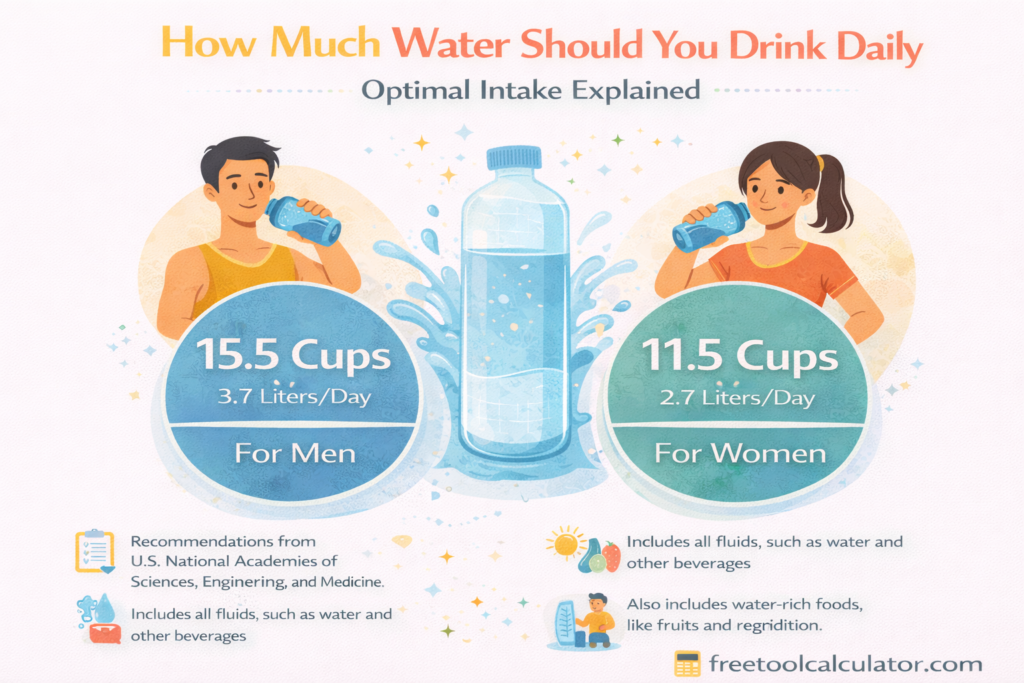
Water is one of the most essential elements for human survival, yet hydration advice is often oversimplified. Most people have heard the classic rule: “Drink 8 glasses of water a day.”
The problem is that this advice ignores a crucial factor—body weight.
A 50 kg person and a 100 kg person clearly do not have the same hydration needs. This is why modern hydration guidance focuses on water intake weight formulas instead of fixed rules.
In this article, I’ll break down how much water you should actually drink based on your body weight, lifestyle, activity level, and environment. I’ll also share practical examples, personal observations, and common mistakes people make when managing hydration.
Why I’m Writing This Article
I’m writing this because most hydration advice online is too generic.
The “8 glasses a day” rule has been repeated for decades, but it doesn’t reflect real human differences. In my experience working with hydration calculators and health-related tools, I’ve seen how much more accurate water intake by weight calculations are compared to fixed recommendations.
People often assume hydration is simple, but in reality, it depends on:
- Body weight
- Activity level
- Climate
- Diet
- Sweat loss
- Health conditions
This is why I prefer explaining hydration using water intake per day by weight, because it gives people a personalized and realistic starting point instead of a one-size-fits-all rule.
Why the “8 Glasses a Day” Rule Is Outdated
The idea of drinking eight glasses of water daily sounds simple, but it is scientifically weak.
It assumes:
- Everyone has the same body size
- Everyone lives in the same climate
- Everyone has the same activity level
But in reality:
- A small office worker may need far less water
- An athlete or laborer may need significantly more
- Someone living in a hot climate like Karachi will lose more fluids through sweat
This is why relying on a fixed number often leads to two common problems:
- Underdhydration (low energy, headaches, fatigue)
- Overhydration (bloating, electrolyte imbalance in extreme cases)
A better approach is to calculate required water intake by weight using a simple formula.
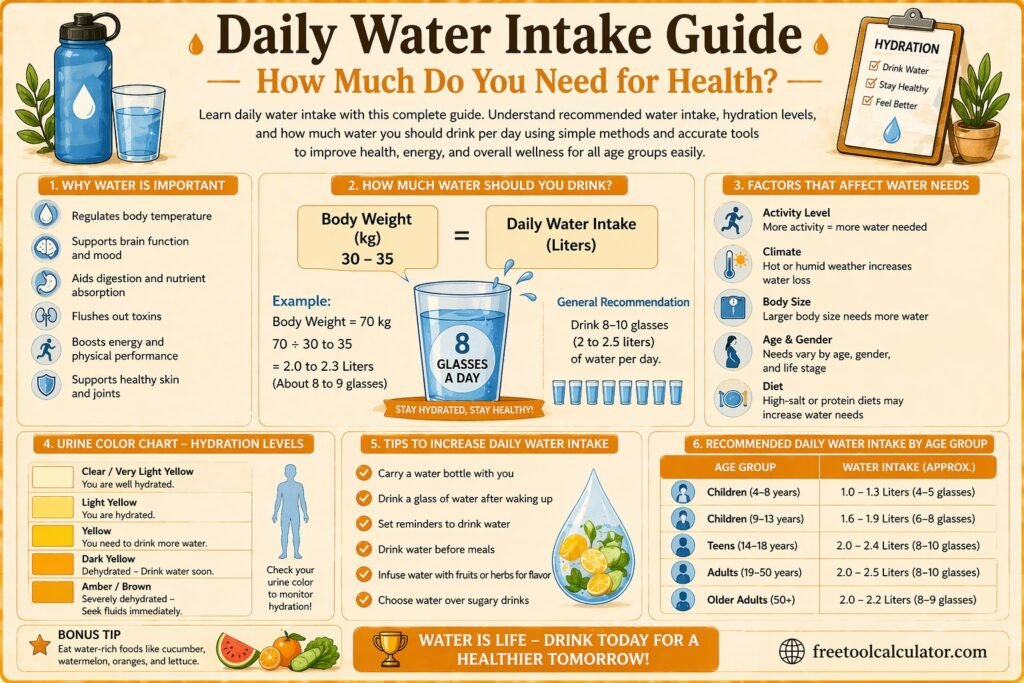
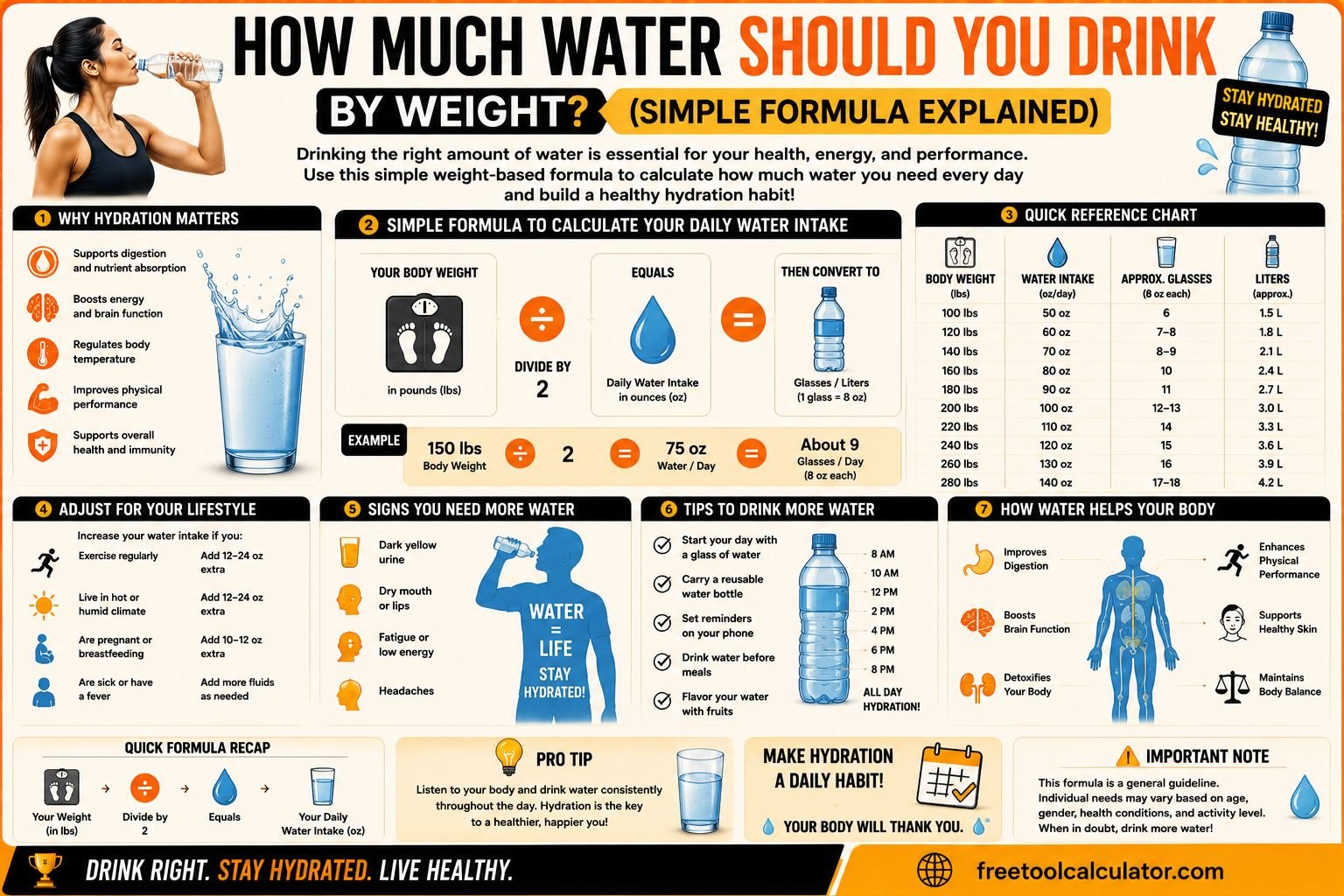
How Much Water Should You Drink by Weight?
The most practical and widely used method is based on body weight:
✔ Basic Formula:
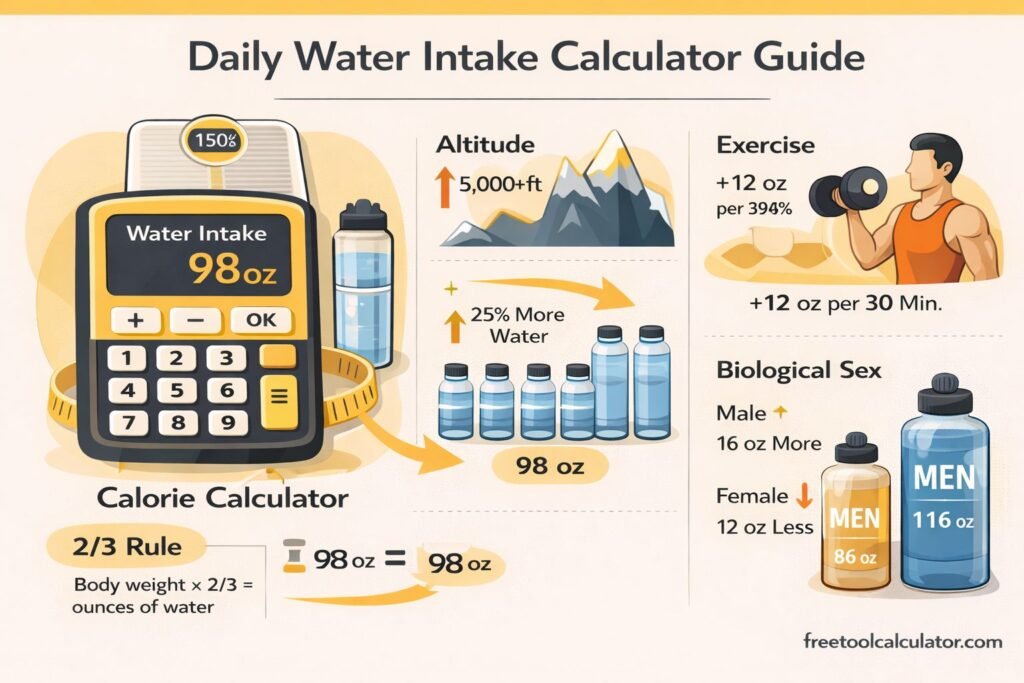
30–35 ml of water per kg of body weight
This means:
- 1 kg body weight ≈ 30–35 ml water
- 70 kg person ≈ 2.1 to 2.45 liters per day
- 90 kg person ≈ 2.7 to 3.15 liters per day
This approach makes water intake weight-based hydration far more accurate than guessing.
Example Breakdown
60 kg person:
- 60 × 30 ml = 1.8 liters
- 60 × 35 ml = 2.1 liters
75 kg person:
- 75 × 30 ml = 2.25 liters
- 75 × 35 ml = 2.6 liters
90 kg person:
- 90 × 30 ml = 2.7 liters
- 90 × 35 ml = 3.15 liters
This simple method gives a personalized hydration target that adapts to different body sizes.
My Personal Experience with Water Intake
From my own experience, adjusting hydration based on body weight and activity made a noticeable difference.
When I started tracking my water intake per day by weight, I noticed:
- Fewer headaches
- Better focus and mental clarity
- Improved workout recovery
- Reduced unnecessary snacking (often mistaken for hunger)
One of the biggest surprises was appetite control. Many people confuse thirst with hunger, and proper hydration helps regulate that feeling naturally.
Even small adjustments in daily water intake had a noticeable impact on energy levels throughout the day.
Water Intake in Hot Climates and Exercise
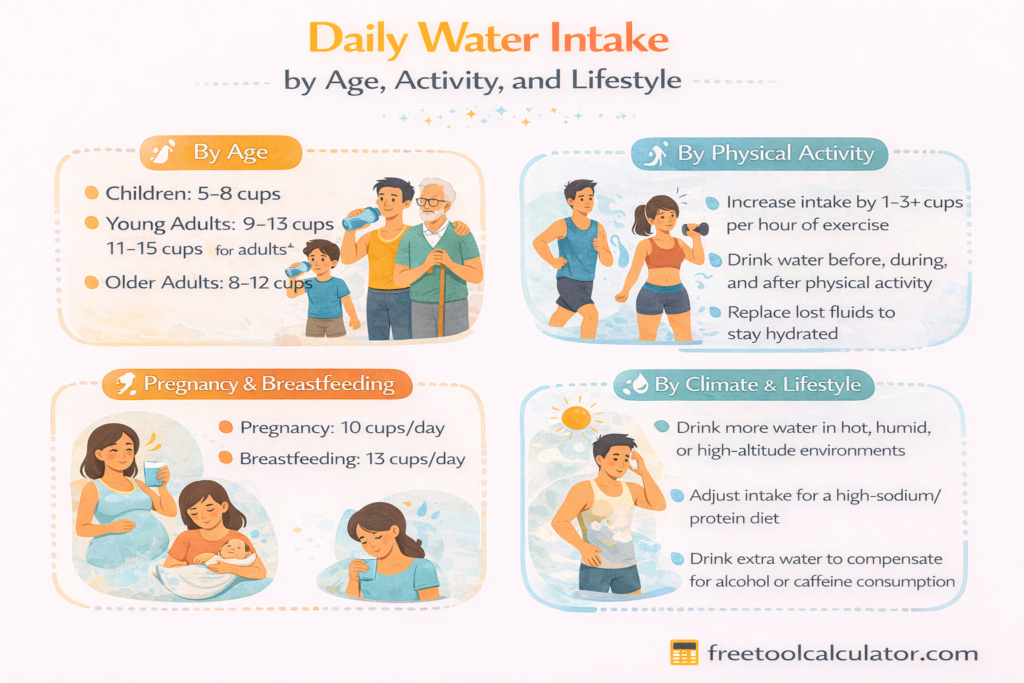
Hydration needs increase significantly in hot weather or during physical activity.
In climates like Karachi, where temperatures can be extremely high, the body loses more water through sweat.
General recommendation:
- Add 0.5 to 1 liter per hour of exercise or heavy sweating
For example:
- A construction worker in Karachi may need 4–5 liters per day
- A sedentary office worker may only need 2–3 liters per day
This shows that water intake by weight alone is not enough—environment matters just as much.
Sweat loss must always be replaced to maintain proper hydration balance.
Common Mistakes in Water Intake
Many people make critical mistakes when managing hydration:
1. Drinking Too Little
This is the most common issue. People underestimate their needs and end up with:
- Fatigue
- Headaches
- Poor concentration
2. Drinking Too Much Water
Some people believe “more is better,” but excessive water intake can:
- Dilute electrolytes
- Cause bloating
- In extreme cases, lead to hyponatremia
3. Ignoring Water from Food
Foods like:
- Fruits
- Vegetables
- Soups
also contribute to hydration but are often ignored.
Trusted Water Intake Formula (My Recommendation)
Based on practical use and consistency, I recommend:
✔ 30–35 ml per kg body weight
It is:
- Simple
- Scalable
- Easy to calculate
- Applicable globally
This method is far more reliable than generic advice like “8 glasses a day.”
It also works well when combined with tools like a water intake calculator, which helps personalize hydration targets more accurately.
Real-Life Example of Water Intake Adjustment
Consider a 68 kg gym-goer:
Step 1: Base water intake
- 68 × 32 ml = ~2.2 liters per day
Step 2: Add workout hydration
- 1 hour workout = +1 liter
Final intake:
- ~3.2 liters per day
After making this adjustment, the individual reported:
- Better endurance during workouts
- Faster recovery
- Less fatigue post-exercise
This shows how water intake weight adjustments combined with activity level can significantly improve performance.
Factors That Change Your Water Intake (Beyond Weight)
Even if two people weigh the same, their water intake per day by weight can still be very different.
Here are the key modifiers:
1. Activity Level
The more active you are, the more water you lose through sweat.
- Sedentary lifestyle → baseline intake is enough
- Moderate exercise → +0.5 to 1 liter daily
- Intense training → +1 to 2 liters daily
Athletes, gym-goers, and labor-intensive workers often underestimate how much fluid they lose during training or physical work.
2. Climate and Temperature
Hot and humid climates significantly increase sweat loss.
For example:
- A person in a cool environment may need 2–2.5 liters
- The same person in a hot city like Karachi may need 3–5 liters
This is why required water intake by weight should always be adjusted for environment.
3. Age
Hydration needs change with age:
- Younger individuals usually drink more naturally
- Older adults often feel less thirst, leading to chronic dehydration
This is one reason dehydration-related fatigue is more common in elderly populations.
4. Diet Composition
Your diet also affects hydration needs:
- High protein diets → increase water requirement
- High salt intake → increases thirst
- Caffeine → has mild diuretic effect but still contributes to fluid balance
- Fruits and vegetables → add natural hydration
So your water intake by weight is not isolated—it interacts with what you eat.
5. Pregnancy and Breastfeeding
Women who are pregnant or breastfeeding require significantly more fluids due to:
- Increased blood volume
- Milk production
- Higher metabolic demand
In these cases, baseline calculations must be increased accordingly.
Common Hydration Myths (Busted)
Hydration is surrounded by misinformation. Let’s clear up the most common myths.
Myth 1: “Clear urine means perfect hydration”
Not necessarily.
- Clear urine may indicate overhydration
- Pale yellow is actually the ideal range
Too much water can dilute electrolytes, which is not healthy.
Myth 2: “Coffee dehydrates you”
This is outdated.
Moderate coffee intake:
- Does NOT significantly dehydrate you
- Still contributes to total fluid intake
So yes, your water intake per day by weight can include fluids from beverages like tea and coffee.
Myth 3: “More water always means better health”
Wrong.
Excessive water intake can lead to:
- Electrolyte imbalance
- Nausea
- Bloating
- In extreme cases, hyponatremia
Balance matters more than excess.
Myth 4: “You should only drink when thirsty”
Thirst is a late signal.
By the time you feel thirsty:
- Mild dehydration may already exist
Especially in hot climates, relying only on thirst is not enough.
Overhydration vs Dehydration
Most people focus on dehydration, but overhydration is also a real issue.
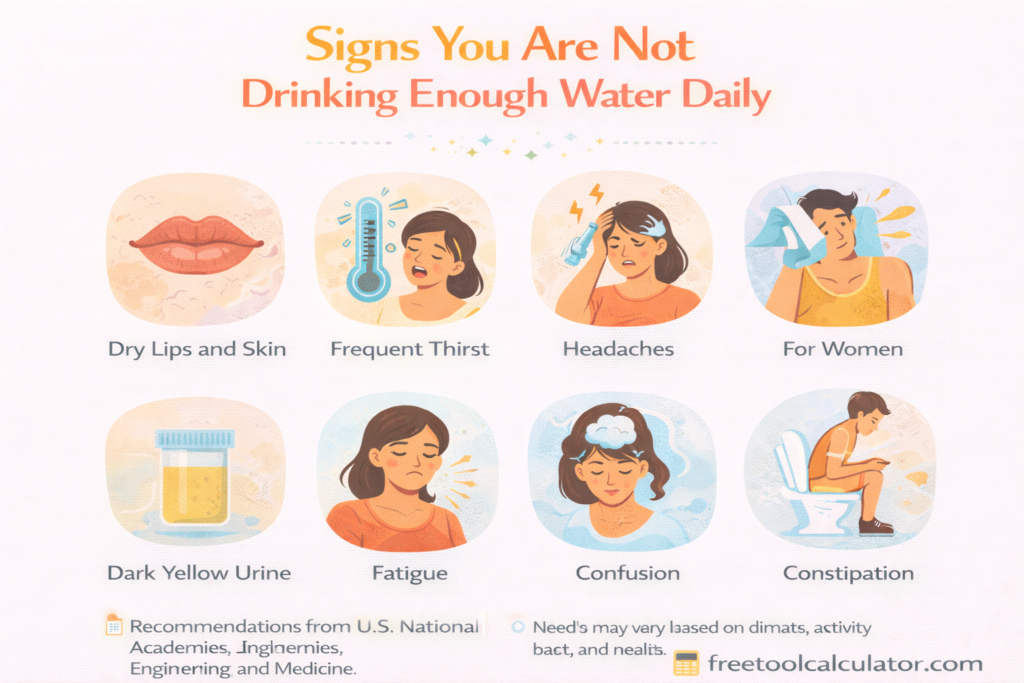
Dehydration symptoms:
- Headaches
- Fatigue
- Dizziness
- Dry mouth
- Poor focus
Overhydration symptoms:
- Nausea
- Bloating
- Frequent urination
- Low sodium levels (rare but serious)
The goal of water intake by weight is balance—not extremes.
Real-Life Hydration Adjustments
Let’s look at a practical scenario.
Example: 150-lb (68 kg) active person
Step 1: Base intake
Using 32 ml/kg:
- 68 × 32 = ~2.2 liters/day
Step 2: Add exercise
- 1 hour workout = +1 liter
Final intake:
- ~3.2 liters/day
Now compare this with someone sedentary at the same weight:
- They may only need 2.2–2.5 liters
This clearly shows why water intake weight calculations must always include lifestyle factors.
Hydration and Performance
Proper hydration is not just about health—it directly impacts performance.
When hydration is optimized:
- Energy levels improve
- Exercise performance increases
- Recovery becomes faster
- Focus and cognitive function improve
Even a 1–2% drop in hydration levels can affect performance noticeably.
Why Most People Get Water Intake Wrong
From experience, I’ve noticed three main reasons people fail at hydration:
1. No measurement system
People guess instead of calculating their water intake per day by weight.
2. Inconsistent habits
Some days they drink a lot, other days very little.
3. Ignoring lifestyle changes
Workout days and rest days often have the same water intake, which is incorrect.
Simple Hydration Strategy (Practical)
Instead of overthinking hydration, use this simple approach:
Step 1:
Calculate base intake using:
- 30–35 ml × body weight
Step 2:
Add:
- 0.5–1 liter for exercise
- Extra in hot weather
Step 3:
Adjust based on:
- Energy levels
- Urine color (light yellow ideal)
- Thirst patterns
This keeps your required water intake by weight flexible and realistic.
Hydration vs Weight Loss (Important Insight)
Many people believe drinking more water directly burns fat. That is incorrect.
However, water helps indirectly:
- Reduces false hunger signals
- Improves digestion
- Supports metabolism
- Helps exercise performance
So while water doesn’t burn fat, it supports the conditions needed for fat loss.
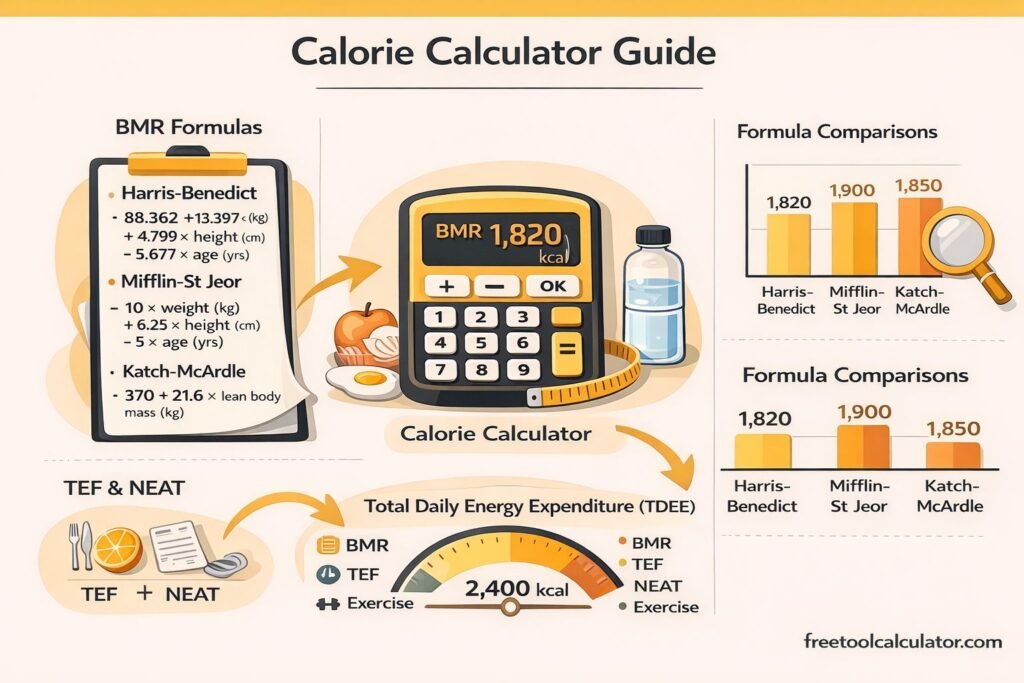
If you’re also tracking weight loss, combining hydration with a calorie plan helps. You can calculate daily needs here:
👉 https://freetoolcalculator.com/calorie-calculator/
BMI and Hydration Awareness
Body composition also plays a role in hydration efficiency.
Higher body weight often requires more fluids, but BMI helps understand whether weight is muscle or fat.
You can check it here:
👉 https://freetoolcalculator.com/bmi-calculator/
This helps refine your understanding of water intake weight adjustments.
Best Daily Water Drinking Routine (Simple & Practical)
Knowing your water intake per day by weight is only step one. The real challenge is distributing it properly throughout the day.
Here is a simple routine that works for most people:
Morning (After Waking Up)
- 1–2 glasses of water
- Helps rehydrate the body after sleep
- Activates digestion and metabolism
Before Meals
- 1 glass of water 20–30 minutes before eating
- Helps with digestion and appetite control
During the Day
- Sip regularly instead of drinking large amounts at once
- Aim for 60–70% of total daily intake before evening
During Exercise
- Add 0.5–1 liter per hour depending on intensity
Evening
- Reduce excessive intake close to bedtime
- Prevent sleep disruption from frequent urination
This structure helps maintain a stable hydration balance instead of sudden spikes.
How to Know If You Are Drinking the Right Amount
Instead of obsessing over exact numbers, your body gives clear signals.
You are likely hydrated if:
- Urine is light yellow
- Energy levels are stable
- No frequent headaches
- Skin feels normal (not overly dry)
You may be dehydrated if:
- Dark urine
- Fatigue
- Dry mouth
- Poor focus
You may be overhydrated if:
- Constant clear urine
- Frequent urination
- Feeling bloated or uncomfortable
The goal of water intake by weight is to find balance—not extremes.
Complete Formula Summary
To simplify everything:
Step 1: Base calculation
Water intake weight formula:
- 30–35 ml × body weight (kg)
Step 2: Adjust for activity
- +0.5 to 1 liter for moderate exercise
- +1 to 2 liters for intense physical activity
Step 3: Adjust for environment
- Hot climate → increase intake
- Cold climate → slightly lower but still consistent intake
Final result:
Your true required water intake by weight is a dynamic number—not a fixed rule.
Frequently Asked Questions (FAQ)
How much water should I drink by weight daily?
On average, you should drink 30–35 ml of water per kg of body weight. This gives a personalized estimate of your daily hydration needs.
Is 3 liters of water a day too much?
Not necessarily. For many active adults, 3 liters is normal—especially in hot climates or during exercise.
Does drinking more water help with weight loss?
Indirectly, yes. Water helps control appetite, improves digestion, and supports exercise performance, but it does not directly burn fat.
Can I count tea, coffee, or juice in my water intake?
Yes, they contribute to total fluid intake. However, plain water should still make up the majority of your water intake per day by weight.
What is the best time to drink water?
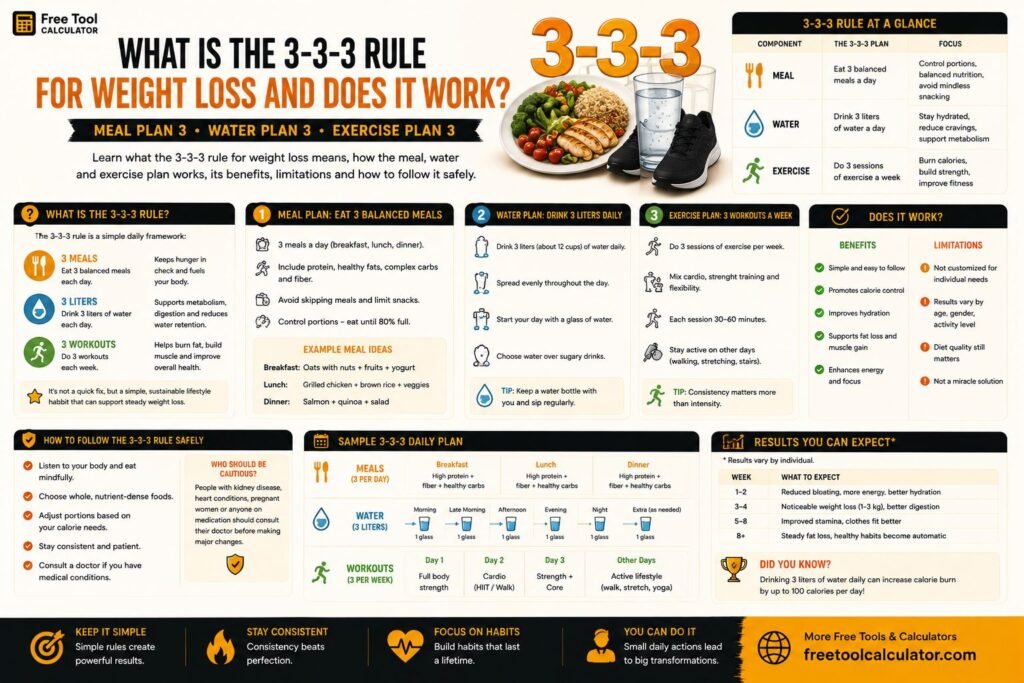
The best strategy is spreading intake throughout the day:
- Morning hydration
- Before meals
- During activity
- Not excessive right before sleep
Can too much water be harmful?
Yes. Excessive water intake can dilute electrolytes and cause discomfort or health risks in extreme cases.
Common Mistakes People Should Avoid
Even when people understand hydration, they still make mistakes:
1. Drinking too fast
Large amounts at once do not hydrate better than slow, steady intake.
2. Ignoring body signals
Your body already provides hydration feedback—urine color and energy levels matter.
3. Copying others
Your friend’s hydration needs are not your needs. This is why water intake by weight is essential.
4. Ignoring lifestyle changes
Workout days, hot weather days, and rest days all require different intake levels.
Advanced Insight: Hydration and Performance
Proper hydration is one of the simplest performance enhancers available.
When your required water intake by weight is correct, you may notice:
- Better workout endurance
- Faster recovery
- Improved mental clarity
- Reduced fatigue during the day
Even small dehydration levels can reduce performance significantly without you realizing it.
Why Weight-Based Hydration Is Better Than Fixed Rules
The traditional “8 glasses a day” method fails because it ignores:
- Body size differences
- Activity levels
- Climate differences
- Diet variations
In contrast, water intake weight-based calculation adapts to your body.
This makes it:
- More accurate
- More personalized
- More practical in real life
Bonus Tip: Combine Hydration with Health Tracking
Hydration works best when combined with overall health awareness.
For example:
- Tracking calorie intake helps manage energy balance
- Monitoring BMI helps understand body composition
- Hydration ensures performance and recovery
Useful tools:
- Calorie Calculator: https://freetoolcalculator.com/calorie-calculator/
- BMI Calculator: https://freetoolcalculator.com/bmi-calculator/
These tools together help build a complete health picture.
Final Thoughts
Understanding how much water you should drink by weight is one of the simplest yet most powerful health improvements you can make.
Instead of guessing or following outdated rules, using a weight-based formula gives you clarity:
- 30–35 ml per kg body weight
- Adjust for exercise and climate
- Listen to your body signals
Hydration is not about perfection—it’s about consistency.
If you remember one thing from this guide, let it be this:
👉 Your ideal water intake is not fixed—it is personalized.
And once you understand your water intake per day by weight, you can easily adjust it based on your lifestyle, activity, and environment.
For the most accurate result, you can always use a dedicated water intake calculator to fine-tune your daily needs and build a healthier hydration habit.