What Is Standard Printer Paper Size? Letter Dimensions Explained (8.5×11 Guide)

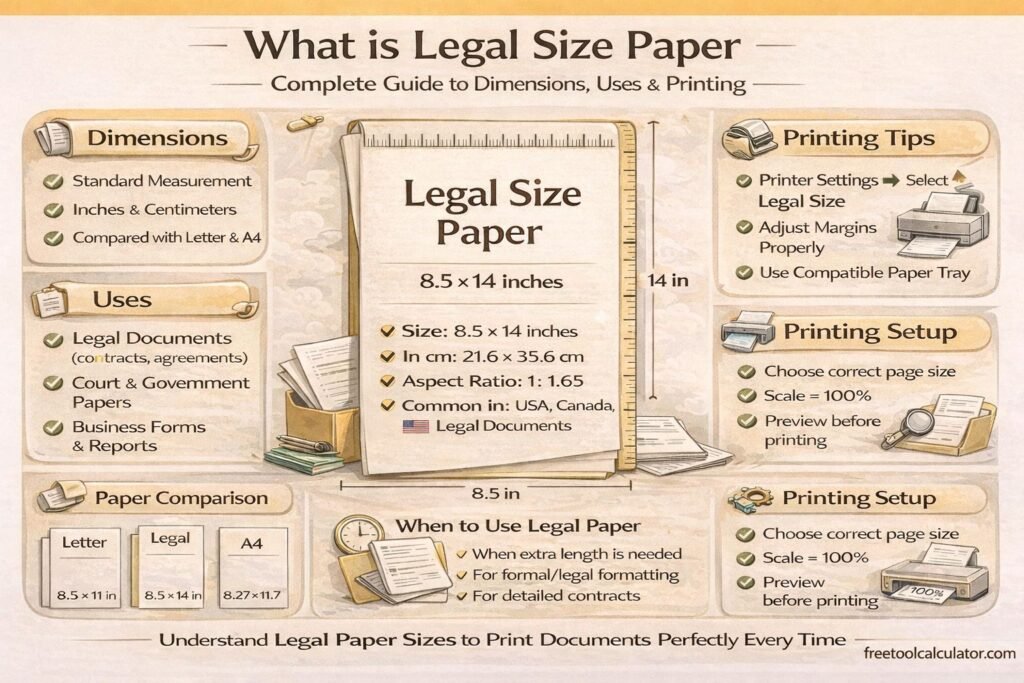
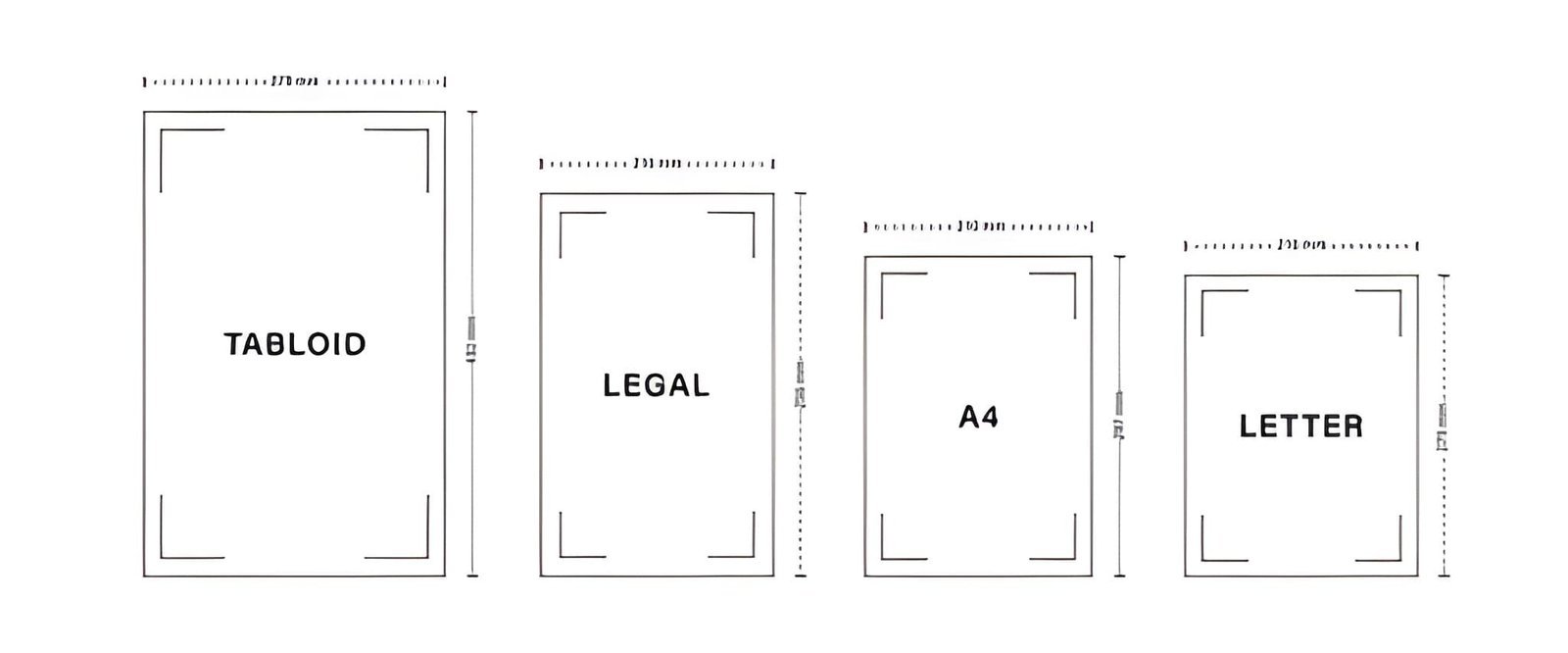
legal paper size measurement in inches and cm

When people ask what size is normal printer paper, they are usually asking about the paper used in home printers, office printers, school assignments, forms, letters, and everyday documents. In the United States and Canada, the standard printer paper size is Letter size, which measures 8.5 × 11 inches.

This size is widely used for printing documents, reports, resumes, invoices, worksheets, business letters, and general paperwork. However, printer paper size can vary by country. While Letter size is standard in North America, many other countries commonly use A4 paper instead.

If you need to compare Letter, A4, Legal, or other paper formats quickly, use our free Paper Size Converter. It helps you check paper dimensions across inches, centimeters, millimeters, and other common formats.

Quick Answer: What Size Is Normal Printer Paper?

Normal printer paper in the United States is usually Letter size paper.

Paper TypeDimensions in InchesDimensions in MillimetersDimensions in Centimeters
Letter8.5 × 11 in216 × 279 mm21.6 × 27.9 cm

Letter paper is the standard size for most home and office printers in the United States, Canada, and some nearby regions. If someone says “regular printer paper” in the U.S., they usually mean 8.5 × 11 inch Letter paper.

What Is Letter Size Paper?

Letter size paper is a standard North American paper size used for everyday printing. Its dimensions are 8.5 inches wide and 11 inches tall. It is commonly used in portrait orientation, although it can also be printed horizontally in landscape orientation.

Letter size is popular because it works well for readable documents, school pages, office forms, contracts, flyers, resumes, and general text layouts. Most printers, scanners, copiers, folders, binders, and filing cabinets in the United States are designed to support Letter size paper.

Letter Size Paper Dimensions

UnitLetter Paper Size
Inches8.5 × 11 inches
Millimeters216 × 279 mm
Centimeters21.6 × 27.9 cm
Points612 × 792 pt

Why Is 8.5 × 11 Paper Called Letter Size?

The name “Letter” comes from its traditional use for written letters and business correspondence. Over time, it became the default paper size for many official documents in North America.

Today, Letter size is used for much more than letters. It is the default page size in many U.S. office environments, schools, government forms, PDFs, and printing workflows.

What Is Regular Printer Paper Size?

Regular printer paper size depends on the country. In the United States, regular printer paper usually means Letter size. In many other countries, regular printer paper usually means A4 size.

RegionCommon Printer Paper SizeDimensions
United StatesLetter8.5 × 11 in
CanadaLetter8.5 × 11 in
United KingdomA4210 × 297 mm
EuropeA4210 × 297 mm
AustraliaA4210 × 297 mm
Most of AsiaA4210 × 297 mm

This is why international documents sometimes print incorrectly if the wrong paper size is selected in the printer settings.

Letter Size vs A4 Paper

Letter and A4 are the two most common paper sizes used for everyday printing, but they are not the same. Letter paper is slightly wider and shorter than A4 paper.

Paper SizeInchesMillimetersCommon Use
Letter8.5 × 11 in216 × 279 mmUnited States and Canada
A48.27 × 11.69 in210 × 297 mmMost other countries

The difference may seem small, but it can affect margins, page breaks, forms, certificates, labels, and print layouts.

Which Is Bigger: Letter or A4?

A4 paper is taller than Letter paper, while Letter paper is slightly wider than A4. This means a document designed for A4 may not fit perfectly on Letter paper without scaling, and a Letter document may need adjustment before printing on A4.

Letter Size vs Legal Size Paper

Legal paper is another common paper size used in offices, especially for contracts, legal documents, agreements, and official paperwork. It has the same width as Letter paper but is longer.

Paper SizeDimensions in InchesBest For
Letter8.5 × 11 inEveryday documents
Legal8.5 × 14 inContracts and legal forms

Because Legal paper is three inches longer than Letter paper, it is useful when more vertical space is needed on one page.

Common Printer Paper Sizes

Although Letter is the normal printer paper size in the U.S., printers can often support several other sizes.

Paper SizeDimensionsCommon Use
Letter8.5 × 11 inGeneral printing
Legal8.5 × 14 inLegal documents
Tabloid11 × 17 inPosters, newsletters, diagrams
A4210 × 297 mmInternational documents
A5148 × 210 mmBooklets, flyers, notebooks

If you work with multiple paper formats, the Paper Size Converter can help you compare dimensions before printing, designing, or exporting files.

Letter Paper Size in Pixels

When designing documents for digital printing or graphic design, paper size is often measured in pixels instead of inches or millimeters. The exact pixel dimensions depend on the print resolution, commonly measured in DPI (dots per inch).

Print ResolutionLetter Size Pixels
72 DPI612 × 792 px
96 DPI816 × 1056 px
150 DPI1275 × 1650 px
300 DPI2550 × 3300 px
600 DPI5100 × 6600 px

For professional printing, 300 DPI is generally recommended because it produces sharp text and high-quality images suitable for brochures, flyers, reports, and marketing materials.

Where Is Letter Size Paper Used?

Letter size paper is the standard paper format for millions of homes, schools, businesses, and government organizations across North America. Its versatility makes it suitable for almost every type of everyday document.

Home Printing

Most home inkjet and laser printers are configured to print on Letter size paper by default. It is commonly used for recipes, homework, personal documents, and printable forms.

Office Documents

Businesses use Letter paper for contracts, invoices, reports, proposals, employee records, and correspondence because it fits standard filing systems and office equipment.

School Assignments

Students frequently print essays, worksheets, research papers, presentations, and project reports on Letter size paper.

Government Forms

Many official forms, permits, tax documents, and applications in the United States are designed specifically for Letter paper.

How to Choose the Correct Paper Size When Printing

Selecting the correct paper size before printing helps prevent cropped pages, incorrect margins, blank pages, and scaling problems.

Check Printer Settings

Before printing, verify that your printer settings match the paper loaded in the paper tray. If your printer is set to A4 while Letter paper is loaded, the output may not align correctly.

Match the Document Size

Many word processors and PDF files are created using a specific paper size. Make sure the document size matches your printer settings to avoid automatic resizing.

Avoid Automatic Scaling

If possible, print at 100% scale when the document and paper sizes match. Automatic scaling may shrink text, shift margins, or change page layouts.

Letter Size vs Other Common Paper Sizes

Different paper sizes are designed for different purposes. Understanding their dimensions helps you choose the right format for your project.

Paper SizeDimensionsTypical Use
Letter8.5 × 11 inGeneral office printing
Legal8.5 × 14 inLegal documents
A4210 × 297 mmInternational documents
A3297 × 420 mmLarge diagrams and posters
Tabloid11 × 17 inNewsletters and presentations

Common Printer Paper Weights

Paper size and paper weight are different specifications. While Letter describes the dimensions, paper weight describes its thickness and durability.

Paper WeightTypical Use
20 lb (75–80 gsm)Everyday office printing
24 lb (90 gsm)Professional reports
28 lb (105 gsm)Presentations
65–110 lb CardstockBusiness cards, invitations, brochures

Choosing the correct paper weight improves print quality and gives documents a more professional appearance.

Common Mistakes When Printing

Many printing problems occur because the wrong paper size or settings are selected. These issues are usually easy to avoid.

Using Letter Instead of A4

International documents designed for A4 may be cropped or scaled when printed on Letter paper.

Incorrect Margins

If margins are too narrow, important content may be cut off because most printers cannot print to the very edge of the page.

Wrong Orientation

Choose portrait for most documents and landscape for spreadsheets, wide tables, or presentations.

Ignoring Print Preview

Always check Print Preview before printing. It allows you to identify layout issues before wasting paper and ink.

Tips for Better Printing Results

  • Use the correct paper size for your document.
  • Select the appropriate print quality setting.
  • Keep printer drivers updated.
  • Use good-quality paper for important documents.
  • Store paper in a dry environment to prevent curling.
  • Check margins before printing multiple copies.

Related Paper and Measurement Tools

If you regularly work with printing, design, or document preparation, these tools can make your workflow easier.

  • Paper Size Converter – Compare Letter, A4, Legal, Tabloid, and other paper dimensions.
  • Unit Converter – Convert inches, centimeters, millimeters, and many other units.
  • Image Resizer – Resize images before printing or publishing.
  • Image Compressor – Reduce image file size while maintaining quality for printable documents.

Frequently Asked Questions

What size is normal printer paper?

In the United States and Canada, normal printer paper is Letter size, measuring 8.5 × 11 inches (216 × 279 mm).

What is regular printer paper size?

Regular printer paper is usually Letter size in North America, while A4 is the standard paper size in most other countries.

What is standard size printer paper?

The standard printer paper size depends on the region. Letter is standard in the U.S., whereas A4 is the international standard in many countries.

What is letter size paper?

Letter size paper measures 8.5 × 11 inches and is commonly used for business documents, school assignments, resumes, invoices, and everyday printing.

Is Letter paper the same as A4?

No. Letter paper is slightly wider and shorter than A4 paper. Although they are similar, their dimensions are different and may affect document formatting.

Conclusion

Letter paper, measuring 8.5 × 11 inches, is the standard printer paper size used throughout the United States and Canada. It is suitable for almost every type of everyday document, including reports, letters, forms, school assignments, invoices, and business correspondence.

Understanding the differences between Letter, A4, Legal, and other paper sizes helps prevent printing problems, improves document formatting, and ensures professional results. Whether you’re printing at home, in an office, or preparing files for commercial printing, selecting the correct paper size is an important part of the process.

To compare paper dimensions quickly, use our free Paper Size Converter. You can also use the Unit Converter, Image Resizer, and Image Compressor when preparing documents and graphics for printing.

Share this article:

On This Page

Subscribe to our newsletter

Read the latest articles from our experts

Related Posts

How to Make Red Color (Complete Mixing Guide) Paint, Digital & Print Methods Explained

How to Make Red Color (Complete Mixing Guide): Paint, Digital & Print Methods Explained

Red is one of the most recognizable primary colors, but many people wonder whether it can be mixed or recreated using other colors. This guide explains how red works in traditional color theory, digital design, and printing while covering paint mixing, RGB, CMYK, and practical color applications for artists and designers.

CMYK to RGB Conversion Guide (Design & Print Colors) Understanding Digital and Print Color Models

CMYK to RGB Conversion Guide (Design & Print Colors): Understanding Digital and Print Color Models

Understanding the difference between CMYK and RGB is essential for designers, printers, photographers, and marketers. This guide explains how CMYK to RGB conversion works, compares popular color models, provides conversion formulas, and helps you choose the right format for both digital screens and professional printing projects.

Best Font Pairings for Websites and Branding 2026 Guide

Best Font Pairings for Websites and Branding 2026 Guide

Discover the best font pairings for websites branding and modern design in this complete 2026 guide Learn how to combine typography styles improve readability create professional visual identity and choose good font pairs for blogs businesses ecommerce and creative projects using practical design strategies and free online tools effectively

HEX to RGB Converter Formula Examples and Tool Guide

HEX to RGB Converter Formula Examples and Tool Guide

Learn hex to rgb conversion with simple formulas and real examples This guide explains how hexadecimal to rgb color works, how to convert manually, and how to use accurate tools to get instant results for design, coding, and digital projects with complete ease and precision

How to Make Brown Color Complete Paint Mixing Guide for Beginners

How to Make Brown Color Complete Paint Mixing Guide for Beginners

Learn how to make brown color using simple paint mixing techniques This complete guide explains what colors make brown, how to adjust shades, and how to create perfect tones for painting, design, and art projects using easy methods suitable for beginners and professionals alike with accurate and practical results

How to Crop an Image Online Free and Easy Guide

How to Crop an Image Online Free and Easy Guide

Learn how to crop image online using simple and free tools This guide explains how to crop jpg image and png image accurately improve image quality and use crop image tool effectively for social media design and web use with easy steps for all users

CSS Beautify Tool Guide Format CSS Online Easily

CSS Beautify Tool Guide Format CSS Online Easily

Learn how to use a css beautify tool to format css online easily This guide explains css beautifier benefits, code formatting techniques, and how to improve readability and maintain clean structured css using simple methods and free tools for developers and beginners

Social Media Video Sizes Guide All Platforms 2026

Social Media Video Sizes Guide All Platforms 2026

Learn social media video sizes for all major platforms in 2026 This guide explains video dimensions formats and aspect ratios to help you create perfect videos for Instagram YouTube TikTok and more ensuring high quality uploads better engagement and professional results across all devices and platforms easily

How to Create Favicon for Website Step by Step Guide

How to Create Favicon for Website Step by Step Guide

Learn how to create favicon for website using simple step by step methods This guide explains how to make icon for website, choose the right size and format, and use free tools to generate professional favicons for branding and better user experience across all devices and browsers easily

What is Legal Size Paper Complete Guide to Dimensions Uses and Printing

What is Legal Size Paper Complete Guide to Dimensions Uses and Printing

Many people face printing problems without even realizing the real cause. You open a document print it and suddenly the content looks cut off or stretched. This usually happens because you selected the wrong paper size.

How to Apply Gradient to Text with CSS Background-Clip

How to Apply Gradient to Text with CSS Background-Clip

Master the CSS gradient text technique using background-clip: text and transparent text color. Learn how to create stunning typography effects that remain accessible, selectable, and SEO-friendly with practical code examples and browser support guidance.

Animated Gradient Background Generator Create Stunning CSS Backgrounds Easily

Animated Gradient Background Generator: Create Stunning CSS Backgrounds Easily

Want to create smooth, modern website backgrounds without writing complex CSS from scratch? This guide explains how an animated gradient background generator works, why designers use it, and how to create eye-catching moving gradients for websites, landing pages, and hero sections. You will also see practical tips and common mistakes.

Font Size Converter Guide – Formulas, Manual Calculations & Unit Conversions

Font Size Converter Guide – Formulas, Manual Calculations & Unit Conversions

This font size converter guide explains how to manually convert font sizes between px, pt, em, rem, percent, vw, vh, cm, mm, inches, and picas. Learn formulas, calculation methods, and practical examples for accurate typography conversions used in responsive web design, print layouts, and modern CSS development workflows across devices and screen sizes.

Optimal Font Size for Website Readability – Complete Typography Guide

Optimal Font Size for Website Readability – Complete Typography Guide

This font size converter guide explains the optimal font size for website readability. Learn recommended typography sizes, accessibility guidelines, and responsive font practices for web design. Discover how to choose body text, headings, and mobile font sizes while converting units like px, em, and rem to maintain consistent, readable typography across devices.

CSS Gradients in Web Design – Performance, Best Practices & Browser Support

How to Convert Figma Gradient to CSS Code – Complete Developer Guide

This CSS gradient generator guide explains how to convert Figma gradients into CSS code accurately. Learn how to extract color stops, angles, and gradient types from Figma, convert them into linear or radial CSS gradients, and optimize them for responsive web design, browser compatibility, and performance using efficient development techniques and tools.

CSS Gradients in Web Design – Performance, Best Practices & Browser Support

CSS Gradients in Web Design – Performance, Best Practices & Browser Support

This CSS gradient generator guide explains performance impacts, best practices, and browser support for modern CSS gradients. Learn how to optimize gradient rendering, improve website speed, ensure cross-browser compatibility, and create visually appealing backgrounds using efficient CSS techniques for responsive and high-performance web design across all devices and screen sizes globally.

Tools & Resources

Explore our collection of professional tools designed to streamline your workflow

Report a Bug