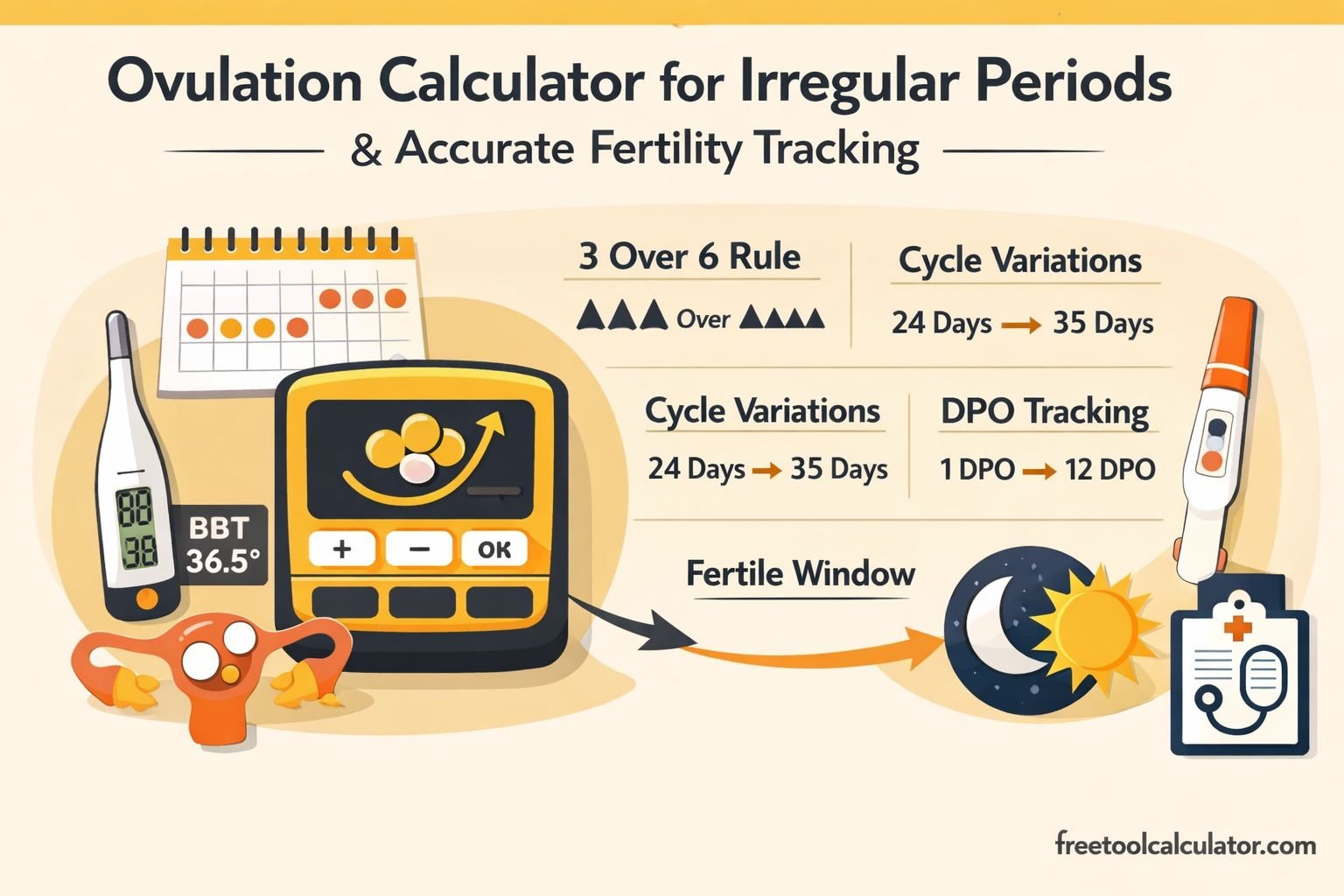
The ovulation calculator for irregular periods and what this blog will cover
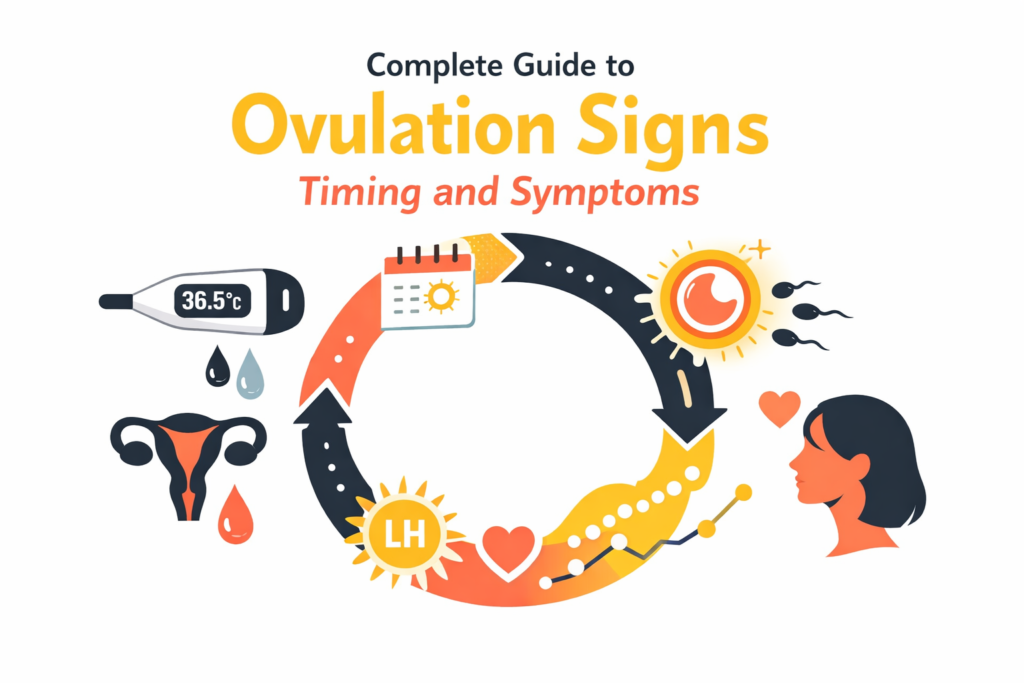
The ovulation calculator for irregular periods is one of the most practical ways to estimate fertile days when cycle lengths change month to month. In this blog, you will learn how to calculate ovulation when periods are irregular, how to confirm ovulation using basal body temperature and the BBT 3 over 6 rule, whether a 26 day cycle changes the ovulation day compared with a 28 day cycle, whether it is possible to ovulate twice in one cycle, and how to count days past ovulation accurately. You will also learn how to use a reliable Ovulation Calculator for Irregular Periods to plan intercourse timing, improve pregnancy planning, and reduce confusion caused by unpredictable cycles, using medically accurate fertility principles.
Why irregular periods make ovulation prediction difficult
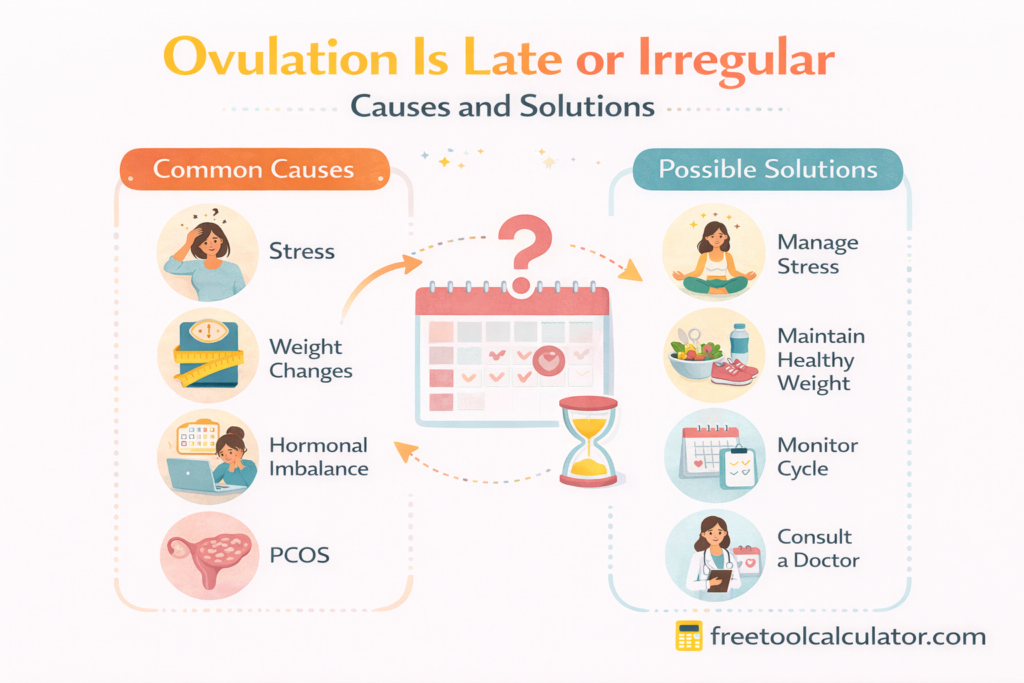
Irregular periods occur when the menstrual cycle length varies significantly from month to month. Ovulation is controlled by hormonal signals from the brain and ovaries. These signals can be affected by stress, sleep disruption, illness, travel, weight changes, thyroid disorders, polycystic ovary syndrome, elevated prolactin, and other endocrine factors. Because the next period date is not predictable in irregular cycles, counting forward from the first day of bleeding often leads to inaccurate conclusions.
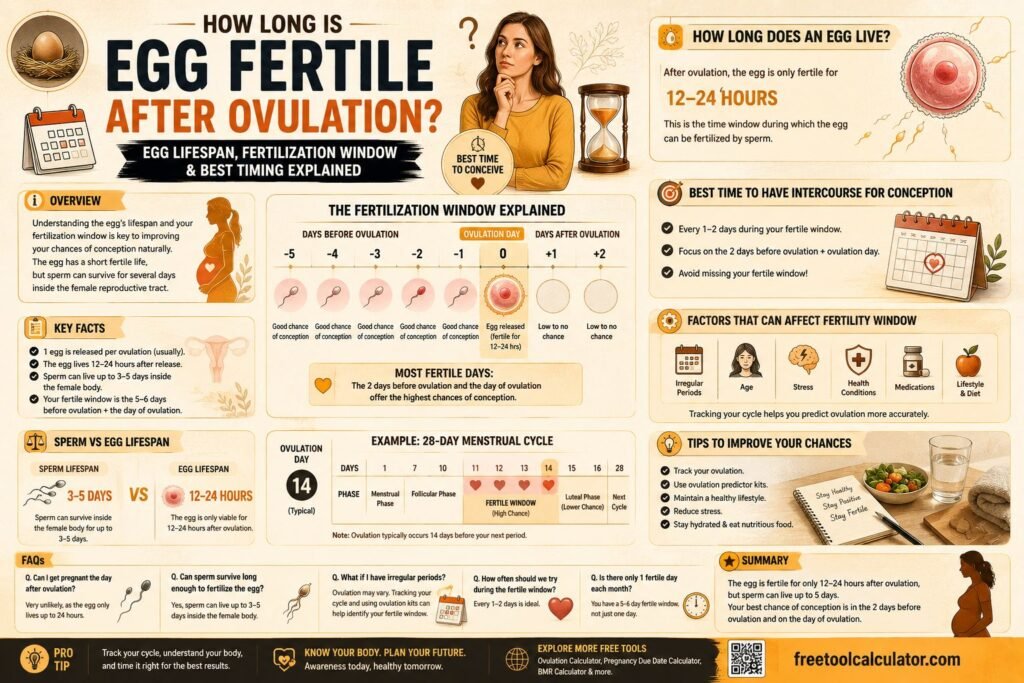
A key medical concept is that ovulation usually occurs about 12 to 14 days before the next menstrual period. Many women incorrectly assume ovulation is a fixed day after the period ends. In reality, the time before ovulation called the follicular phase is the part that varies the most. In irregular cycles, ovulation may occur earlier in one month and later in another. This is why symptom based tracking is essential and why an Ovulation Calculator for Irregular Periods should be used as guidance rather than as a guaranteed date.
How an Ovulation Calculator for Irregular Periods works
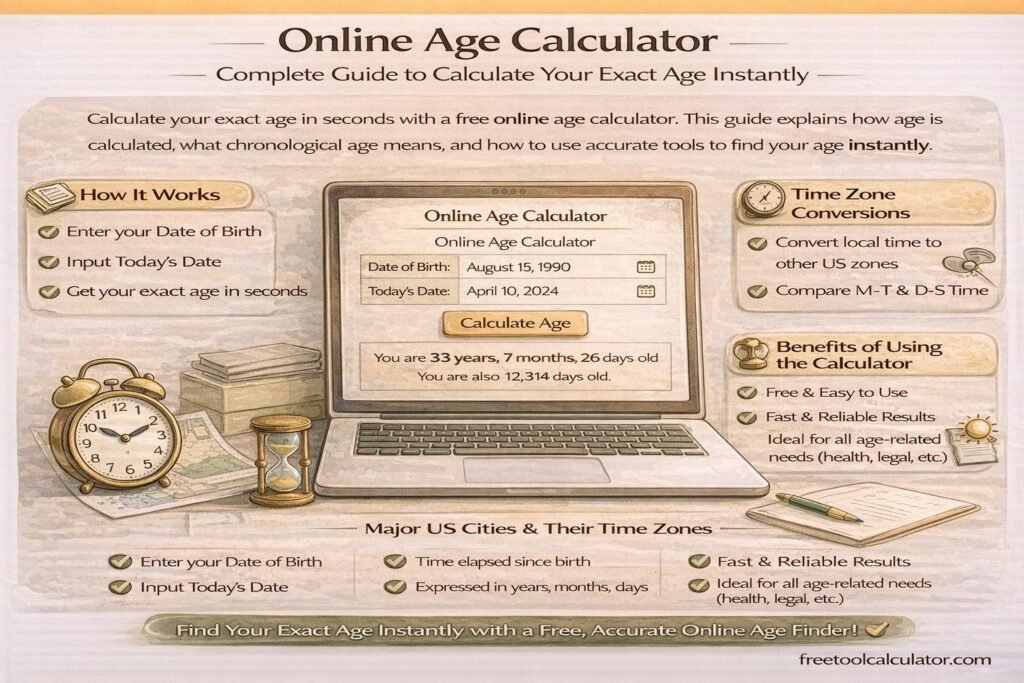
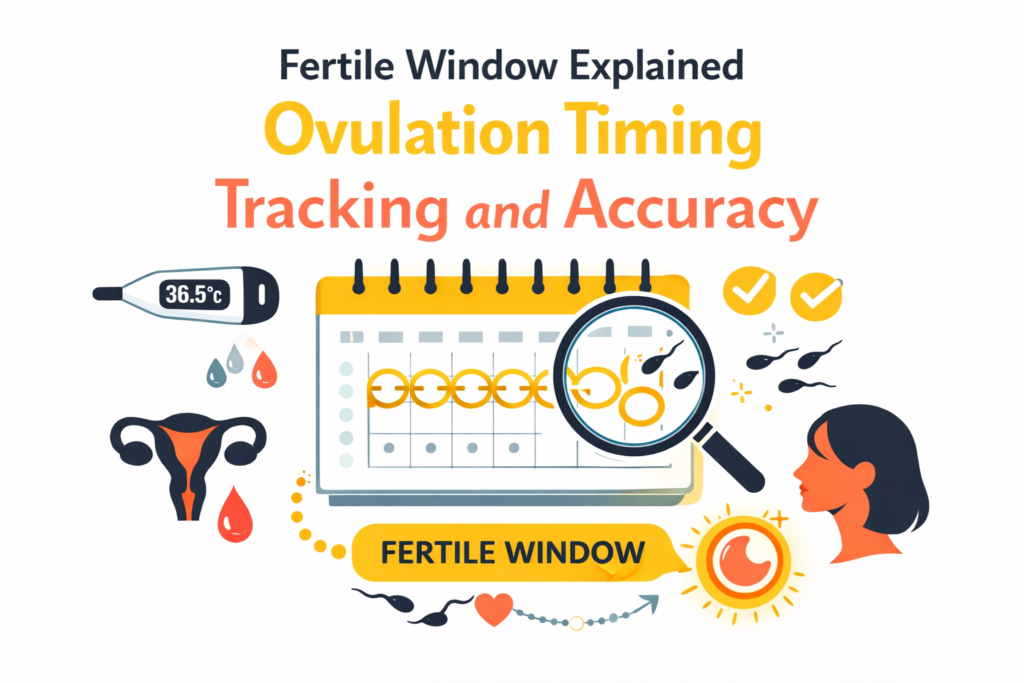
An Ovulation Calculator for Irregular Periods estimates a fertile window rather than promising one exact ovulation day. It uses cycle history and reproductive physiology to identify likely timing for ovulation. For women with irregular cycles, this probability based approach is medically appropriate because it reflects real world variability.
To use a reliable free tool, enter your cycle information in this Ovulation Calculator for Irregular Periods page: https://freetoolcalculator.com/ovulation-fertility-calculator/
This calculator is completely free and designed to help users estimate fertile days and understand ovulation timing even when cycles are not consistent.
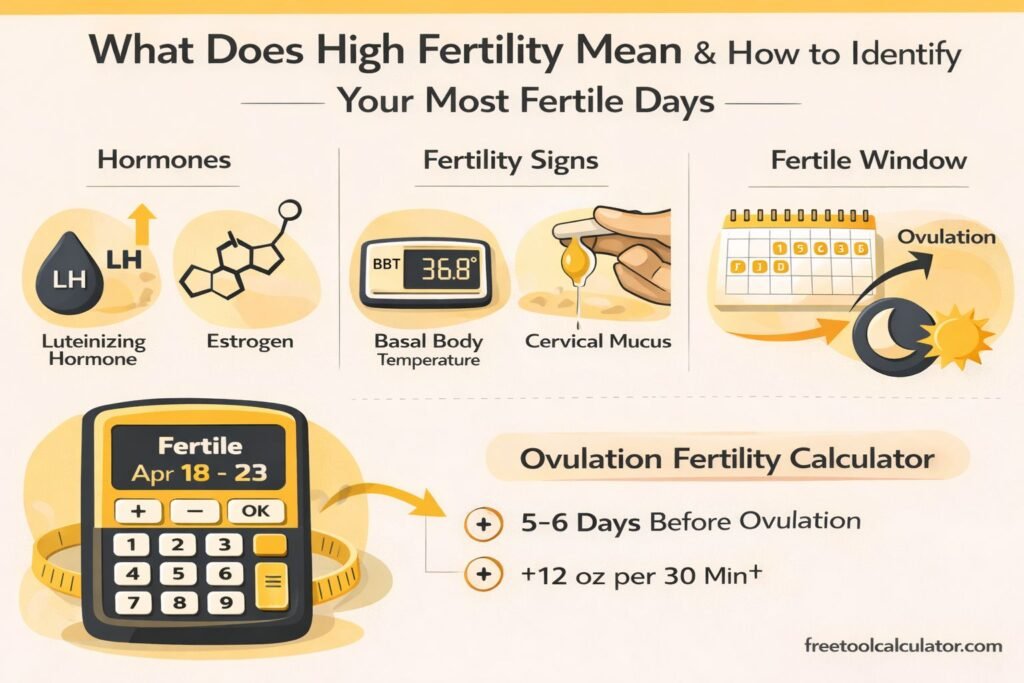
The most accurate results occur when you combine the calculator with biological indicators such as basal body temperature, ovulation predictor kits, and cervical mucus tracking. This combination is consistent with fertility awareness methods used globally and aligns with standard reproductive medicine principles.
Why biological tracking is more reliable than calendar counting
Calendar counting assumes the body behaves predictably. Biological tracking reflects actual hormonal changes. In irregular cycles, biological tracking provides evidence of fertility progression, confirms whether ovulation occurred, and helps identify patterns over time. For pregnancy planning, this reduces guesswork and supports more accurate timing.
How to calculate your ovulation day if your periods are irregular
When periods are irregular, the most reliable approach is to identify ovulation through signs that the body is preparing for and completing ovulation. Instead of asking what day you will ovulate, the medically correct question becomes how to identify when ovulation is approaching and when it has already occurred.
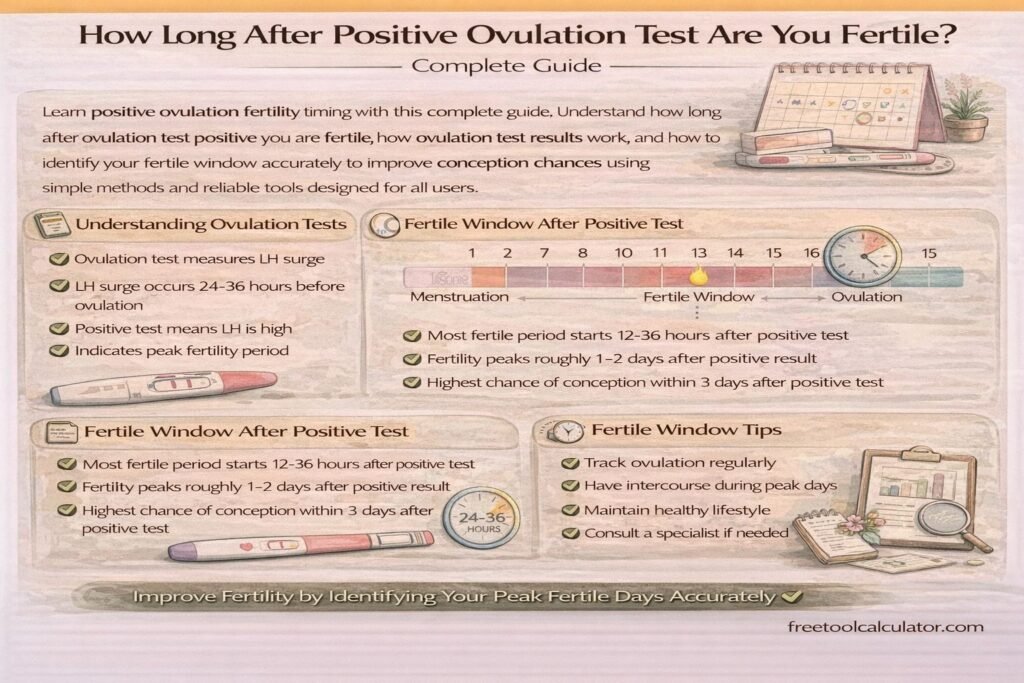
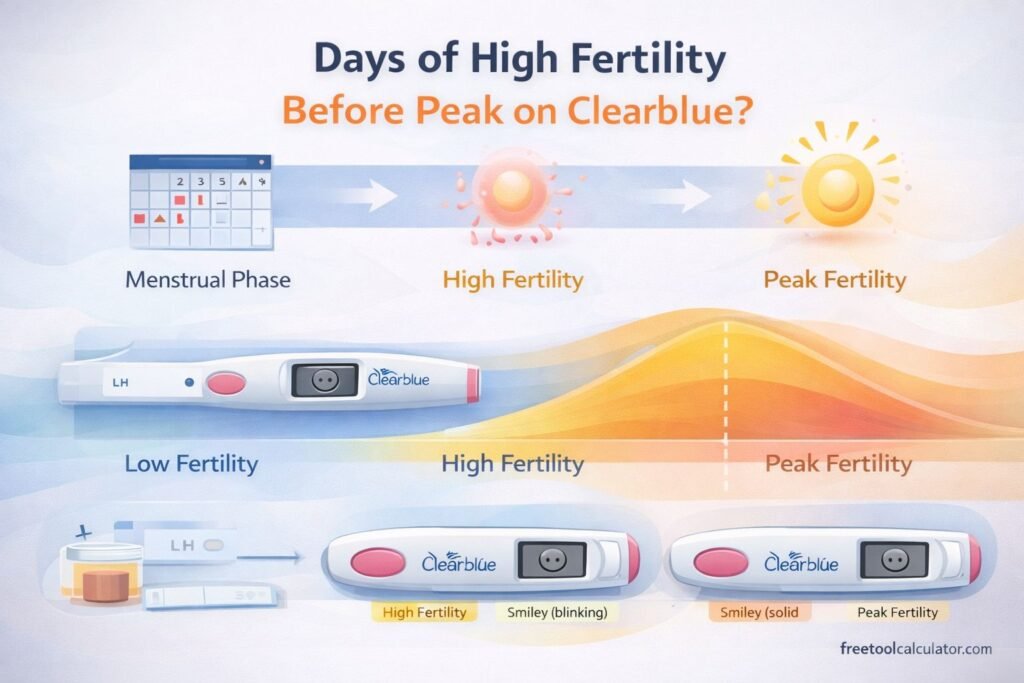
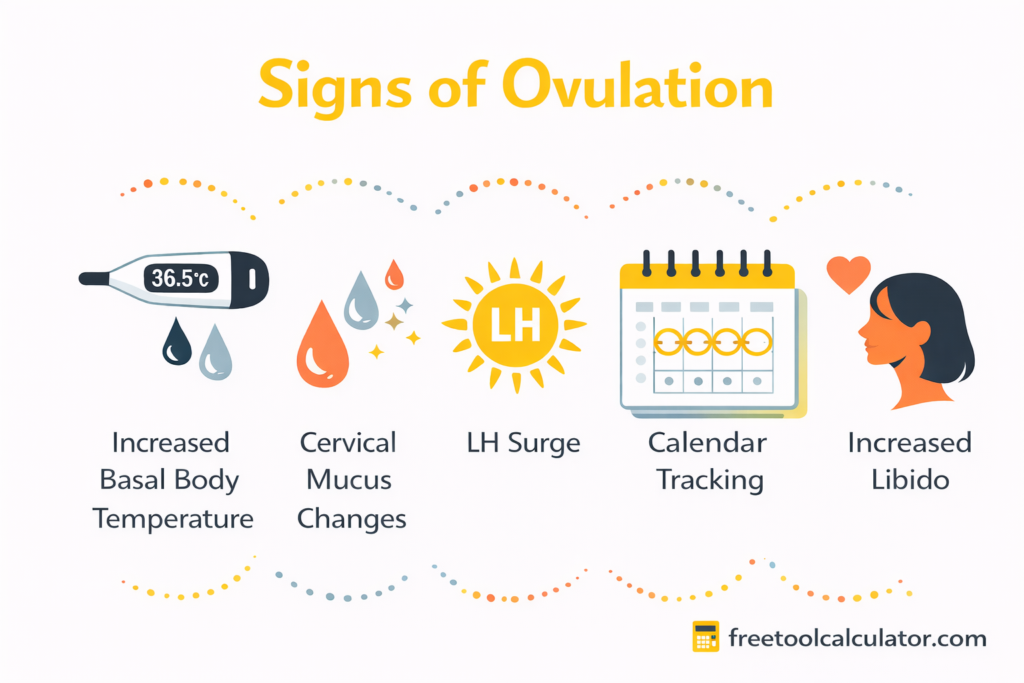
You can estimate ovulation using these clinical indicators. A positive ovulation predictor kit suggests ovulation is likely within about 24 to 36 hours. Cervical mucus that becomes clear, slippery, and stretchy indicates high fertility and often occurs in the days leading up to ovulation. Basal body temperature rises after ovulation and confirms ovulation in hindsight. For irregular cycles, these signals matter more than cycle day numbers.
An Ovulation Calculator for Irregular Periods helps by narrowing the likely fertile window based on your history. You then use body signals to pinpoint timing within that window. Over several cycles, this process becomes more accurate and allows many women to identify consistent personal patterns even when cycle lengths vary.
What is the BBT 3 over 6 rule and how it identifies ovulation
The BBT 3 over 6 rule is a commonly used, medically grounded approach to confirm ovulation using basal body temperature charting. Basal body temperature is the resting temperature measured immediately after waking, before getting out of bed, eating, drinking, or moving significantly. After ovulation, progesterone rises and causes a small but meaningful temperature increase.
The 3 over 6 rule means that after at least six consecutive lower temperature readings, you must see three consecutive higher temperature readings that are above the highest of the previous six. When that pattern occurs, ovulation is considered confirmed. In most cases, ovulation happened the day before the first higher reading.
This method is helpful for women using an Ovulation Calculator for Irregular Periods because it provides objective confirmation that ovulation occurred, even when cycles are unpredictable. It is especially valuable for understanding luteal phase length and for calculating days past ovulation accurately.
Practical example of the 3 over 6 rule
If your temperatures for six days are around 97.2°F to 97.4°F and then you record three days at 97.7°F, 97.8°F, and 97.9°F, the sustained rise suggests ovulation likely occurred the day before the first 97.7°F reading. This is a practical way to estimate ovulation retrospectively.
Does a 26 day cycle change when you ovulate compared to a 28 day cycle
Yes, a 26 day cycle often means ovulation happens earlier than it would in a 28 day cycle, but the exact day varies between individuals. The key is understanding the two phases of the cycle. The luteal phase after ovulation is usually more stable and commonly lasts about 12 to 14 days. The follicular phase before ovulation is the phase that varies.
If a woman has a 28 day cycle and a 14 day luteal phase, ovulation commonly occurs around day 14. If a woman has a 26 day cycle and a similar luteal phase length, ovulation may occur around day 12. This is a general estimate, not a guarantee. Stress, illness, and hormonal shifts can move ovulation earlier or later.
An Ovulation Calculator for Irregular Periods helps you estimate fertile timing across different cycle lengths. If you notice your cycles often range between 26 and 32 days, the calculator can help identify the broader fertile window and support better planning.
Why shorter cycles usually mean earlier ovulation
Because the luteal phase tends to remain relatively consistent, shorter total cycle lengths usually reflect a shorter follicular phase. That moves ovulation earlier. However, if the luteal phase is unusually short, professional evaluation may be needed, particularly when pregnancy planning is a goal.
Can you ovulate twice in one single menstrual cycle
A woman cannot ovulate, then ovulate again days or weeks later in the same menstrual cycle. After ovulation, progesterone increases and suppresses the hormonal cascade needed for another ovulation event. This is a normal protective mechanism of the reproductive system.
However, it is possible to release two eggs within a short window of time, typically within 12 to 24 hours, during the same ovulatory event. This is called multiple ovulation and is how fraternal twins can occur. Even in this situation, it is still considered one ovulation phase, not two separate ovulation events.
For fertility tracking, this means there is one fertile window per cycle. An Ovulation Calculator for Irregular Periods appropriately estimates one fertile window, consistent with medical physiology.
Why the concept of two separate ovulations is a myth
The myth often comes from misunderstanding irregular bleeding, mid cycle spotting, or changes in cervical mucus. These signs may shift, but they do not indicate two separate ovulations. Progesterone after ovulation prevents a second ovulation from occurring in the same cycle.
How to count days past ovulation DPO accurately
Days past ovulation is a standardized way to track the post ovulation timeline. Ovulation day itself is counted as 0 DPO. The day after ovulation is 1 DPO, and the count continues from there. This is essential for timing pregnancy tests and understanding implantation and hormonal progression.
Accurate DPO depends on correctly identifying ovulation day. In irregular cycles, this is best done by using the BBT shift confirmed by the 3 over 6 rule, supported by ovulation predictor kits and cervical mucus tracking.
Using BBT to estimate ovulation for DPO
With BBT, ovulation is estimated as the day before the first sustained temperature rise. If your first higher temperature occurs on cycle day 19 and is followed by two more higher temperatures, ovulation likely occurred on cycle day 18. Cycle day 19 is then 1 DPO.
Using LH testing to estimate ovulation for DPO
If you have a positive LH test, ovulation typically occurs about 12 to 36 hours later. For DPO counting, the ovulation day is usually the day after the surge begins, though timing varies. Combining LH testing with BBT improves accuracy.
When to test for pregnancy based on DPO
Implantation commonly occurs around 6 to 10 DPO. Pregnancy hormone levels may not be high enough to detect early. Testing too early can produce a false negative. Clinically, many women obtain more reliable urine test results closer to 10 to 14 DPO. Blood testing can detect pregnancy earlier but should be ordered through a clinician when appropriate.
For women using an Ovulation Calculator for Irregular Periods, DPO provides a more reliable timeline than cycle day numbers. This helps reduce confusion and prevents premature testing.
How to use the ovulation fertility calculator tool effectively
To support pregnancy planning, use the free calculator here as your primary guide: https://freetoolcalculator.com/ovulation-fertility-calculator/ An Ovulation Calculator for Irregular Periods is most helpful when used consistently over several months, allowing it to reflect your personal cycle variability.
Best practice includes entering accurate cycle details, using LH tests during the predicted fertile window, checking cervical mucus daily during the fertile window, and tracking BBT to confirm ovulation. Over time, you gain a clearer picture of your cycle behavior even when it is irregular.
A second natural placement of your tool link within the body content helps users who are actively searching for immediate fertility guidance. If you want to calculate your current fertile window today, you can use the Ovulation Calculator for Irregular Periods here: https://freetoolcalculator.com/ovulation-fertility-calculator/
Because it is completely free, it offers an accessible starting point for women worldwide seeking medically sound fertility estimates.
When to seek medical evaluation
If cycles are consistently longer than 35 days, shorter than 21 days, or absent for several months, a medical evaluation is recommended. Persistent irregularity can be associated with endocrine conditions that require treatment. If you are trying to conceive for 12 months under age 35 or for 6 months over age 35 without success, professional fertility assessment is appropriate.
Final medical conclusion
An Ovulation Calculator for Irregular Periods is a scientifically grounded tool that supports fertility tracking when cycle timing is unpredictable. Irregular cycles reduce the reliability of calendar estimates, but biological tracking methods provide clarity. The BBT 3 over 6 rule confirms ovulation, shorter cycles such as 26 days often shift ovulation earlier, and ovulation does not occur twice weeks apart in one cycle. Finally, accurate DPO counting begins the day after ovulation and depends on correctly identifying ovulation timing. When used together, the calculator, BBT tracking, LH testing, and cervical mucus observation create a medically sound approach to pregnancy planning and reproductive health understanding on a completely free platform.