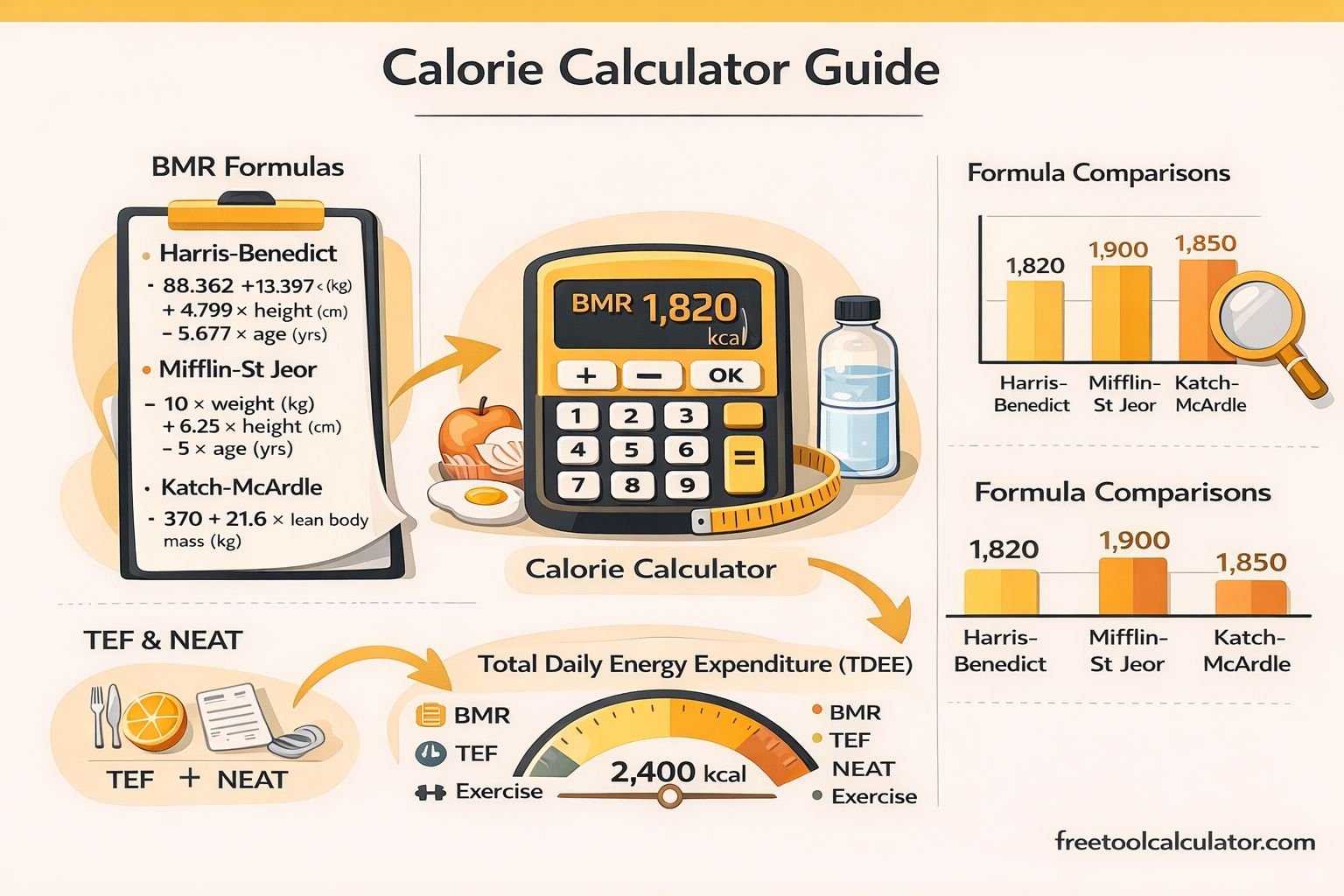
Calorie Calculator and what this blog will explain
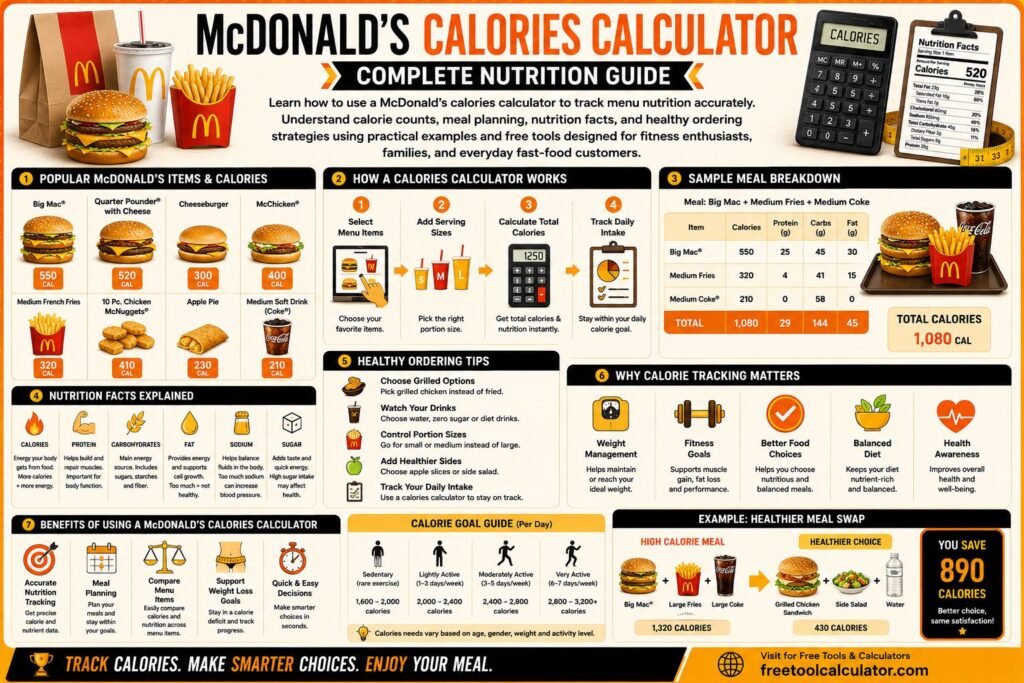
A Calorie Calculator is a cornerstone tool for personalized nutrition planning, weight management, and metabolic health assessment. In this blog, we will explain how a calorie calculator determines your Basal Metabolic Rate (BMR), the key differences between the Mifflin-St Jeor and Harris-Benedict formulas, what Total Daily Energy Expenditure (TDEE) means and how it is calculated, whether calorie calculators account for the Thermic Effect of Food (TEF), and how they estimate calories burned through Non-Exercise Activity Thermogenesis (NEAT). You will gain medically accurate insights into the mechanics and formulas that power calorie calculators and how they guide daily energy needs.
To get an instant estimate of your daily calorie requirements, you can use our free and easy-to-use Calorie Calculator, which integrates validated formulas and user parameters to deliver individualized results.
Foundational Mechanics & Formulas Behind a Calorie Calculator
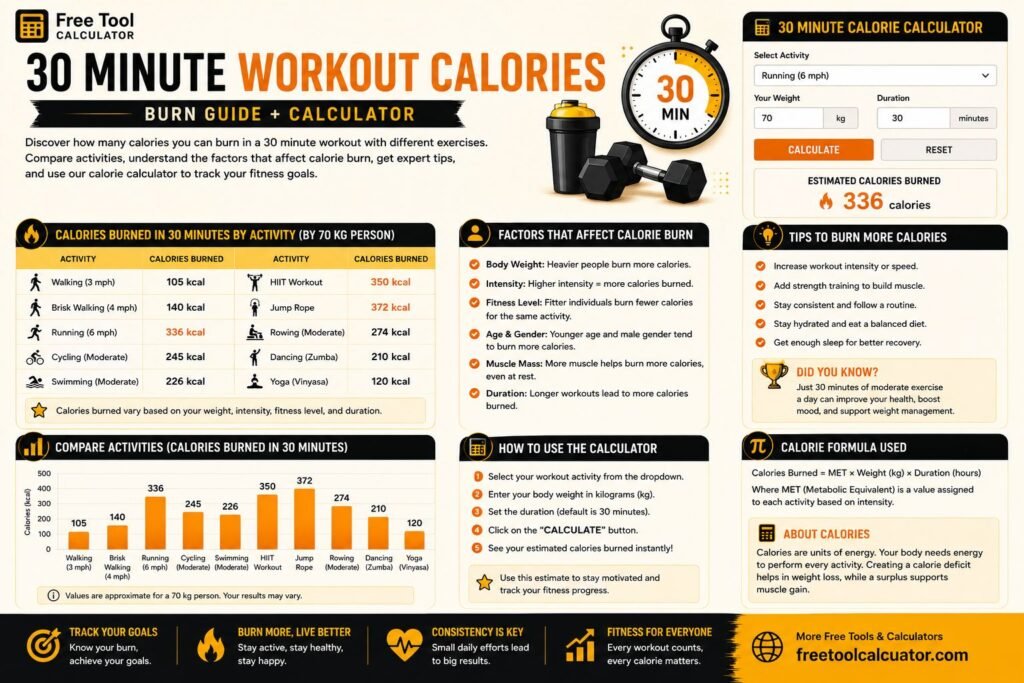
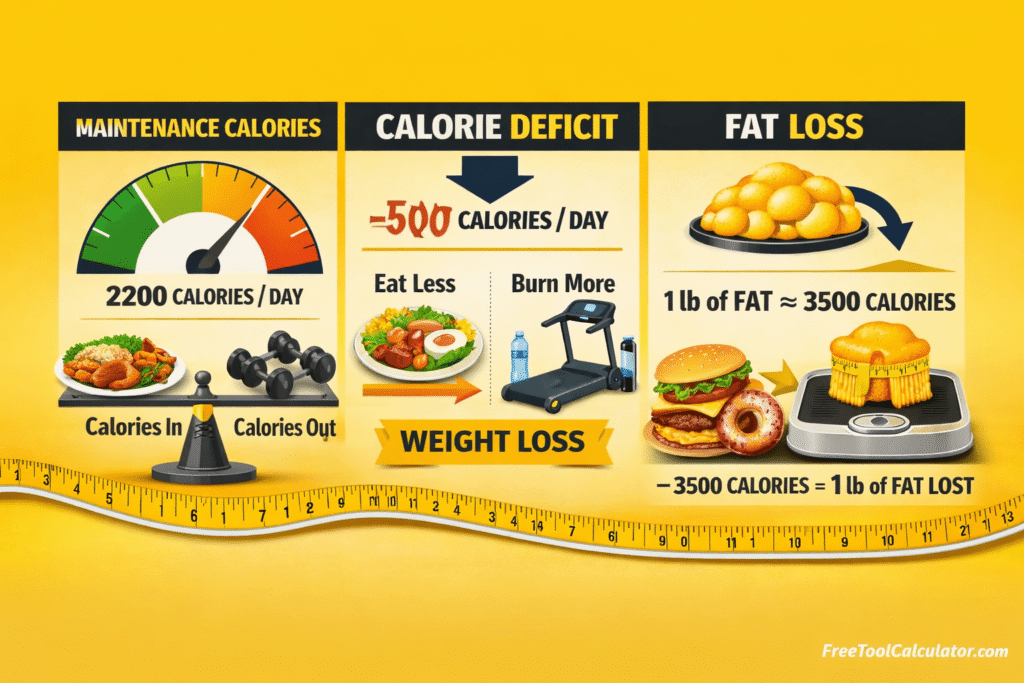
Calorie calculators are based on physiological principles of energy balance. Energy intake (calories consumed) must balance energy expenditure (calories used) over time for weight maintenance. When intake exceeds expenditure, weight gain occurs; when expenditure exceeds intake, weight loss occurs. Calorie calculators estimate energy needs by calculating the baseline energy your body requires at rest and then adjusting for activity and metabolic processes.
Two central components of this estimation are:
- Basal Metabolic Rate (BMR) – the energy required to support essential physiological functions at rest
- Total Daily Energy Expenditure (TDEE) – the total calories burned in a day accounting for activity
What is Basal Metabolic Rate and How a Calorie Calculator Determines it
Basal Metabolic Rate (BMR) is the number of calories your body needs to maintain basic life functions such as breathing, circulation, cell production, and temperature regulation while at complete rest. BMR accounts for the largest portion of daily energy expenditure in most individuals.
Because direct measurement of BMR through calorimetry is not feasible for everyday use, calorie calculators estimate BMR using validated predictive equations based on variables such as age, sex, height, and body weight.
Difference Between the Mifflin-St Jeor and Harris-Benedict Formulas
Both the Mifflin-St Jeor and Harris-Benedict formulas aim to estimate BMR, but they differ in development, accuracy, and clinical relevance.
Mifflin-St Jeor Formula
The Mifflin-St Jeor formula is currently considered more accurate for contemporary populations because it was developed using modern metabolic research and larger, more diverse samples. It is widely recommended in clinical and research settings.
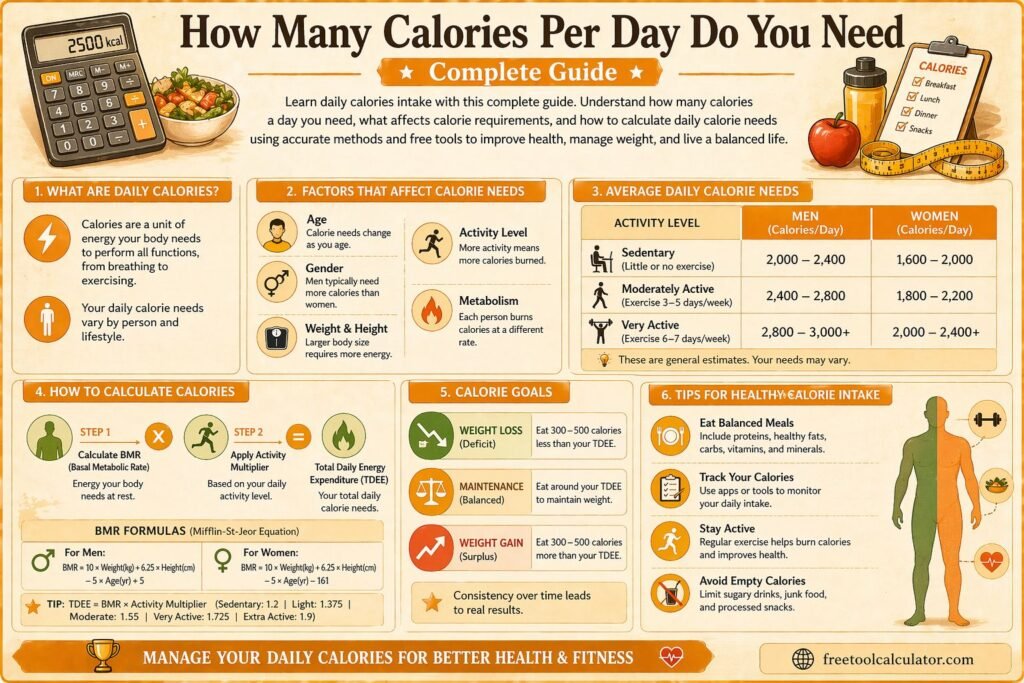
For men:
BMR = (10 × weight in kg) + (6.25 × height in cm) – (5 × age in years) + 5
For women:
BMR = (10 × weight in kg) + (6.25 × height in cm) – (5 × age in years) – 161
Harris-Benedict Formula
The Harris-Benedict equation was one of the first widely used BMR prediction equations but tends to overestimate energy needs in many modern populations.
Original Harris-Benedict formulas:
For men:
BMR = 66.47 + (13.75 × weight in kg) + (5.003 × height in cm) – (6.755 × age in years)
For women:
BMR = 655.1 + (9.563 × weight in kg) + (1.850 × height in cm) – (4.676 × age in years)
Comparative Summary
- The Mifflin-St Jeor formula is generally more accurate and recommended for current clinical use
- The Harris-Benedict formula may overestimate BMR, especially in overweight or obese individuals
- Many modern calorie calculators default to Mifflin-St Jeor for baseline BMR estimation
A calorie calculator like the Calorie Calculator often allows selection of either formula but defaults to the more evidence-based Mifflin-St Jeor method.
What is Total Daily Energy Expenditure (TDEE) and How It Is Calculated
Total Daily Energy Expenditure (TDEE) represents the total number of calories you burn in a day. It is a sum of multiple components:
- Basal Metabolic Rate (BMR)
- Thermic Effect of Food (TEF)
- Activity Energy Expenditure (AEE) including exercise
- Non-Exercise Activity Thermogenesis (NEAT)
Once BMR is calculated, a calorie calculator increases this value based on your self-reported activity level. For example:
TDEE = BMR × Activity Factor
Activity factors may include categories such as sedentary, lightly active, moderately active, very active, and extra active. These activity multipliers reflect exertion levels from daily movement and structured exercise.
Do Calorie Calculators Account for the Thermic Effect of Food (TEF)?
Yes — indirectly.
TEF refers to the calories your body uses to digest, absorb, and metabolize nutrients after eating. It represents about 5–10% of total daily calorie expenditure and varies slightly based on macronutrient composition:
- Protein has the highest TEF (~20–30%)
- Carbohydrates (~5–10%)
- Fat (~0–3%)
Most calorie calculators do not explicitly ask for macronutrient breakdown but incorporate TEF implicitly in their activity multipliers or total energy expenditure estimates. Some advanced models allow users to adjust for diet composition to reflect TEF more precisely, but for most practical purposes, TEF is built into TDEE estimation rather than calculated separately.
How a Calorie Calculator Estimates Calories Burned Through Non-Exercise Activity Thermogenesis (NEAT)
NEAT represents the energy expended during everyday movements that are not formal exercise — such as standing, walking between rooms, fidgeting, climbing stairs, doing household chores, and occupational activity. NEAT varies widely between individuals and can significantly influence TDEE.
Calorie calculators estimate NEAT based on self-reported activity level:
- Sedentary: minimal daily movement
- Lightly active: some daily movement but little structured exercise
- Moderately active: regular daily walking or light workouts
- Very active: structured workouts plus active lifestyle
- Extra active: physically demanding job or intense exercise regimen
These categories function as proxies for NEAT; higher activity levels increase the TDEE multiplier.
For example, a moderately active multiplier typically reflects:
TDEE ≈ BMR × 1.55
This multiplier accounts for:
- Daily non-exercise movement (NEAT)
- Transportation and occupational activity
- Structured exercise
By integrating NEAT into the total multiplier, a calorie calculator provides a more realistic estimate of energy requirements for individuals with different lifestyles.
Practical Use of a Calorie Calculator for Personalized Nutrition
Using the Calorie Calculator helps individuals:
- Estimate daily calorie needs for weight maintenance
- Plan calorie targets for weight loss or gain
- Understand how lifestyle and activity levels influence energy needs
- Compare results from different BMR formulas
- Track progress over time with consistent methodology
When tracking nutrition or setting goals, combining calorie calculator output with food logging and physical activity monitoring enhances precision and supports sustainable outcomes.
Final Medical Conclusion
A Calorie Calculator is an evidence-based tool that helps individuals understand their energy requirements for daily life and metabolic health. It uses validated formulas like Mifflin-St Jeor and, optionally, Harris-Benedict to estimate Basal Metabolic Rate, then calculates Total Daily Energy Expenditure (TDEE) using activity multipliers that include NEAT and the Thermic Effect of Food. While TEF is not always calculated separately, it is reflected in comprehensive TDEE estimates.
By understanding the mechanics behind BMR, TDEE, TEF, and NEAT, you can interpret calorie calculator results more accurately and use them to guide individualized health and nutrition strategies. Using a free Calorie Calculator offers a personalized starting point for evidence-based dietary planning, weight management, and long-term metabolic wellness.