Introduction
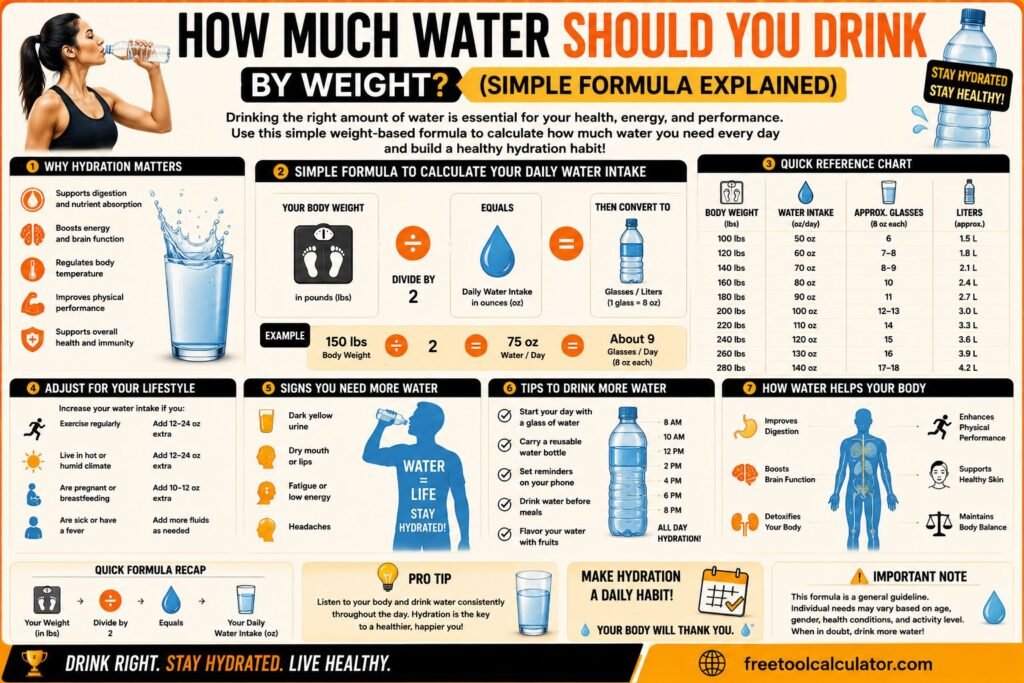
Not drinking enough water is one of the most common yet overlooked health issues worldwide. Many individuals go through their day mildly dehydrated without realizing it because thirst is a late signal rather than an early warning. As a senior health doctor I regularly see patients experiencing fatigue headaches poor digestion and concentration issues that stem directly from inadequate daily water intake. Understanding the signs of dehydration and knowing how much water your body truly needs helps prevent these problems before they affect long term health. Using a personalized daily water intake calculator at https://freetoolcalculator.com/daily-water-intake-calculator/ allows you to estimate your hydration needs accurately instead of guessing.
Why Not Drinking Enough Water Is So Common
Modern lifestyles contribute heavily to chronic low water intake. Busy schedules high caffeine consumption sugary drinks air conditioned environments and sedentary habits all reduce natural thirst awareness. Many people rely on coffee tea or soft drinks instead of water which can worsen dehydration.
Additionally thirst perception declines with age making older adults particularly vulnerable. By the time thirst appears dehydration has often already begun.
Early Signs You Are Not Drinking Enough Water
Mild dehydration produces subtle symptoms that are often mistaken for stress or lack of sleep.
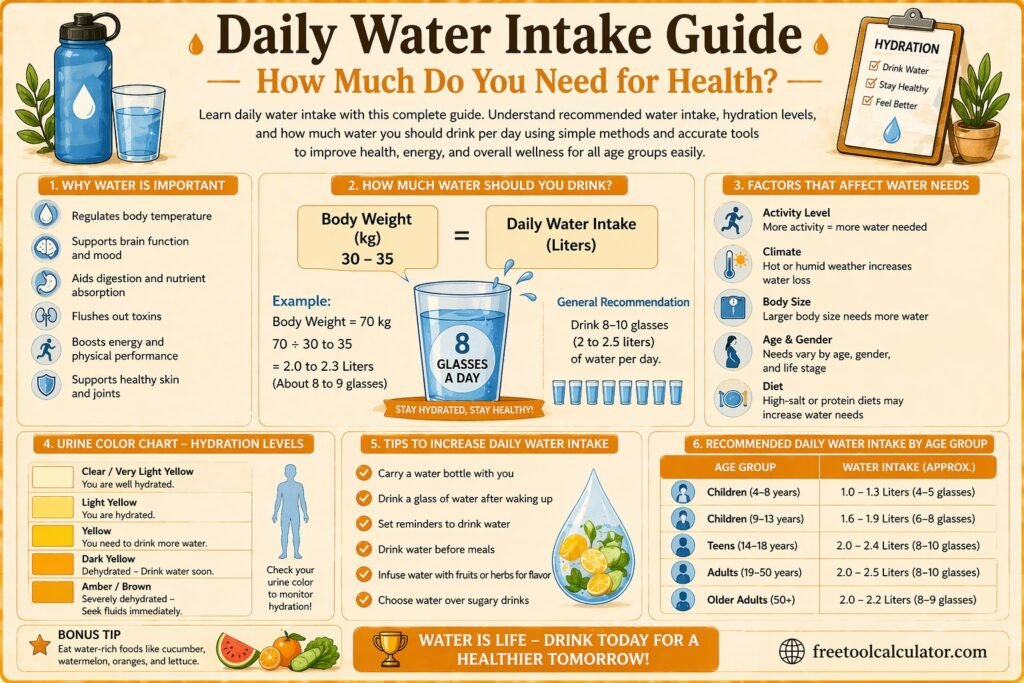
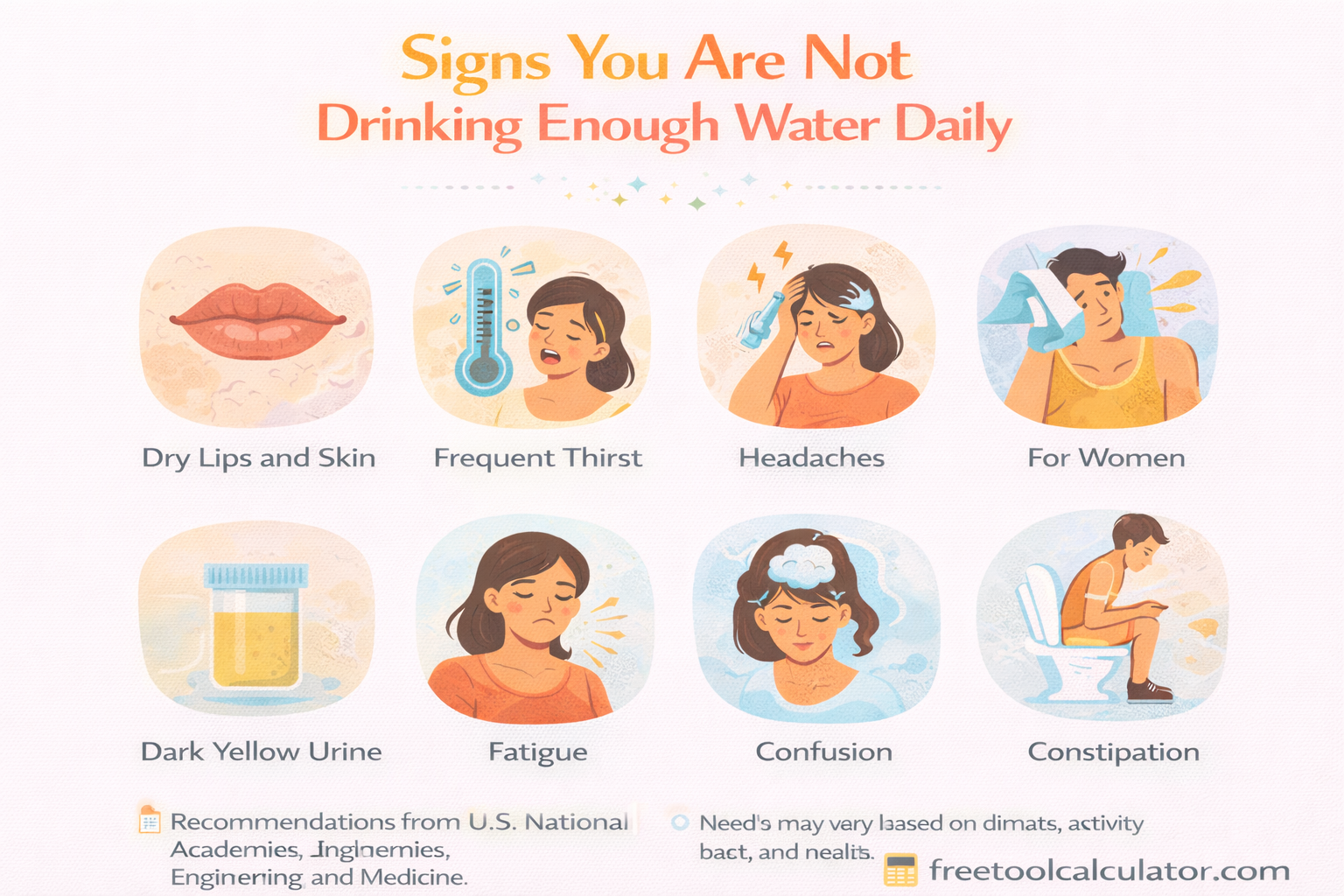
Dark yellow urine is one of the earliest indicators of inadequate water intake. Healthy hydration typically results in pale yellow urine.
Dry mouth lips or throat suggest reduced saliva production which occurs when fluid levels drop.
Fatigue and low energy occur because dehydration reduces blood volume making the heart work harder to deliver oxygen.
Headaches are common due to reduced blood flow and electrolyte imbalance.
Difficulty concentrating and brain fog result from decreased hydration affecting cognitive performance.
Physical Signs of Ongoing Dehydration
When not drinking enough water continues physical symptoms become more noticeable.
Muscle cramps may occur due to electrolyte imbalance and reduced circulation.
Constipation is common because water is needed to soften stool and support digestion.
Dry skin and reduced skin elasticity indicate prolonged dehydration.
Dizziness or lightheadedness may occur when standing due to reduced blood pressure.
Increased heart rate can develop as the body compensates for low fluid volume.
Severe Dehydration Warning Signs
Severe dehydration requires urgent medical attention.
Very dark urine or minimal urination
Confusion or irritability
Rapid breathing or heartbeat
Sunken eyes
Extreme thirst
Fainting
These symptoms indicate significant fluid loss and should not be ignored.
How Much Water Your Body Really Needs
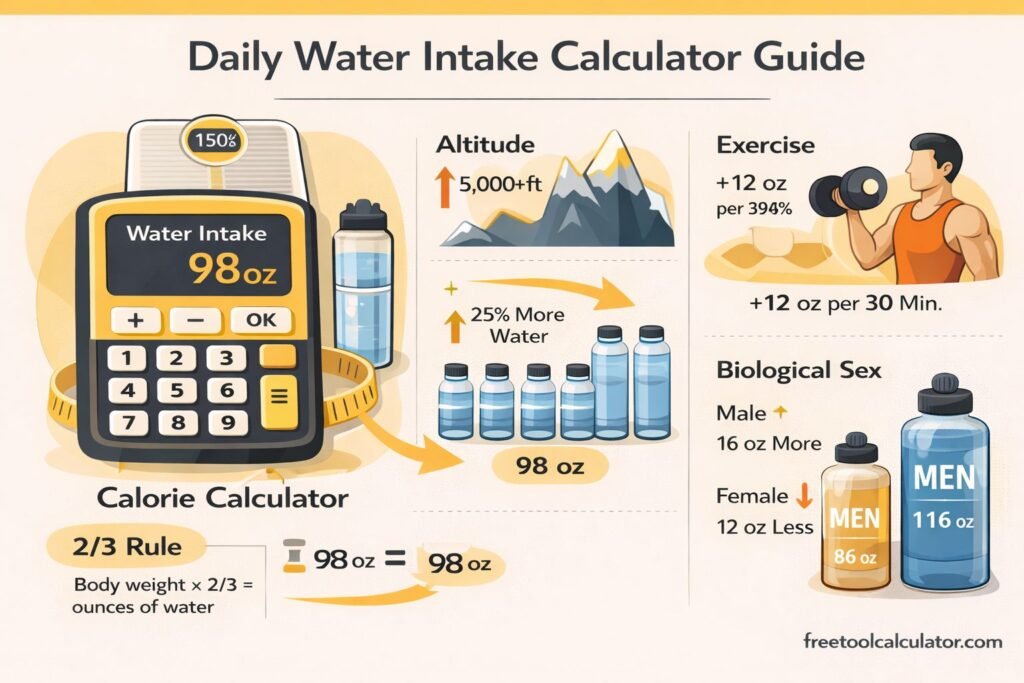
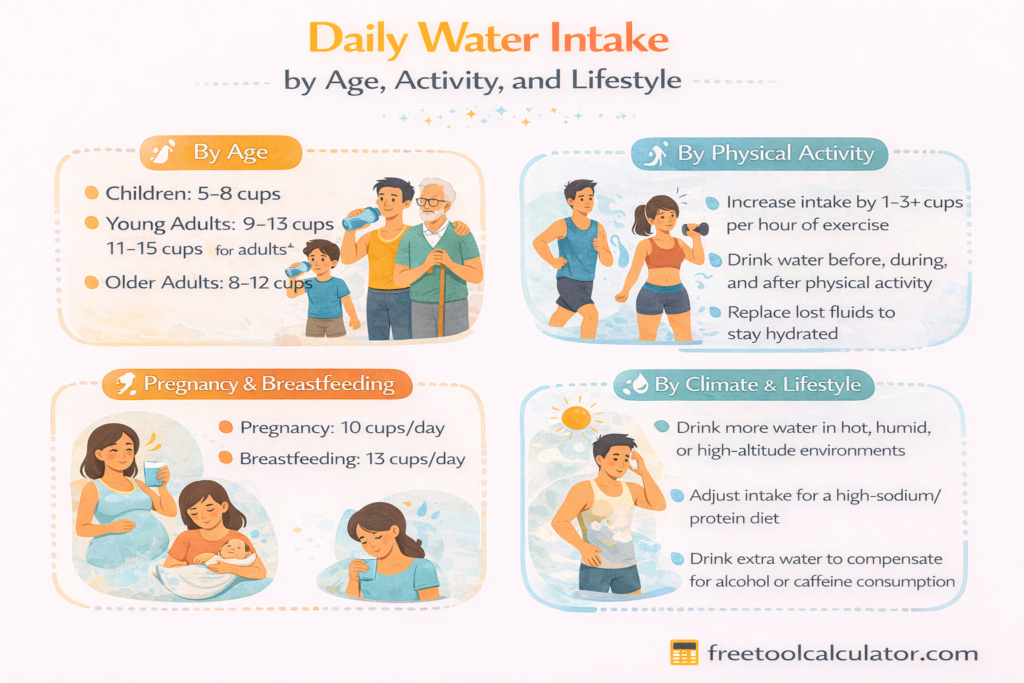
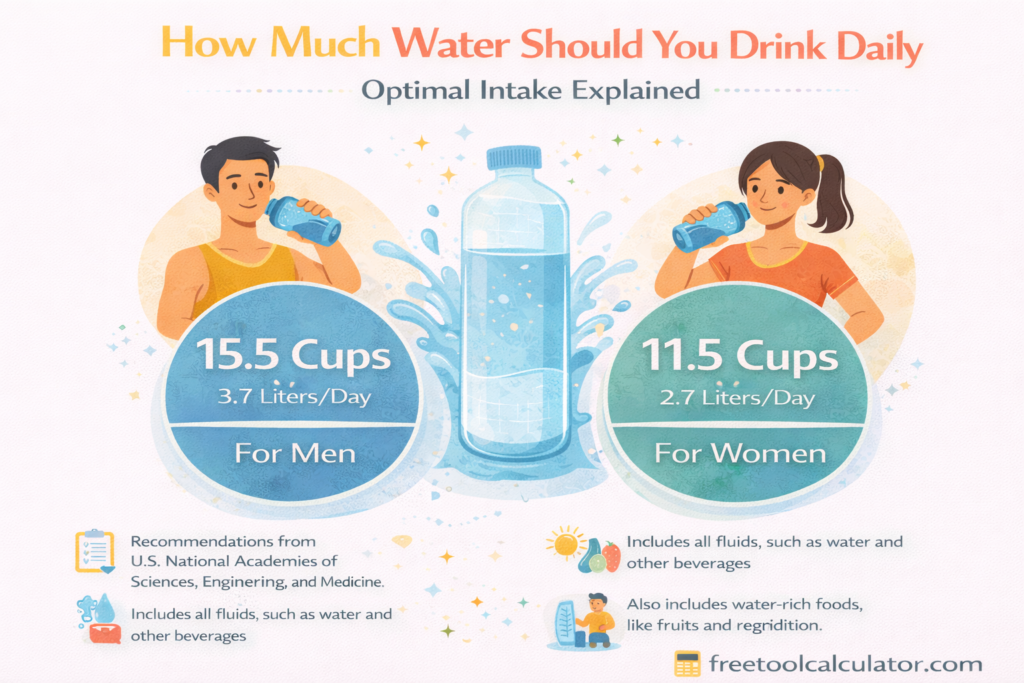
Daily water intake requirements vary significantly between individuals. Body weight activity level climate health status and diet all influence hydration needs.
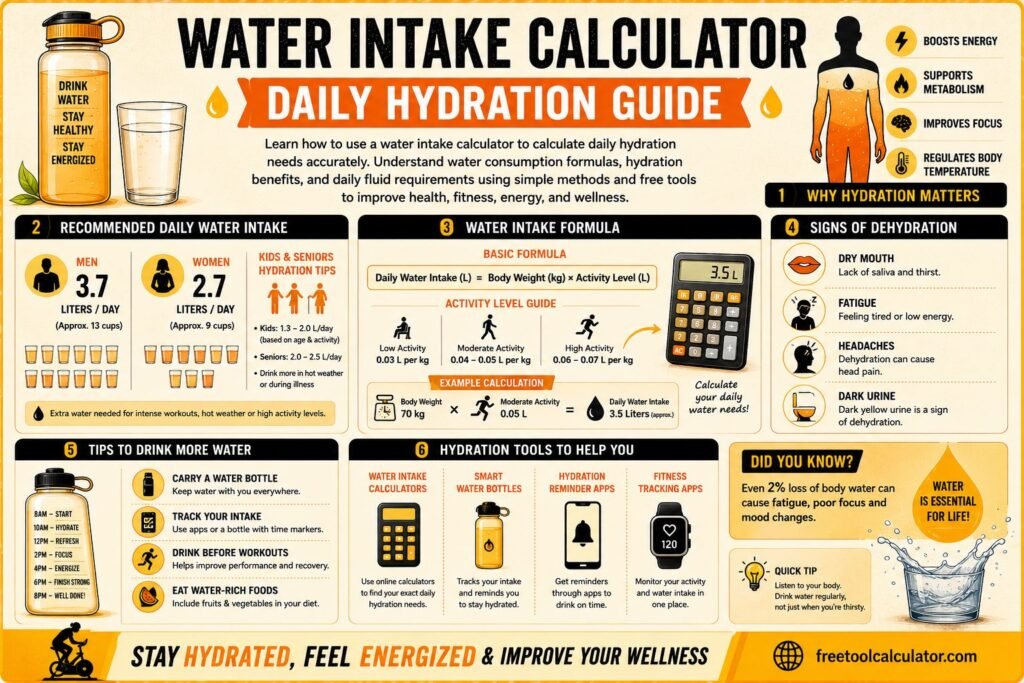
General medical guidance suggests 30 to 35 milliliters of water per kilogram of body weight. This baseline increases with exercise heat exposure pregnancy breastfeeding and illness.
Rather than relying on fixed rules the most accurate approach is using a daily water intake calculator such as https://freetoolcalculator.com/daily-water-intake-calculator/ which accounts for personal factors.
Why Thirst Alone Is Not Reliable
Thirst is a delayed response mechanism. When you feel thirsty your body is already mildly dehydrated. Relying solely on thirst signals leads to chronic underhydration.
Children and older adults have especially unreliable thirst perception which increases dehydration risk.
Scheduled hydration and awareness of intake amounts help prevent dehydration more effectively than waiting for thirst.
Daily Water Intake and Brain Function
The brain is highly sensitive to hydration status. Even mild dehydration can impair attention memory reaction time and mood. Studies show that dehydration negatively affects learning performance and increases perceived task difficulty.
Proper hydration supports neurotransmitter function and cerebral blood flow which are essential for mental clarity.
Hydration and Digestive Health
Water plays a key role in digestion nutrient absorption and waste elimination. Inadequate water intake slows intestinal transit time leading to constipation bloating and discomfort.
Adequate hydration supports stomach acid balance enzyme activity and intestinal movement which are essential for gut health.
Hydration and Kidney Health
The kidneys rely on sufficient water to filter waste products from the blood. Chronic dehydration increases the risk of kidney stones urinary tract infections and impaired kidney function.
Maintaining proper daily water intake helps dilute urine and flush toxins efficiently.
Hydration and Joint Muscle Health
Joint cartilage contains a high percentage of water. Dehydration reduces lubrication leading to stiffness and discomfort. Muscles also require adequate hydration to function properly and prevent cramps.
Proper hydration improves exercise performance and reduces injury risk.
How Diet Affects Hydration
Certain foods contribute to hydration while others increase fluid loss. Fruits and vegetables such as cucumbers oranges strawberries and lettuce provide significant water content.
High sodium processed foods increase water requirements. Alcohol acts as a diuretic increasing dehydration risk. Caffeine in moderation contributes to fluid intake but excessive consumption may increase fluid loss.
Hydration Needs During Exercise
Exercise increases fluid loss through sweat and respiration. Individuals who exercise regularly require additional water beyond baseline needs.
Monitoring sweat rate and body weight changes before and after exercise helps determine fluid replacement needs.
The daily water intake calculator helps adjust hydration targets based on activity level.
How to Improve Daily Water Intake Habits
Carry a reusable water bottle throughout the day
Drink water upon waking
Set reminders during work hours
Drink water before meals
Replace sugary drinks with water or herbal teas
Track intake until habits are established
Small consistent changes produce long term hydration success.
Using a Daily Water Intake Calculator
A daily water intake calculator provides a personalized hydration target based on your body weight lifestyle and activity level. This removes guesswork and prevents both underhydration and excessive intake.
Use https://freetoolcalculator.com/daily-water-intake-calculator/ daily to set realistic hydration goals and track progress.
Can You Drink Too Much Water
While rare excessive water intake can dilute electrolytes leading to a condition called hyponatremia. This typically occurs only in endurance athletes or individuals consuming extremely large volumes in short periods.
Balanced hydration guided by thirst and calculated needs prevents this risk.
When to See a Doctor
Seek medical advice if dehydration symptoms persist despite increased water intake or if you have conditions affecting fluid balance such as kidney disease diabetes or heart failure.
Medical guidance ensures safe hydration strategies tailored to your health needs.
Conclusion
Not drinking enough water affects nearly every system in the body from brain function to digestion and kidney health. Early signs of dehydration are often subtle but long term low intake can lead to significant health consequences. Understanding your personal hydration needs and tracking daily intake helps prevent these issues. A personalized daily water intake calculator such as https://freetoolcalculator.com/daily-water-intake-calculator/ provides an accurate science based hydration target. As a senior health doctor I emphasize that consistent proper hydration is one of the most powerful yet simplest habits for maintaining long term health energy and wellbeing.