Body Fat Percentage Calculator and Overview of Body Composition Assessment
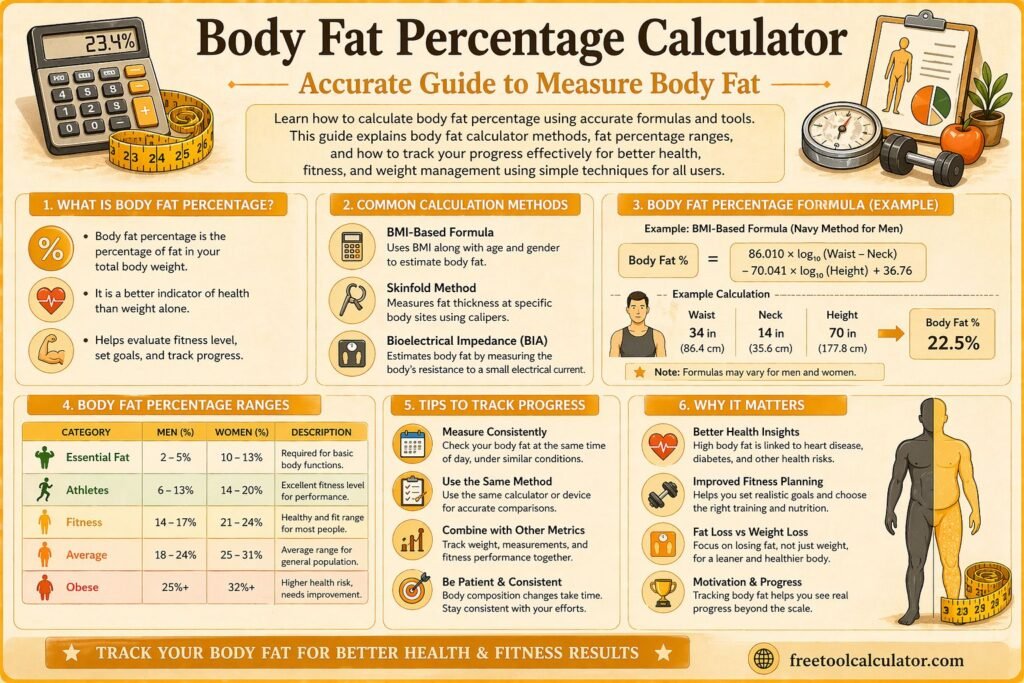
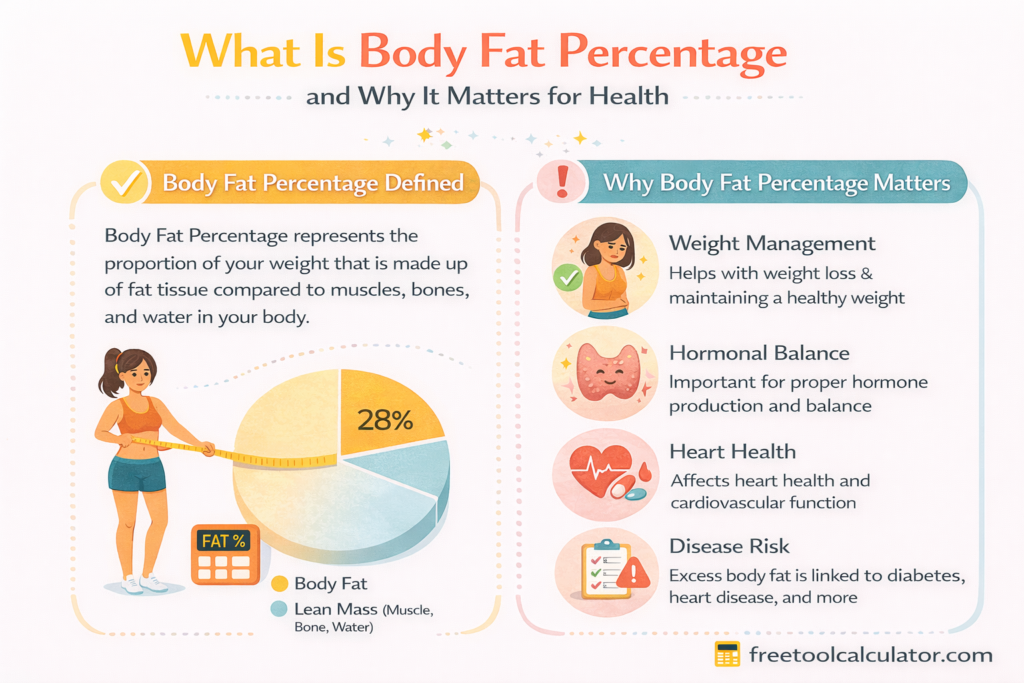
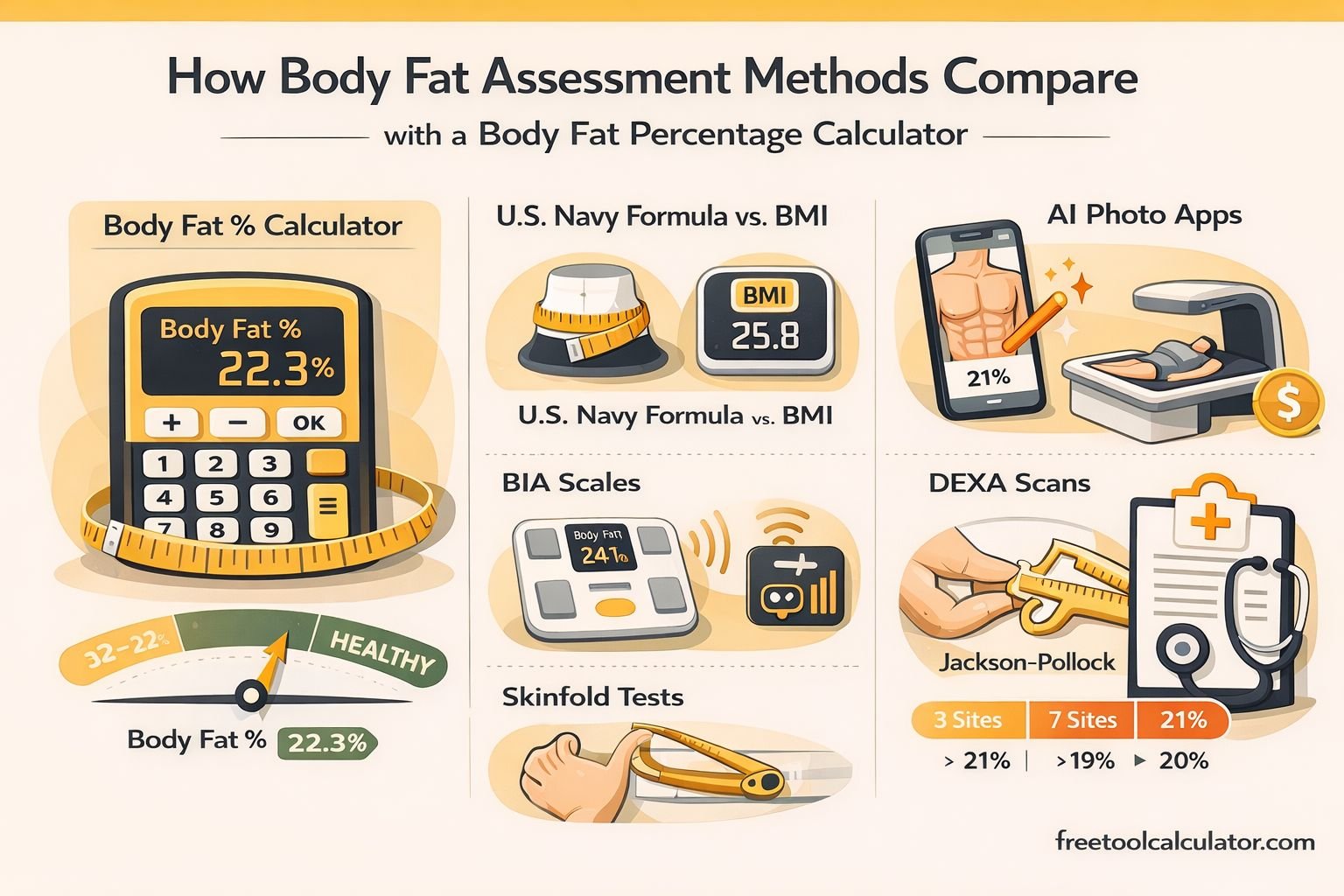
A Body Fat Percentage Calculator is one of the most practical tools for understanding true body composition because it focuses on fat mass rather than body weight alone. In this article, you will learn how the U.S. Navy Body Fat formula differs from BMI, whether AI-powered photo body fat apps in 2026 are more accurate than skinfold calipers, how bioelectrical impedance scales distinguish muscle mass from water weight, whether a DEXA scan is worth the cost compared to a free online calculator, and why the Jackson Pollock 3-site and 7-site methods produce different results.
Understanding these differences allows you to choose the most appropriate method for your health goals, whether you are managing weight, improving athletic performance, or monitoring long-term metabolic health.
How the U.S. Navy Body Fat Formula Differs from the BMI Method
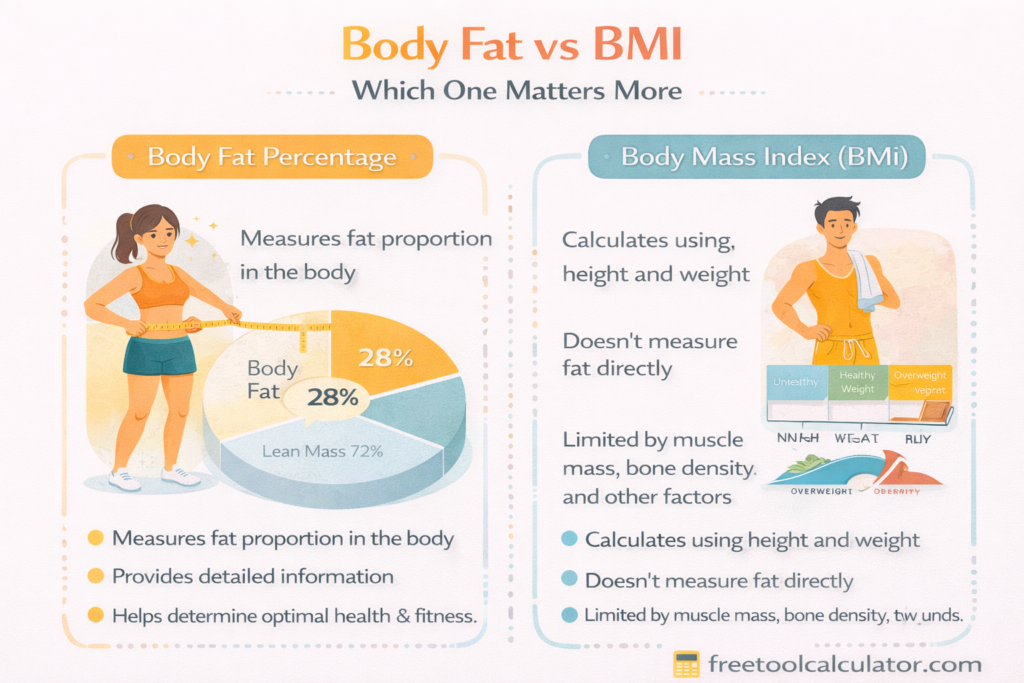
BMI and the U.S. Navy Body Fat formula are both used to assess health risk, but they work on completely different principles.
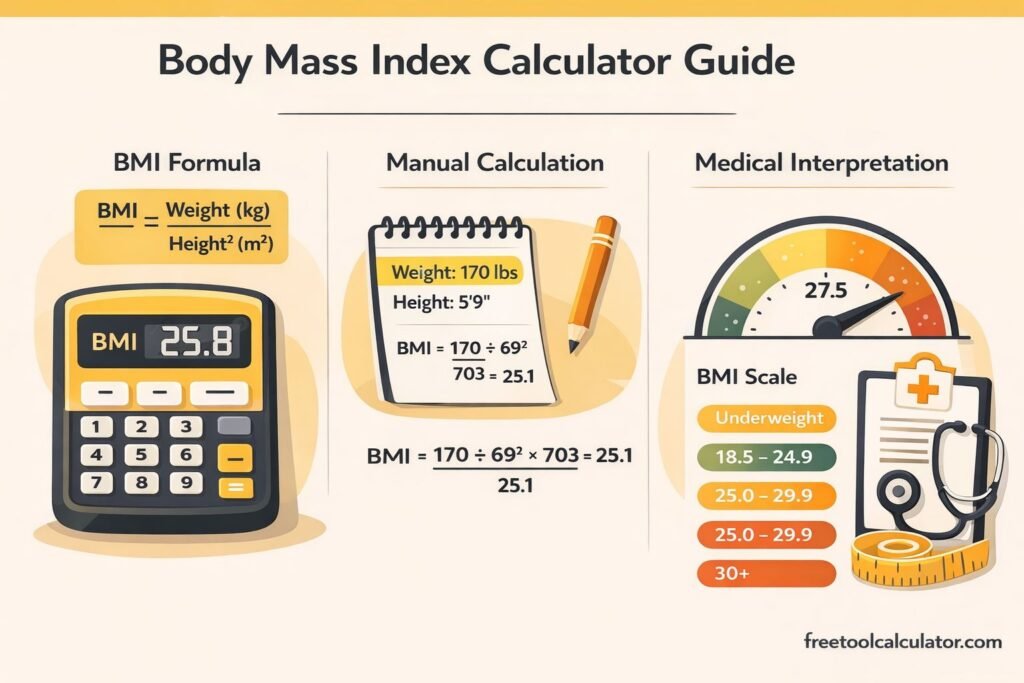
How BMI Works
BMI is calculated using only height and weight. It is useful for population screening but cannot differentiate between muscle and fat. A muscular individual and someone with high body fat may have the same BMI value, even though their health risks are very different.
How the U.S. Navy Body Fat Formula Works
The U.S. Navy method estimates body fat percentage using body circumferences.
For men: neck and waist measurements are used.
For women: neck, waist, and hip measurements are included.
Because this method directly evaluates body shape and fat distribution, it correlates more closely with actual fat percentage than BMI. A Body Fat Percentage Calculator that uses similar anthropometric principles gives a more realistic view of health risk than BMI alone.
Are AI-Powered Photo Body Fat Apps in 2026 More Accurate Than Skinfold Calipers
AI-powered apps estimate body fat by analyzing photos and comparing body shape patterns to large training datasets.
Strengths of AI Body Fat Apps
They are fast, convenient, and require no physical tools. In 2026, these apps are far more advanced than earlier versions and can provide reasonable estimates for the general population.
Limitations Compared to Skinfold Calipers
AI apps infer fat from appearance rather than measuring tissue directly. Lighting, posture, clothing, and camera angles affect accuracy. They remain less reliable than properly performed caliper measurements.
Why Calipers Are Still More Accurate
Skinfold calipers physically measure subcutaneous fat thickness. When performed by trained professionals, they produce more consistent and scientifically validated results than AI photo analysis. For everyday use, combining calipers or AI apps with a Body Fat Percentage Calculator improves confidence in estimates.
How Bioelectrical Impedance Analysis BIA Scales Distinguish Muscle from Water Weight
BIA scales pass a weak electrical current through the body. Muscle contains more water and electrolytes than fat, so it conducts electricity better.
Principle Behind BIA Technology
Low resistance indicates higher lean mass and hydration.
High resistance suggests higher fat content.
Why Hydration Affects Results
Dehydration increases resistance and makes fat percentage appear higher. Overhydration lowers resistance and may reduce estimated fat. This is why BIA results fluctuate daily.
Because of this variability, BIA should be considered an approximation. A Body Fat Percentage Calculator provides a stable, hydration-independent estimation method based on body measurements.
Is a DEXA Scan Worth the Cost Compared to a Free Online Calculator
DEXA scanning is the gold standard for body composition measurement.
Advantages of DEXA
It provides precise measurements of fat mass, lean mass, and bone density.
It can identify visceral fat distribution.
It is highly accurate and reproducible.
Limitations of DEXA
It is expensive.
It requires medical-grade equipment.
It is not easily accessible to the general public.
For athletes, medical patients, and research subjects, DEXA is valuable. For routine health monitoring, a Body Fat Percentage Calculator offers a free, safe, and sufficiently accurate alternative.
Why You Get Different Results Using Jackson Pollock 3-Site vs 7-Site Caliper Methods
Both methods estimate body fat using skinfold thickness, but they differ in sampling locations.
Jackson Pollock 3-Site Method
Uses fewer measurement points.
Faster and easier.
Slightly less accurate because it samples limited areas.
Jackson Pollock 7-Site Method
Uses more body locations.
Provides a more representative average of fat distribution.
Generally more accurate when performed correctly.
Reason for Result Differences
Fat is not distributed evenly across the body. The 7-site method reduces bias by averaging more regions. Differences are normal and expected.
Why a Body Fat Percentage Calculator Is Still Essential
A Body Fat Percentage Calculator provides an ideal balance of accessibility, safety, and scientific accuracy. It allows users to estimate fat percentage instantly without cost, radiation exposure, or specialized equipment.
It is especially valuable for:
Tracking progress over time
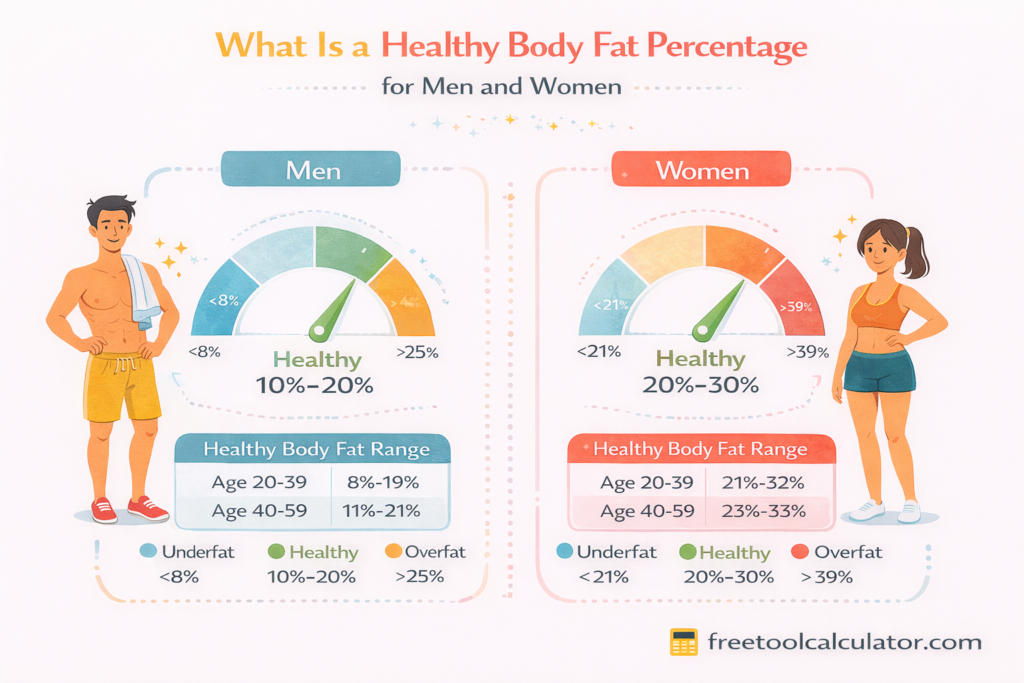
Identifying unhealthy fat levels
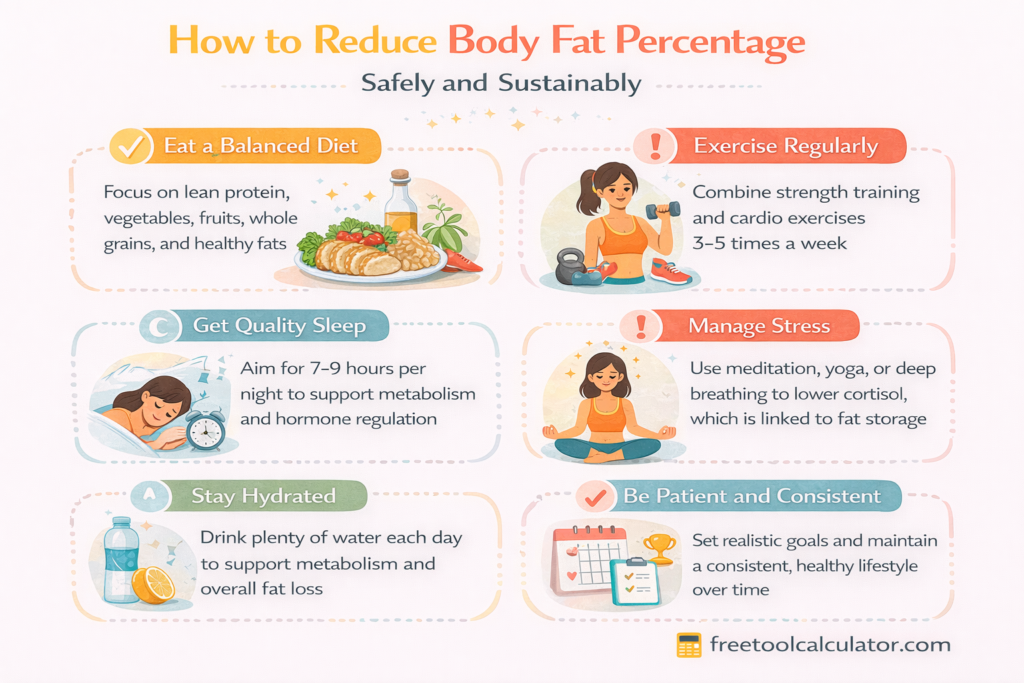
Supporting weight management
Enhancing fitness planning
Final Medical Conclusion
No single body fat assessment method is perfect. BMI is simple but indirect. The U.S. Navy formula is more anatomically precise. AI apps are improving but remain inferential. BIA scales depend heavily on hydration. DEXA offers maximum accuracy at high cost. Caliper methods vary based on site selection and technique.
For most people, combining reliable measurements with a Body Fat Percentage Calculator offers the best balance between accuracy, convenience, and accessibility. It remains one of the most effective free tools for understanding body composition and guiding long-term health decisions.