What Does a Semen Analysis Test Actually Involve?
A semen analysis test is a laboratory examination used to assess sperm and the fluid that carries them. It is one of the first and most important tests used when investigating male fertility, a low sperm count or difficulty achieving pregnancy.
The test may sound uncomfortable or intimidating, but the process is usually straightforward. A man provides a semen sample, normally through masturbation into a sterile container. The laboratory then examines the sample to measure semen volume, sperm concentration, total sperm count, sperm movement and sperm shape.
A semen analysis does not directly declare that someone is fertile or infertile. It provides important information about sperm health and helps a fertility specialist determine whether a male factor may be contributing to difficulty conceiving. The results must be interpreted together with medical history, physical examination, the fertility of the other partner and sometimes additional tests.
The World Health Organization publishes standardized laboratory procedures for examining and processing human semen. These standards are intended to improve the quality and consistency of semen testing between laboratories.
This guide explains what a semen analysis test involves, how to prepare, how the sample is collected, what the laboratory measures, what the results may mean and what happens when an abnormal result is found.
What Is a Semen Analysis?
A semen analysis is a microscopic and laboratory examination of freshly collected semen. Semen is the fluid released through the penis during ejaculation. It contains sperm produced by the testicles as well as fluids produced by the prostate, seminal vesicles and other reproductive glands.
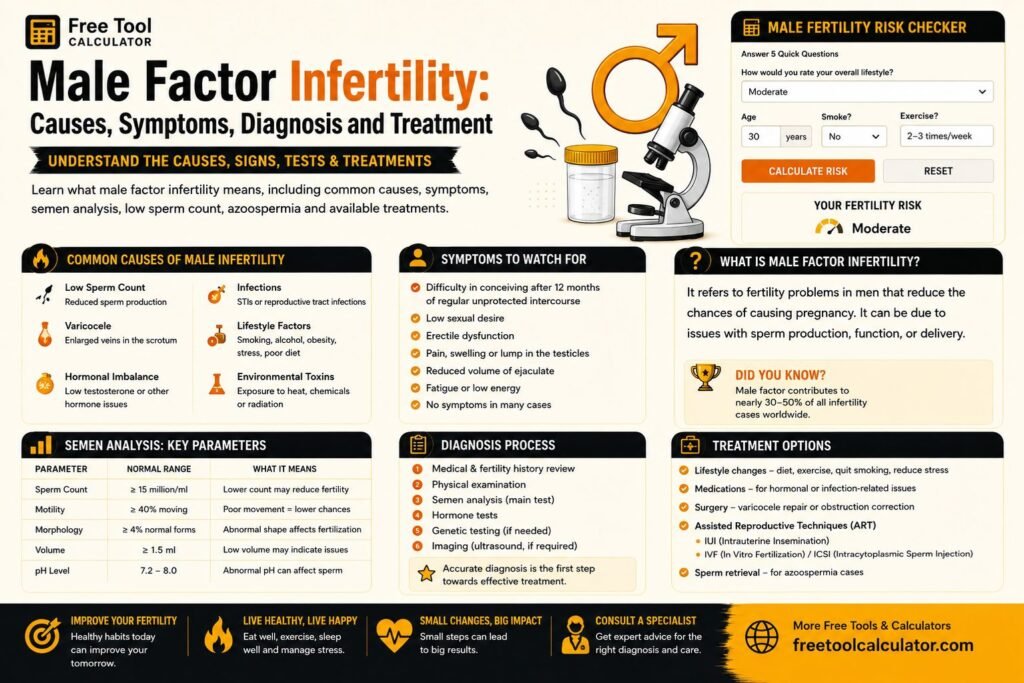
The purpose of a fertility semen analysis is to evaluate several characteristics that may affect the ability of sperm to reach and fertilize an egg. The test commonly examines sperm concentration, total sperm number, motility and morphology.
The laboratory may also assess semen volume, acidity, liquefaction, thickness, sperm vitality and the presence of cells that could indicate inflammation or another problem.
Some people use the terms semen analysis, sperm analysis, sperm count test and male fertility test interchangeably. However, sperm count is only one part of a complete semen analysis. A sample can contain a normal number of sperm while showing problems with movement, shape or another parameter.
Why Is a Semen Analysis Test Performed?
A doctor may recommend semen analysis for several reasons. The most common reason is to investigate why a couple has not achieved pregnancy after regular unprotected sexual intercourse.
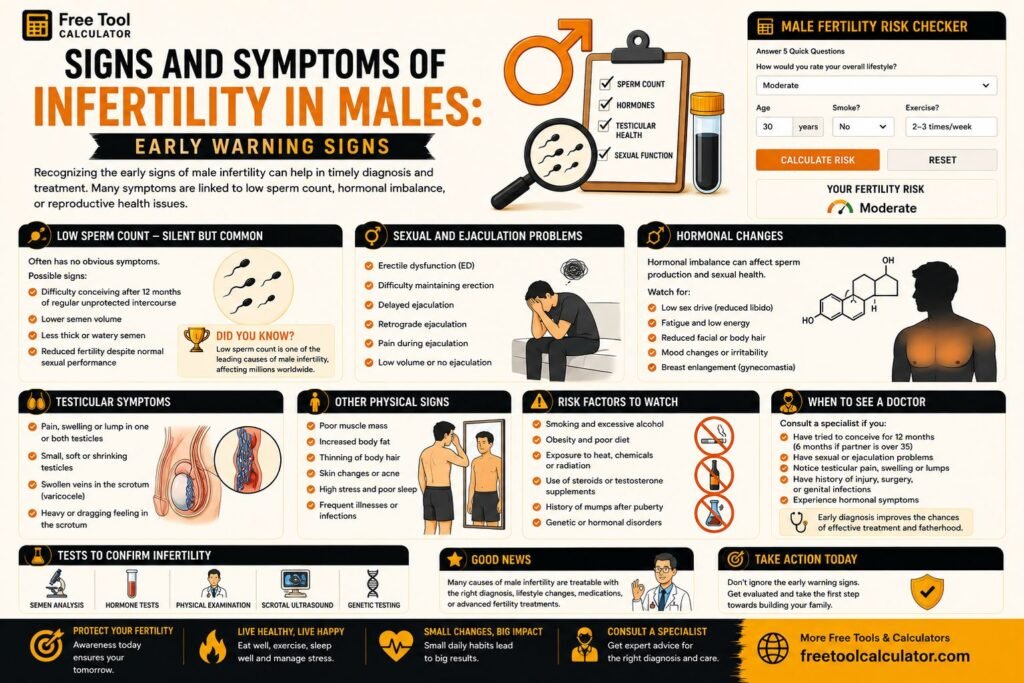
Infertility is generally evaluated after 12 months of trying to conceive. Earlier testing may be appropriate when the female partner is 35 or older or when either partner has a known fertility risk.
A semen analysis may also be requested when a man has a history of testicular injury, undescended testicles, reproductive surgery, chemotherapy, radiotherapy, hormone treatment or anabolic steroid use.
Other reasons for performing the test include:
- Investigating a possible low sperm count
- Checking sperm movement or morphology
- Evaluating male factor infertility
- Confirming whether sperm are present after vasectomy reversal
- Checking whether a vasectomy was successful
- Planning intrauterine insemination, IVF or ICSI
- Assessing fertility before or after medical treatment
- Investigating ejaculation or reproductive tract problems
A diagnostic fertility semen analysis is different from a post-vasectomy semen test. A fertility test evaluates several semen and sperm characteristics. A post-vasectomy test mainly checks whether sperm remain in the ejaculate after the procedure.
What Happens During a Semen Analysis Test?
The exact process can differ slightly between clinics, but most semen analysis appointments follow several basic steps.
Booking the Test
A doctor, fertility clinic or reproductive specialist may refer the patient to an andrology laboratory. Some laboratories require a scheduled appointment because semen must be examined within a particular time after collection.
The clinic should provide instructions explaining how long to avoid ejaculation, where to produce the sample, which container to use and how quickly a sample collected at home must be delivered.
Preparing Before the Appointment
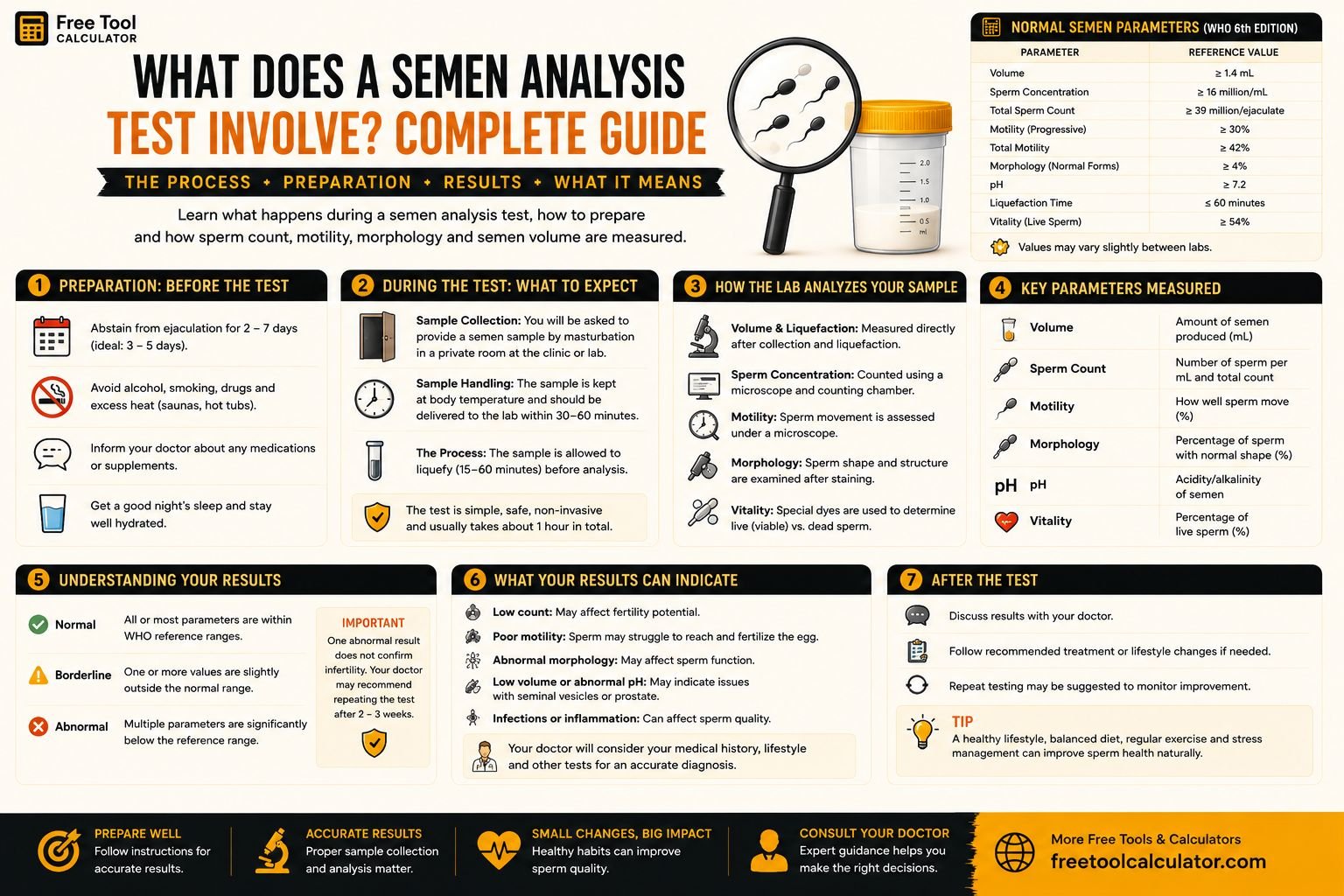
The patient is normally asked to avoid ejaculation for a specified period before producing the sample. Many laboratories request between two and seven days of abstinence, although the exact instructions should come from the testing center.
Abstinence means avoiding both sexual intercourse that results in ejaculation and masturbation. The period matters because ejaculating too recently may reduce the semen volume or sperm concentration, while a very long period may affect sperm movement or other results.
Providing the Sample
The most common collection method is masturbation into a sterile, laboratory-approved container. Clinics usually provide a private room near the laboratory so that the sample can be transferred for testing without unnecessary delay.
The patient should collect the entire ejaculate directly into the container without touching the inside of the container or lid. No ordinary lubricant, saliva or standard condom should be used unless the laboratory has specifically approved it.
Giving the Sample to the Laboratory
After collection, the container is closed securely and labelled according to the clinic’s procedure. The patient may be asked to record the collection time, the number of abstinence days and whether any part of the sample was missed.
The sample is then given to laboratory staff. The laboratory begins examining it after the semen has liquefied.
Laboratory Examination
Laboratory professionals inspect the semen and examine sperm under a microscope or with validated laboratory equipment. They assess the amount of semen, the number of sperm, how the sperm move and how many have a typical structure.
The WHO laboratory manual provides standardized procedures to help laboratories produce reliable and comparable semen analysis results.
How Should You Prepare for a Semen Analysis?
Correct preparation improves the reliability of the results. Patients should follow the instructions from their own clinic because requirements may vary.
Avoid Ejaculation for the Recommended Period
Many laboratories recommend avoiding ejaculation for two to seven days. A patient should not deliberately extend or shorten this period unless advised by the clinic.
The number of abstinence days should be reported because it can influence semen volume, sperm concentration and motility.
Tell the Clinic About Recent Fever or Illness
A high fever or significant illness can temporarily affect sperm production and semen quality. Because sperm take several weeks to develop, the effect may remain visible after the illness has ended.
Tell the clinician if you recently had a fever, infection or serious medical condition. The doctor may recommend proceeding with the test and repeating it later or postponing the test, depending on the situation.
Report Medications and Supplements
Inform the fertility specialist about prescription medicines, over-the-counter products, herbal supplements, testosterone therapy and anabolic steroid use.
Do not stop medication independently. Some medicines are medically necessary, and sudden discontinuation may be dangerous. A clinician can determine whether a drug may affect the result or whether an alternative is appropriate.
Avoid Ordinary Lubricants
Many lubricants can interfere with sperm movement or contaminate the sample. Saliva should also be avoided.
When lubrication is medically necessary, ask the laboratory whether it can provide a sperm-safe product. Do not assume that a product marketed as fertility-friendly is accepted by every laboratory.
Use the Correct Container
The sample should be collected in the sterile, non-toxic container supplied or approved by the laboratory. Household jars, ordinary plastic containers and unapproved specimen cups may contain residues that affect sperm. A fresh, complete ejaculate in a toxicity-tested container is commonly required.
Follow Hygiene Instructions
The clinic may ask the patient to wash and dry the hands and penis before collection. Soap, water or cleaning products should not be allowed to enter the specimen container.
How Is the Semen Sample Collected?
Masturbation into a sterile container is the standard collection method because it makes it easier to collect the entire sample without substances that could harm sperm.
The process takes place in a private room at many fertility centers. The room may contain a chair, sink and other basic facilities. Clinic policies regarding a partner entering the room vary.
The patient should open the container immediately before collection and avoid touching its inner surface. The entire ejaculate should go into the container, particularly the first portion, which may contain a high concentration of sperm.
If part of the sample is spilled or missed, the patient should not hide the problem. Laboratory staff need to know because an incomplete sample may produce a falsely low semen volume or sperm count.
The laboratory may still analyze the specimen, but the clinician may recommend repeating the test when the missing portion could materially affect interpretation.
Can You Collect a Semen Sample at Home?
Some clinics allow home collection, while others require the sample to be produced on site. The patient should confirm the laboratory’s policy before the appointment.
When home collection is permitted, the sample must normally be placed in the approved container and delivered within the time specified by the laboratory. It should be protected from extreme heat and cold during transport.
The clinic may ask the patient to keep the container close to body temperature. However, it should not be placed directly on a heater, immersed in hot water or exposed to sunlight.
The exact collection time should be recorded. Delayed delivery can reduce sperm movement and make the result less representative of the original sample.
Home collection may feel more private or comfortable, but it introduces risks involving transport time and temperature. On-site collection is often preferred when the patient lives far from the laboratory.
What If You Cannot Produce a Sample Through Masturbation?
Some men find it difficult to produce a sample at the clinic because of anxiety, religious beliefs, physical limitations, medication effects or ejaculation problems. This is not unusual, and the patient should discuss the issue with the clinic rather than feeling embarrassed.
Depending on the circumstances, the laboratory may allow collection at home. A specialist collection condom may sometimes be used during intercourse. It must be designed for semen testing because ordinary condoms may contain sperm-killing substances or lubricants that affect the sample.
Withdrawal during intercourse and ejaculation into a container may result in an incomplete sample and is generally less reliable unless specifically approved by the clinic.
When a man cannot ejaculate, the specialist may investigate medication effects, nerve damage, diabetes, previous surgery or another medical condition. Assisted ejaculation techniques or surgical sperm retrieval may be considered in selected cases.
What Does a Semen Analysis Measure?
A complete semen analysis evaluates multiple characteristics. No single number provides a complete fertility diagnosis.
Semen Volume
Semen volume is the amount of fluid released during ejaculation. It is usually measured in milliliters.
Low semen volume may result from incomplete collection, a short abstinence period, retrograde ejaculation, hormone problems or blockage of the ejaculatory ducts. A high volume does not automatically indicate better fertility because sperm concentration and total sperm number must also be considered.
Sperm Concentration
Sperm concentration refers to the number of sperm in each milliliter of semen. This is often what people mean when they use the phrase sperm count.
A lower concentration may reduce the probability that enough sperm will reach the egg, but it does not mean natural pregnancy is impossible.
Total Sperm Count
Total sperm count estimates the number of sperm in the complete ejaculate. It is calculated using semen volume and sperm concentration.
This measurement can provide useful information because two samples may have the same concentration but different total sperm numbers due to differences in semen volume.
Sperm Motility
Motility describes how sperm move. Laboratory professionals assess the percentage of sperm that are moving and may distinguish sperm moving progressively forward from sperm moving without useful progression.
Progressive movement is important because sperm must travel through the female reproductive tract to reach the egg.
Sperm Morphology
Morphology refers to sperm size, shape and structure. The laboratory examines stained sperm under a microscope and reports the percentage meeting strict appearance criteria.
A sperm cell is assessed according to features involving its head, middle section and tail. Morphology is only one part of fertility assessment and should not be interpreted alone.
Sperm Vitality
Vitality refers to the percentage of sperm that are alive. It may be especially useful when many sperm are not moving because an immotile sperm can be either alive or dead.
Liquefaction
Semen is often thick or gel-like immediately after ejaculation. It should gradually become more liquid. The laboratory records whether liquefaction occurs appropriately.
Delayed or incomplete liquefaction may make laboratory assessment more difficult and may sometimes be associated with reproductive gland problems.
Viscosity
Viscosity describes semen thickness after liquefaction. Highly viscous semen may interfere with sperm movement or laboratory processing, although it does not provide a fertility diagnosis by itself.
Acidity or pH
The pH indicates how acidic or alkaline the semen is. An unusual result may provide clues about infection, obstruction or abnormal reproductive gland function.
White Blood Cells and Other Cells
The laboratory may look for white blood cells, immature germ cells or other round cells. An elevated number of white blood cells may suggest inflammation or infection, although additional testing is needed to confirm the cause.
Agglutination
Agglutination means sperm are sticking to one another in a particular pattern. It may prompt consideration of inflammation, infection or antisperm antibodies, depending on the clinical situation.
Does a Semen Analysis Hurt?
No. Producing a semen sample is not physically painful for most men. The test does not normally involve needles, surgery or instruments entering the body.
Some people experience embarrassment, pressure or difficulty ejaculating in a clinical setting. These reactions are understandable. Laboratory staff perform this test routinely and should handle the process professionally and confidentially.
A patient who experiences pain during masturbation or ejaculation should tell the clinician because painful ejaculation may require separate medical evaluation.
How Long Does a Semen Analysis Take?
Producing the specimen may take only a few minutes, but there is usually no need to rush. After collection, the laboratory allows the semen to liquefy and then performs the required measurements.
The technical analysis may begin shortly after collection, but the final report may not be available immediately. Depending on the clinic, workload and tests performed, results may be provided within several days or approximately one week.
The clinic should explain how the patient will receive the results and whether a doctor will arrange a follow-up consultation.
How Are Semen Analysis Results Interpreted?
Semen analysis results are compared with laboratory reference values and interpreted alongside the patient’s circumstances. Reference limits are not absolute boundaries separating fertile men from infertile men.
A result below a reference value does not prove that pregnancy is impossible. Similarly, results within reference ranges do not guarantee pregnancy.
Fertility depends on several interacting factors, including sperm function, timing of intercourse, ovulation, fallopian tube health, egg quality and the ages of both partners.
The WHO manual emphasizes standardized laboratory procedures, but interpretation still requires clinical judgment.
A clinician will usually consider the complete pattern. For example, a mildly reduced sperm concentration may be less concerning when semen volume and motility are strong. Multiple severely abnormal measurements may justify more detailed investigation.
Common Terms on a Semen Analysis Report
Normozoospermia
Normozoospermia generally means that the major semen measurements are within the laboratory’s reference ranges. It does not guarantee fertility, but it makes a major sperm abnormality less likely.
Oligozoospermia
Oligozoospermia means that sperm concentration is lower than the reference range.
Azoospermia
Azoospermia means that no sperm are identified in the ejaculate. The result normally requires confirmation and further assessment to determine whether the cause is a blockage or impaired sperm production.
Asthenozoospermia
Asthenozoospermia refers to reduced sperm motility.
Teratozoospermia
Teratozoospermia refers to a lower proportion of sperm meeting strict morphology criteria.
Oligoasthenoteratozoospermia
This term describes a combination of low sperm concentration, reduced movement and abnormal morphology.
Necrozoospermia
Necrozoospermia refers to a high proportion of dead sperm in the sample. Vitality testing helps distinguish dead sperm from living sperm that are not moving.
Hypospermia
Hypospermia refers to low semen volume. It should not be confused with a low sperm concentration.
What Does an Abnormal Semen Analysis Mean?
An abnormal result means that one or more measurements fall outside the laboratory’s expected reference range. It does not automatically mean the patient is permanently infertile.
Semen quality changes naturally. Temporary abnormalities may occur after fever, infection, stress, incomplete sample collection or exposure to certain medicines or hormones.
Potential medical causes include varicocele, hormone disorders, reproductive tract obstruction, genetic conditions, testicular injury, undescended testicles, infection, cancer treatment or external testosterone use.
A low result should be discussed with a qualified clinician rather than interpreted from one number on an online chart.
The next step may be repeat analysis, a medical history, physical examination, hormone testing, ultrasound or genetic evaluation, depending on the severity and pattern.
Why Might the Test Need to Be Repeated?
Semen parameters can vary considerably between ejaculates. One sample may not reflect a man’s usual sperm production.
The NHS states that when an initial semen analysis identifies a possible problem, another test is commonly arranged, often around three months later.
The timing may vary. A specialist may recommend an earlier repeat when the first sample was incomplete, collection instructions were not followed or the laboratory needs to confirm that no sperm are present.
A longer interval may be selected after fever, medication changes, surgery or treatment because sperm development takes several weeks.
Repeat testing helps determine whether an abnormality is persistent or temporary.
What Can Affect Semen Analysis Results?
Several medical, lifestyle and collection factors can influence the report.
Incomplete Collection
Missing part of the ejaculate can reduce measured volume and total sperm count, especially when the first portion is lost.
Incorrect Abstinence Period
Too little or too much time since the previous ejaculation may influence sperm concentration, semen volume and motility.
Delayed Delivery
When a home-collected sample reaches the laboratory late, sperm movement may decline.
Temperature Exposure
Excessive heat or cold during transport may affect sperm and the reliability of the analysis.
Recent Fever
A high fever may temporarily reduce sperm production or quality.
Testosterone and Anabolic Steroids
External testosterone and anabolic steroids can suppress the hormonal signals required for sperm production. In some men, the sperm count can become extremely low or reach zero.
Medication and Recreational Drugs
Some prescription medicines and recreational drugs may influence reproductive hormones, ejaculation or sperm production.
Laboratory Variation
Semen analysis involves careful laboratory observation. Standardized methods and quality control are important for reducing variation between laboratories.
Can a Semen Analysis Diagnose Infertility?
A semen analysis can identify sperm abnormalities that may contribute to infertility, but it cannot independently diagnose every fertility problem or predict pregnancy with certainty.
A man with an abnormal result may still achieve natural pregnancy. A man with apparently normal results may still have difficulty conceiving because the test cannot measure every aspect of sperm function.
Results should be evaluated as part of the couple’s complete fertility assessment. Testing both partners at the same time can prevent delays and identify combined factors.
The NHS describes semen analysis as a test used to look for problems such as a low sperm count or sperm that do not move properly.
What Tests May Be Recommended After Semen Analysis?
Additional testing depends on the result, symptoms and medical history.
Repeat Semen Analysis
A second sample may confirm whether an abnormality is persistent.
Hormone Blood Tests
Blood tests may measure testosterone, follicle-stimulating hormone, luteinizing hormone and prolactin. These hormones help regulate sperm production and sexual function.
Physical Examination
A reproductive urologist may examine testicular size, reproductive ducts and the scrotum. The examination may identify a varicocele, missing vas deferens or another structural concern.
Scrotal Ultrasound
Ultrasound may be used when a testicular mass, structural abnormality or another specific problem is suspected.
Genetic Testing
Genetic tests may be recommended when the sperm concentration is severely reduced or no sperm are found. Testing may include chromosome analysis or Y chromosome microdeletion testing.
Post-Ejaculation Urine Test
If a man produces little or no semen, urine collected after orgasm may be examined for sperm. The presence of sperm in the urine may suggest retrograde ejaculation.
Sperm DNA Fragmentation Testing
Sperm DNA fragmentation testing may be considered in selected situations. It is not necessarily part of the routine first semen analysis and should be ordered when the result could influence management.
Antisperm Antibody Testing
This specialist test may be used in limited circumstances, particularly when sperm agglutination or a relevant history raises suspicion.
What Happens If No Sperm Are Found?
When no sperm are seen, the condition is called azoospermia. The laboratory may examine a concentrated portion of the sample to confirm the finding.
The test is usually repeated because an incomplete collection or laboratory issue must be excluded.
If azoospermia is confirmed, the doctor will investigate whether sperm are being produced but blocked or whether production inside the testicles is severely reduced.
Possible causes include obstruction, vasectomy, congenital absence of the vas deferens, hormone deficiency, genetic conditions, testicular damage and testosterone or anabolic steroid exposure.
Treatment depends on the cause. Options may include hormone therapy, microsurgical reconstruction or surgical sperm retrieval for use with IVF and ICSI.
Supplements should not be relied upon to treat azoospermia without a specialist diagnosis.
Can You Improve the Result Before a Repeat Test?
The most important step is identifying and addressing the underlying cause rather than attempting to manipulate the test result.
A clinician may recommend stopping smoking, avoiding anabolic steroids, limiting excessive alcohol, managing body weight and reducing harmful occupational exposure.
External testosterone should not be stopped without medical advice, but the prescribing clinician should be informed when fertility is desired.
A balanced diet, regular physical activity, appropriate sleep and management of chronic medical conditions support general reproductive health.
Changes in sperm production are not immediate. It may take several weeks or months before an intervention is reflected in a new semen analysis.
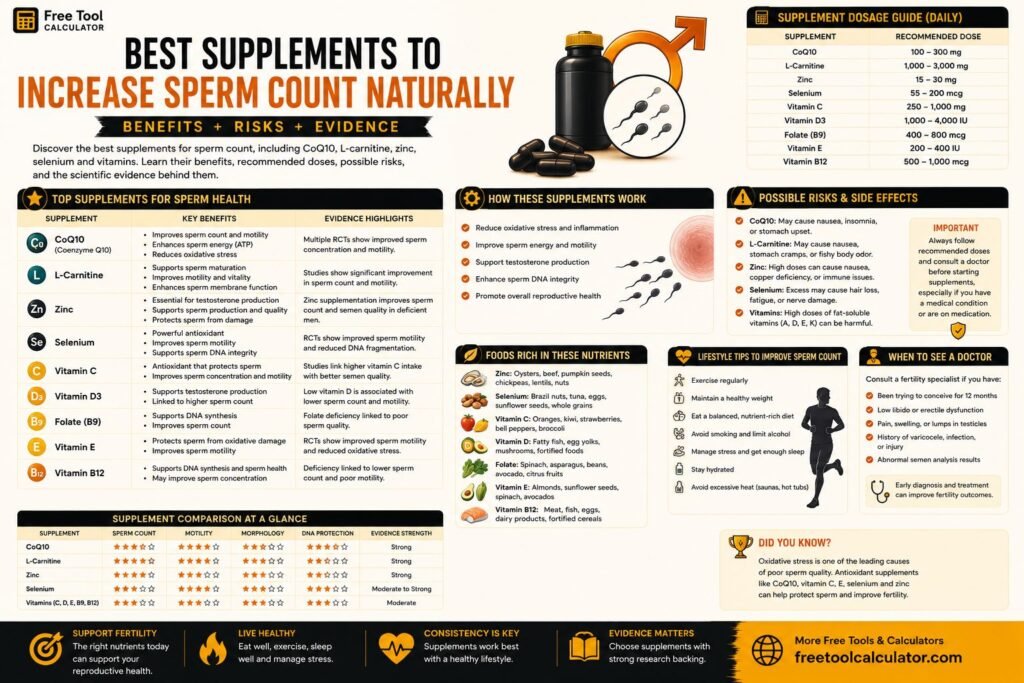
Over-the-counter fertility supplements should not replace medical investigation. Evidence that antioxidant combinations improve pregnancy or live birth rates remains uncertain.
Semen Analysis Versus a Home Sperm Test
A home sperm test may provide limited information, such as whether the sperm concentration is above or below a particular threshold. Some newer products also provide information about motility.
A laboratory semen analysis is more comprehensive. It can assess volume, concentration, total count, movement, morphology and additional semen characteristics under controlled conditions.
Mayo Clinic notes that some home tests can show whether sperm are present and may report movement, but they do not provide the complete evaluation available through a clinical laboratory.
A reassuring home result does not rule out all fertility problems. An abnormal home result should be confirmed through clinical testing.
Is a Semen Analysis Confidential?
Semen analysis is a medical test, and the sample and results should be handled under the clinic’s privacy and confidentiality procedures.
The laboratory may ask the patient to confirm identifying information when submitting the sample. This is necessary to prevent specimens from being mixed up and to ensure the result is recorded correctly.
Patients who are concerned about privacy should ask how the sample is labelled, who can access the report and how results will be communicated.
How Much Does a Semen Analysis Cost?
The cost varies according to the country, laboratory, healthcare system and level of analysis. A basic semen analysis may be covered when ordered as part of an infertility investigation, while private clinics may charge a separate fee.
Specialist tests such as DNA fragmentation, antisperm antibodies or sperm preparation for assisted reproduction may cost more and are not automatically included.
Before attending, ask whether the quoted fee includes the appointment, collection container, full laboratory analysis, written report and medical interpretation.
Frequently Asked Questions About Semen Analysis
What is a semen analysis test?
It is a laboratory test that evaluates semen volume and sperm characteristics such as concentration, total number, movement and shape.
Why is semen analysis performed?
It is commonly used to investigate male fertility, a possible low sperm count, difficulty conceiving or the outcome of a vasectomy or vasectomy reversal.
How is the semen sample collected?
The sample is usually collected through masturbation directly into a sterile laboratory-approved container.
Is semen analysis painful?
No. Providing the sample is not normally painful, although some men may feel anxious or uncomfortable in the clinical environment.
How many days should I abstain before semen analysis?
Many clinics request between two and seven days without ejaculation. Follow the exact instructions provided by your laboratory.
Can I have sex before a semen analysis?
You should avoid ejaculation during the instructed abstinence period. Sex that does not result in ejaculation may still be restricted by some clinics, so follow their guidance.
Can I use lubricant to collect the sample?
Do not use an ordinary lubricant or saliva. Ask the laboratory whether an approved sperm-safe lubricant is available when needed.
Can I collect the sample at home?
Some laboratories allow home collection when the sample can be transported within the required time and temperature conditions. Confirm this before collecting it.
What if I spill part of the sample?
Tell the laboratory immediately and explain which portion may have been missed. The test may need to be repeated.
How quickly must the sample reach the laboratory?
The time limit varies by laboratory and should be included in the clinic’s instructions. Prompt delivery is important because sperm motility can decline over time.
What does sperm count mean?
It may refer to the sperm concentration in each milliliter or the total number of sperm in the complete ejaculate. A full report usually distinguishes between these measurements.
What is sperm motility?
Motility describes whether sperm move and whether they move progressively forward.
What is sperm morphology?
Morphology describes the size and shape of sperm assessed according to strict laboratory criteria.
Does abnormal morphology mean I cannot have children?
No. Morphology is one measurement and should be interpreted with count, motility, the other partner’s fertility and the complete clinical situation.
Can normal semen analysis results guarantee fertility?
No. Normal results reduce the likelihood of a major semen abnormality but do not guarantee natural conception.
Does an abnormal result mean permanent infertility?
No. Results can be temporarily affected by illness, fever, collection problems and other factors. The abnormality may also be treatable or manageable.
Why do I need a second semen analysis?
Semen values naturally vary. Repeat testing helps determine whether the first result represents a persistent condition.
Can a fever affect sperm analysis?
Yes. A significant fever can temporarily affect sperm production and quality, sometimes for several weeks afterward.
Can testosterone affect the test?
Yes. External testosterone can suppress sperm production and may cause a very low sperm count or azoospermia.
Can I check my fertility with a home test?
A home test may provide limited information, but it cannot replace a complete laboratory semen analysis and medical evaluation.
What doctor interprets a semen analysis?
A reproductive urologist, andrologist, fertility specialist or appropriately trained clinician can interpret the result and recommend further testing.
What happens when no sperm are found?
The result is usually confirmed with repeat testing, followed by hormone, genetic or structural evaluation to determine whether the cause is obstruction or impaired sperm production.
Can semen analysis detect infection?
The test may show cells or other findings that raise concern about inflammation or infection, but additional testing may be needed for confirmation.
How long do results take?
Timing depends on the laboratory. Some results are available within several days, while others may take approximately one week.
Should both partners have fertility testing?
Yes. Fertility depends on both partners, and simultaneous evaluation can reduce delays and identify combined factors.
Conclusion
A semen analysis is a routine laboratory test that provides important information about male reproductive health. It usually involves avoiding ejaculation for a specified period, producing a complete semen sample in a sterile container and allowing a laboratory to assess the semen and sperm.
The test measures more than sperm count. It commonly evaluates semen volume, sperm concentration, total sperm number, motility and morphology. The laboratory may also examine vitality, pH, liquefaction, viscosity and the presence of other cells.
Providing the sample is not normally painful, although it may feel awkward or stressful. Patients should follow the laboratory’s collection instructions carefully, avoid ordinary lubricants and report any spilled or missed portion of the sample.
An abnormal result does not automatically mean permanent infertility. Semen values can vary naturally and may be temporarily affected by fever, illness, medication or collection problems. Repeat testing is commonly needed before conclusions are made.
The results should be interpreted by a qualified healthcare professional alongside medical history, physical examination and the fertility evaluation of the other partner. Additional hormone tests, imaging or genetic evaluation may be recommended when a significant abnormality is found.
Understanding what a semen analysis involves can make the process less intimidating. The test is a practical first step toward identifying a possible male fertility factor and choosing appropriate treatment or fertility support.
This article provides general educational information and does not replace personalized diagnosis or medical advice from a qualified healthcare professional.